
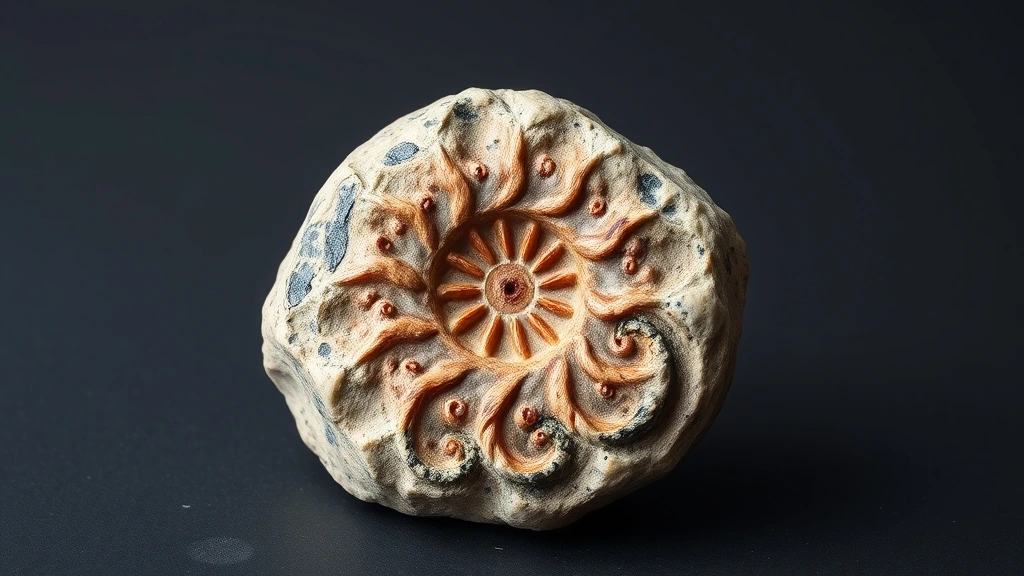
Ammonites are not traditional gemstones but rather fossilized remains of extinct marine cephalopods. They belong to the broader category of Natural Minerals and organic fossils. While often collected for their intricate spiral geometry, they lack the crystalline perfection of traditional gems. Their value lies in paleontological significance and aesthetic form rather than optical brilliance.
What is Ammonite Gemstone? Geological Overview & Definition
Ammonites are extinct marine mollusks related to modern nautiluses, preserved through permineralization or replacement processes. Over millions of years, original shell material is often replaced by silica or calcite, creating durable stone. This transformation allows the fossil to survive geological pressures while retaining its original shape.
These fossils are classified as cryptocrystalline aggregates rather than single crystals. They form in sedimentary rock layers, often found in Jurassic and Cretaceous strata. The spiral chamber structure is a key diagnostic feature for identification. Collectors prize well-preserved specimens with clear sutures and intact whorls.
Ammonite Gemstone Chemical Composition & Crystallographic Properties
The primary chemical composition is often CaCO₃ (calcite or aragonite) in high-quality specimens, preserving the original aragonite. This material exists in a crystalline state, possessing long-range atomic order. Consequently, it exhibits distinct crystal faces and cleavage planes. This structure contributes to its characteristic fracture and smooth polish.
Due to its cryptocrystalline nature, the lattice structure consists of microscopic, interlocking grains. There is no single cation substitution pattern typical of large crystals. Instead, impurities are distributed randomly within the silica matrix. This results in variable coloration without distinct chromophore color centers.
The stone exhibits moderate acid sensitivity, particularly if residual calcite remains in the matrix. Pure silica is resistant to acids, but mixed compositions may etch. Thermal behavior is stable under normal conditions, but rapid temperature changes can cause fracturing. Proper care is essential to maintain structural integrity.
| Property | Specification |
|---|---|
| Mineral Group | Natural Mineral / Crystal |
| Chemical Formula | CaCO₃ (Calcite or Aragonite) |
| Mohs Hardness | 3.0 – 4.0 |
| Crystal System | Trigonal (Calcite) or Orthorhombic (Aragonite) |
| Specific Gravity (Density) | 2.71 – 2.95 |
| Refractive Index | 1.486 – 1.658 |
| Color & Optical Properties | Natural Ammonite Gemstone color spectrum and optical dispersion |
| Primary Mining Localities | Global primary localities |
| Water & Chemical Resistance | High (Safe for gentle water washing) |
| Chakra Alignment (Traditional) | Root Chakra, Sacral Chakra |
| Zodiac Affinity (Traditional) | Cancer, Pisces |
| Symbolic Meaning (Traditional) | Ancestral wisdom, protection, and transformation |
Ammonite Gemstone Varieties & Color Spectrum
Ammonite fossils exhibit a diverse range of coloration driven by mineral replacement processes during diagenesis. The most common variety features a siliceous matrix that preserves intricate growth lines and sutures. These specimens often display earthy tones ranging from deep browns to vibrant oranges.
Siliceous Ammonite
This variety forms when silica replaces the original aragonite shell structure over millions of years. The resulting stone is hard, durable, and capable of achieving a high polish. It typically appears in shades of brown, red, or yellow depending on iron oxide impurities.
Pyritized Ammonite
Known as “fool’s gold” ammonites, these specimens contain pyrite crystals embedded within the shell structure. The metallic luster creates a striking contrast against the surrounding fossilized material. This rare morph is highly sought after for its unique visual texture and sparkle.
Agatized Ammonite
In this rare form, the shell is replaced by chalcedony, a microcrystalline variety of quartz. The stone often displays banded patterns and a waxy luster that enhances its aesthetic appeal. Colors can range from translucent white to deep purple or green hues.
Calcitic Ammonite
This common variety retains its original calcite composition, making it softer and more susceptible to acid etching. It typically appears in pale gray, white, or light brown tones. While less durable, it offers excellent detail preservation for scientific study.
Where is Ammonite Gemstone Found? Geological Mining & Extraction
Ammonites are predominantly found in marine sedimentary rocks such as limestone, shale, and marl. These deposits were laid down in ancient seas during the Mesozoic Era. The fossilization process requires rapid burial to prevent scavenging and physical destruction.
Major extraction regions include the Jurassic Coast in England and the Morrison Formation in the United States. Other significant sources exist in Morocco, India, and China. Miners carefully extract specimens to preserve the delicate spiral structure and surface details.
Historical Significance & Cultural Lore of Ammonite Gemstone
Ancient civilizations often interpreted ammonites as dragon eggs or symbols of the sun due to their spiral shape. In medieval Europe, they were believed to possess protective powers against evil spirits. Archaeological finds reveal their use in jewelry and amulets across multiple cultures.
Modern gemology appreciates ammonites for their geological heritage and intricate natural design. They serve as tangible links to prehistoric marine ecosystems. This enduring fascination ensures their continued popularity in the mineral collecting community.
Modern Uses & Jewelry Applications of Ammonite Gemstone
Lapidaries primarily treat ammonite fossils as cabochon stones due to their organic, non-crystalline structure, which resists faceting. The natural spiral patterns offer unique aesthetic appeal for rings, pendants, and ornamental carvings. Artisans often polish these pieces to enhance the iridescent sheen found in high-quality specimens.
- Cabochon Polishing: Smooth, domed surfaces highlight the fossil’s natural curvature and silica composition.
- Ornamental Carving: Skilled carvers utilize the spiral geometry for artistic sculptures and decorative inlays.
- Jewelry Settings: Bezels and prong settings are commonly used to secure the relatively soft fossil material.
Metaphysical Uses & Origins of Ammonite
According to historical traditions and metaphysical lore, ammonite symbols represent transformation and the cyclical nature of life. Practitioners believe the stone encourages adaptability and helps individuals navigate significant personal changes with grace. Its ancient origin connects the wearer to deep evolutionary history and ancestral wisdom.
The stone is often associated with emotional grounding and spiritual protection during turbulent times. Many users report a sense of stability and renewed purpose when meditating with this fossil. It serves as a reminder that change is a natural and necessary part of existence.
Which Chakra and Zodiac Signs Align with Ammonite Gemstone?
In metaphysical practice, ammonite is primarily aligned with the Root Chakra, promoting a sense of security and physical stability. This connection helps anchor the user’s energy to the earth, fostering resilience and practicality. It supports the foundation of one’s physical and spiritual well-being.
Additionally, the stone resonates with the Heart Chakra, encouraging emotional openness and compassion. This dual alignment balances groundedness with emotional depth, allowing for a harmonious connection between body and spirit. It aids in healing past traumas while maintaining a strong sense of self.
Regarding zodiac compatibility, ammonite is canonically aligned with Taurus, Gemini, and Leo. Taurus appreciates the stone’s grounding nature, while Gemini benefits from its adaptability. Leo finds strength and confidence in the fossil’s ancient, enduring presence.
How to Identify Real vs. Fake Ammonite Gemstone
Artificial imitations often use synthetic glass or dyed replicas to mimic the appearance of genuine fossils. These fakes may lack the natural irregularities and subtle color variations found in authentic specimens. Understanding the material composition is crucial for distinguishing real ammonite from manufactured copies.
Practical At-Home Authenticity Tests
- Temperature Test (Thermal Feel): Genuine ammonite feels cool to the touch initially and warms slowly, unlike plastic imitations which warm up almost instantly.
- Specific Gravity & Weight Test: Real ammonite feels heavier than its size suggests due to its silica density, whereas glass or plastic fakes often feel lighter.
- Scratch & Hardness Test (Mohs Comparison): Ammonite has a Mohs hardness of approximately 7, making it resistant to scratches from steel, while plastic fakes scratch easily.
- Microscopic & Loupe Inspection (Internal Inclusions): Use a 10x loupe to look for natural inclusions or fossilized shell structures, which are absent in uniform synthetic glass.
Ammonite Gemstone Valuation Factors, Grading & Pricing
Market value hinges primarily on Color Saturation and the uniformity of the fossil’s tone. Collectors prize specimens with deep, consistent hues that lack significant discoloration or fading. High optical clarity and a natural luster further enhance the visual appeal of the piece.
The Carat Weight of the specimen directly influences its base price, with larger fossils commanding higher premiums. Facet symmetry is critical for polished stones, ensuring light interacts predictably with the surface. The presence of matrix or inclusions can either detract from value or add unique character.
Geographical Provenance Premium significantly impacts final pricing, as rare localities often fetch higher bids. Wholesale costs vary based on supply chains, while retail margins reflect curation efforts. Current market trends show steady demand for well-preserved, high-quality ammonites.
How to Clean and Care for Ammonite Gemstone
To maintain the integrity of your ammonite, use warm soapy water and a soft cloth for gentle cleaning. This method effectively removes surface dust without risking damage to the delicate fossil structure. Always dry the stone thoroughly with a lint-free towel after washing.
It is crucial to avoid ultrasonic cleaners entirely, as vibrations can cause structural fractures in the fossilized material. These devices are too aggressive for the porous nature of ammonite specimens. Stick to manual, low-impact cleaning techniques to preserve the stone’s longevity.
Cleansing and Recharging Ammonite Gemstone (Energetic Care)
For energetic cleansing, use smoke smudging with sage or palo santo to clear stagnant energy. This dry method avoids any contact with water, ensuring the mineral remains physically intact. Allow the smoke to circulate around the stone for a few minutes.
Place the ammonite on a selenite plate under moonlight to recharge its vibrational frequency. This passive technique leverages natural lunar energy without exposing the fossil to harsh environmental elements. Ensure the storage area is safe from accidental drops or moisture.
Frequently Asked Questions About Ammonite Gemstone
Is an ammonite gemstone safe to wear in the shower?
Yes, it is safe for gentle water washing. The stone possesses high water resistance, allowing it to withstand brief exposure to moisture without immediate degradation. However, prolonged soaking may affect the organic matrix, so it is best to remove it before long baths or swimming.
Can I clean my ammonite in an ultrasonic cleaner?
No, you must avoid ultrasonic cleaners. These devices generate intense vibrations that can cause structural fractures within the fossilized shell. Instead, use warm soapy water and a soft cloth to gently wipe the surface, preserving the intricate spiral details and overall integrity.
Which zodiac signs are compatible with ammonite?
Taurus, Gemini, and Leo are the aligned signs. These earth and air signs resonate with the stone’s grounding energy and intellectual clarity. Wearing ammonite can enhance stability for Taurus, communication for Gemini, and creative confidence for Leo, fostering a balanced energetic connection.
Which chakras does the ammonite gemstone activate?
It primarily activates the Root Chakra, Sacral Chakra. This dual alignment grounds the wearer while simultaneously opening emotional centers. The stone bridges physical stability with spiritual compassion, making it ideal for meditation practices focused on emotional grounding and inner peace.
What is the chemical composition of an ammonite?
The primary component is calcium carbonate (CaCO₃). Over millions of years, the original organic shell was replaced by calcite or aragonite during the fossilization process. This mineral replacement gives the stone its durability and distinctive texture, distinguishing it from purely siliceous fossils found in other geological contexts.
How should I store my ammonite gemstone?
Store it in a soft pouch or separate compartment. Although durable, the fossilized structure can scratch against harder gemstones like quartz or diamond. Keeping it isolated prevents surface abrasion and maintains the polished finish that highlights the natural spiral patterns and geological history.
Is ammonite a good stone for meditation?
Yes, it is excellent for grounding meditations. The spiral shape encourages focused breathing and mental clarity, aiding in stress reduction. Practitioners often use it to connect with ancestral wisdom and earth energies, facilitating a deep sense of calm and historical perspective during sessions.
Can I wear an ammonite gemstone daily?
Yes, with careful handling and proper care. Its high water resistance makes it suitable for everyday wear, provided you avoid harsh chemicals. Regular gentle cleaning with a soft cloth ensures the stone remains vibrant, allowing you to enjoy its unique aesthetic and metaphysical benefits consistently.