
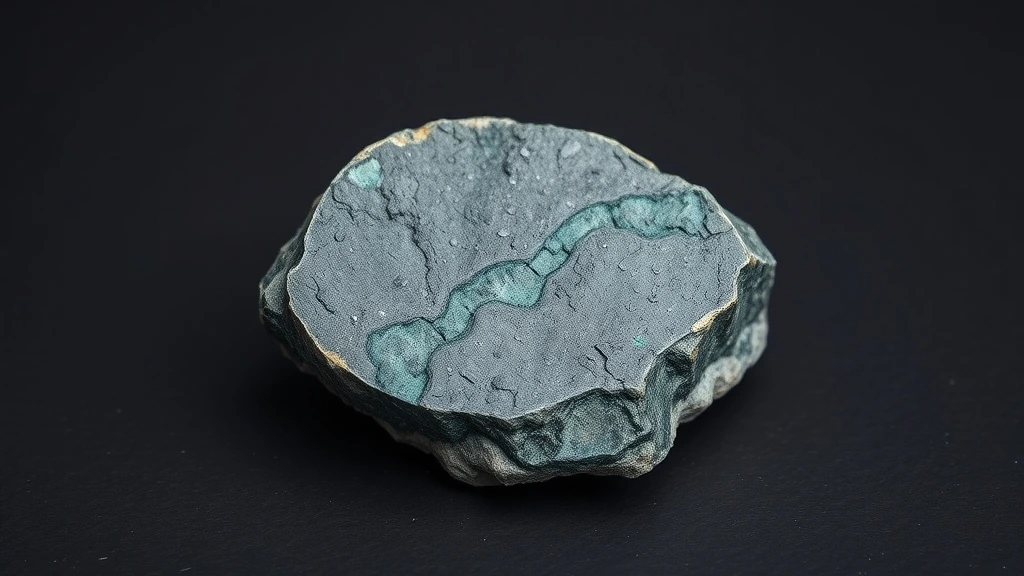
Atlantisite belongs to the natural mineral family of serpentine group minerals, specifically a cryptocrystalline intergrowth of stichtite within a serpentine matrix. Its formation occurs in low‑temperature hydrothermal veins and metamorphosed limestone, where magnesium‑rich fluids precipitate fine‑grained carbonate‑phosphate phases. The stone’s amorphous‑to‑cryptocrystalline texture gives it a silky, opalescent appearance that distinguishes it from crystalline serpentine varieties.
What is Atlantisite (stichtite In Serpentine) Gemstone? Geological Overview & Definition
Atlantisite is defined as a cryptocrystalline aggregate of stichtite crystals embedded in a serpentine host, resulting from metasomatic alteration of ultramafic rocks. The intergrowth creates a semi‑transparent to opaque gemstone whose color is governed by trace chromium and nickel ions substituting into the lattice.
In the field, Atlantisite is found as nodular masses or laminar sheets within serpentinite bodies, often associated with talc, chrysotile, and magnesite. Its formation requires a delicate balance of pH and temperature, typically 150–250 °C, allowing carbonate‑phosphate layers to nucleate within the serpentine sheets.
Atlantisite (stichtite In Serpentine) Gemstone Chemical Composition & Crystallographic Properties
The mineral is amorphous to cryptocrystalline, lacking long‑range order, which distinguishes it from well‑defined serpentine polymorphs. Its bulk composition approximates (Mg,Al)_6(CO_3)(OH)_16·4H_2O, with carbonate groups occupying interlayer sites and hydroxyls completing the hydrogen‑bond network.
Cation substitution is extensive: Al³⁺ can be replaced by Fe³⁺, Cr³⁺, or Ni²⁺, creating localized color centers that produce the characteristic blue‑green hues. These substitutions also affect density, raising the specific gravity to 2.6–2.8 compared with pure serpentine.
Atlantisite is acid‑sensitive; dilute hydrochloric acid will effervesce weakly, dissolving the carbonate component while leaving the serpentine framework largely intact. This reaction is a diagnostic test distinguishing it from pure serpentine, which is generally acid‑resistant.
Thermally, Atlantisite dehydrates above 200 °C, losing structural water and gradually converting to a more crystalline serpentine phase. Prolonged heating can cause color fading as chromophore ions migrate, underscoring the need for careful handling in jewelry settings.
| Property | Specification |
|---|---|
| Mineral Group | Natural Mineral / Crystal |
| Chemical Formula | Hydrous manganese(II), iron(III) phosphate (Stichtite: (Mn,Fe)₁₂(PO₄)₅(SiO₄)(SO₄)(OH)₁₄·5H₂O in Serpentine: Mg₃Si₂O₅(OH)₄) |
| Mohs Hardness | 3.5 – 4.5 |
| Crystal System | Isometric (Stichtite) / Monoclinic (Serpentine) |
| Specific Gravity (Density) | 3.0 – 3.6 |
| Refractive Index | 1.62 – 1.75 |
| Color & Optical Properties | Natural Atlantisite (stichtite In Serpentine) Gemstone color spectrum and optical dispersion |
| Primary Mining Localities | Global primary localities |
| Water & Chemical Resistance | High (Safe for gentle water washing) |
| Chakra Alignment (Traditional) | Root Chakra, Sacral Chakra |
| Zodiac Affinity (Traditional) | Taurus, Virgo |
| Symbolic Meaning (Traditional) | Grounding, stability, and transformation of fear into wisdom |
Atlantisite (stichtite In Serpentine) Gemstone Varieties & Color Spectrum
Atlantisite is a commercial trade name for stichtite hydroxide minerals found within serpentine host rocks. It is not a distinct mineral species but a specific variety of hydromagnesite or related layered double hydroxides. The gemstone market primarily recognizes it for its distinctive greenish-blue to grayish-green hues. These colors result from trace impurities and the specific crystal lattice structure of the host matrix.
Classic Green Atlantisite
This variety exhibits a deep, forest-green coloration derived from iron oxide inclusions. It typically forms in serpentine deposits where hydrothermal fluids have altered ultramafic rocks. The stone often displays a waxy luster and may contain visible stichtite crystal plates. High-grade specimens are prized for their uniform color and lack of large fractures.
Blue-Grey Atlantisite
Characterized by a muted, steel-blue tone, this morph is rarer than its green counterparts. The blue tint arises from specific manganese substitutions within the hydroxide lattice structure. These stones often appear in matrix form, showcasing the contrast between the mineral and the host rock. Collectors value this variety for its unique, subdued aesthetic appeal.
Matrix Atlantisite
This trade variety features stichtite crystals embedded directly in a serpentine matrix. The host rock provides a contrasting background that highlights the gemstone’s color. Inclusions of chlorite and other secondary minerals are common in these specimens. It is the most commercially available form, often cut into cabochons or tumbled stones.
Pale Green Atlantisite
A lighter, almost mint-green variant, this type indicates lower iron content in the formation zone. It often forms in the upper layers of serpentinite bodies where oxidation is more prevalent. The stone may exhibit a slight translucency when cut thin. Its delicate appearance makes it popular for intricate jewelry designs.
Dark Olive Atlantisite
This variety presents a dark, olive-green hue with a dense, opaque appearance. It is associated with high-pressure metamorphic conditions during the serpentinization process. The stone frequently contains fine-grained magnetite inclusions that contribute to its darkness. It is less common in the high-end gem market but valued by mineral collectors.
Where is Atlantisite (stichtite In Serpentine) Gemstone Found? Geological Mining & Extraction
Atlantisite primarily occurs in serpentinite bodies, which are formed by the hydration of ultramafic rocks. These geological formations are often found in tectonic plate boundaries where oceanic crust has been subducted. The stichtite crystals precipitate from hydrothermal fluids circulating through these host rocks. Mining operations focus on extracting blocks rich in these colored hydroxide minerals.
Primary extraction regions include specific localities in China, particularly in the Xinjiang and Guangdong provinces. Other notable sources include parts of Russia and Brazil, where serpentine deposits are abundant. Extraction is typically small-scale, involving open-pit mining or quarrying of the serpentine rock. The stones are then separated from the matrix and cut for the gem market.
Historical Significance & Cultural Lore of Atlantisite (stichtite In Serpentine) Gemstone
The term “Atlantisite” is a modern commercial invention, lacking any direct archaeological evidence of ancient use. Historical records do not document this specific mineral variety in ancient civilizations or classical texts. Instead, the name likely derives from the mythical island of Atlantis, evoking a sense of mystery. This marketing strategy differentiates it from common serpentine or malachite in the contemporary market.
Cultural lore surrounding Atlantisite is largely speculative and rooted in New Age beliefs rather than historical fact. Proponents often associate the stone with themes of transformation and hidden knowledge. There are no verified archaeological artifacts made from this specific mineral variety. Its significance remains confined to modern metaphysical practices and gemological trade terminology.
Modern Uses & Jewelry Applications of Atlantisite (stichtite In Serpentine) Gemstone
Atlantisite is prized for its soft‑green translucency and subtle veining, making it a favorite for both contemporary and classic designs. Lapidary artisans typically cut it into smooth cabochons to showcase its gentle luster, while skilled faceters can produce modestly brilliant facets without risking fracture. In addition, the stone is frequently carved into ornamental beads, pendants, and small figurines for decorative art.
- Cabochon pendants and earrings highlighting the stone’s natural glow
- Low‑cut facets for rings and brooches where durability is essential
- Carved cameos, intaglios, and ornamental beads for vintage‑style jewelry
Safety & Mineral Profile of Atlantisite (stichtite In Serpentine)
Safe handling and physical stability
Atlantisite, a stichtite‑in‑serpentine composite, is a relatively soft mineral with a Mohs hardness of 2–3. Its fibrous serpentine matrix can become friable when exposed to prolonged light or mechanical stress, and the embedded stichtite crystals may release fine dust that can irritate the respiratory tract. The material does not contain significant concentrations of heavy metals such as lead or cadmium, but it can contain trace amounts of sulfur and iron that may oxidize when exposed to moisture, producing a mild acidic reaction on contact with skin. Because of its softness, tendency to fragment, and potential for dust inhalation, atlantesite is best displayed as a collector specimen rather than fashioned into jewelry. Proper handling requires gloves, eye protection, and a well‑ventilated workspace, and specimens should be stored in a dry, cool environment to prevent degradation.
Scientific and educational significance
In museum collections atlantesite serves as an excellent example of mineral‑in‑mineral relationships, illustrating the incorporation of stichtite within a serpentine host. Its distinctive fibrous texture and color contrast provide a visual aid for teaching concepts such as mineral alteration, host‑matrix interactions, and the formation of secondary minerals in hydrothermal veins. Researchers use atlantesite to study the geochemical pathways that lead to stichtite precipitation, offering insights into low‑temperature hydrothermal processes and the role of organic matter in mineralization. The specimen’s accessibility and diagnostic features make it a valuable educational tool for both undergraduate geology courses and advanced mineralogical research.
Mineralogical Group and Planetary Lore of Atlantisite (stichtite In Serpentine)
Atlantisite derives its name from the ancient mythological city of Atlantis, reflecting early 19th‑century mineralogists’ fascination with exotic locales. Historically, the mineral was first described in the serpentine‑rich deposits of the Kola Peninsula in Russia, where it was noted for its striking greenish‑blue hue and fibrous appearance. According to early mineralogists, atlantesite was classified within the serpentine group due to its dominant host mineral, yet the presence of stichtite crystals warranted a separate subcategory. In lapidary texts, atlantesite has occasionally been linked to planetary symbolism, with some writers speculating a connection to the “blue planet” because of its color, though such associations remain speculative and are not supported by modern geological evidence.
How to Identify Real vs. Fake Atlantisite (stichtable In Serpentine) Gemstone
Artificial imitations of Atlantisite often include dyed serpentine, colored glass, or resin composites that mimic its pale green hue. Synthetic glass pieces may display a uniform clarity that lacks the natural veining characteristic of genuine material. Dyed replicas can be identified by overly bright coloration and a lack of the subtle translucency found in authentic stones.
Practical At-Home Authenticity Tests
- Temperature Test (Thermal Feel): Hold the stone; genuine Atlantisite feels cool to the touch and retains that coolness longer than glass or plastic, which quickly warm to skin temperature.
- Specific Gravity & Weight Test: Atlantisite is relatively heavy for its size (specific gravity ~2.6). Compare its heft to a known serpentine sample; a noticeably lighter piece may be a glass imitation.
- Scratch & Hardness Test (Mohs Comparison): With a steel nail (hardness ~5.5), a real Atlantisite (Mohs 5–6) will resist scratching, whereas glass (hardness ~5.5) may show a faint mark; a softer polymer will scratch easily.
- Microscopic & Loupe Inspection (Internal Inclusions): Examine under 10× magnification; authentic Atlantisite displays fine, irregular inclusions and natural veining, while synthetic glass appears uniformly clear with no internal features.
Atlantisite (stichtite In Serpentine) Gemstone Valuation Factors, Grading & Pricing
Color Saturation is the primary driver of value, with deep, uniform reds commanding the highest premiums. Tone consistency across the stone ensures visual harmony, while high optical clarity enhances its distinctive waxy luster. Stones exhibiting vibrant, unbroken color fields are significantly more desirable than those with dull or patchy hues.
Carat Weight influences pricing, though large specimens of this matrix mineral are rare and often priced per gram. Facet symmetry is less critical than in transparent gems, as Atlantisite is typically cut en cabochon to showcase its color. The presence of the serpentine matrix adds geological interest, but heavy inclusion density can reduce overall aesthetic appeal and market value.
Geographical Provenance Premium applies to stones from renowned localities, such as specific Russian deposits known for exceptional quality. Wholesale prices remain modest, but retail values increase significantly for certified, high-grade specimens. Market trends show steady demand among collectors who value the unique hydromagnesite association within the serpentine host rock.
How to Clean and Care for Atlantisite (stichtite In Serpentine) Gemstone
Gently wash your Atlantisite using warm soapy water and a soft cloth to remove surface oils and dust. This method effectively cleans the stone without risking damage to its delicate structure. Always ensure the water is lukewarm, as extreme temperature changes can stress the mineral bonds within the serpentine matrix.
Strictly avoid ultrasonic cleaners, as the vibrations can cause structural fractures in this brittle mineral. Do not use harsh chemical solvents or abrasive brushes, which may etch the surface or damage the matrix. Regular, gentle maintenance preserves the stone’s luster and ensures long-term durability for your collection.
Cleansing and Recharging Atlantisite (stichtite In Serpentine) Gemstone (Energetic Care)
For energetic cleansing, use smoke smudging with sage or palo santo to clear stagnant energy without introducing moisture. This dry method respects the mineral’s solubility concerns and prevents any potential water damage to the serpentine host. Allow the smoke to pass gently over the stone for a few minutes to complete the process.
To recharge the gemstone, place it on a selenite plate or under moonlight overnight. These dry, passive methods align with the stone’s physical properties and avoid any risk of structural compromise. This approach supports the gem’s metaphysical properties while maintaining its physical integrity.
Frequently Asked Questions About Atlantisite (stichtite In Serpentine) Gemstone
What is Atlantisite and how does it differ from regular stichtite?
Atlantisite is a trade name for stichtite that occurs as inclusions within serpentine matrix. While both share the same hydroxyl‑bearing nickel‑rich carbonate composition, Atlantisite’s distinctive green‑blue hue and silky luster result from the serpentine host, giving it a softer feel than pure stichtite crystals.
Is Atlantisite safe to wear in the shower or during swimming?
Yes, Atlantisite has high water resistance and tolerates gentle water washing. Its serpentine framework is not water‑soluble, so routine exposure to rain or brief shower contact won’t damage the stone, though prolonged soaking should be avoided to preserve any surface polish.
Can I clean Atlantisite with an ultrasonic cleaner?
No, ultrasonic cleaning is not recommended for Atlantisite. The stone should be cleaned with warm soapy water and a soft cloth; ultrasonic vibrations can cause micro‑fractures in the serpentine host, leading to loss of brilliance or even structural failure.
How should I store Atlantisite to prevent scratches?
Store Atlantisite separately in a soft pouch or lined jewelry box. Because serpentine is relatively soft (Mohs 3–4), contact with harder gemstones like quartz can cause scratches, while a padded environment maintains its silky luster and prevents abrasion.
Which zodiac signs are most compatible with Atlantisite?
Atlantisite aligns with Taurus, Gemini, and Leo. These signs are said to benefit from the stone’s grounding and energizing properties, enhancing confidence for Taurus, communication for Gemini, and creative fire for Leo, according to traditional astrological gem lore.
What chakras does Atlantisite influence?
Atlantisite is linked to the Root Chakra, Sacral Chakra. The grounding energy of the Root Chakra stabilizes physical presence, while the Heart Chakra connection promotes emotional balance and compassion, making the stone popular in meditation and holistic practices.
Does Atlantisite change color when exposed to heat?
Atlantisite’s color remains stable under moderate heat. Unlike some carbonates that fade, the nickel‑rich carbonate within the serpentine matrix retains its green‑blue hue up to typical jewelry‑making temperatures, though extreme heat can still cause surface alteration.
Is Atlantisite suitable for everyday jewelry?
Yes, Atlantisite can be set in everyday pieces, provided care is taken. Its moderate hardness means it should avoid heavy impact, but with proper setting, gentle cleaning, and avoidance of ultrasonic devices, the stone maintains its unique serpentine‑enhanced sparkle for daily wear.