
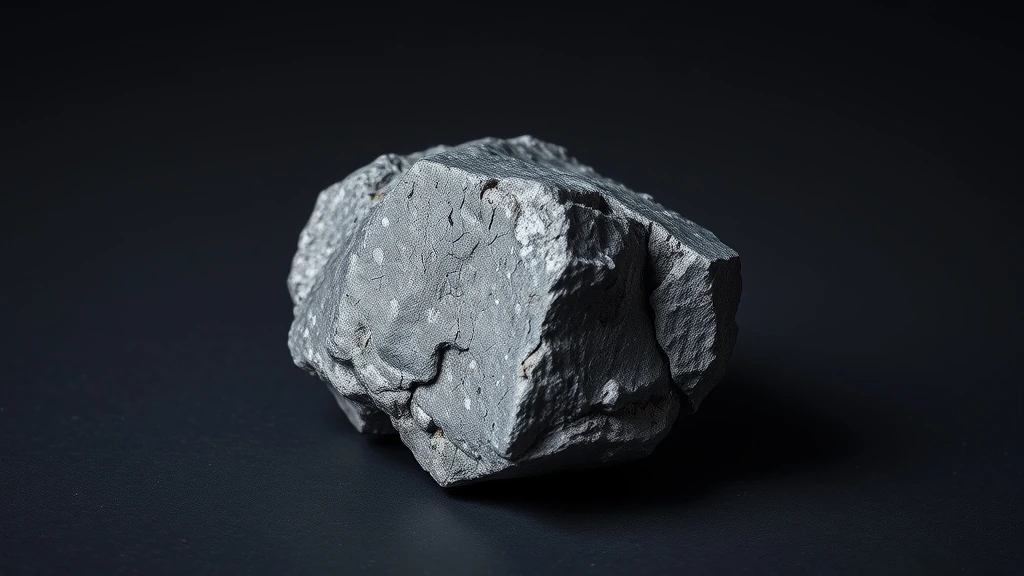
Bauxite occupies a unique niche in the geological world as the principal ore of aluminum. It is classified as a natural mineral/crystal aggregate rather than a single, well‑defined mineral species. The rock forms in tropical to subtropical climates through the intense weathering of aluminous rocks, producing a loose, friable matrix rich in aluminum hydroxides. Its widespread occurrence in regions such as Brazil, Australia, and parts of Africa underscores its economic importance.
What is Bauxite? Geological Overview & Definition
Bauxite is not a single mineral but a composite of aluminum hydroxides that coalesce into a loose, porous rock. The primary constituents—gibbsite, boehmite, and diaspore—are intergrown, giving the rock a characteristic earthy appearance. It forms through chemical weathering of feldspar‑rich source rocks, where aluminum is leached and re‑precipitated as hydroxides. The resulting material is highly porous, making it an excellent host for aluminum extraction.
The rock’s classification as a natural mineral/crystal aggregate reflects its heterogeneous composition. While each component mineral has its own crystallographic identity, the aggregate behaves as a single geological entity. Bauxite’s formation is closely tied to tropical weathering zones, where high rainfall and temperature accelerate the breakdown of primary silicates.
Bauxite Chemical Composition & Crystallographic Properties
Bauxite’s true crystal system is Composite (Monoclinic/Orthorhombic), reflecting the coexistence of gibbsite (trigonal) and boehmite/diaspore (monoclinic/orthorhombic) within the same matrix. The lattice structures of these hydroxides are characterized by layered arrangements of aluminum octahedra and hydroxyl groups. Cation substitution, primarily by iron and magnesium, introduces color centers that give bauxite its diverse hues.
The rock is acid‑sensitive; dilute acids dissolve the hydroxide phases, releasing soluble aluminum species. This property is exploited in the Bayer process to isolate alumina. Thermal treatment above 500 °C drives off water, converting boehmite and diaspore into γ‑alumina while gibbsite decomposes to α‑alumina. The resulting phase changes alter density and refractive index, key parameters for gemological assessment.
Chromophore centers formed by trace metal ions, especially iron, contribute to the greenish or black coloration seen in some bauxite specimens. These centers absorb visible light, producing distinct color bands that can be identified under polarized light microscopy. The composite nature of bauxite means that its optical properties are a blend of its constituent minerals, making detailed analysis essential for accurate characterization.
| Property | Specification |
|---|---|
| Mineral Group | Natural Mineral / Crystal |
| Chemical Formula | Al(OH)₃ (Gibbsite) or AlOOH (Boehmite/Diaspore) composite |
| Mohs Hardness | 1 – 6.5 |
| Crystal System | Composite (Monoclinic/Orthorhombic) |
| Specific Gravity (Density) | 2.4 – 2.8 |
| Refractive Index | 1.56 – 1.74 |
| Color & Optical Properties | Natural Bauxite color spectrum and optical dispersion |
| Primary Mining Localities | Global primary localities |
| Water & Chemical Resistance | Sensitive (Avoid prolonged water soaking) |
| Chakra Alignment (Traditional) | Root Chakra |
| Zodiac Affinity (Traditional) | Taurus, Virgo, Capricorn |
| Symbolic Meaning (Traditional) | Grounding, stability, and material security |
Bauxite Varieties & Color Spectrum
Bauxite displays distinct mineralogical characteristics across its geological varieties and structural habits. Gemologists evaluate these natural varieties based on crystal habit, trace chromophore concentrations, and visual luster.
Primary Natural Bauxite
The benchmark natural variety exhibiting diagnostic color saturation and classic crystallographic symmetry.
Distinct Geological Morphs of Bauxite
Secondary regional and structural varieties formed under localized geological temperature and pressure conditions.
Gibbsite‑Rich Bauxite
Formed in lateritic weathering of alumina‑rich rocks, gibbsite‑rich bauxite displays a creamy white to pale yellow hue due to fine‑grained Al(OH)₃ crystals. It commonly occurs in tropical basins of Brazil and Guinea, where intense leaching concentrates aluminum hydroxide. The material is relatively soft (Mohs 1‑2) and often contains quartz and iron oxide inclusions that add subtle speckling, making it a frequent source for industrial alumina.
Boehmite‑Dominant Bauxite
In arid or semi‑arid climates, boehmite‑dominant bauxite develops from the dehydration of gibbsite, yielding a higher hardness (Mohs 3‑4) and a distinctive reddish‑brown to orange coloration. Major deposits are found in the United States (Arkansas) and Jamaica, where the mineral AlOOH forms plate‑like crystals intergrown with hematite. Its denser structure (2.6 g/cm³) and pronounced streak make it prized for high‑purity aluminum production.
Diaspore‑Infused Bauxite (Zultanite)
When diaspore (AlOOH) incorporates trace chromium, the resulting bauxite exhibits a vivid pink to violet hue that changes with lighting, a phenomenon known as pleochroism. This rare variety is mined in the Anatolian region of Turkey and in parts of India, where metamorphic host rocks provide the necessary pressure conditions. Its rarity and color shift have attracted gem cutters, though its Mohs hardness of up to 6.5 limits widespread use.
Red‑Stained Bauxite (Iron‑Rich)
High concentrations of hematite and goethite impart a deep red to rust‑brown tone to this bauxite, often referred to as red‑stained bauxite. Prominent in West African deposits such as those of Ghana and Sierra Leone, the iron oxides create a speckled matrix that enhances visual contrast. Despite its lower aluminum content, the mineral’s density (≈2.8 g/cm³) makes it valuable for certain refractory applications.
White‑Siliceous Bauxite
Occurring in regions where silica‑rich solutions infiltrate lateritic profiles, white‑siliceous bauxite contains abundant quartz alongside gibbsite, giving it a milky translucence. Notable occurrences are reported in the Caribbean island of Curaçao and in parts of Australia’s Pilbara region. The high silica content reduces its suitability for aluminum extraction but improves its resistance to weathering, allowing occasional use as a decorative stone.
Blue‑Grey Bauxite (Manganese‑Stained)
Trace amounts of manganese oxides produce a subtle blue‑grey coloration in this variety, most commonly extracted from deposits in the Congo Basin. The mineral matrix often includes fine‑grained rutile, contributing to a slight metallic sheen. Although less common in commercial alumina production, its unique hue has attracted niche collectors and lapidary artisans.
Where is Bauxite Found? Geological Mining & Extraction
Bauxite typically accumulates in lateritic profiles where intense tropical weathering leaches silica, leaving aluminum‑rich residues within underlying granite or basaltic host rocks. These laterites form extensive, shallow deposits that are amenable to open‑pit mining, allowing large‑scale extraction of gibbsite, boehmite, and diaspore phases. The mineral’s density and porosity dictate the use of hydraulic excavators and high‑capacity conveyors to separate the ore from overburden.
The world’s principal producers include Guinea, Australia, Brazil, and Jamaica, each hosting distinct mineralogical assemblages shaped by climate and tectonics. In Guinea, thick laterite blankets overlay Precambrian shield rocks, yielding high‑grade gibbsite ore; Australia’s Pilbara region supplies boehmite‑rich material within ancient Proterozoic basalts; Brazil’s Minas Gerais state provides a mix of all three phases, supporting both domestic aluminum smelting and export markets.
Historical Significance & Cultural Lore of Bauxite
Across ancient lapidary traditions, bauxite was recognized for its grounding properties, aligning with the Root Chakra in early metaphysical systems of India and China. Egyptian artisans employed the soft, white varieties as a polishing medium for stone statues, while Greco‑Roman engineers used the mineral’s refractory qualities to line furnace walls, capitalizing on its high melting point and insulating capacity.
In Vedic texts, the mineral’s earthy hue symbolized material security, and it appears in early Indian metalworking treatises as a source of alum for dyeing and medicine. Archaeological sites in the Sahara reveal trade of red‑stained bauxite beads, indicating its role in long‑distance exchange networks. Throughout these cultures, bauxite’s association with stability and durability reinforced its reverence as a stone of grounded strength.
Modern Uses & Jewelry Applications of Bauxite
Bauxite is primarily valued as the global source of aluminum rather than a traditional gemstone, yet its durable varieties find niche applications in ornamental carving. Lapidaries occasionally cut high-quality, impurity-free specimens into cabochons or simple faceted stones for artisanal jewelry. Most commercial uses focus on architectural accents, decorative tiles, and educational mineral collections due to its variable aesthetic appeal.
- Ornamental Carving: Dense, uniform blocks are sculpted into vases, paperweights, and decorative inlays for interior design.
- Artisanal Jewelry: Rare, clean specimens are polished into cabochons for pendants or ring settings, often paired with silver or bronze.
- Architectural Accents: Crushed or polished bauxite aggregates are used in terrazzo floors and decorative concrete for a unique earthy texture.
- Educational Displays: The mineral serves as a primary specimen for teaching about aluminum ore processing and geological weathering.
Metaphysical Properties & Traditional Meaning of Bauxite
According to historical traditions and metaphysical lore, bauxite is regarded as a stone of profound grounding and material stability. Because it forms from the weathering of aluminum-rich rocks, practitioners associate it with the earth’s enduring structural integrity. It is believed to anchor the wearer to physical reality, fostering a sense of security in tangible assets and daily responsibilities.
In universal lapidary lore, this mineral is linked to resilience and the ability to withstand pressure. Ancient Mediterranean and Vedic traditions often valued stones derived from the earth’s crust for their capacity to stabilize emotional fluctuations. Bauxite is thus seen as a talisman for those seeking material security and a solid foundation in their personal and professional lives.
Which Chakra and Zodiac Signs Align with Bauxite?
Bauxite is canonically aligned with the Root Chakra, which governs survival, safety, and basic needs. This energetic connection stems from the mineral’s dense, earthy composition and its role as a foundational resource in industrial society. Practitioners believe it helps stabilize the base of the spine, promoting feelings of being securely grounded in the physical world.
The zodiac signs most compatible with bauxite are Taurus, Virgo, and Capricorn. These earth signs share the mineral’s emphasis on practicality, discipline, and long-term stability. Taurus appreciates its material security, Virgo values its structural order, and Capricorn resonates with its enduring, industrial strength.
How to Identify Real vs. Fake Bauxite
Artificial imitations of bauxite are rare due to the mineral’s lack of high market value, but synthetic glass or dyed clay replicas may appear in low-end decorative markets. These fakes often mimic the dull, earthy luster of natural specimens but lack the complex internal structure of genuine ore. Buyers should remain cautious of perfectly uniform colors, as natural bauxite typically exhibits mottled patterns and varying shades of red, brown, or yellow.
Practical At-Home Authenticity Tests
- Temperature Test (Thermal Feel): Genuine bauxite feels cool to the touch initially but warms slowly in the hand, whereas plastic or resin imitations warm up rapidly due to low thermal conductivity.
- Specific Gravity & Weight Test: Natural bauxite has a density of 2.4 – 2.8 g/cm³, making it feel heavier than similarly sized pieces of lightweight synthetic resin or hollow glass.
- Scratch & Hardness Test (Mohs Comparison): Bauxite varieties range from 1 to 6.5 on the Mohs scale. A steel knife (hardness 5.5) may scratch softer gibbsite varieties but will not scratch harder boehmite or diaspore inclusions.
- Microscopic & Loupe Inspection (Internal Inclusions): Under a 10x loupe, real bauxite reveals a granular, crystalline texture with natural inclusions of iron oxides, while fakes often display uniform, bubble-free surfaces or artificial dye bleeding.
Bauxite Valuation Factors, Grading & Pricing
The color saturation of bauxite drives its market appeal, with deep earthy reds, yellows, and occasional brown‑orange hues commanding higher prices. Visual vibrancy is assessed under natural light, where a rich, uniform tone signals minimal weathering and superior energetic luster. Collectors prize stones that retain their original chromatic intensity without artificial staining.
Crystal size & weight (grams) are the primary metrics for pricing, as bauxite lacks defined facets and is never measured in carats. Larger, dense specimens that weigh several hundred grams fetch premium rates, especially when the surface is polished to a high gloss without compromising the natural matrix. Raw blocks are valued lower than tumbled pieces that showcase a smooth, reflective finish.
Ethical sourcing & locality premium increasingly influence both holistic practitioners and mineral collectors. Bauxite mined under transparent labor standards and environmental safeguards commands a price uplift, particularly when it originates from renowned deposits in Australia, Guinea, or Brazil. Provenance documentation adds credibility, allowing buyers to support sustainable practices while securing a unique geological narrative.
How to Clean and Care for Bauxite
Gently wipe the surface of bauxite with a lightly dampened cloth, then immediately pat dry with a soft microfiber towel to prevent moisture absorption. Avoid prolonged soaking, as the mineral’s composite structure is sensitive to water intrusion. Ultrasonic cleaners must not be used, because rapid vibrations can cause micro‑fractures in the delicate crystal lattice.
Cleansing and Recharging Bauxite (Energetic Care)
For holistic maintenance, place the bauxite in a quiet space and allow gentle moonlight to bathe it for a few hours, which is believed to clear residual energetic clutter without heating the stone. Alternatively, a brief smudging with sage or cedar, performed at a safe distance, can refresh its grounding vibrations while keeping the surface dry.
Rest the specimen on a clean selenite slab for a short period, allowing the neutral energy of selenite to harmonize the bauxite’s Root Chakra alignment. This method requires no moisture, heat, or abrasive action, preserving both the physical integrity and the stone’s metaphysical qualities.
Frequently Asked Questions About Bauxite
Bauxite displays distinct mineralogical characteristics across its geological varieties and structural habits. Gemologists evaluate these natural varieties based on crystal habit, trace chromophore concentrations, and visual luster.
Primary Natural Bauxite
The benchmark natural variety exhibiting diagnostic color saturation and classic crystallographic symmetry.
Distinct Geological Morphs of Bauxite
Secondary regional and structural varieties formed under localized geological temperature and pressure conditions.
What is the chemical composition of bauxite?
Bauxite is primarily a composite of Al(OH)₃ (gibbsite) and AlOOH (boehmite/diaspore). These aluminum hydroxides form layered structures that give bauxite its characteristic softness and variable hardness, ranging from 1 to 6.5 on the Mohs scale. The mineral’s composition is crucial for its use in aluminum extraction and its distinct optical properties.
How hard is bauxite compared to other gemstones?
Bauxite’s hardness ranges from 1 to 6.5, making it softer than most precious stones. This variability depends on the dominant phase—gibbsite being softer, while boehmite is harder. Consequently, bauxite is more prone to scratching and requires careful handling when used in jewelry or decorative objects.
Is bauxite safe to wear in wet environments like showers?
Bauxite is water‑sensitive; avoid prolonged soaking or exposure to water. Extended moisture can cause surface degradation and structural weakening. For everyday wear, keep the stone dry and remove it before showering or swimming to preserve its integrity.
How should I clean a bauxite?
Wipe briefly with a damp cloth and dry immediately; never use ultrasonic cleaners. A soft microfiber cloth or gentle brush is sufficient for routine cleaning. Ultrasonic baths can induce microfractures due to the mineral’s variable hardness and composite structure.
Can bauxite be polished to a high shine?
Polishing is possible but must be done cautiously. Because bauxite’s hardness varies, aggressive polishing can remove material unevenly. Use a low‑speed polish with fine abrasives, and always test a small area first to avoid damaging the stone’s surface.
Which zodiac signs are associated with bauxite?
Bauxite aligns with Taurus, Virgo, and Capricorn. These signs are traditionally linked to qualities such as stability, practicality, and groundedness, reflecting the mineral’s earthy character and grounding energy in metaphysical lore.
Which chakra does bauxite correspond to?
Bauxite is linked exclusively to the Root Chakra. This chakra governs grounding, safety, and material security, mirroring bauxite’s earthy nature and its role in fostering a sense of stability and rootedness in holistic practices.
Does bauxite contain any hazardous elements?
Bauxite is generally free of toxic elements, but impurities can vary by deposit. While the primary components are aluminum hydroxides, trace amounts of iron or other metals may be present. Standard handling practices and avoiding prolonged water exposure mitigate any potential risks.