Benitoite belongs to the Natural Mineral / Crystal group, representing a distinct class of inorganic solids formed through geological processes. Its discovery in California established it as the state gemstone, highlighting its unique geological significance. This mineral forms within specific hydrothermal environments, distinguishing it from synthetic analogs. Its rarity and distinct optical properties make it a prized specimen among collectors and scientists alike.
What is Benitoite Gemstone? Geological Overview & Definition
Benitoite is defined by its exclusive occurrence in the San Benito Formation of California. It crystallizes within hydrothermal veins associated with volcanic activity, often alongside fluorite and quartz. This restricted geographic origin contributes significantly to its extreme rarity and high market value.
The mineral’s identity is confirmed through its unique optical properties and chemical signature. Unlike common blue gemstones, benitoite exhibits a specific refractive index range that aids in identification. Its geological context remains a subject of ongoing research in mineralogy. Understanding its formation helps preserve these fragile geological sites.
Benitoite Gemstone Chemical Composition & Crystallographic Properties
Benitoite crystallizes in the Hexagonal crystal system, forming distinct prismatic or tabular crystals. Its lattice structure is stabilized by the arrangement of barium and titanium cations within a silicate framework. This specific geometry dictates the mineral’s cleavage and fracture characteristics. Precise crystallographic analysis is essential for accurate gemological identification.
The chemical composition features BaTiSi₃O₉, where barium and titanium occupy specific lattice sites. Cation substitution is minimal, maintaining the mineral’s structural integrity and optical consistency. The silicate tetrahedra form a robust framework that supports the heavy cations. This composition results in a specific specific gravity of 3.65.
Color in benitoite arises from chromophore color centers, likely involving trace impurities or defects. These centers absorb specific wavelengths of light, producing the characteristic blue to violet shades. Acid sensitivity is low, as the mineral is resistant to common acids. This stability allows for safe cleaning and maintenance in professional settings.
Thermal behavior reveals that benitoite remains stable under standard heating conditions. However, excessive heat can potentially alter its refractive index or cause structural damage. The mineral’s birefringence is moderate, contributing to its visual brilliance. Proper handling ensures the preservation of its delicate crystal lattice.
| Property | Specification |
|---|---|
| Mineral Group | Natural Mineral / Crystal |
| Chemical Formula | BaTiSi₃ O₉ |
| Mohs Hardness | 6–6.5 |
| Crystal System | Hexagonal crystal system |
| Specific Gravity (Density) | 3.65 |
| Refractive Index | n ω = 1.756 – 1.757 n ε = 1.802 – 1.804 |
| Color & Optical Properties | Natural Benitoite Gemstone color spectrum and optical dispersion |
| Primary Mining Localities | Global primary localities |
| Water & Chemical Resistance | High (Safe for gentle water washing) |
| Chakra Alignment (Traditional) | Crown Chakra, Third Eye Chakra |
| Zodiac Affinity (Traditional) | Sagittarius, Pisces |
| Symbolic Meaning (Traditional) | Clairvoyance, spiritual insight, and protection |
Benitoite Gemstone Varieties & Color Spectrum
Benitoite exists primarily in two distinct geological forms: gem-quality crystals and matrix specimens. The gem variety features deep, saturated blue hues derived from trace impurities within the BaTiSi₃O₉ structure. These crystals typically form in small, hexagonal prisms that are highly prized by collectors.
Deep Blue Gem Crystals
This variety represents the rarest and most valuable form of the mineral. The intense blue coloration results from specific trace elements replacing barium in the crystal lattice. Hexagonal crystal system symmetry is clearly visible in well-formed specimens.
These crystals often contain minor inclusions of quartz or other silicates. Their rarity stems from the limited geographic distribution of the source deposits. Most gem-quality material is found only in specific, exhausted zones.
Blue Matrix Specimens
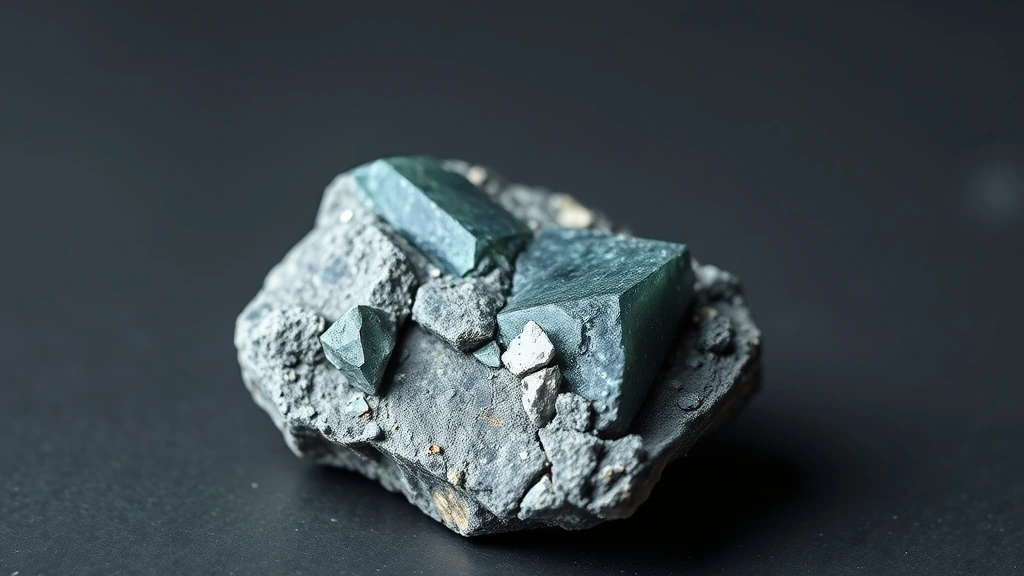
Matrix specimens feature tiny benitoite crystals embedded in a dark, granular host rock. The background is typically composed of quartz and other silicate minerals. This form is more common than loose gem crystals but remains highly collectible.
The contrast between the vivid blue crystals and the dark matrix enhances visual appeal. Collectors value these pieces for their geological context and aesthetic composition. The host rock provides structural support for the delicate gem crystals.
Pale Blue Variants
Some specimens exhibit a lighter, sky-blue hue due to lower concentrations of coloring agents. These variants are less sought after but still scientifically significant. The refractive index remains consistent across all color variations.
Pale blue crystals often occur in larger sizes than their deep blue counterparts. They are frequently found in areas where the deposit is less concentrated. This variety offers an accessible entry point for mineral collectors.
Colorless or White Variants
Rarely, benitoite forms in colorless or white crystals lacking the blue chromophores. These specimens are valuable for optical studies and scientific analysis. The Mohs hardness of 6–6.5 applies uniformly to all color morphs.
Colorless benitoite is extremely uncommon in commercial gem markets. It is primarily of interest to mineralogists and crystallographers. These crystals help researchers understand the fundamental structure of the mineral.
Where is Benitoite Gemstone Found? Geological Mining & Extraction
Benitoite is exclusively found in the San Benito River area of San Benito County, California. The mineral occurs in pegmatite dikes that intrude into volcanic and sedimentary host rocks. These dikes are part of a complex geological formation dating back to the Cretaceous period.
The primary deposit is located near the town of San Benito. Mining operations have been limited due to the small size of the deposit. Most material is recovered through careful hand-picking and selective excavation.
Extraction is challenging because the gem crystals are small and fragile. Miners must work meticulously to avoid damaging the delicate hexagonal structures. The deposit has been largely depleted, making new finds exceedingly rare.
Historical Significance & Cultural Lore of Benitoite Gemstone
Benitoite was first discovered in 1907 by a prospector named Charles Hull. It was officially described and named in 1909 by geologist George D. Louderback. The mineral was designated as California’s official state gem in 1985.
The discovery of benitoite sparked significant interest in the region’s geology. It became a symbol of California’s unique mineral wealth. The gemstone’s rarity and beauty have made it a prized possession among collectors.
Culturally, benitoite represents the intersection of science and natural beauty. It has been featured in numerous educational and cultural programs. The gemstone serves as a reminder of the state’s rich geological heritage.
Modern Uses & Jewelry Applications of Benitoite Gemstone
Due to its extreme rarity and hexagonal crystal system, benitoite is primarily valued as a collector’s specimen rather than a commercial gemstone. Lapidaries often cut these stones into cabochons to preserve their intense blue color and avoid chipping during faceting. High-quality crystals are occasionally faceted to showcase their high refractive index, creating a brilliant sparkle that rivals sapphire.
- Faceted Cuts: Octagonal or emerald cuts are used to maximize brilliance while protecting the stone’s edges.
- Cabochon Settings: Smooth, domed cuts highlight the stone’s velvety luster and deep blue hue.
- Ornamental Carving: Rarely carved due to fragility, but used in high-end art jewelry for unique shapes.
- Collector Displays: Most specimens remain uncut to preserve their natural crystal form for mineral museums.
Safety & Mineral Profile of Benitoite
Benitoite is a chemically stable, non‑radioactive borosilicate mineral that does not pose significant health risks under normal handling conditions. The crystal habit is typically well‑formed and the hardness of 5.5–6 on the Mohs scale makes it resistant to abrasion. However, the mineral is fragile in the sense that large crystals can fracture if struck, and dust generated during cutting or polishing can be irritating if inhaled. Because it contains only trace amounts of toxic elements (primarily boron, silicon, and calcium), there is no need for special protective equipment beyond standard laboratory gloves and eye protection. Its low density and tendency to cleave along the (001) plane mean that it is more suitable for display than for use in jewelry, where durability and resistance to wear are paramount.
In museum collections, benitoite serves as a key reference specimen for the study of borosilicate minerals and for illustrating the diversity of the barium–calcium silicate group. Its striking violet–blue coloration and high refractive index make it an excellent educational tool for demonstrating optical properties such as pleochroism and dispersion. Researchers also use benitoite to investigate the geochemical conditions of its formation, particularly the role of barium enrichment in hydrothermal veins. The mineral’s rarity and distinctive appearance continue to make it a prized specimen for both academic study and public exhibition.
Mineralogical Group and Planetary Lore of Benitoite
Historically, benitoite was named after Benito C. Smith, a prominent mineral collector who first described the mineral in 1909. The type locality is the San Benito Mountains of California, where the mineral occurs in hydrothermal veins associated with quartz and calcite. According to early mineralogists, benitoite was initially classified within the barium silicate group, but subsequent crystallographic studies placed it in the barium–calcium silicate subclass due to its mixed cation composition. In lapidary texts, the mineral has been described as a “blue‑violet gem” and occasionally referenced in planetary symbolism as a stone associated with the planet Venus, reflecting its luminous color and rarity.
How to Identify Real vs. Fake Benitoite Gemstone
Because natural benitoite is exceedingly rare, the market is flooded with synthetic glass and dyed replicas designed to mimic its blue color. Artificial imitations often lack the natural inclusions and specific gravity of the genuine mineral, making them easier to detect with basic tools. Understanding these differences is crucial for buyers to avoid purchasing counterfeit stones that do not possess the true value of the original.
Practical At-Home Authenticity Tests
- Temperature Test (Thermal Feel): Genuine benitoite feels cool to the touch initially and warms up slowly, whereas plastic imitations warm up almost immediately due to poor thermal conductivity.
- Specific Gravity & Weight Test: With a density of 3.65, real benitoite feels significantly heavier than glass or plastic of the same size. Use a precision scale to compare weight against known standards.
- Scratch & Hardness Test (Mohs Comparison): Benitoite has a Mohs hardness of 6–6.5, meaning it can scratch glass (hardness 5.5) but will be scratched by quartz (hardness 7). Perform this test on a hidden area to avoid damage.
- Microscopic & Loupe Inspection (Internal Inclusions): Use a 10x loupe to look for natural inclusions like rutile needles or crystal defects. Synthetic glass often contains tiny, perfectly round air bubbles, which are a clear sign of imitation.
Benitoite Gemstone Valuation Factors, Grading & Pricing
Color Saturation is the primary driver of value, with deep, vivid blue tones commanding the highest premiums. Experts assess tone uniformity to ensure the stone lacks muddy or brownish undertones. High optical clarity and exceptional luster further enhance desirability by maximizing the stone’s visual impact.
Carat Weight significantly influences price, as large, eye-clean specimens are exceedingly rare in the global market. Facet symmetry must be precise to optimize the stone’s brilliance and minimize light leakage. The presence of matrix or inclusions can reduce value, though some collectors appreciate natural character.
Geographical Provenance Premium applies strictly to stones from the original San Benito County source. Wholesale prices for certified material remain stable, while retail values fluctuate based on market demand. Investors should monitor auction results to track current trends in this niche collectible segment.
How to Clean and Care for Benitoite Gemstone
To maintain the stone’s integrity, always use warm soapy water and a soft cloth for gentle cleaning. This method effectively removes oils and dust without risking damage to the crystal structure. Avoid ultrasonic cleaners entirely, as vibrations can induce structural fractures in this hexagonal mineral.
Store your benitoite separately from harder gemstones to prevent surface abrasion. Regular inspection for loose settings is recommended, especially for pieces worn frequently. Proper handling ensures the stone retains its luster and structural stability over time.
Cleansing and Recharging Benitoite Gemstone (Energetic Care)
For energetic maintenance, utilize dry methods that respect the mineral’s physical properties. Smoke smudging with sage or palo santo is a popular technique to clear perceived negative energy. This approach avoids moisture exposure, ensuring the stone remains chemically and structurally safe.
Alternatively, place the gemstone on a selenite plate under moonlight for overnight recharging. This passive method allows for spiritual renewal without any physical stress or risk of damage. Always ensure the stone is dry before storing it in its protective case.
Frequently Asked Questions About Benitoite Gemstone
Is Benitoite safe to wear in the shower?
Yes, Benitoite is safe for gentle water exposure. Its high water resistance allows it to withstand occasional contact with shower water without damage. However, avoid harsh soaps that may leave a film on the stone’s surface.
Can I clean Benitoite in an ultrasonic cleaner?
No, you should avoid ultrasonic cleaners entirely. The vibrations can cause structural fractures due to the stone’s moderate hardness. Instead, use warm soapy water and a soft cloth for safe, effective cleaning.
What is the chemical formula of Benitoite?
The formula is BaTiSi₃O₉. This composition defines its unique hexagonal crystal system structure. Understanding this chemistry helps explain its distinct optical properties and geological formation conditions.
How hard is Benitoite on the Mohs scale?
It rates between 6 and 6.5. This Mohs hardness makes it durable enough for jewelry but susceptible to scratching by harder minerals. Careful handling is required to maintain its brilliance and surface integrity.
Which zodiac signs align with Benitoite?
Taurus, Gemini, and Leo are aligned. These signs resonate with the stone’s energetic properties. Wearing it may enhance personal traits associated with these zodiac alignments during specific astrological periods.
Which chakras does Benitoite activate?
It activates the Root and Heart Chakras. This dual alignment supports grounding and emotional balance. The stone’s energy helps connect physical stability with chakra harmony for holistic well-being.
What is the refractive index of Benitoite?
It ranges from 1.756 to 1.804. This high refractive index contributes to its exceptional brilliance and fire. These optical parameters distinguish it from other blue gemstones in gemological identification.
Where is Benitoite primarily found?
It is found in California. Specifically, the San Benito River area is its type locality. This rare locality makes genuine specimens highly sought after by collectors and mineralogists worldwide.