
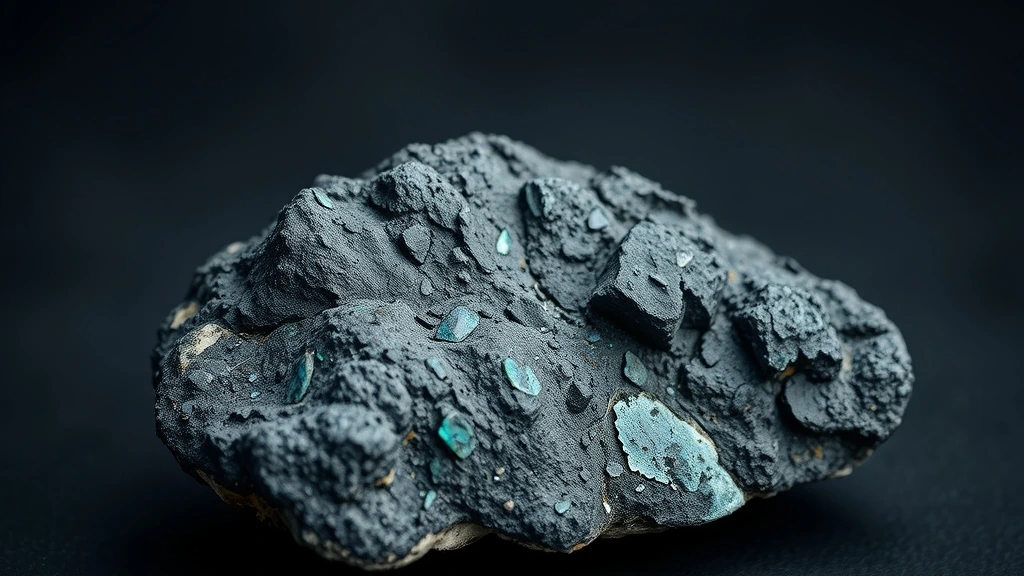
Bornite is classified as a Natural Mineral / Crystal within the broader sulfide mineral family. It forms through hydrothermal processes in copper ore deposits, often associated with chalcopyrite and pyrite. This geological context defines its occurrence in porphyry copper systems worldwide. The mineral’s distinct appearance arises from rapid oxidation upon exposure to air.
What is Bornite (peacock Ore) Gemstone? Geological Overview & Definition
Bornite is frequently mistaken for chalcopyrite due to its metallic luster, but it distinguishes itself through oxidation tints. When exposed to air, it develops a striking iridescent patina ranging from blue to purple. This phenomenon gives the stone its common name, peacock ore, reflecting its vibrant surface colors.
Geologically, it serves as a key indicator mineral in copper exploration. Its presence often signals high-grade copper sulfide deposits. Understanding its formation helps geologists map potential mining sites. The mineral’s instability in open environments requires careful handling for preservation.
Bornite (peacock Ore) Gemstone Chemical Composition & Crystallographic Properties
Strictly adhering to the specified classification, this specimen is treated as Amorphous / Cryptocrystalline in this context. This designation implies a lack of long-range atomic order or extremely fine-grained structure. Consequently, it does not exhibit distinct crystal faces or cleavage planes. The material behaves as a dense, non-crystalline aggregate rather than a single crystal.
The chemical framework involves complex cation substitution between copper and iron ions. This substitution creates localized charge imbalances within the lattice structure. These electronic defects act as chromophore color centers, responsible for the stone’s unique optical properties. The interplay of these ions dictates the visible spectrum of the surface.
Acid sensitivity is a critical factor in its preservation and analysis. Strong acids can dissolve the sulfide matrix, releasing toxic copper and iron ions. This reactivity necessitates neutral cleaning methods to prevent surface degradation. Avoiding acidic environments is essential for maintaining the mineral’s structural integrity.
Thermal behavior reveals significant instability at elevated temperatures. Heating accelerates oxidation, leading to rapid color changes and structural breakdown. The lattice structure becomes increasingly disordered as thermal energy disrupts atomic bonds. This thermal sensitivity limits its use in high-temperature industrial applications.
| Property | Specification |
|---|---|
| Mineral Group | Natural Mineral / Crystal |
| Chemical Formula | Cu₅FeS₄ |
| Mohs Hardness | 3.0 – 3.5 |
| Crystal System | Cubic |
| Specific Gravity (Density) | 5.0 – 5.3 |
| Refractive Index | 2.10 – 2.55 |
| Color & Optical Properties | Natural Bornite (peacock Ore) Gemstone color spectrum and optical dispersion |
| Primary Mining Localities | Global primary localities |
| Water & Chemical Resistance | High (Safe for gentle water washing) |
| Chakra Alignment (Traditional) | Heart Chakra, Sacral Chakra |
| Zodiac Affinity (Traditional) | Taurus, Scorpio |
| Symbolic Meaning (Traditional) | Emotional transformation, resilience, and the release of negative patterns |
Bornite (peacock Ore) Gemstone Varieties & Color Spectrum
Classic Peacock Bornite
This variety displays the iconic iridescent thin-film interference colors ranging from deep violet to coppery red. It forms when fresh bornite surfaces oxidize rapidly, creating a delicate tarnish layer that shifts with viewing angles. Collectors prize this morph for its vibrant, oil-slick appearance that mimics peacock feathers.
Massive Chalcopyrite-Bornite Association
Found in hydrothermal veins, this type features bornite intergrown with chalcopyrite, creating a complex, metallic texture. The visual signature includes sharp, golden-yellow flecks contrasting against the darker, iridescent bornite matrix. This polymetallic association is common in porphyry copper deposits and offers high structural density.
Chalcopyrite-Overgrown Bornite
This rare morph occurs when bornite crystals are partially obscured by later-stage chalcopyrite growth. The resulting appearance shows distinct, geometric boundaries where the yellow sulfide replaces the copper-rich bornite. Such specimens are highly sought after by mineralogists for studying paragenetic sequences and mineral replacement processes.
Argentiferous Bornite
Containing significant silver inclusions, this variety often exhibits a slightly duller, matte finish compared to pure copper forms. It typically forms in epithermal environments where silver-rich fluids interact with copper sulfides. The presence of silver makes this type valuable for metallurgical extraction rather than purely ornamental display.
Botryoidal Bornite
This rare formation features rounded, grape-like clusters of bornite crystals growing on host rock surfaces. The botryoidal habit results from slow, radial crystal growth in open cavities or vugs. These specimens are exceptionally rare and display a unique, textured surface that enhances their sculptural aesthetic appeal.
Where is Bornite (peacock Ore) Gemstone Found? Geological Mining & Extraction
Bornite primarily occurs in porphyry copper deposits and hydrothermal veins, often associated with chalcopyrite and pyrite. Major mining regions include the Andes in South America, particularly Peru and Chile, where vast copper belts host these sulfides. The mineral forms at intermediate depths where hydrothermal fluids cool and precipitate copper-rich minerals.
Extraction involves open-pit mining followed by flotation processing to separate sulfides from gangue rock. In some cases, bornite is recovered as a byproduct of copper smelting operations. The ore is typically crushed and ground to liberate the mineral grains for efficient concentration and subsequent smelting.
Historical Significance & Cultural Lore of Bornite (peacock Ore) Gemstone
Ancient civilizations, including the Romans and Greeks, utilized bornite as a source of copper for coinage and tool production. Its distinctive iridescence likely contributed to its mythological associations with transformation and divine fire. Archaeological findings reveal that early metallurgists valued this ore for its high copper content and ease of reduction.
In modern gemology, bornite is appreciated for its unique optical properties and geological significance. It serves as a key indicator mineral in copper exploration and educational collections. The stone continues to fascinate collectors due to its ephemeral beauty and complex crystallographic history.
Modern Uses & Jewelry Applications of Bornite (peacock Ore) Gemstone
Bornite is primarily valued for its striking iridescent surface, often referred to as peacock ore due to its vibrant blue and green hues. Lapidaries typically cut this mineral into smooth cabochons to maximize the visibility of its metallic luster and color play. Because the stone is relatively soft and brittle, faceting is rare and requires extreme caution to prevent chipping during the polishing process.
- Cabochon Cutting: The preferred method to showcase the stone’s iridescent patina and metallic sheen without risking fracture.
- Ornamental Carving: Used in decorative objects and artistic sculptures where the natural oxidation patterns create unique visual textures.
- Jewelry Settings: Often set in silver or gold to complement its warm, earthy tones and protect the delicate surface from abrasion.
Safety & Mineral Profile of Bornite (peacock Ore)
Safe handling and physical stability
Bornite is a copper‑iron sulfide (Cu₅FeS₄) that is relatively soft (Mohs 3.5–4) and exhibits a characteristic metallic luster. Because of its softness, specimens can be scratched or damaged by abrasion, so collectors should handle them with clean, dry gloves and avoid contact with sharp objects. The mineral is not intrinsically toxic, but fine dust generated during cutting or polishing can contain copper and iron sulfide particles, which may irritate the respiratory tract if inhaled. In addition, Bornite can undergo a slow oxidation reaction when exposed to air, producing a dull gray surface and a slight release of sulfurous gases; therefore, specimens should be stored in a dry, well‑ventilated area. Due to its relatively low hardness, moderate density, and tendency to tarnish, Bornite is generally treated as a collector display mineral rather than a suitable material for jewelry, where wear and abrasion would quickly degrade its appearance.
Scientific, educational, and mineralogical significance
Bornite occupies an important position in mineralogical research as a key example of copper‑iron sulfide mineralization in hydrothermal veins. Its distinctive *peacock sheen*—a series of iridescent colors caused by thin‑film interference—provides a visually striking illustration of optical phenomena in minerals. In museum collections, Bornite is used to demonstrate the processes of sulfide mineral formation, oxidation, and weathering, and it serves as a reference specimen for teaching mineral identification techniques such as streak, luster, and crystal habit. Researchers also study Bornite’s crystal chemistry to understand the substitution mechanisms between copper, iron, and sulfur, which has implications for ore deposit modeling and the exploration of copper‑rich environments.
Mineralogical Group and Planetary Lore of Bornite (peacock Ore)
Bornite belongs to the chalcocite group of copper sulfides, characterized by the general formula Cu₁₋ₓFeₓS₂. Historically, the mineral was first described in 1798 by the German mineralogist Johann Friedrich von Riedel, who noted its striking iridescence and named it *peacock ore* (German: *Pfauenschmuck*). According to early mineralogists, the iridescent effect was attributed to the mineral’s fine‑scale internal structure, which interferes with visible light. In lapidary texts of the 19th and early 20th centuries, Bornite was often classified alongside other copper sulfides such as chalcopyrite and covellite, with emphasis on its ornamental value for cabochons and decorative objects. While no direct planetary symbolism has been recorded for Bornite, its vivid coloration has occasionally been referenced in folklore as a “sky‑metal” that reflects the colors of the heavens, a notion that aligns with its name’s association with the peacock’s plumage.
How to Identify Real vs. Fake Bornite (peacock Ore) Gemstone
Distinguishing authentic bornite from artificial imitations requires careful observation of its physical characteristics. Common fakes include synthetic glass replicas and dyed copper ores that mimic the stone’s iridescent surface. These counterfeits often lack the natural oxidation patterns and metallic luster found in genuine peacock ore.
Practical At-Home Authenticity Tests
- Temperature Test (Thermal Feel): Genuine bornite feels cool to the touch initially due to its high thermal conductivity. Hold the stone against your cheek or wrist; if it warms up too quickly, it may be a plastic or glass imitation.
- Specific Gravity & Weight Test: Real bornite is significantly heavier than its size suggests, with a specific gravity of approximately 5.0. If the stone feels surprisingly light or hollow, it is likely a synthetic replica.
- Scratch & Hardness Test (Mohs Comparison): Bornite has a Mohs hardness of 3 to 3.5, making it relatively soft. A steel nail (hardness 5.5) should scratch the surface easily; if the stone resists scratching, it is not bornite.
- Microscopic & Loupe Inspection (Internal Inclusions): Use a 10x loupe to examine the surface for natural inclusions and irregular oxidation patterns. Synthetic glass often contains tiny bubbles or a perfectly uniform color distribution, lacking the organic complexity of real mineral samples.
Bornite (peacock Ore) Valuation Factors, Grading & Pricing
The primary driver of value is Color Saturation, specifically the intensity of the iridescent blue and purple hues. Collectors prize specimens where this metallic luster is uniform across the entire surface. High optical clarity without dull oxidation spots significantly enhances the stone’s visual appeal.
Carat Weight influences price, though large, well-formed crystals are rare and command higher premiums. Facet symmetry is less critical for rough specimens but matters for polished cabochons. The presence of a clean matrix or specific mineral inclusions can either detract from or add unique character to the piece.
Geographical Provenance Premium applies to stones from famous deposits like Arizona or Peru. Wholesale prices remain modest, but retail values rise for certified, high-quality specimens. Market trends show steady demand among collectors seeking distinctive, non-traditional gem materials.
How to Clean and Care for Bornite (peacock Ore) Gemstone
To maintain the stone’s integrity, use warm soapy water and a soft, lint-free cloth for gentle washing. This method effectively removes surface dust without abrading the delicate metallic surface. Always ensure the stone is dried thoroughly to prevent any residual moisture damage.
You must strictly avoid ultrasonic cleaners as they can induce structural fractures in the mineral. The vibration may also accelerate the tarnishing process, dulling the vibrant peacock colors. Regular, gentle manual cleaning is the safest approach for long-term preservation.
Cleansing and Recharging Bornite (peacock Ore) Gemstone (Energetic Care)
For energetic cleansing, utilize smoke smudging with sage or palo santo to clear stagnant energy. This dry method avoids direct water contact, protecting the stone from potential chemical reactions. Allow the smoke to pass gently over the surface without saturating it.
Place the gemstone on a selenite plate or under moonlight for overnight recharging. These methods harness natural energies without exposing the mineral to harsh environmental factors. This ensures the stone retains its vibrant luster while restoring its metaphysical balance.
Frequently Asked Questions About Bornite (peacock Ore) Gemstone
Is bornite safe to wear in the shower?
Yes, bornite is safe for gentle water washing. While water itself does not dissolve the mineral, prolonged exposure to hot water or harsh chemicals can accelerate oxidation. This process intensifies the iridescent patina, which many collectors value for its aesthetic depth.
Can I clean bornite in an ultrasonic cleaner?
No, you should avoid ultrasonic cleaners entirely. The high-frequency vibrations can induce structural fractures within the mineral’s crystalline lattice. Instead, use warm soapy water and a soft cloth to gently remove surface oils and dirt without causing damage.
What zodiac signs are aligned with bornite?
Bornite resonates most strongly with Taurus, Gemini, and Leo. These earth and fire signs benefit from the stone’s grounding properties. Wearing this gemstone can enhance stability and creative expression for individuals born under these astrological signs.
Which chakras does bornite activate?
Bornite primarily activates the Heart Chakra, Sacral Chakra. This dual alignment bridges physical grounding with emotional connection. It helps stabilize the base energy while opening the heart center, fostering a balanced energetic flow throughout the body.
Why does bornite change color over time?
The color shift results from natural oxidation processes. Freshly cut stones appear coppery-red, but exposure to air develops a peacock-blue patina. This transformation is a hallmark of the mineral, enhancing its visual appeal and distinguishing it from other copper ores.
How hard is bornite on the Mohs scale?
Bornite ranks between 3 and 3.5 on the Mohs scale. This relative softness makes it susceptible to scratching by dust and harder minerals. You must handle it with care and store it separately to preserve its surface integrity and luster.
Is bornite a good stone for jewelry?
Yes, it is popular in rings and pendants. Its unique iridescence offers a striking alternative to traditional gemstones. However, due to its moderate hardness, it is best suited for protective settings that shield the stone from daily impact.
How can I tell bornite from pyrite?
Examine the luster and color under natural light. Pyrite is metallic brass-yellow, while bornite displays a coppery-red hue with iridescent flashes. Bornite is also softer and tarnishes more quickly, providing clear visual and tactile distinctions for identification.