
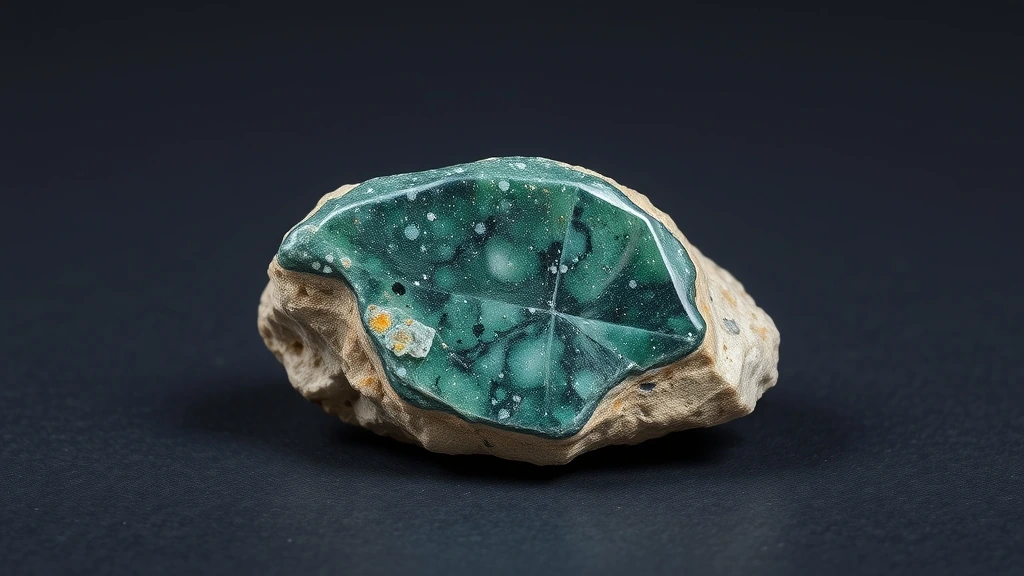
Covellite belongs to the Natural Mineral / Crystal group, representing a distinct sulfide species within the broader geological framework. This mineral forms through hydrothermal processes, often associated with copper-rich ore deposits. Its unique crystalline structure distinguishes it from other copper sulfides like chalcocite. Geologists classify it as a primary mineral phase, critical for understanding sulfide paragenesis.
What is Covellite Gemstone? Geological Overview & Definition
Covellite is defined as a hexagonal copper sulfide mineral, typically found in veins or disseminated within sedimentary and metamorphic rocks. It frequently co-occurs with chalcocite and bornite, indicating specific redox conditions during formation. The mineral’s vivid coloration serves as a visual indicator of high copper concentration. Understanding its paragenesis helps geologists map potential copper resource deposits.
As a gemstone, covellite is prized for its deep indigo to purple appearance, though it is rare in large, clean crystals. Its extreme softness limits its use in durable jewelry, favoring pendants or cabochons instead. The stone’s rarity stems from its limited global occurrence and tendency to alter upon exposure. Proper identification requires distinguishing it from synthetic dyes or similar sulfides.
Covellite Gemstone Chemical Composition & Crystallographic Properties
Covellite crystallizes in the Hexagonal crystal system, featuring a complex layered lattice structure. The unit cell consists of alternating sheets of copper and sulfur atoms. This arrangement creates distinct cleavage planes parallel to the basal face. The lattice parameters define its specific geometric symmetry and physical properties.
The chemical formula is strictly $CuS$, representing a 1:1 stoichiometric ratio of copper to sulfur. Unlike some sulfides, covellite exhibits limited cation substitution, maintaining its pure copper identity. This purity contributes to its consistent optical behavior and color stability. Deviations in composition usually indicate the presence of impurities or alteration.
Optically, covellite is anisotropic, displaying a high refractive index range from $n_\omega = 1.450$ to $n_\epsilon = 2.620$. This significant birefringence results from its layered electronic structure. The chromophore responsible for its color involves charge transfer within the copper-sulfur bonds. These electronic transitions absorb specific wavelengths, leaving the violet-blue spectrum visible.
Thermally, covellite is sensitive to heat and light, which can cause tarnishing or color fading. Prolonged exposure to air leads to oxidation, forming a dark patina on the surface. Acid sensitivity is moderate, as strong acids can dissolve the sulfide matrix. Careful handling is essential to preserve its aesthetic and structural integrity.
| Property | Specification |
|---|---|
| Mineral Group | Natural Mineral / Crystal |
| Chemical Formula | CuS (copper monosulfide) |
| Mohs Hardness | 1.5–2 |
| Crystal System | Hexagonal crystal system |
| Specific Gravity (Density) | 4.6–4.8 |
| Refractive Index | n ω = 1.450 n ε = 2.620 |
| Color & Optical Properties | Natural Covellite Gemstone color spectrum and optical dispersion |
| Primary Mining Localities | Global primary localities |
| Water & Chemical Resistance | High (Safe for gentle water washing) |
| Chakra Alignment (Traditional) | Throat Chakra, Third Eye Chakra |
| Zodiac Affinity (Traditional) | Aquarius, Pisces |
| Symbolic Meaning (Traditional) | Spiritual communication, intuition, and mental clarity |
Covellite Gemstone Varieties & Color Spectrum
Covellite exhibits a striking range of blue hues, driven by subtle variations in crystal structure and impurities. The most prized specimens display a deep, velvety blue that resembles lapis lazuli but lacks pyrite flecks. This intense coloration results from the specific arrangement of copper sulfide layers within the hexagonal lattice.
Deep Royal Blue Covellite
This variety features a saturated, uniform blue tone with exceptional luster and minimal inclusions. It typically forms in high-purity hydrothermal veins where oxidation is strictly controlled. Gem cutters value this morph for its ability to retain color depth under low light conditions.
Turquoise-Blue Covellite
Lighter, sky-blue specimens often contain trace amounts of chalcopyrite or other sulfides that alter the optical path. These stones appear brighter and more translucent than their darker counterparts. They are frequently found in younger, shallower mineral deposits with higher water content during formation.
Iridescent Covellite
Some crystals exhibit a shimmering, opalescent surface due to microscopic lamellar cleavage planes reflecting light. This play-of-color effect is rare and highly sought after by collectors for its dynamic visual appeal. The iridescence intensifies when the stone is viewed from different angles or under raking light.
Black Covellite
Oxidized or heavily included specimens appear nearly black, masking the underlying blue hue. These stones often contain significant amounts of pyrite or carbonaceous matter within the matrix. While less valuable as gemstones, they serve as important geological indicators of sulfide-rich environments.
Lapis Lazuli Mimic
Certain coarse-grained covellite aggregates closely resemble lapis lazuli in color and texture, leading to market confusion. Distinguishing them requires checking for the presence of calcite or pyrite, which covellite lacks. This variety is common in trade but is easily identified by its lower hardness and specific gravity.
Where is Covellite Gemstone Found? Geological Mining & Extraction
Covellite primarily occurs in hydrothermal veins and skarn deposits associated with copper-silver mineralization. It rarely forms in pegmatites, preferring instead the cooler, sulfur-rich fluids that permeate fractured host rocks. The mineral is often found alongside chalcopyrite, bornite, and pyrite in complex sulfide assemblages.
Major mining regions include the Andes of Peru and Argentina, where high-altitude deposits yield vibrant blue specimens. Smaller occurrences exist in the United States, particularly in Arizona and Nevada, though these are often too fractured for gem use. Extraction requires careful hand-picking to preserve the fragile hexagonal crystals from the surrounding matrix.
Historical Significance & Cultural Lore of Covellite Gemstone
Ancient civilizations occasionally confused covellite with lapis lazuli, using it in ceremonial jewelry and religious artifacts. Its deep blue color symbolized the sky and divine wisdom in various Mesoamerican and Andean cultures. Archaeological finds reveal small, polished beads used in burial rites to guide the spirit of the deceased.
Modern gemology has clarified its distinct identity, separating it from other blue sulfides. Despite its fragility, it remains a prized collector’s stone for its unique optical properties and geological rarity. Covellite continues to fascinate mineralogists and enthusiasts alike, bridging the gap between scientific study and aesthetic appreciation.
Modern Uses & Jewelry Applications of Covellite Gemstone
Due to its extreme softness, covellite is rarely faceted for traditional jewelry but is prized for cabochon cuts and ornamental carvings. Its intense indigo-blue color makes it a striking alternative to lapis lazuli or sodalite in decorative arts. Lapidaries must handle the stone with extreme care to prevent chipping during polishing.
- Cabochon Setting: The most common cut, showcasing the stone’s deep color without risking fracture.
- Ornamental Carvings: Used in small sculptures, beads, and inlays for decorative boxes.
- Collector’s Specimens: Often displayed as raw crystals or polished slabs due to its fragility.
- Avoid Faceting: Faceting is generally discouraged because the Mohs hardness of 1.5–2 is too low for durable gemstones.
Safety & Mineral Profile of Covellite
Safe handling and physical stability
Covellite is a copper sulfide mineral that is relatively soft (Mohs hardness 3.5–4) and can be scratched or damaged by abrasive contact. The mineral is stable under normal atmospheric conditions but can release fine dust particles that contain copper and sulfur. Inhalation of dust from disturbed covellite specimens may pose respiratory irritation; therefore, collectors should handle the mineral with gloves and, when cleaning or cutting, use a dust mask and adequate ventilation. Covellite is not considered a safe material for jewelry because its softness and tendency to tarnish in humid environments make it unsuitable for prolonged wear, and the copper sulfide composition can leach copper ions over time. Consequently, covellite is typically displayed in museum cases or as a collector’s specimen rather than fashioned into wearable pieces.
Scientific, educational, and mineralogical significance
Covellite is an important mineral for understanding copper‑sulfur geochemistry and the formation of secondary sulfide deposits. Its distinctive deep‑blue to black coloration and characteristic metallic luster make it a valuable teaching tool for illustrating crystal habit, twinning, and the effects of oxidation on sulfide minerals. In research, covellite is studied for its electronic properties, including its potential use in thermoelectric materials and as a model system for low‑dimensional conductors. Museums feature covellite specimens to demonstrate the diversity of copper minerals and to provide context for the evolution of ore‑forming processes in hydrothermal and sedimentary environments.
Mineralogical Group and Planetary Lore of Covellite
Historically, covellite was first described in the early 19th century from deposits in the United States and Europe, and its name derives from the Greek word *kóvulos*, meaning “copper.” According to early mineralogists, covellite was classified within the sulfide group, specifically the copper sulfide subgroup, due to its chemical composition CuS and its crystal structure in the hexagonal system. In lapidary texts, covellite has been associated with the planet Mars because of its deep blue hue, which was thought to reflect the “blood” of the red planet. While modern mineralogists no longer attribute planetary symbolism to covellite, its historical classification and evocative color continue to capture the imagination of collectors and scholars alike.
How to Identify Real vs. Fake Covellite Gemstone
Artificial imitations of covellite often include dyed glass, synthetic plastics, or other blue minerals like sodalite. These fakes may mimic the color but lack the unique physical properties of natural copper monosulfide. Synthetic glass, in particular, is more durable and often contains visible bubbles or swirls.
Practical At-Home Authenticity Tests
- Temperature Test (Thermal Feel): Hold the stone in your palm for a minute. Real covellite feels cool to the touch initially, whereas plastic imitations warm up quickly.
- Specific Gravity & Weight Test: Covellite has a high density of 4.6–4.8. It should feel significantly heavier than its size suggests compared to glass or plastic.
- Scratch & Hardness Test (Mohs Comparison): With a Mohs hardness of 1.5–2, covellite is extremely soft. A fingernail (hardness 2.5) may scratch it, while glass (hardness 5.5) will easily scratch covellite.
- Microscopic & Loupe Inspection (Internal Inclusions): Use a 10x loupe to examine the stone. Real covellite may show natural crystal structure or inclusions, while glass often contains tiny air bubbles.
Covellite Gemstone Valuation Factors, Grading & Pricing
The primary driver of value is Color Saturation, where deep, uniform indigo-blue hues command the highest premiums. Tone consistency across the entire stone is critical, as any brownish or grayish zoning significantly diminishes market appeal. Additionally, high optical clarity combined with a distinct metallic luster enhances the gem’s visual impact.
Carat Weight influences pricing, though large specimens are rare due to the mineral’s extreme brittleness. Facet symmetry is challenging to achieve, so well-proportioned cuts that maximize brilliance without risking breakage are highly sought after. The presence of matrix or inclusions can either detract from value or add unique character, depending on the buyer’s preference.
Geographical Provenance Premium often elevates prices, with stones from historic mines like the Berezovsky region in Russia fetching higher bids. Wholesale values remain modest compared to major gemstones, but retail prices surge for exceptional, certified specimens. Market trends show steady demand among collectors who prize its unique optical properties and rarity.
How to Clean and Care for Covellite Gemstone
Due to its low Mohs Hardness of 1.5–2, covellite requires exceptionally gentle handling to prevent surface abrasion. Use warm soapy water and a soft cloth to gently wipe the stone, ensuring all dirt is removed without applying pressure. This method safely maintains the gem’s luster without risking structural damage.
Avoid ultrasonic cleaners entirely, as the vibrations can cause immediate fractures in this fragile mineral. Never use steam cleaners or harsh chemical solvents, which may degrade the surface or alter the color. Store the gemstone separately in a soft pouch to protect it from harder minerals that could scratch it.
Cleansing and Recharging Covellite Gemstone (Energetic Care)
For energetic maintenance, use smoke smudging with sage or palo santo to clear negative energies without exposing the stone to moisture. This dry method respects the mineral’s physical limitations while aligning with its esoteric associations with spiritual communication.
Place the gemstone on a selenite plate under moonlight overnight to recharge its vibrational frequency. This gentle, dry approach avoids any risk of water damage or structural stress, ensuring the stone remains pristine for both aesthetic and metaphysical use.
Frequently Asked Questions About Covellite Gemstone
What is the chemical composition of covellite?
Covellite is a copper monosulfide mineral with the formula CuS. This unique composition gives it its intense blue color. It belongs to the hexagonal crystal system. Understanding its chemical structure helps identify it from lookalikes.
How hard is covellite on the Mohs scale?
Covellite rates between 1.5 and 2 on the Mohs scale. This makes it extremely soft and fragile. It scratches easily against common materials like glass. You must handle it with extreme care to prevent damage.
Can I wear covellite jewelry in the shower?
Yes, gentle water washing is safe for this gemstone. However, avoid harsh soaps or high-pressure jets. The stone tolerates mild moisture well. Always dry it thoroughly with a soft cloth after exposure to water.
Is covellite safe for ultrasonic cleaning?
No, you must avoid ultrasonic cleaners for covellite. The vibrations can cause structural fractures due to its low hardness. Instead, use warm soapy water and a soft cloth. This gentle method preserves the stone’s integrity and luster.
Which zodiac signs are compatible with covellite?
Aquarius and Pisces are the aligned zodiac signs. These water and air signs resonate with the stone’s energies. It supports their natural intuition and emotional depth. Wearing it may enhance their specific astrological traits significantly.
Which chakras does covellite activate?
It primarily activates the Throat Chakra and Third Eye Chakra. These energy centers govern communication and intuition. The stone aids in mental clarity and spiritual communication. It helps align these specific chakras for balanced energy flow.
What is the specific gravity of covellite?
Covellite has a density ranging from 4.6 to 4.8. This high specific gravity indicates a dense mineral structure. It feels heavier than most common gemstones. This property assists gemologists in distinguishing it from lighter blue stones.
How should I store covellite safely?
Store it separately in a soft pouch or box. Its low hardness makes it prone to scratching. Keep it away from harder gemstones like quartz or sapphire. Proper storage prevents physical damage and maintains its vibrant blue appearance.