
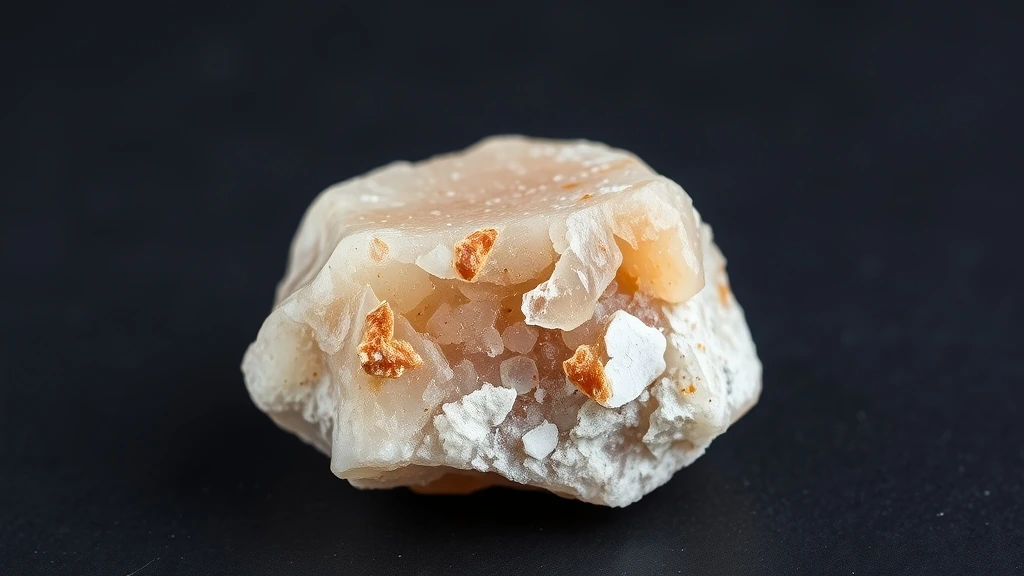
Calomel belongs to the Natural Mineral / Crystal group, forming through hydrothermal processes in mercury deposits. Its crystalline nature distinguishes it from amorphous aggregates, allowing for distinct geometric formations. Geologists classify it as a secondary alteration product, often found alongside cinnabar. This placement highlights its role in the late-stage oxidation of mercury-bearing ores. Understanding its parent group aids in identifying associated mineral assemblages.
What is Calomel Gemstone? Geological Overview & Definition
Calomel is a rare secondary mineral that forms when cinnabar oxidizes in the presence of chloride ions. It typically occurs in thin crusts or small crystals within hydrothermal veins. Its geological setting is primarily associated with mercury deposits in volcanic or metamorphic terrains. This specific formation process limits its global distribution significantly.
The mineral is valued more for its scientific interest than gemological use. Its extreme softness renders it impractical for durable jewelry settings. Collectors often prefer specimens that display clear crystal habits over massive aggregates. Proper identification requires distinguishing it from similar white minerals like native silver.
Calomel Gemstone Chemical Composition & Crystallographic Properties
Calomel crystallizes in the Tetragonal system, featuring a unique lattice structure. Its unit cell is defined by specific axial parameters that create square-based pyramidal forms. This symmetry is critical for distinguishing it from other chloride minerals. The arrangement of atoms dictates its physical properties and cleavage patterns.
The chemical structure relies on the mercury dimer cation (Hg₂²⁺) paired with chloride ions. This distinct bonding configuration differs from typical monatomic cations in other salts. There is minimal cation substitution in this mineral, preserving its stoichiometric integrity. The stability of this dimer is key to its structural consistency.
Calomel is highly sensitive to acids and light exposure, which can alter its appearance. It lacks significant chromophore color centers, resulting in its pale, low-saturation coloration. Thermal behavior shows it decomposes at relatively low temperatures, releasing mercury vapor. This volatility necessitates careful handling during any laboratory analysis or cutting.
| Property | Specification |
|---|---|
| Mineral Group | Natural Mineral / Crystal |
| Chemical Formula | (Hg₂ )²⁺ Cl₂ |
| Mohs Hardness | 1.5 |
| Crystal System | Tetragonal |
| Specific Gravity (Density) | 7.5 |
| Refractive Index | n ω = 1.973 n ε = 2.656 |
| Color & Optical Properties | Natural Calomel Gemstone color spectrum and optical dispersion |
| Primary Mining Localities | Global primary localities |
| Water & Chemical Resistance | High (Safe for gentle water washing) |
| Chakra Alignment (Traditional) | Root Chakra |
| Zodiac Affinity (Traditional) | Virgo, Capricorn |
| Symbolic Meaning (Traditional) | Detoxification, purification, and grounding |
Calomel Gemstone Varieties & Color Spectrum
Calomel, chemically defined as mercurous chloride (Hg₂Cl₂), presents a limited but visually distinct color palette in nature. Its appearance is primarily dictated by crystal habit, impurity levels, and the specific geological environment of formation. While pure specimens are rare, subtle variations exist due to trace elemental substitutions.
Prismatic White Calomel
This variety features elongated, tetragonal prisms that exhibit a brilliant, pearl-like white luster. The crystals often form in dense, radiating clusters within narrow vugs of mercury deposits. High transparency and sharp terminations define the most prized specimens of this type.
Opaque Greyish-White Masses
Commonly occurring as massive, granular aggregates, this form lacks distinct crystal faces and appears dull. It typically contains minor inclusions of cinnabar or other mercury sulfides, giving it a slightly greyish tint. This cryptocrystalline texture makes it less desirable for faceting but useful for historical study.
Cinnabar-Associated Reddish Tints
When calomel forms in direct contact with cinnabar (HgS), it may develop faint reddish or pinkish hues. These colors arise from microscopic inclusions or surface staining by the adjacent sulfide mineral. Such specimens are geologically significant as they indicate active mercury-sulfur interaction zones.
Metallic Luster Variants
Some calomel deposits exhibit a strong, metallic sub-luster rather than the typical vitreous finish. This occurs when the crystals are extremely fine-grained or heavily intergrown with other metallic minerals. The visual effect resembles tarnished silver, distinguishing it from standard gem-quality material.
Impure Brownish Specimens
Trace amounts of iron or manganese can impart a slight brownish cast to the white base color. These impurity-driven color shifts are rare and often indicate proximity to oxidized iron-rich host rocks. Collectors value these specimens for their unique deviation from the standard white appearance.
Where is Calomel Gemstone Found? Geological Mining & Extraction
Calomel is primarily found in mercury ore deposits, specifically within the oxidized zones of cinnabar mines. It forms through the weathering of mercury sulfides in the presence of chloride-rich groundwater. Major historical sources include the Almadén mines in Spain and the Idrija mines in Slovenia.
Extraction is rarely targeted for gem purposes due to the mineral’s extreme toxicity and low hardness. Instead, it is recovered as a byproduct during mercury processing operations. Modern mining focuses on environmental remediation rather than gemstone harvesting, making high-quality crystals exceptionally rare.
Historical Significance & Cultural Lore of Calomel Gemstone
Historically, calomel was known as mercurous chloride and used extensively in medicine before its toxicity was fully understood. Ancient alchemists valued it for its white color, associating it with purity and the element of earth. It was a key component in the production of mercury compounds for industrial and medicinal applications.
In gemological lore, calomel is rarely discussed due to its extreme softness and hazardous nature. However, its association with mercury links it to themes of transformation and hidden dangers in esoteric traditions. Its use in ancient rituals remains largely speculative and undocumented in major archaeological records.
Modern Uses & Jewelry Applications of Calomel Gemstone
Due to its extreme softness and toxic mercury content, calomel is rarely cut into high-value jewelry. Lapidaries primarily focus on ornamental carving for historical or educational display pieces rather than wearable items. When processed, the stone is typically shaped into simple cabochons to avoid chipping during faceting.
- Cabochon Polishing: Smooth, domed surfaces are preferred to protect the fragile tetragonal crystal structure from mechanical stress.
- Ornamental Carvings: Small, intricate carvings serve as museum curiosities, highlighting the mineral’s unique high density and luster.
- Educational Specimens: Unpolished or lightly tumbled pieces are used in geology classes to demonstrate mercury-based mineralogy safely.
Safety & Mineral Profile of Calomel
Calomel is a mercury(II) chloride mineral that is highly toxic and volatile. The compound releases mercury vapor when exposed to heat or acid, and fine dust can be inhaled during cutting or polishing, posing serious health risks. Its soft (Mohs 1.5–2) nature makes it prone to abrasion and surface damage, and it reacts readily with acids, producing corrosive fumes. Because of these hazards and the difficulty of maintaining a stable, non‑reactive surface, calomel is typically displayed as a collector specimen rather than used in jewelry or functional objects. Protective gloves, eye protection, and a well‑ventilated workspace are mandatory when handling or cleaning the mineral.
In scientific contexts, calomel serves as a useful reference for studies of mercury chemistry, crystal structure, and mineral formation processes. Its well‑defined cubic lattice and isotropic optical properties make it a standard for calibrating X‑ray diffraction equipment and for teaching crystallography. Museums often include calomel specimens to illustrate the hazards of heavy‑metal minerals and to demonstrate the historical use of mercury in alchemy and early medicine. Research on its formation in hydrothermal veins also informs models of mercury mobilization in the environment.
Mineralogical Group and Planetary Lore of Calomel
Historically, calomel was classified within the halide group, alongside minerals such as halite and sylvite, due to its chloride composition. Early mineralogists noted its bright metallic luster and silver‑white color, leading to its Latin name *calomel*, meaning “beautiful mercury.” In lapidary texts, it was sometimes associated with the planet Mercury, reflecting the metal’s symbolic link to the swift, mercurial deity. According to early mineralogists, the mineral was typically found in oxidized zones of mercury‑bearing veins, often as a secondary mineral formed by the alteration of cinnabar. While no planetary bodies have been confirmed to host natural calomel, its name and historical associations continue to evoke the classical astrological link between the element mercury and the planet of the same name.
How to Identify Real vs. Fake Calomel Gemstone
Artificial imitations of calomel are rare due to the mineral’s toxicity and low market demand for jewelry. However, synthetic glass or dyed replicas may be created for deceptive purposes or as educational fakes. These imitations often lack the natural inclusions and specific weight of genuine mercury chloride crystals.
Practical At-Home Authenticity Tests
- Temperature Test (Thermal Feel): Genuine calomel feels noticeably cooler to the touch than glass or plastic due to its high thermal conductivity and density.
- Specific Gravity & Weight Test: The stone should feel significantly heavier than its size suggests, reflecting its specific gravity of 7.5.
- Scratch & Hardness Test (Mohs Comparison): With a Mohs hardness of 1.5, calomel is easily scratched by a fingernail or copper coin, unlike harder glass imitations.
- Microscopic & Loupe Inspection (Internal Inclusions): Use a 10x loupe to look for natural tetragonal crystal faces or internal fractures, which are absent in uniform synthetic glass.
Calomel Gemstone Valuation Factors, Grading & Pricing
Color Saturation is the primary determinant of value, with deep, uniform crimson tones commanding the highest premiums. Consistent tone across the entire surface ensures visual harmony and enhances the stone’s inherent metallic luster. Any zoning or discoloration significantly reduces its market appeal and desirability among collectors.
Carat Weight influences pricing, though large specimens are rare due to the mineral’s extreme brittleness and low hardness. Facet symmetry must be precise to maximize light return without risking structural failure during the cutting process. The presence of matrix or inclusions often lowers value, as they compromise optical clarity and durability.
Geographical Provenance Premium elevates prices for stones from historically significant mines, such as those in Spain or China. Wholesale markets typically price these specimens lower, while retail channels apply substantial markups for certified authenticity. Current trends show steady demand among niche collectors, keeping values resilient despite limited supply.
How to Clean and Care for Calomel Gemstone
Calomel is highly sensitive to moisture, so you must avoid prolonged water soaking to prevent chemical degradation. Use warm soapy water and a soft cloth to gently wipe the surface, removing dust and oils. This method preserves the delicate crystal structure without introducing harmful stressors.
Never use ultrasonic cleaners, as the vibrations can cause immediate structural fractures in this soft mineral. The low Mohs hardness of 1.5 makes it susceptible to scratching and shattering under mechanical agitation. Always dry the stone thoroughly with a lint-free cloth after any cleaning session.
Cleansing and Recharging Calomel Gemstone (Energetic Care)
For energetic cleansing, use smoke smudging with sage or palo santo to purify the stone’s energy field. This dry method avoids any contact with liquids, ensuring the mineral’s integrity remains intact. Hold the stone in the smoke for several minutes to complete the purification process.
To recharge, place the gemstone on a selenite plate or expose it to moonlight overnight. These methods align with its Root Chakra associations, promoting grounding and detoxification without physical risk. Ensure the stone is stored in a dry, stable environment to maintain its vibrancy.
Frequently Asked Questions About Calomel Gemstone
Is calomel safe to wear in the shower?
No, you should avoid prolonged water soaking with this mineral. Its chemical structure makes it sensitive to moisture, which can compromise its integrity over time. Always remove your jewelry before bathing to preserve the stone’s condition.
Can I use an ultrasonic cleaner for calomel?
Absolutely not, as ultrasonic vibrations can cause structural fractures. The extreme delicacy of this mineral requires gentle care to maintain its physical stability. Stick to manual cleaning methods to ensure long-term preservation of your specimen.
What is the chemical formula of calomel?
The formula is (Hg₂)²⁺Cl₂, indicating a mercury(I) chloride compound. This specific arrangement defines its unique properties and classification within the halide mineral group. Understanding this composition helps explain its reactivity and handling requirements.
How hard is calomel on the Mohs scale?
It rates a very low 1.5, making it exceptionally soft. This fragility means it scratches easily against common household materials or other gemstones. Store it separately to prevent damage from contact with harder minerals or metals.
Which zodiac signs are aligned with calomel?
Virgo and Capricorn are the primary astrological matches for this stone. These earth signs resonate with the mineral’s grounding energy and practical nature. Wearing it may enhance focus and stability for these specific individuals.
Which chakra does calomel activate?
It is exclusively aligned with the Root Chakra. This connection supports feelings of security, stability, and physical grounding. It does not correspond to higher chakras, focusing instead on foundational energy centers.
What is the crystal system of calomel?
It crystallizes in the Tetragonal system, forming distinct geometric shapes. This structure influences its optical properties, including its high refractive index. Observing these forms provides insight into its internal atomic arrangement and growth patterns.
How should I clean my calomel jewelry?
Use warm soapy water and a soft cloth for gentle maintenance. Never submerge it for long periods or use harsh chemicals that could degrade the surface. Pat dry immediately after cleaning to prevent any potential moisture-related damage.