
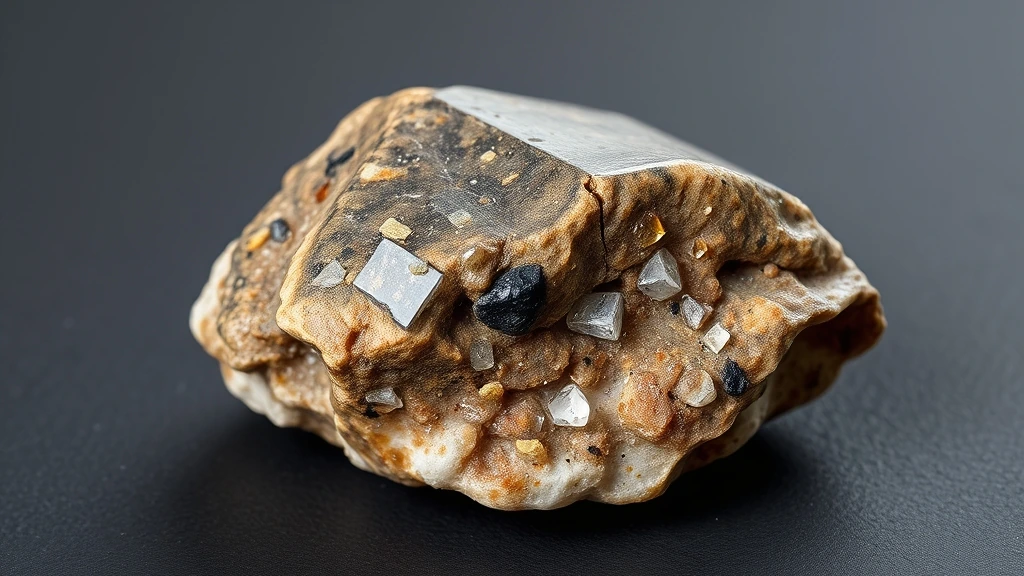
Jarosite belongs to the Natural Mineral / Crystal group, forming through the oxidation of iron-rich sulfide ores in acidic environments. It is not a metamorphic rock but a distinct crystalline phase often found in volcanic fumaroles. Its formation indicates specific geochemical conditions involving high acidity and oxidizing agents. This mineral serves as a critical indicator of past hydrothermal activity in geological surveys.
What is Jarosite Gemstone? Geological Overview & Definition
Jarosite is a secondary mineral that typically precipitates from acidic, iron-rich solutions. It commonly occurs in oxidation zones of sulfide deposits, where it replaces primary minerals like pyrite. This process is driven by the interaction of water, oxygen, and sulfuric acid.
As a gemstone, jarosite is rare due to its fragile nature and low durability. It is often found in botryoidal or crusty aggregates rather than large, faceted crystals. Collectors value its intense color and unique surface textures over traditional clarity. Its presence signals a specific geochemical environment rich in iron and sulfur.
Jarosite Gemstone Chemical Composition & Crystallographic Properties
The mineral crystallizes in the Trigonal crystal system, forming rhombohedral or scalenohedral habits. Its lattice structure is defined by the chemical formula KFe₃(SO₄)₂(OH)₆, which dictates its physical stability. The arrangement of ions creates a rigid but brittle framework. This structure contributes to its relatively low refractive index and distinct optical properties.
Cation substitution is limited, as the iron(III) cations are essential for the mineral’s identity. Significant replacement by other metals would form distinct species like aluminjarosite. The chromophore responsible for its yellow color is the Fe³⁺ ion. This electronic transition absorbs specific wavelengths of visible light, producing the characteristic hue.
Jarosite is highly sensitive to acidic environments, which can alter its surface structure. Thermal behavior shows that it begins to dehydrate at elevated temperatures. This loss of hydroxyl groups leads to structural instability. Consequently, heat treatment is strictly prohibited to preserve the mineral’s integrity.
| Property | Specification |
|---|---|
| Mineral Group | Natural Mineral / Crystal |
| Chemical Formula | KFe₃ (SO₄ )₂ (OH)₆ |
| Mohs Hardness | 2.5–3.5 |
| Crystal System | Trigonal |
| Specific Gravity (Density) | 2.9 to 3.3 |
| Refractive Index | n ω = 1.815 to 1.820; n ε = 1.713 to 1.715 |
| Color & Optical Properties | Natural Jarosite Gemstone color spectrum and optical dispersion |
| Primary Mining Localities | Global primary localities |
| Water & Chemical Resistance | High (Safe for gentle water washing) |
| Chakra Alignment (Traditional) | Root Chakra, Sacral Chakra |
| Zodiac Affinity (Traditional) | Capricorn, Virgo |
| Symbolic Meaning (Traditional) | Grounding, protection, and transformation |
Jarosite Gemstone Varieties & Color Spectrum
Jarosite presents a limited but distinct palette, primarily dominated by earthy tones that reflect its iron-rich composition. The most common form exhibits a deep, rusty ochre-yellow hue, often mistaken for limonite by casual observers. This coloration stems directly from the ferric iron content within its crystal lattice structure.
Classic Potassium Jarosite
This primary variety features a vibrant, golden-yellow appearance with a distinct sub-vitreous luster that catches light beautifully. It typically forms in oxidized zones of copper mines, where potassium-rich fluids interact with iron sulfides. Collectors prize specimens for their well-defined, trigonal crystal terminations and sharp geometric edges.
Iron-Rich Dark Jarosite
Darker morphs appear when the mineral incorporates higher concentrations of iron or traces of other heavy metals during formation. These specimens range from deep amber to nearly black, offering a more somber and mysterious aesthetic. The density of these stones often sits at the upper end of the 2.9 to 3.3 g/cm³ range.
Aluminum-Substituted Jarosite
In this variant, aluminum partially replaces iron in the crystal structure, slightly altering the optical properties and color saturation. It tends to display a paler, more muted yellow-green tint compared to the classic potassium form. This substitution can affect the refractive index, making the stone appear slightly less brilliant under magnification.
Arsenic-Bearing Jarosite
Rarely, arsenic substitutes for sulfur, creating a toxic but visually striking greenish-yellow morph known as arsenate jarosite. This variety is significantly rarer and requires careful handling due to its chemical composition. Its presence indicates specific hydrothermal conditions involving arsenic-rich fluids in the host rock.
Regional Trade Varieties
Commercially, jarosite is often sold as “yellow iron” or grouped with other earthy minerals for budget-friendly jewelry. These trade stones are usually tumbled or polished, emphasizing their Mohs hardness of 2.5–3.5 for durability in pendants. They are frequently sourced from large-scale mining operations in South America and Australia.
Where is Jarosite Gemstone Found? Geological Mining & Extraction
Jarosite is a secondary mineral, forming in the oxidized zone of copper and iron deposits where groundwater interacts with primary sulfides. It rarely occurs in primary igneous rocks but thrives in weathered environments rich in potassium and sulfur. This geological context explains its frequent association with other secondary minerals like goethite and limonite.
Major extraction sites include the copper mines of Arizona, USA, and the iron-rich deposits of Brazil and Australia. In these regions, jarosite is often a byproduct of mining operations, collected from waste piles or exposed outcrops. Its low hardness and economic value mean it is seldom targeted for primary mining, relying instead on secondary recovery from industrial waste streams.
Historical Significance & Cultural Lore of Jarosite Gemstone
Ancient civilizations rarely used jarosite as a high-status gemstone due to its softness and common occurrence in mining waste. However, its striking yellow color may have been utilized in early pigment applications for decorative arts and ritualistic markings. Archaeological evidence suggests its presence in ancient trade routes, though it was often confused with more durable yellow minerals.
In modern esoteric traditions, jarosite is linked to the Root Chakra, symbolizing grounding, protection, and transformation. Practitioners believe its earthy energy helps stabilize emotional states and connect the wearer to the physical plane. This contemporary lore contrasts sharply with its historical obscurity, highlighting a shift in mineral appreciation.
Modern Uses & Jewelry Applications of Jarosite Gemstone
Due to its relatively low Mohs hardness of 2.5–3.5, jarosite is rarely cut into high-faceted gems that require durability. Instead, lapidaries typically polish it into smooth cabochons or use it for ornamental carvings and decorative inlays. Its earthy yellow-brown hues make it suitable for rustic, vintage-style jewelry pieces rather than fine, high-impact settings.
- Cabochon Polishing: The most common cut, preserving the stone’s soft luster and avoiding stress fractures.
- Ornamental Carving: Used in small pendants, beads, or decorative boxes where mechanical stress is minimal.
- Collectible Specimens: Often displayed in mineral collections due to its distinct trigonal crystal system and coloration.
Safety & Mineral Profile of Jarosite
Safe handling and physical stability
Jarosite is a hydrated iron potassium sulfate mineral that is soft (Mohs hardness 2–3) and friable. It readily disintegrates when struck or rubbed, and its crystals can crumble into fine dust. The dust contains sulfate and iron ions, which can irritate the skin, eyes, and respiratory tract if inhaled. The mineral is also acidic; contact with water can release sulfate and iron ions, potentially lowering pH and corroding nearby materials. Because of its softness, friability, and potential for dust inhalation, jarosite is best displayed in a sealed, low‑traffic area and handled with gloves and a dust mask. These precautions, combined with its lack of durability and aesthetic appeal, mean that jarosite is treated as a collector display mineral rather than a suitable material for jewelry or functional artifacts.
Scientific, educational, and mineralogical significance
Jarosite is an important mineralogical marker of oxidizing, sulfate‑rich environments. It forms in the weathering zones of sulfide ore deposits, in volcanic fumaroles, and in acid mine drainage systems, providing clues to the geochemical history of a site. In museum collections, jarosite specimens illustrate the processes of oxidation, acid leaching, and sulfate mineralization, and they serve as educational tools for teaching mineral identification, crystal habits, and the effects of weathering on ore bodies. Researchers use jarosite to study the mobility of iron and potassium in acidic waters, the kinetics of sulfate mineral formation, and the environmental impact of mining activities.
Mineralogical Group and Planetary Lore of Jarosite
Jarosite belongs to the jarosite group, a series of hydrated sulfate minerals that share a common crystal structure but differ in the alkali metal cation (K, Na, or Rb). Historically, the mineral was first described in 1859 by German mineralogist Friedrich August von Bessel from a sample collected near the Krems region in Austria. Early mineralogists noted its striking bright red to orange coloration and its association with oxidized iron sulfide deposits. According to early mineralogists, jarosite was often mistaken for hematite or pyrite until its distinct crystal habit and chemical composition were confirmed through analytical techniques. In contemporary mineralogy, jarosite is recognized as a key indicator of acid mine drainage and is frequently cited in studies of planetary geology, particularly in the context of Mars, where sulfate minerals analogous to jarosite have been detected by orbital spectrometers, suggesting past aqueous activity on the Martian surface.
How to Identify Real vs. Fake Jarosite Gemstone
Because jarosite is a relatively obscure and soft mineral, it is frequently imitated by more common materials to deceive buyers. Artificial imitations often include dyed quartz, synthetic glass, or even painted clay designed to mimic the stone’s characteristic yellow-brown color. These fakes lack the specific chemical formula and physical properties of natural jarosite, making careful inspection essential for verification.
Practical At-Home Authenticity Tests
- Temperature Test (Thermal Feel): Hold the stone in your palm for thirty seconds; genuine mineral specimens typically feel cooler and retain that coolness longer than plastic or glass imitations, which warm up quickly.
- Specific Gravity & Weight Test: Compare the stone’s weight to a similar-sized piece of quartz; jarosite has a density of 2.9 to 3.3, making it feel surprisingly heavy for its size compared to lighter fakes.
- Scratch & Hardness Test (Mohs Comparison): Gently rub the stone against a fingernail (hardness 2.5); real jarosite (hardness 2.5–3.5) may leave a faint mark or be scratched by a steel knife, whereas glass will not scratch easily.
- Microscopic & Loupe Inspection (Internal Inclusions): Examine the stone under a 10x loupe for natural inclusions or surface imperfections; synthetic glass often contains tiny, perfectly round air bubbles, while dyed quartz shows color concentrated in cracks.
Jarosite Gemstone Valuation Factors, Grading & Pricing
Market value hinges primarily on Color Saturation, where deep, uniform rust-red hues command the highest premiums. Tonal consistency across the stone ensures visual appeal, while optical clarity significantly enhances its natural Luster. Gemstones exhibiting a bright, vitreous finish without dulling impurities are highly sought after by collectors.
The Carat Weight of jarosite is secondary to its cut quality, as larger specimens are rare. Facet symmetry must be precise to maximize light return, given the mineral’s moderate Refractive Index. Furthermore, the presence of matrix or inclusions often reduces value, though some collectors appreciate unique geological formations.
Geographical Provenance Premium plays a crucial role in determining final pricing for high-grade specimens. Stones from renowned localities often fetch higher wholesale and retail prices due to their historical significance. Current market trends show steady demand for well-preserved, large crystals from verified sources.
How to Clean and Care for Jarosite Gemstone
Due to its low Mohs Hardness of 2.5–3.5, jarosite requires gentle handling to prevent surface abrasion. Always use warm soapy water and a soft cloth to remove dirt and oils safely. This method effectively cleans the stone without risking damage to its delicate crystal structure.
It is critical to avoid ultrasonic cleaners, as vibrations can cause structural fractures in this brittle mineral. Similarly, steam cleaning should be avoided to prevent potential delamination or weakening of the bonds. Store your jarosite separately from harder gemstones to avoid accidental scratching during daily wear.
Cleansing and Recharging Jarosite Gemstone (Energetic Care)
For energetic maintenance, utilize dry methods that respect the mineral’s sensitivity to moisture and heat. Smoke smudging with sage or palo santo is an excellent way to clear negative energies without physical contact. This practice aligns with its Root Chakra association, promoting grounding and stability.
Alternatively, place the stone on a Selenite plate or expose it to moonlight for gentle recharging. These methods avoid water exposure, ensuring the structural integrity of the jarosite remains intact. Regular, gentle energetic care helps maintain the stone’s vibrational alignment and protective qualities.
Frequently Asked Questions About Jarosite Gemstone
Is jarosite safe to wear in the shower?
Yes, jarosite is safe for gentle water washing. Its high water resistance allows it to withstand brief exposure to water without immediate damage. However, prolonged soaking can weaken the structure over time. Always dry the stone thoroughly after any water contact to maintain its integrity and luster.
Can I clean jarosite in an ultrasonic cleaner?
No, you must avoid ultrasonic cleaners for jarosite. The vibrations can cause structural fractures due to its relatively low hardness. Instead, use warm soapy water and a soft cloth for cleaning. This gentle method preserves the crystal lattice and prevents irreversible damage to the gemstone.
What zodiac signs are compatible with jarosite?
Jarosite is aligned with Capricorn and Virgo. These earth signs resonate with the stone’s grounding properties. Wearing jarosite can enhance stability and practicality for these individuals. It supports their natural inclination towards discipline and structured approaches to life challenges.
Which chakras does jarosite activate?
Jarosite primarily activates the Root and Sacral Chakras. These energy centers govern protection and transformation. The stone helps anchor your energy to the earth while stimulating creative flow. This dual alignment supports both physical stability and emotional resilience during significant life changes.
How hard is jarosite on the Mohs scale?
Jarosite measures 2.5 to 3.5 on the Mohs scale. This makes it a soft mineral susceptible to scratching. It is softer than a standard steel knife. Therefore, it requires careful handling and should be stored separately from harder gemstones to prevent surface abrasion.
What is the chemical formula of jarosite?
The formula is KFe₃(SO₄)₂(OH)₆. This composition defines it as a potassium iron sulfate hydroxide. The presence of iron gives it its characteristic yellow-brown color. Understanding this chemistry helps explain its formation in oxidized environments and its specific physical properties.
What crystal system does jarosite belong to?
Jarosite crystallizes in the Trigonal system. This structure often forms hexagonal plates or prisms. The symmetry contributes to its distinctive geometric appearance. Recognizing this system aids in identifying the mineral and understanding its growth patterns in geological contexts.
What is the refractive index of jarosite?
Jarosite has a refractive index of 1.815 to 1.820. This high value indicates significant light dispersion and brilliance. The stone reflects light effectively, creating a noticeable sparkle. This optical property distinguishes it from many other earthy minerals with lower luster.