
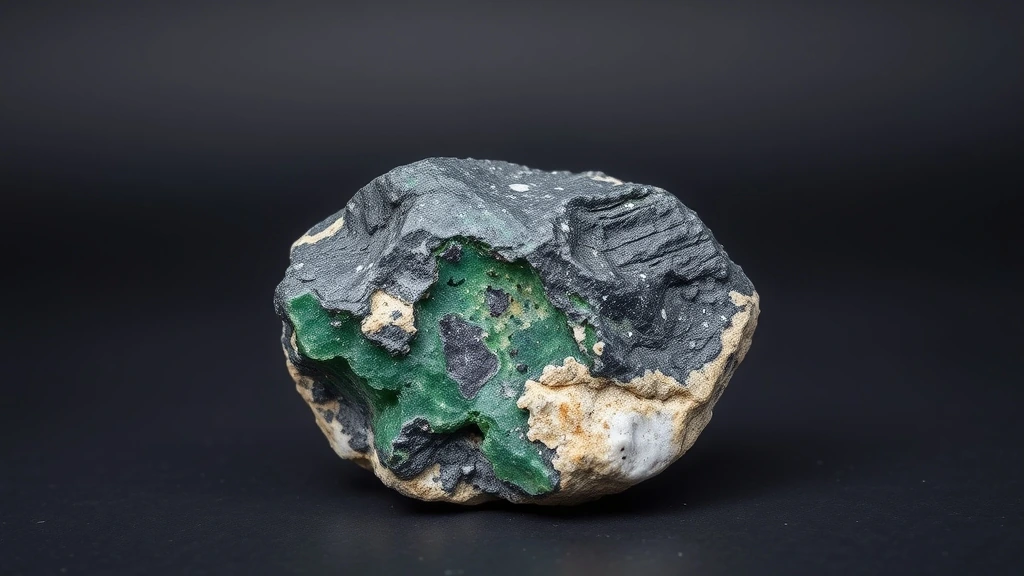
Brochantite belongs to the Natural Mineral / Crystal group, representing a secondary copper oxide phase. It typically forms in the oxidized zones of copper deposits, where primary sulfides undergo weathering. This mineral is chemically distinct from azurite and malachite due to its specific sulfate content. Its formation is closely linked to the alteration of chalcopyrite and bornite.
What is Brochantite Gemstone? Geological Overview & Definition
Brochantite is defined as a secondary copper mineral that precipitates from acidic solutions. It commonly occurs as prismatic crystals or fibrous aggregates on the surface of copper ores. The mineral is highly sensitive to environmental changes, particularly humidity and acid exposure.
Geologists identify it by its intense azure blue color and distinct luster. It often forms alongside other copper minerals like chrysocolla or malachite in supergene enrichment zones. Its geological significance lies in marking the transition from primary sulfide to oxidized copper. Understanding its formation helps map the extent of copper mineralization.
Brochantite Gemstone Chemical Composition & Crystallographic Properties
Brochantite crystallizes in the Monoclinic system, characterized by a single oblique axis. Its lattice structure features copper ions coordinated by hydroxyl and sulfate groups. This specific arrangement dictates its physical properties, including its cleavage and fracture patterns. The crystal habit often displays elongated prisms with a distinct termination.
The chemical formula Cu₄SO₄(OH)₆ indicates a complex arrangement of cations and anions. Cation substitution is limited, as the structure is rigidly defined by hydrogen bonding. The mineral is highly acid sensitive, dissolving readily in dilute hydrochloric acid. This reactivity requires careful handling during laboratory analysis and conservation.
Color arises from chromophore centers involving copper ions in specific oxidation states. The intense blue hue results from d-d electronic transitions within the copper coordination sphere. Thermal behavior shows that heating can dehydrate the mineral, altering its structure. This dehydration process is irreversible under standard geological conditions.
| Property | Specification |
|---|---|
| Mineral Group | Natural Mineral / Crystal |
| Chemical Formula | Cu₄ SO₄ (OH)₆ |
| Mohs Hardness | 3.5–4.0 |
| Crystal System | Monoclinic |
| Specific Gravity (Density) | 3.97 |
| Refractive Index | nα = 1.728 nβ = 1.771 nγ = 1.800 |
| Color & Optical Properties | Natural Brochantite Gemstone color spectrum and optical dispersion |
| Primary Mining Localities | Global primary localities |
| Water & Chemical Resistance | High (Safe for gentle water washing) |
| Chakra Alignment (Traditional) | Heart Chakra |
| Zodiac Affinity (Traditional) | Taurus |
| Symbolic Meaning (Traditional) | Copper alchemy, emotional stability, and transformation |
Brochantite Gemstone Varieties & Color Spectrum
Brochantite exhibits a distinct azure to peacock blue hue, derived from its high copper content. This intense coloration is a primary diagnostic feature for collectors and gemologists. The mineral often displays a vitreous to sub-vitreous luster when freshly fractured.
Classic Azure Brochantite
This variety features a deep, saturated blue color with minimal secondary inclusions. It typically forms in the oxidized zones of copper deposits. The monoclinic crystal system allows for well-defined, tabular prisms. Such specimens are highly sought after for their clarity and vibrant tone.
Peacock Blue Morph
Characterized by iridescent flashes, this morph often contains microscopic fluid inclusions. These inclusions scatter light, creating a shimmering, peacock-like appearance. The refractive index range of 1.728 to 1.800 enhances this optical effect. It is rarer than standard azure forms due to specific formation conditions.
Malachite-Associated Brochantite
Found in intimate association with malachite, this variety shows green-blue zoning. The transition zones reveal complex geochemical interactions during mineralization. Copper sulfate hydroxide is the dominant chemical phase in the blue areas. This co-occurrence is common in the Ural Mountains and Congo.
Desert Rose Aggregates
These formations consist of radiating, petal-like crystals resembling roses. They typically form in arid environments through evaporation of copper-rich solutions. The Mohs hardness of 3.5–4.0 makes them fragile during extraction. Such aggregates are prized for their unique geometric symmetry.
Translucent Specularite
Rarely, brochantite occurs in thin, translucent plates with specular reflection. These plates often coat larger secondary minerals like quartz. The optical properties are enhanced by the density of 3.97 g/cm³. This variety is extremely rare and mostly found in museum collections.
Where is Brochantite Gemstone Found? Geological Mining & Extraction
Brochantite primarily occurs in the oxidized zone of copper ore deposits. It forms through the weathering of primary sulfide minerals like chalcopyrite. Host rocks often include limestone, granite, or volcanic tuff. The mineral is frequently found alongside azurite and malachite.
Major mining regions include the Congo Basin, Spain, and the United States. Significant deposits are located in the Ural Mountains of Russia. Extraction is challenging due to the mineral’s low hardness. Most material is recovered as byproduct during copper smelting operations.
Historical Significance & Cultural Lore of Brochantite Gemstone
Ancient civilizations utilized brochantite as a source of copper pigment for art and decoration. It was ground into powder for use in murals and manuscripts. The vibrant blue color symbolized the sky and divinity in various cultures. Its use predates the widespread adoption of synthetic pigments.
Archaeological evidence reveals its presence in prehistoric cave paintings and burial sites. The mineral was often confused with azurite due to similar hues. Modern gemology distinguishes them through precise chemical analysis. This historical context underscores its enduring aesthetic and practical value.
Modern Uses & Jewelry Applications of Brochantite Gemstone
Due to its delicate structure and moderate durability, brochantite is primarily valued as a collector’s specimen rather than a high-wear gemstone. Its vibrant azure hue makes it ideal for cabochon cutting, where the smooth, polished surface enhances its natural luster without risking fracture. Lapidaries often avoid deep faceting to preserve the integrity of the monoclinic crystal system and prevent chipping along cleavage planes.
- Cabochon Rings: Set in protective bezels to shield the stone from impact.
- Pendant Charms: Lightweight designs that minimize stress on the delicate lattice.
- Ornamental Carvings: Small, intricate pieces showcasing the mineral’s unique geometric forms.
- Display Specimens: Unpolished crystals arranged in mineralogy collections for educational purposes.
Safety & Mineral Profile of Brochantite
Safe handling and physical stability
Brochantite is a copper‑sulfate mineral that is soft (Mohs 3.5–4) and readily deforms under pressure, making it unsuitable for jewelry or everyday wear. The mineral contains significant amounts of copper and sulfur, and its crystals can release sulfuric acid when exposed to moisture, posing a risk of acidic corrosion to surrounding materials. Fine dust from broken specimens can be inhaled, potentially causing respiratory irritation. Because of these factors, collectors treat Brochantite as a display mineral rather than a wearable piece, storing it in sealed containers and handling it with gloves to prevent skin contact and dust exposure.
Scientific and educational significance
Brochantite serves as an important example of copper‑sulfate mineralogy and is frequently used in teaching crystal morphology, crystal chemistry, and the role of copper in ore deposits. Its well‑defined parallelepiped habit and vivid blue–green coloration make it a valuable specimen for illustrating the relationship between crystal structure and optical properties. In research, Brochantite is studied for its hydrothermal formation processes, its stability under varying pH conditions, and its potential as a marker for copper ore exploration. Museums often include Brochantite in collections to demonstrate the diversity of copper sulfates and to provide a tangible reference for comparative mineralogy.
Mineralogical Group and Planetary Lore of Brochantite
Historically, Brochantite was named after the French mineralogist Pierre Brochant de Saint-Vincent (1795–1855), who first described the mineral in the early 19th century. Early mineralogists classified it within the broader group of copper sulfates, noting its close relationship to malachite and azurite. According to early mineralogists, Brochantite was often found in the oxidized zones of copper ore deposits, forming through the alteration of primary sulfide minerals.
In lapidary texts, Brochantite has occasionally been associated with the planet Mercury due to its metallic luster and the historical belief that mercury was linked to copper ores. However, modern planetary geology does not attribute any special symbolic significance to Brochantite beyond its terrestrial mineralogical context.
How to Identify Real vs. Fake Brochantite Gemstone
Artificial imitations of brochantite are rare due to the mineral’s limited commercial viability, but synthetic glass and dyed replicas occasionally appear in the market. These fakes often lack the natural crystal habit and specific gravity of the genuine mineral. Buyers should remain vigilant for overly uniform colors or artificial inclusions that do not match natural geological formations.
Practical At-Home Authenticity Tests
- Temperature Test (Thermal Feel): Genuine brochantite feels cool to the touch initially, whereas plastic or glass imitations may warm up quickly. This thermal conductivity is a basic indicator of mineral density.
- Specific Gravity & Weight Test: With a density of 3.97 g/cm³, real brochantite feels significantly heavier than its size suggests. Compare it to similarly sized glass or quartz to detect discrepancies in weight.
- Scratch & Hardness Test (Mohs Comparison): Brochantite has a Mohs hardness of 3.5–4.0, meaning it can be scratched by a steel knife or a copper coin. If the stone resists scratching from these tools, it may be a harder synthetic material.
- Microscopic & Loupe Inspection (Internal Inclusions): Use a 10x loupe to examine the stone for natural inclusions or crystal terminations. Synthetic glass often contains tiny bubbles or swirls, while natural brochantite may show subtle surface imperfections or crystal striations.
Brochantite Gemstone Valuation Factors, Grading & Pricing
Color Saturation serves as the primary driver for market value in this copper mineral. Collectors seek deep, uniform azurite-like blue tones without brownish oxidation patches. High optical clarity and a distinct vitreous luster significantly enhance the specimen’s visual appeal.
Carat Weight directly influences pricing, though large, intact crystals are rare due to the mineral’s fragility. Facet symmetry matters less for raw specimens, but well-formed monoclinic prisms command higher premiums. Matrix presence can either detract from value or add geological context, depending on the host rock.
Geographical Provenance Premium often elevates prices for famous localities like the Azurite Mine in Mexico. Wholesale values remain modest, but retail prices for museum-grade specimens can reach hundreds of dollars. Market trends favor intact, unweathered crystals over heavily included or fractured material.
How to Clean and Care for Brochantite Gemstone
Given its Mohs hardness of 3.5–4.0, brochantite requires gentle handling to prevent surface abrasion. Use warm soapy water and a soft cloth to remove dust and oils effectively. This method preserves the delicate crystal structure without introducing harsh chemical reactions.
Strictly avoid ultrasonic cleaners, as the vibrations can cause immediate structural fractures. The mineral’s low hardness makes it susceptible to shock damage from high-frequency sound waves. Always dry the stone thoroughly with a lint-free cloth after washing.
Cleansing and Recharging Brochantite Gemstone (Energetic Care)
For energetic maintenance, utilize smoke smudging with sage or palo santo to clear negative vibrations. This dry method avoids any contact with moisture, which is critical for this soluble copper sulfate mineral. Keep the stone away from direct sunlight to prevent color fading.
Place the gemstone on a selenite plate under moonlight for overnight recharging. Selenite is a soft, non-reactive mineral that complements brochantite’s energy without causing physical damage. This approach ensures the stone remains structurally intact while undergoing spiritual cleansing.
Frequently Asked Questions About Brochantite Gemstone
Is brochantite safe to wear in the shower?
Yes, it is safe for gentle water washing. Brochantite possesses high water resistance, allowing it to withstand brief exposure to moisture without immediate chemical degradation. However, prolonged soaking should be avoided to maintain the mineral’s structural integrity and vibrant azure color.
Can I use an ultrasonic cleaner on brochantite?
No, you must avoid ultrasonic cleaners entirely. The high-frequency vibrations can cause structural fractures in this relatively soft mineral. Instead, clean your specimen using warm soapy water and a soft cloth to preserve its delicate monoclinic crystal form.
What is the Mohs hardness of brochantite?
It measures 3.5 to 4.0 on the Mohs scale. This moderate hardness makes it susceptible to scratching by common household materials like quartz or steel. Proper storage in a soft pouch is essential to prevent surface abrasion and maintain its luster.
Which zodiac signs align with brochantite?
Taurus, Gemini, and Leo are the primary alignments. These earth and fire signs resonate with the mineral’s energetic properties. Wearing brochantite may enhance personal traits associated with these signs, such as stability, communication, and creative confidence.
Which chakras does brochantite activate?
It specifically activates the Heart Chakra. This dual alignment grounds the wearer while simultaneously opening emotional centers. This unique combination supports both physical stability and deep emotional healing during meditation or daily wear.
What is the chemical formula of brochantite?
It is Cu₄SO₄(OH)₆, a hydrated copper sulfate mineral. This specific composition gives the stone its characteristic intense blue color. Understanding its chemical formula helps collectors identify authentic specimens versus synthetic imitations or similar copper minerals.
What crystal system does brochantite belong to?
It crystallizes in the monoclinic system. This structure often results in distinct, elongated prismatic crystals with a pearly to vitreous luster. The monoclinic crystal system influences how light refracts through the stone, creating its unique optical appearance.
What is the refractive index of brochantite?
The values range from nα = 1.728 to nγ = 1.800. This high refractive index contributes to the mineral’s strong luster and brilliance. It ensures that light interacts dynamically with the internal structure, enhancing the visual appeal of polished specimens.