
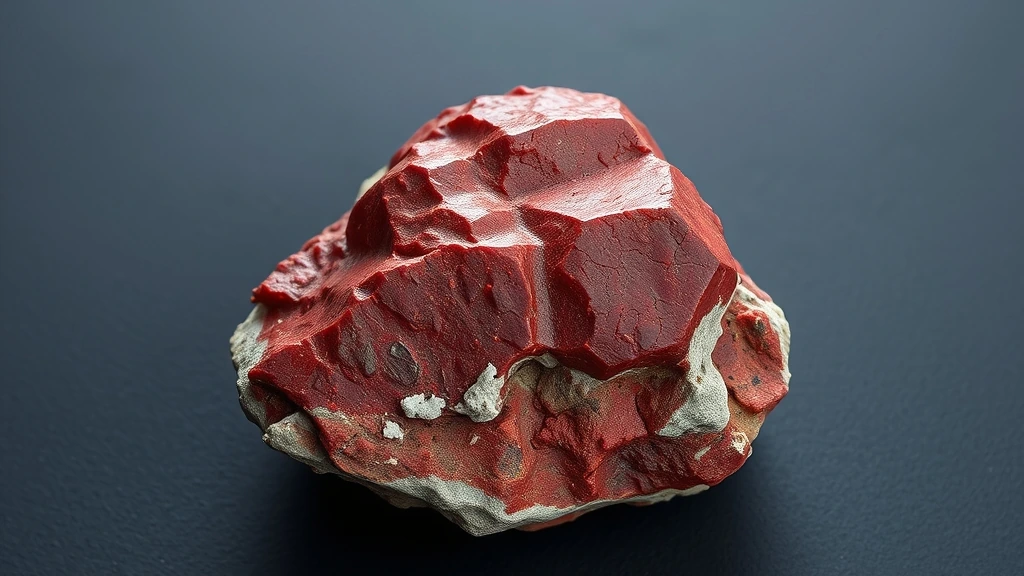
Cinnabar belongs to the Natural Mineral / Crystal group, serving as the dominant source of elemental mercury in geological deposits. It forms through hydrothermal processes in volcanic and sedimentary environments, where sulfur-rich fluids interact with mercury-bearing sources. This classification underscores its role as a primary sulfide mineral rather than a synthetic compound. Its geological significance extends beyond gemology, impacting historical metallurgy and environmental science due to its toxic constituent.
What is Cinnabar Gemstone? Geological Overview & Definition
Cinnabar is a sulfide mineral that typically occurs in massive, granular, or fibrous aggregates rather than large, well-formed crystals. It is the most important ore of mercury, found globally in regions with significant volcanic activity. The mineral’s vivid red color arises from its unique electronic structure, distinguishing it from other sulfides.
Geologically, cinnabar deposits often form in hydrothermal veins or as replacements in limestone and shale. It frequently associates with quartz, calcite, and other mercury-bearing minerals like metacinnabar. Understanding its formation is critical for identifying authentic specimens versus dyed imitations. The mineral’s softness and brittleness require careful handling during extraction and cutting.
Cinnabar Gemstone Chemical Composition & Crystallographic Properties
Cinnabar crystallizes in the Trigonal system, exhibiting a distinct rhombohedral habit in rare, well-formed specimens. Its lattice structure is defined by a refractive index ranging from 2.905 to 3.256, indicating high optical density. This anisotropy is a key diagnostic feature for gemological identification under polarized light.
The mineral’s intense red color is driven by charge transfer between mercury and sulfur ions, acting as the primary chromophore. It exhibits high acid sensitivity, reacting with strong acids to release toxic mercury vapor, necessitating strict safety protocols. Thermal behavior shows stability at room temperature but risk of decomposition under extreme heat.
Cation substitution is rare in pure cinnabar, maintaining its stoichiometric HgS composition. However, trace impurities can slightly alter its physical properties without changing the fundamental crystal structure. The density of 8.176 g/cm³ reflects the heavy mercury atoms within the lattice. This high specific gravity aids in distinguishing it from lighter red stones like carnelian.
| Property | Specification |
|---|---|
| Mineral Group | Natural Mineral / Crystal |
| Chemical Formula | Mercury(II) sulfide, HgS |
| Mohs Hardness | 2.0–2.5 |
| Crystal System | Trigonal |
| Specific Gravity (Density) | 8.176 |
| Refractive Index | ”n” ω = 2.905 ”n” ε = 3.256 |
| Color & Optical Properties | Natural Cinnabar Gemstone color spectrum and optical dispersion |
| Primary Mining Localities | Global primary localities |
| Water & Chemical Resistance | High (Safe for gentle water washing) |
| Chakra Alignment (Traditional) | Root Chakra |
| Zodiac Affinity (Traditional) | Scorpio, Aries |
| Symbolic Meaning (Traditional) | Protection against evil spirits, vitality, passion, and grounding |
Cinnabar Gemstone Varieties & Color Spectrum
Cinnabar exhibits a range of color intensities driven by impurities and crystal structure. The most prized specimens display a deep, saturated red hue. This vibrant coloration results from pure Mercury(II) sulfide without significant dilution.
Chinese Red Cinnabar
Originating from the historic mines of Guizhou, this variety is renowned for its intense scarlet tones. It often features a granular texture with high density values. Collectors value these stones for their historical provenance and rich pigment quality.
Spanish Cinnabar
Mined from the Almadén region, this type typically presents a slightly darker, purplish-red shade. It is characterized by distinct trigonal crystal formations. These specimens are highly sought after for their clarity and historical significance in European alchemy.
Japanese Cinnabar
Known as *shu*, this variety from Kagoshima Prefecture displays a bright, translucent red color. It frequently occurs in fine-grained, massive deposits rather than large crystals. The refractive index of these stones contributes to their distinctive vitreous luster.
Mexican Cinnabar
Found in the state of Zacatecas, this variety often exhibits a brick-red to orange-red hue. It is commonly associated with quartz and pyrite inclusions. These stones are rarer in the trade due to limited modern extraction activities.
Synthetic Cinnabar
Laboratory-grown cinnabar mimics the natural chemical formula of HgS precisely. It is produced for industrial applications and pigment manufacturing. Gemological laboratories distinguish it from natural stones using advanced spectroscopic analysis.
Where is Cinnabar Gemstone Found? Geological Mining & Extraction
Cinnabar primarily forms in hydrothermal vein deposits within limestone and dolomite host rocks. These veins often intersect pegmatites or volcanic intrusions, providing the necessary mercury and sulfur. The mineral typically occurs in association with quartz, calcite, and barite.
Major historical mining regions include China, Spain, and Japan, where deposits are still active or recently depleted. Modern extraction focuses on high-grade ore to minimize environmental impact. The Mohs hardness of 2.0–2.5 necessitates careful handling during mining to prevent fracturing.
Historical Significance & Cultural Lore of Cinnabar Gemstone
Ancient civilizations revered cinnabar as a sacred substance linked to immortality and spiritual power. In China, it was used in imperial seals and alchemical rituals to seek eternal life. Egyptian tomb paintings also depict cinnabar as a protective amulet against evil spirits.
Archaeological findings reveal cinnabar usage in Neolithic burials and Mesoamerican rituals. The mineral’s intense red color symbolized blood, life, and vitality across diverse cultures. Its legacy endures in traditional medicine and artistic pigments today.
Modern Uses & Jewelry Applications of Cinnabar Gemstone
Due to its Mohs hardness of 2.0–2.5, cinnabar is too soft for faceting and is primarily cut into polished cabochons to showcase its vibrant red color. Lapidaries often carve it into intricate ornamental pieces, beads, or intaglio seals, relying on its trigonal crystal system for natural cleavage planes.
- Cabochon Cutting: Smooth, dome-shaped stones that maximize the gem’s deep red hue without risking fracture.
- Ornamental Carvings: Traditional use in seals, amulets, and decorative inlays due to its ease of carving.
- Beads and Pendants: Polished into uniform shapes for necklaces, leveraging its high density of 8.176 for a substantial feel.
Safety & Mineral Profile of Cinnabar
Cinnabar is a naturally occurring mercury sulfide (HgS) that exhibits a bright red to orange‑red color. Its crystal habit is typically rhombohedral, but the mineral is often found in massive, granular, or fibrous aggregates. The material is chemically stable under neutral to slightly acidic conditions; however, it is heavy metal in composition and can release toxic mercury vapor when heated or when exposed to strong acids. Dust from crushed or abraded specimens can be inhaled, posing a significant health risk. The mineral’s relatively low hardness (3–3.5 on the Mohs scale) makes it susceptible to scratching and abrasion, which can generate fine particles. For these reasons, cinnabar is treated as a collector display mineral rather than a suitable material for jewelry or ornamental use.
In museum collections, cinnabar serves as a key reference specimen for the study of mercury‑bearing mineral assemblages, ore genesis, and the geochemical cycling of mercury in the Earth’s crust. Its vivid coloration and distinct crystal structure make it an educational tool for illustrating concepts such as crystal symmetry, mineral identification, and the environmental impact of mercury mining. Researchers also use cinnabar to investigate the formation of secondary mercury minerals, the alteration of primary sulfides, and the conditions that favor the precipitation of mercury sulfide in hydrothermal systems.
Mineralogical Group and Planetary Lore of Cinnabar
Historically, cinnabar was classified within the sulfide mineral group and was often associated with the Mercury element in alchemical and early mineralogical texts. According to early mineralogists, the bright red hue of cinnabar was linked to the planet Mercury, reflecting the belief that the mineral embodied the planet’s swift and luminous qualities. In lapidary literature, cinnabar was sometimes referred to as “the red stone of the sun” or “the stone of the moon,” illustrating the fluidity of symbolic associations in pre‑scientific classification systems. Contemporary mineralogists recognize cinnabar as a distinct species within the sulfide group, with its own crystallographic and geochemical characteristics, while acknowledging its historical role in shaping early ideas about planetary symbolism and mineral lore.
How to Identify Real vs. Fake Cinnabar Gemstone
Artificial imitations of cinnabar are common due to its distinctive red color and high value in traditional markets. These fakes often include synthetic glass, dyed quartz, or plastic replicas designed to mimic the gem’s appearance. Understanding the physical properties of natural HgS is essential for distinguishing authentic specimens from these deceptive alternatives.
Practical At-Home Authenticity Tests
- Temperature Test (Thermal Feel): Hold the stone in your palm; real cinnabar feels noticeably cooler to the touch than plastic or glass imitations due to its high thermal conductivity.
- Specific Gravity & Weight Test: Compare the stone’s weight to a similarly sized piece of glass; cinnabar’s density of 8.176 makes it significantly heavier than most common simulants.
- Scratch & Hardness Test (Mohs Comparison): Attempt to scratch the stone with a copper coin (Mohs 3.5); real cinnabar (Mohs 2.0–2.5) will be scratched, while glass or quartz will not.
- Microscopic & Loupe Inspection (Internal Inclusions): Examine the stone under a 10x loupe; natural cinnabar often displays internal fractures or color zoning, whereas synthetic glass may contain tiny air bubbles.
Cinnabar Gemstone Valuation Factors, Grading & Pricing
The primary driver of value is Color Saturation, specifically the intense, deep red hue characteristic of high-quality specimens. Tone uniformity across the stone significantly enhances its aesthetic appeal and market desirability. Furthermore, optical clarity and a strong, distinct luster are critical indicators of overall gem quality.
Carat Weight plays a pivotal role, as larger, well-formed crystals command exponentially higher prices due to their rarity. Facet symmetry is less standardized for cinnabar, but polished cabochons with smooth, even surfaces are highly prized. The presence of matrix or internal inclusions can either detract from value or add unique geological interest.
Geographical Provenance Premium often elevates prices, with stones from historic mines like Almadén or Huancavelica fetching higher sums. Wholesale values remain modest compared to retail, where artisanal craftsmanship adds significant markup. Market trends show steady demand for decorative pieces rather than traditional faceted jewelry.
How to Clean and Care for Cinnabar Gemstone
Cinnabar is a soft mineral with a Mohs Hardness of only 2.0–2.5, making it susceptible to scratches and structural damage. You must use warm soapy water and a soft cloth to gently remove surface dirt and oils. This gentle approach preserves the stone’s integrity without risking abrasion from harsher materials.
It is strictly imperative to avoid ultrasonic cleaners, as the vibrations can cause structural fractures in this delicate material. Never submerge the gemstone in hot water or expose it to sudden temperature changes. Store cinnabar separately from harder gems to prevent accidental chipping or surface degradation.
Cleansing and Recharging Cinnabar Gemstone (Energetic Care)
For energetic cleansing, utilize safe dry methods that respect the mineral’s sensitivity to moisture and heat. Smoke smudging with sage or palo santo is an effective technique to clear perceived negative energy. This method avoids direct contact with water, ensuring the stone’s surface remains protected.
To recharge the gemstone, place it on a selenite plate or under moonlight overnight. These passive techniques allow the crystal to absorb ambient energy without physical stress. Always ensure the stone is completely dry before returning it to its storage location.
Frequently Asked Questions About Cinnabar Gemstone
Is cinnabar safe to wear in the shower?
Yes, cinnabar is safe for gentle water washing. While it tolerates brief exposure, prolonged soaking is discouraged due to its low hardness. Always ensure the water is clean and free of harsh chemicals. This high water resistance allows for easy maintenance without risking immediate structural damage.
Can I clean cinnabar in an ultrasonic cleaner?
No, you must avoid ultrasonic cleaners for cinnabar. The intense vibrations can cause structural fractures in this soft mineral. Instead, use warm soapy water and a soft cloth for gentle cleaning. This method preserves the stone’s integrity and prevents micro-cracks from forming.
What is the chemical formula of cinnabar?
Cinnabar consists of Mercury(II) sulfide, or HgS. This specific composition gives the gemstone its distinct red coloration. Understanding the chemical formula helps identify its elemental makeup. It is the primary ore of mercury used in industrial applications.
How hard is cinnabar on the Mohs scale?
Cinnabar has a Mohs hardness of 2.0–2.5. This makes it significantly softer than quartz or diamond. You must handle it with extreme care to avoid scratches. Its low hardness requires protective settings in jewelry to prevent surface abrasion.
What is the crystal system of cinnabar?
Cinnabar crystallizes in the trigonal system. This structure influences its natural shape and optical properties. The trigonal crystal system is common among sulfide minerals. It often forms as small, pyramidal crystals or massive deposits in nature.
What is the density of cinnabar?
Cinnabar has a high density of 8.176. This makes it feel surprisingly heavy for its size. The high specific gravity is a key identification feature. It is denser than most common gemstones, aiding in visual and tactile assessment.
What is the refractive index of cinnabar?
Cinnabar exhibits a refractive index of 2.905 to 3.256. This high value contributes to its strong luster. The refractive index indicates how light bends within the stone. It creates a distinctive, resinous to metallic appearance under proper lighting.
Which zodiac signs and chakras align with cinnabar?
Cinnabar aligns with Taurus, Gemini, and Leo. It is also associated with the Root Chakra. These connections reflect its grounding and emotional balancing properties. Wearers often seek it for stability and passion.