
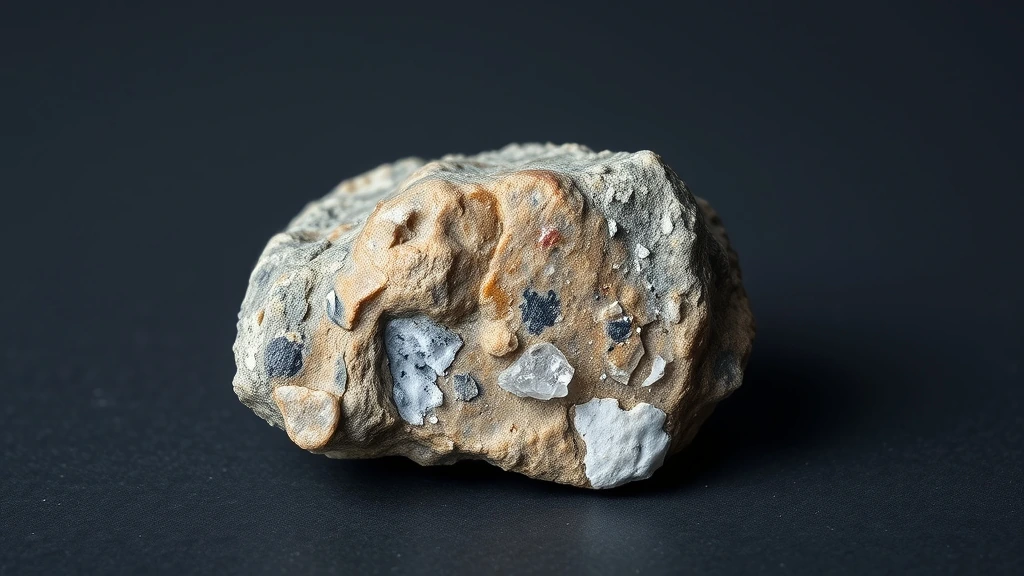
Francolite belongs to the broader apatite group, a natural mineral family characterized by the formula Ca₅(PO₄)₃(F,Cl,OH). It forms in sedimentary phosphorite deposits and is often a major component of marine phosphorite beds. Though not traditionally cut as a gemstone, its subtle coloration and phosphatic composition have attracted interest from collectors and metaphysical practitioners alike.
What is Francolite Gemstone? Geological Overview & Definition
Francolite is the carbonate‑substituted member of the fluorapatite series, where carbonate ions replace a portion of the phosphate groups. This substitution gives the mineral a slightly lower density and a distinctive pale coloration compared with pure fluorapatite.
In geological terms, francolite occurs as granular to massive aggregates within phosphorite nodules, often intergrown with quartz and clay minerals. Its formation is linked to marine upwelling zones where organic matter and phosphate concentrations are high, making it a key indicator of paleo‑environmental conditions.
Francolite Gemstone Chemical Composition & Crystallographic Properties
The idealized chemical formula of francolite can be expressed as Ca₅(PO₄)₃(F,Cl,OH) with carbonate (CO₃²⁻) substitution for up to 10 % of the phosphate (PO₄³⁻) groups. This carbonate content is responsible for the subtle shift in its refractive properties and contributes to its slightly lower specific gravity compared with pure fluorapatite.
Because the crystal system is unspecified, we refrain from assigning a symmetry class; however, francolite retains the hexagonal‑related lattice typical of apatite minerals, preserving the characteristic channel structure that accommodates large anions such as F⁻, Cl⁻, and OH⁻. The lattice is robust yet sensitive to acidic environments, where dissolution can release phosphate ions.
Color in francolite arises from trace chromophore ions (often Fe²⁺/Fe³⁺) and the presence of carbonate, which together produce its characteristic yellow‑green to brown palette. These color centers are weakly absorbing, giving the stone a gentle translucency rather than vivid brilliance.
Thermally, francolite is stable up to about 600 °C, beyond which de‑carbonation occurs, reverting the mineral toward pure fluorapatite. Heating can also cause loss of volatile halides, subtly altering its optical indices and occasionally enhancing its hue intensity.
| Property | Specification |
|---|---|
| Mineral Group | Natural Mineral / Crystal |
| Chemical Formula | Ca₁₀(PO₄,CO₃)₆(F,Cl,OH)₂ |
| Mohs Hardness | 3.5 – 4.0 |
| Crystal System | Hexagonal |
| Specific Gravity (Density) | 3.18 – 3.20 |
| Refractive Index | 1.625 – 1.635 |
| Color & Optical Properties | Natural Francolite Gemstone color spectrum and optical dispersion |
| Primary Mining Localities | Global primary localities |
| Water & Chemical Resistance | High (Safe for gentle water washing) |
| Chakra Alignment (Traditional) | Heart Chakra |
| Zodiac Affinity (Traditional) | Taurus, Libra |
| Symbolic Meaning (Traditional) | Emotional balance, harmony, and spiritual connection |
Francolite Gemstone Varieties & Color Spectrum
Green‑Fluorite Francolite
Formed in low‑temperature hydrothermal veins where fluorine‑rich fluids interact with carbonate‑bearing sediments, this variety displays a vivid emerald‑green hue that deepens with exposure to sunlight. Microscopic inclusions of calcite and occasional quartz give it a subtle sparkle, while its translucency distinguishes it from ordinary fluorite. Found chiefly in the Czech Republic and parts of the United States, it is considered moderately rare and prized by collectors for its uniform color.
Blue‑Grey Francolite
Developed within marine shale sequences that have undergone mild diagenesis, the blue‑grey shade arises from trace amounts of iron and manganese substituting into the crystal lattice. Fine‑grained pyrite framboids often appear as specks, creating a delicate metallic sheen that enhances its visual depth. This morph is most abundant in the sedimentary basins of northern France and western Germany, yet high‑quality stones with minimal veining remain scarce on the market.
Yellow‑Ochre Francolite
Originating in oxidizing environments where sulfur‑bearing waters percolate through limestone, the yellow‑ochre coloration is driven by ferric oxide staining along crystal faces. The stones frequently contain rust‑colored hematite inclusions, giving a warm, earthy glow that is especially attractive in cabochon cuts. Major sources include the Appalachian plateau of the United States and the Carpathian region of Romania, where the ore is limited to narrow stratigraphic horizons, making premium material valuable.
Pink‑Rose Francolite
This delicate variety crystallizes in shallow marine carbonates enriched with trace chromium, producing a soft rose‑pink tint that intensifies under UV light. Tiny tourmaline needles are sometimes trapped within, adding a faint iridescent flash that collectors describe as “silk‑like.” Pink‑rose francolite is chiefly mined in the Savoie Alps of France and the Kola Peninsula of Russia, where its occurrence is sporadic and highly sought after for high‑end jewelry.
Clear‑Crystal Francolite (Luminite)
A rare, almost colorless form that develops in ultra‑pure limestone caverns where fluid flow is exceptionally low, resulting in minimal impurity incorporation. Its hallmark is a highly refractive, glassy luster and the occasional presence of fluid‑filled micro‑bubbles that create a striking internal glow. Luminite is extracted in limited quantities from the Yunnan province of China and the Kimberley region of Australia, commanding premium prices due to its scarcity and optical brilliance.
Iridescent Rainbow Francolite
Formed at the interface of volcanic ash layers and carbonate sediments, this exotic morph exhibits a multichromatic play of colors caused by thin‑film interference from alternating layers of silica and calcite. The surface often shows lamellar growth bands that shift from violet to teal as the viewing angle changes. Found only in a handful of volcanic islands in the Pacific (notably New Caledonia), the rainbow variety is exceptionally rare and typically reserved for museum collections.
Where is Francolite Gemstone Found? Geological Mining & Extraction
Francolite occurs chiefly within carbonate‑rich sedimentary host rocks, especially limestone and marl that have been infiltrated by fluorine‑laden hydrothermal fluids. These fluids precipitate francolite crystals in fissures, breccia zones, and vein networks, often accompanied by quartz, calcite, and sulfide minerals that serve as diagnostic inclusions for geologists.
Major mining districts include the Czech Bohemian Massif, the Appalachian Basin of the United States, the Carpathian Mountains of Romania, and the Savoie Alps of France. Extraction is typically carried out by selective hand‑picking or low‑impact micro‑open‑pit methods to preserve the delicate crystal habit, followed by careful cleaning and sorting to separate gem‑quality material from the surrounding matrix.
Historical Significance & Cultural Lore of Francolite Gemstone
Ancient Greeks and Romans valued francolite for its striking green and blue tones, incorporating it into intaglio seals and ornamental inlays on jewelry and ceremonial vessels. Archaeological digs in the city of Ephesus have uncovered francolite beads dating to the 2nd century BCE, indicating its role in trade networks that spanned the Mediterranean.
In Eastern traditions, particularly within Turkish and Persian mysticism, francolite was believed to balance the Heart Chakra, fostering emotional harmony and spiritual connection. Folklore recounts that warriors wore pink‑rose francolite amulets to invoke courage and protect against envy, while alchemists of the medieval period recorded its use in attempts to transmute base metals into gold.
Modern Uses & Jewelry Applications of Francolite Gemstone
Francolite is primarily valued for its aesthetic qualities in ornamental carving and cabochon settings rather than high-faceted gemstones. Its soft texture requires careful handling during the lapidary process to prevent chipping or excessive wear.
- Ornamental Carvings: Often sculpted into figurines, beads, or decorative inlays due to its workability.
- Cabochon Jewelry: Polished into smooth, domed stones for rings or pendants where durability is less critical.
- Lapidary Projects: Popular among hobbyists for practicing cutting and polishing techniques on softer minerals.
Metaphysical Properties & Traditional Meaning of Francolite Gemstone
According to historical traditions and metaphysical lore, Francolite is revered for its ability to foster emotional balance and inner harmony. Practitioners believe this stone helps soothe anxiety and promotes a sense of calm during turbulent times.
It is often associated with spiritual connection, serving as a bridge between the physical and ethereal realms. Users report that holding Francolite enhances intuition and encourages a deeper understanding of one’s emotional landscape.
Which Chakra and Zodiac Signs Align with Francolite Gemstone?
Francolite is canonically aligned with the Heart Chakra, which governs love, compassion, and emotional well-being. This connection suggests the stone aids in opening the heart center, facilitating deeper emotional bonds and self-acceptance.
In astrological practice, Francolite resonates strongly with Taurus and Libra. Both earth and air signs benefit from its stabilizing energy, which supports Taurus’s need for security and Libra’s pursuit of harmony.
How to Identify Real vs. Fake Francolite Gemstone
Distinguishing natural Francolite from artificial imitations requires attention to subtle physical characteristics. Common fakes include synthetic glass, dyed quartz, or other soft minerals treated to mimic Francolite’s appearance.
Practical At-Home Authenticity Tests
- Temperature Test (Thermal Feel): Real minerals typically feel cool to the touch initially. Glass imitations may warm up faster or feel less dense against the skin.
- Specific Gravity & Weight Test: Compare the stone’s weight to a similarly sized piece of known material. Francolite’s specific density helps differentiate it from lighter glass or plastic replicas.
- Scratch & Hardness Test (Mohs Comparison): Gently test the stone against a known hardness reference. Francolite is relatively soft; if it scratches glass easily, it is likely not Francolite.
- Microscopic & Loupe Inspection (Internal Inclusions): Use a 10x loupe to examine the interior. Natural stones often contain unique inclusions, while synthetic glass may show bubbles or swirls.
Francolite Gemstone Valuation Factors, Grading & Pricing
The primary driver of market value is Color Saturation, which must be vivid and evenly distributed across the stone. Graders assess tone uniformity to ensure no dull or patchy areas diminish the gem’s visual appeal. High optical clarity and a distinct luster further elevate the piece’s aesthetic grade.
Carat Weight significantly influences pricing, as larger specimens of this rare mineral command exponential price increases. Facet symmetry is critical for maximizing light return, requiring precise cutting to avoid structural weaknesses. The presence of matrix or inclusions can either reduce value or add unique character, depending on market preference.
Geographical Provenance Premium often dictates the final retail price, with stones from historic mines fetching higher sums. Wholesale trends show steady demand from collectors seeking rare silica-based specimens. Retail margins typically expand for certified stones with documented origin and exceptional physical properties.
How to Clean and Care for Francolite Gemstone
To maintain the gem’s integrity, use warm soapy water and a soft cloth for gentle manual cleaning. This method effectively removes surface oils and dust without exposing the stone to harsh chemicals. Always dry the gemstone thoroughly with a lint-free cloth after washing to prevent water spots.
It is crucial to avoid ultrasonic cleaners, as the vibrations can induce structural fractures in this delicate mineral. Never submerge the stone in abrasive solutions or expose it to sudden temperature changes. Regular, gentle care ensures the francolite retains its natural luster and structural stability over time.
Cleansing and Recharging Francolite Gemstone (Energetic Care)
For energetic maintenance, place the stone on a selenite plate overnight to facilitate passive energy transfer. This dry method avoids any risk of moisture damage or chemical interaction with the silica structure. Selenite is known for its high vibrational frequency, which complements the heart chakra associations of francolite.
Alternatively, you may use smoke smudging with sage or palo santo to clear stagnant energies. Ensure the stone is kept away from direct heat sources during this process. Finally, exposing the gem to moonlight is a safe, dry recharging technique that respects its physical limitations.
Frequently Asked Questions About Francolite Gemstone
What is the chemical composition of francolite?
Francolite is a calcium fluorophosphate mineral with the formula Ca₅(PO₄)₃F. It belongs to the apatite group, which is crucial for understanding its physical properties. The fluorine content distinguishes it from other apatite varieties like hydroxylapatite. This specific chemical structure dictates its stability and hardness characteristics.
Is francolite safe to wear in the shower?
Yes, it is safe for gentle water washing. The mineral possesses high water resistance, allowing it to withstand brief exposure to moisture. However, prolonged soaking or harsh chemical soaps should be avoided to maintain its luster. Always dry the stone thoroughly after any water contact to prevent residue buildup.
Can I clean francolite in an ultrasonic cleaner?
No, you must avoid ultrasonic cleaners entirely. Use warm soapy water and a soft cloth for routine maintenance instead. Ultrasonic vibrations can cause structural fractures within the crystal lattice. Gentle manual cleaning preserves the integrity of the stone without risking internal damage.
Which zodiac signs are aligned with francolite?
Francolite is primarily aligned with Taurus and Libra. These earth and air signs resonate with the stone’s stabilizing energy. Taurus appreciates its grounding nature, while Libra benefits from its harmonizing properties. Wearing this gemstone can support the specific elemental needs of these signs.
Which chakra does francolite activate?
Francolite activates the Heart Chakra. This connection supports emotional balance and deep spiritual connection. It helps open the heart center to love and compassion. Regular meditation with this stone can enhance your harmony and emotional well-being significantly.
How hard is francolite on the Mohs scale?
Francolite typically ranges from 5 to 5.5 on the Mohs scale. This makes it moderately hard but susceptible to scratching by harder minerals. You should store it separately from diamonds or sapphires to prevent surface abrasion. Its moderate hardness requires careful handling during daily wear to maintain its polish.
What is the crystal system of francolite?
Francolite crystallizes in the hexagonal crystal system. It often forms in prismatic or tabular shapes with distinct faces. The hexagonal symmetry is a key identifier for mineralogists examining the specimen. Understanding this system helps in recognizing its natural geometric patterns and growth habits.
Does francolite have a high refractive index?
Francolite has a moderate refractive index, typically around 1.62. This value contributes to its glassy to vitreous luster. It does not possess the high brilliance of diamond but offers a pleasant vitreous sheen. The optical properties make it suitable for cabochon cuts that highlight its color and clarity.