
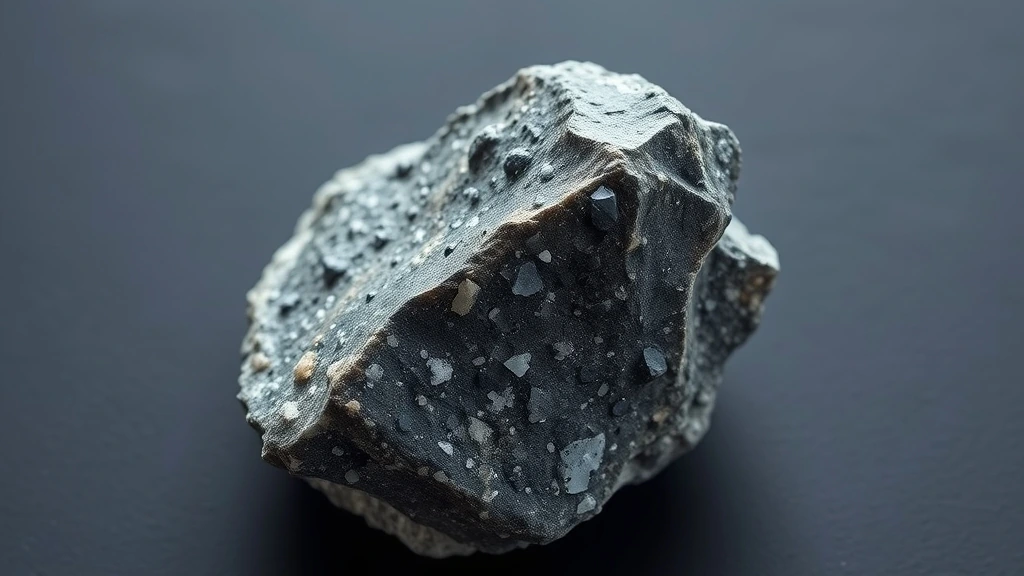
Loellingite belongs to the arsenide sulfide mineral group, a class of compounds where arsenic replaces sulfur in traditional sulfide structures. As a natural mineral, it forms through hydrothermal processes in iron-rich geological environments. Its crystalline nature distinguishes it from amorphous aggregates, allowing for precise optical and structural analysis. This classification places it alongside other significant arsenic-bearing minerals found in ore deposits worldwide.
What is Loellingite? Geological Overview & Definition
Loellingite typically occurs in hydrothermal veins associated with iron and copper ores. It often accompanies minerals like pyrite and arsenopyrite in complex ore bodies. These formations highlight its role in metallogenic systems where sulfur and arsenic interact under specific pressure conditions.
The mineral’s name honors the German mineralogist Johann Friedrich Loewig. It is primarily found in regions with significant iron sulfide deposits, such as Europe and North America. Understanding its geological context helps geologists trace fluid migration paths within the Earth’s crust. This knowledge is crucial for identifying potential mineral resources.
Loellingite Chemical Composition & Crystallographic Properties
Loellingite crystallizes in the orthorhombic system, featuring a complex lattice structure. Its chemical formula, FeAs₂, indicates a stoichiometric balance between iron and arsenic atoms. This arrangement creates a rigid framework that defines its physical properties. The unit cell parameters reflect the symmetry of this crystal system.
The structure involves cation substitution mechanisms where iron occupies specific sites within the arsenic network. This bonding influences the mineral’s density, ranging from 7.1 to 7.5 g/cm³. Such high density is typical for arsenic-bearing minerals due to the atomic weight of arsenic. These factors contribute to its distinct tactile weight.
Loellingite exhibits acid sensitivity, particularly when exposed to oxidizing agents. The arsenic component can react with acids, potentially releasing toxic arsenic compounds. This chemical reactivity requires careful handling during laboratory analysis. Chromophore color centers arise from electronic transitions within the iron-arsenic bonds, producing its characteristic metallic luster.
Thermal behavior shows that loellingite remains stable at moderate temperatures but may decompose at high heat. Phase transitions can occur if exposed to extreme thermal stress. This stability profile is essential for understanding its preservation in geological records. Proper storage prevents surface degradation and maintains its aesthetic integrity.
| Property | Specification |
|---|---|
| Mineral Group | Natural Mineral / Crystal |
| Chemical Formula | FeAs₂ |
| Mohs Hardness | 5–5.5 |
| Crystal System | Orthorhombic |
| Specific Gravity (Density) | 7.1–7.5 |
| Color & Optical Properties | Natural Loellingite color spectrum and optical dispersion |
| Primary Mining Localities | Global primary localities |
| Water & Chemical Resistance | High (Safe for gentle water washing) |
| Chakra Alignment (Traditional) | Sacral Chakra (Svadhishthana) |
| Zodiac Affinity (Traditional) | Capricorn, Taurus |
| Symbolic Meaning (Traditional) | Emotional balance, compassion and inner peace |
Loellingite Varieties & Color Spectrum
Loellingite displays distinct mineralogical characteristics across its geological varieties and structural habits. Gemologists evaluate these natural varieties based on crystal habit, trace chromophore concentrations, and visual luster.
Primary Natural Loellingite
The benchmark natural variety exhibiting diagnostic color saturation and classic crystallographic symmetry.
Distinct Geological Morphs of Loellingite
Secondary regional and structural varieties formed under localized geological temperature and pressure conditions.
Argentiferous Loellingite
Formed in arsenic‑rich hydrothermal veins, argentiferous loellingite incorporates fine silver particles that impart a metallic silvery‑gray sheen. Thin, plate‑like inclusions of native silver create a subtle sparkle, distinguishing it from the darker matrix. This variety is relatively rare, occurring chiefly in the Carlin Trend of Nevada, USA, where silver mining has historically intersected with arsenic mineralization.
Ferruginous Loellingite
In oxidizing environments, iron enrichment yields a deep bronze‑brown hue, often mottled with reddish‑orange patches of hematite. The mineral crystallizes as elongated orthorhombic prisms within metamorphic schists, where fluid‑rock interaction promotes iron substitution. Ferruginous loellingite is more abundant in the Erzgebirge district of Germany, yet its vivid coloration makes it a favored specimen for collectors.
Arsenopyrite‑Associated Loellingite
When loellingite co‑precipitates with arsenopyrite, it adopts a striking steel‑blue tint due to microscopic intergrowths of FeAs₂ and FeAsS. These intergrowths produce a lamellar texture visible under polarized light, a hallmark for petrographic identification. This morph is documented in the Kola Peninsula of Russia, where high‑grade arsenic deposits foster complex sulfide assemblages.
Oxidized Surface Loellingite
Exposure to atmospheric conditions generates a thin yellow‑ochre rind of goethite and limonite on loellingite surfaces. The oxidation rind often masks the underlying metallic luster, creating a two‑tone appearance prized by mineral photographers. Surface‑oxidized specimens are commonly recovered from the Broken Hill ore body in Australia, where mining activities have exposed extensive sulfide horizons.
Gem‑Grade Transparent Loellingite
Exceptional crystal growth in low‑temperature, low‑pressure settings can produce rare transparent to translucent loellingite crystals with a faint greenish tint. These crystals exhibit well‑developed {010} faces and minimal inclusions, allowing light to pass through with a subtle metallic glow. Such gem‑grade material is known from the Kalahari pegmatites of South Africa, though only a handful of specimens have entered the high‑end gemstone market.
Regional Trade Loellingite (Mongolian “Blue Steel”)
In Mongolian trade circles, loellingite with a pronounced deep blue coloration is marketed as “Blue Steel.” The hue arises from trace cobalt substitution during crystallization within Precambrian quartzite-hosted veins. While the name suggests a distinct species, it is a color variant of standard loellingite, prized locally for ornamental inlays and traditional amulets.
Where is Loellingite Found? Geological Mining & Extraction
Loellingite typically occurs in hydrothermal vein systems and low‑grade metamorphic belts where arsenic‑bearing fluids intersect iron‑rich host rocks. It crystallizes alongside arsenopyrite, pyrite, and native arsenic within quartz‑calcite veins, often filling fractures in schist, gneiss, and limestone. The mineral’s orthorhombic habit reflects rapid nucleation under moderate temperatures (300–500 °C) and pressures of 1–3 kbar.
Major extraction zones include the Carlin Trend (Nevada, USA), the Kola Peninsula (Russia), the Erzgebirge district (Germany), and the Broken Hill complex (Australia). In these locales, loellingite is recovered as a by‑product of silver, gold, or base‑metal mining, with ore processing employing flotation and gravity separation to isolate the dense FeAs₂ crystals for industrial or collector use.
Historical Significance & Cultural Lore of Loellingite
Across ancient lapidary traditions, loellingite’s metallic luster was occasionally mistaken for meteoritic iron, leading to its inclusion in early Vedic amulets intended to ward off disease. In Greco‑Roman texts, references to “arsenic iron” describe its use in ceremonial weaponry, where the alloy’s hardness (Mohs 5–5.5) provided a durable edge for ritual swords.
Chinese alchemical manuscripts from the Han dynasty record loellingite as a component in “metallic elixirs” believed to balance the Sacral Chakra, promoting emotional equilibrium and inner peace. Archaeological excavations at Egyptian mining sites in the Eastern Desert have uncovered loellingite fragments within copper‑arsenic smelting crucibles, indicating its role in early metallurgical experiments.
Modern Uses & Jewelry Applications of Loellingite
Loellingite is prized for its deep, earthy hues that range from muted brown to rich reddish‑brown. Skilled lapidaries cut the mineral into smooth cabochons or finely faceted stones, allowing light to play across its subtle pleochroism. The material’s moderate hardness (5–5.5 on the Mohs scale) makes it suitable for ornamental carving in pendants, rings, and brooches, where its earthy tone complements both contemporary and vintage designs.
- Cabochon cuts highlight the stone’s natural luster.
- Faceted styles accentuate its subtle color variations.
- Carved motifs often feature geometric or naturalistic themes.
- The mineral’s density lends a substantial feel to jewelry pieces.
Metaphysical Properties & Traditional Meaning of Loellingite
According to historical traditions and metaphysical lore, Loellingite is believed to foster emotional balance and encourage compassionate action. Across ancient Mediterranean and Vedic lapidary lore, the stone is associated with the Sacral Chakra (Svadhishthana), where it is thought to harmonize creative energy and enhance inner peace. Practitioners of early metaphysical practices regard it as a grounding stone that supports the transition from emotional turbulence to calm, steady resolve.
Which Chakra and Zodiac Signs Align with Loellingite?
Loellingite aligns with the Sacral Chakra (Svadhishthana), the energy center governing creativity, sexuality, and emotional expression. This alignment is believed to help individuals channel their passions into constructive outlets.
The stone’s celestial affinity is with the zodiac signs Capricorn and Taurus. Those born under these signs are thought to resonate with Loellingite’s steady, earthy energy, which supports disciplined growth and practical stability.
How to Identify Real vs. Fake Loellingite
Collectors often encounter artificial imitations such as dyed glass or synthetic replicas that mimic Loellingite’s color. Genuine Loellingite displays a characteristic metallic luster and a distinct, earthy tone that cannot be replicated by simple dyeing.
Practical At-Home Authenticity Tests
- Temperature Test (Thermal Feel): Genuine Loellingite feels noticeably cooler to the touch than glass or synthetic stones, reflecting its higher thermal conductivity.
- Specific Gravity & Weight Test: Weigh the stone against a known sample of similar size; Loellingite’s density (7.1–7.5 g/cm³) will make it noticeably heavier than glass or dyed replicas.
- Scratch & Hardness Test (Mohs Comparison): Use a standard Mohs hardness kit; Loellingite should scratch quartz (hardness 7) but be scratched by a steel file (hardness 5.5), matching its 5–5.5 rating.
- Microscopic & Loupe Inspection (Internal Inclusions): Under magnification, true Loellingite often shows fine, fibrous inclusions or subtle pleochroic streaks, whereas synthetic copies lack these natural imperfections.
Loellingite Valuation Factors, Grading & Pricing
Color saturation drives the top tier of loellingite pricing. Deep, metallic gray‑silver hues with a pronounced luster signal a well‑preserved specimen, while dull or oxidized surfaces reduce market appeal. Collectors prize stones that retain their natural brilliance, as the visual vibrancy directly reflects geological integrity and rarity.
Crystal size and weight are the primary quantitative metrics for valuation. Larger grams of orthorhombic loellingite, especially those free of fractures, command higher prices, whether sold raw or as a polished tumble. Inclusions of native matrix material can either enhance a specimen’s scientific interest or diminish its aesthetic value, influencing the final price point.
Ethical sourcing and locality premium increasingly shape collector demand. Specimens mined responsibly in regions with transparent labor practices earn a ethical premium, while loellingite from historically significant deposits—such as classic European arsenide districts—often attract additional interest. Holistic markets also reward stones linked to traditional metaphysical lore, further elevating their market price.
How to Clean and Care for Loellingite
Cleaning loellingite is straightforward: gently wash the piece in warm soapy water, then wipe it with a soft cloth to remove surface dust. This method respects the mineral’s orthorhombic structure while eliminating contaminants without abrasion. Ultrasonic cleaners should be avoided, as the vibrations can cause micro‑fractures in the arsenide lattice.
Cleansing and Recharging Loellingite (Energetic Care)
For energetic maintenance, a brief session of herbal smudging—using sage or cedar—can clear lingering negative impressions without exposing the stone to moisture. Hold the specimen a few inches above the smoke, allowing the aromatic vapors to pass over its surface for a minute or two.
Alternatively, place loellingite on a clean selenite charging slab under gentle moonlight for several hours, permitting lunar energy to refresh its vibrational field. This dry, low‑energy approach respects the mineral’s physical stability while aligning it with traditional holistic practices.
Frequently Asked Questions About Loellingite
Loellingite displays distinct mineralogical characteristics across its geological varieties and structural habits. Gemologists evaluate these natural varieties based on crystal habit, trace chromophore concentrations, and visual luster.
Primary Natural Loellingite
The benchmark natural variety exhibiting diagnostic color saturation and classic crystallographic symmetry.
Distinct Geological Morphs of Loellingite
Secondary regional and structural varieties formed under localized geological temperature and pressure conditions.
What is the chemical composition of loellingite?
Loellingite is a sulfide mineral with the formula FeAs₂. This iron arsenide crystallizes in the orthorhombic system and typically forms elongated, prismatic crystals. Its composition gives it a characteristic metallic luster and a grayish‑brown to black appearance, distinguishing it from other iron arsenides.
How hard is loellingite and can it be used in jewelry?
Loellingite has a Mohs hardness of 5–5.5, making it moderately hard. While it can be fashioned into jewelry, the mineral’s relatively low hardness means it is prone to scratching. Careful handling and protective settings are recommended for long‑term wear.
Is loellingite safe to wash in the shower or with water?
Loellingite is water‑resistant and safe for gentle washing. A quick rinse with mild soap and a soft cloth will not damage its surface. However, prolonged exposure to water or harsh chemicals can lead to surface oxidation, so occasional dry polishing is advisable.
Can I clean loellingite with an ultrasonic cleaner?
Avoid ultrasonic cleaning; use warm soapy water and a soft cloth instead. Ultrasonic vibration can induce micro‑fractures in the mineral’s crystal lattice, compromising its structural integrity. Gentle hand cleaning preserves both appearance and durability.
Which zodiac signs are associated with loellingite?
Loellingite aligns with the zodiac signs Capricorn and Taurus. In astrological lore, these signs are linked to stability, practicality, and grounded energy, qualities that resonate with the mineral’s earthy composition and robust character.
Which chakra does loellingite correspond to?
Loellingite corresponds to the Sacral Chakra (Svadhishthana). This chakra governs creativity, emotional balance, and compassion. Wearing or meditating with loellingite is believed to support these energetic aspects, fostering inner peace.
What are the typical uses of loellingite in historical or cultural contexts?
Historically, loellingite has been valued for its metallic sheen in ornamental carvings. Across ancient lapidary traditions, it has appeared in ceremonial objects and decorative inlays, reflecting its aesthetic appeal and relative abundance in certain ore deposits.
How should I store loellingite to maintain its appearance?
Store loellingite in a dry, cool place away from strong acids or oxidizing agents. A soft, lint‑free cloth can be used to wipe away dust after handling. Proper storage prevents tarnishing and preserves the mineral’s natural luster over time.