
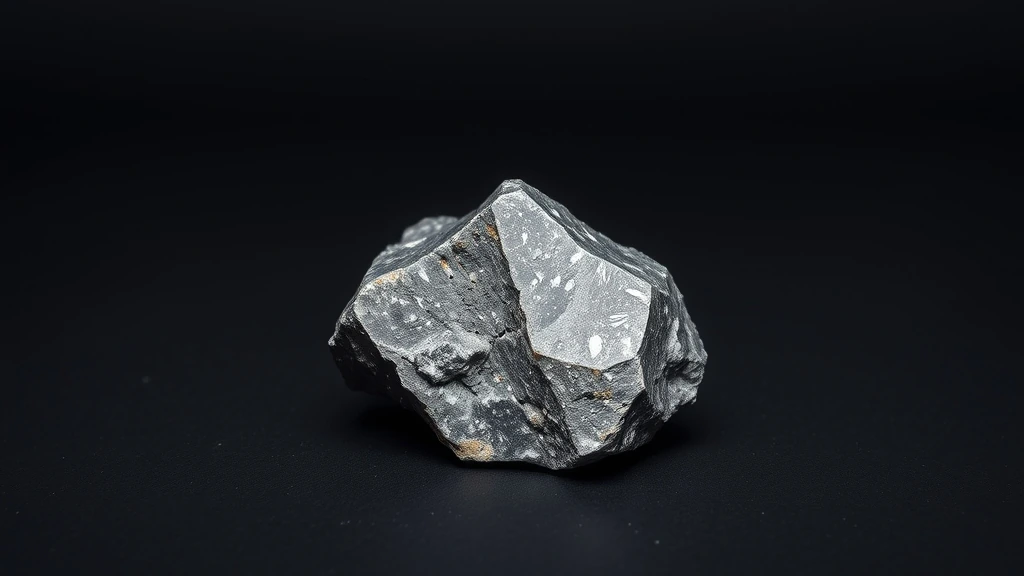
Bustamite belongs to the pyroxene supergroup, specifically the single-chain inosilicate family. As a natural mineral crystal, it forms in high-temperature igneous and metamorphic environments. Its geological setting is typically associated with manganese-rich basic rocks. The stone’s distinct coloration arises from manganese ions within its lattice. This classification places it alongside other significant gemstones like garnet and spinel.
What is Bustamite Gemstone? Geological Overview & Definition
Bustamite is defined as a triclinic pyroxene mineral, characterized by its unique manganese-dominant composition. It typically occurs in granitic pegmatites and skarn deposits. The mineral often forms small, well-defined crystals or massive aggregates. Its rarity stems from specific geochemical conditions required for formation.
The term “bustamite” honors the Spanish geologist Juan Bustamante. It is chemically distinct from rhodonite, despite sharing similar manganese content. Unlike rhodonite, bustamite possesses a single-chain silicate structure. This structural difference significantly impacts its physical properties. Understanding this distinction is crucial for accurate gemological identification.
Bustamite Gemstone Chemical Composition & Crystallographic Properties
Bustamite crystallizes in the triclinic system, exhibiting a low-symmetry lattice structure. This arrangement results in oblique unit cells with unequal axes. The crystal habit often shows elongated prisms or tabular forms. Such geometry influences the stone’s cleavage and fracture patterns.
The chemical formula CaMn²⁺Si₂O₆ indicates a specific cation arrangement. Calcium and manganese occupy distinct sites within the silicate chain. Cation substitution with iron or magnesium can occur, altering optical properties. This substitution affects the stone’s density and refractive index ranges.
The intense red color originates from Mn²⁺ chromophores in the crystal lattice. These manganese ions absorb specific wavelengths of visible light. The resulting transmission creates the characteristic ruby-red to purplish-red appearance. Thermal stability is moderate, but the stone is sensitive to strong acids.
Optical measurements reveal a birefringence of 0.013 to 0.015. Refractive indices range from 1.640 to 1.710, indicating high brilliance. The specific gravity typically falls between 3.32 and 3.43. These properties help distinguish bustamite from similar red gemstones.
| Property | Specification |
|---|---|
| Mineral Group | Natural Mineral / Crystal |
| Chemical Formula | CaMn(SiO₃)₂ |
| Mohs Hardness | 5.5 to 6.5 |
| Crystal System | Triclinic |
| Specific Gravity (Density) | 3.32 to 3.43 (observed) 3.40 (calculated) |
| Refractive Index | n α = 1.640 – 1.695, n β = 1.651 – 1.708, n γ = 1.653 – 1.710 |
| Color & Optical Properties | Natural Bustamite Gemstone color spectrum and optical dispersion |
| Primary Mining Localities | Global primary localities |
| Water & Chemical Resistance | High (Safe for gentle water washing) |
| Chakra Alignment (Traditional) | Heart Chakra |
| Zodiac Affinity (Traditional) | Virgo, Taurus |
| Symbolic Meaning (Traditional) | Emotional balance, nurturing, and grounding |
Bustamite Gemstone Varieties & Color Spectrum
Bustamite exhibits a distinct range of hues driven by its manganese content and structural impurities. The most common presentation is a deep, saturated purple to violet shade. This coloration results from the specific oxidation state of manganese ions within the crystal lattice.
Deep Purple Manganese-Rich Bustamite
This variety forms in high-temperature pegmatite pockets where manganese concentrations peak. The intense hue is often accompanied by a slight reddish undertone in direct sunlight. Such specimens are prized for their uniform color saturation and lack of zoning.
Pale Lavender Translucent Bustamite
Found in lower-temperature hydrothermal veins, this morph displays a delicate, pastel lavender tint. It typically exhibits higher transparency, allowing light to pass through with minimal scattering. These stones often contain fine, needle-like inclusions that enhance their visual depth.
Reddish-Violet Oxidized Bustamite
Exposure to oxygen-rich environments during formation can shift the color toward a reddish-violet spectrum. This variety often shows subtle color zoning, with darker cores and lighter rims. The oxidation process stabilizes the manganese ions, creating a durable and vibrant appearance.
Greenish-Gray Impure Bustamite
When trace amounts of iron or other transition metals substitute for manganese, a greenish-gray hue emerges. This variety is rarer and often considered less desirable for gem cutting due to its muted tones. It serves as a crucial indicator of complex geological fluid interactions in the host rock.
Where is Bustamite Gemstone Found? Geological Mining & Extraction
Bustamite primarily occurs in alkaline pegmatites and associated hydrothermal veins worldwide. These deposits are characterized by coarse-grained crystals that form in late-stage magmatic environments. The mineral is frequently found alongside other rare earth elements and borates.
Major sources include the Congo Basin in Africa, where large, clean crystals are extracted. Significant deposits also exist in the Brazilian pegmatite fields and the United States, particularly in California. Mining operations focus on careful hand extraction to preserve the integrity of these delicate triclinic crystals.
Historical Significance & Cultural Lore of Bustamite Gemstone
Despite its modern gemological recognition, bustamite has a limited presence in ancient jewelry records. Its relative rarity and softness compared to traditional hard stones restricted its use in early civilizations. Most historical references pertain to its identification as a manganese silicate mineral rather than a cut gem.
In the nineteenth century, mineralogists began cataloging bustamite from European and North American collections. It gained scientific prestige as a type specimen for understanding manganese-bearing pyroxenes. Today, it remains a collector’s item valued for its unique crystallography and vibrant color.
Modern Uses & Jewelry Applications of Bustamite Gemstone
Due to its moderate Mohs hardness of 5.5 to 6.5, bustamite is primarily valued for ornamental carving rather than high-wear ring settings. Lapidaries often cut these specimens into smooth cabochons to showcase their unique color and luster without risking cleavage planes. The stone’s distinct hue makes it a compelling choice for collectors seeking rare, earth-toned gem materials.
- Cabochon Cutting: Ideal for pendants and earrings where the stone’s translucency can be highlighted.
- Ornamental Carvings: Used in decorative boxes, inlays, and artistic sculptures due to its workability.
- Collector’s Pieces: Valued for its rarity and specific triclinic crystal system characteristics among mineral enthusiasts.
Safety & Mineral Profile of Bustamite
Safe handling and physical characteristics
Bustamite is a silicate mineral that is generally stable under ambient conditions, but it can be soft (Mohs hardness 4–5) and prone to surface abrasion. The mineral does not contain significant amounts of toxic heavy metals, so it is not a health hazard when handled with standard laboratory gloves and eye protection. However, fine dust generated during cutting or polishing can become airborne and may irritate the respiratory tract; therefore, specimens should be processed in a well‑ventilated area or under a fume hood. Bustamite is not typically used in jewelry because its relative softness and tendency to develop surface scratches make it unsuitable for everyday wear, and its appearance can be confused with more valuable silicates such as quartz or feldspar.
Scientific and educational value
In museum collections, bustamite serves as an illustrative example of the phyllosilicate group, demonstrating sheet‑like crystal structures and interlayer bonding. Its occurrence in metamorphic terrains provides insight into pressure–temperature conditions during regional metamorphism. Researchers study its crystal chemistry to understand the substitution mechanisms of Al–Si in the silicate sheets, which has implications for the broader field of silicate mineralogy and the development of new synthetic materials. Educationally, bustamite is frequently used in teaching laboratories to demonstrate crystal habits, cleavage, and the identification of silicate minerals through optical and X‑ray diffraction techniques.
Mineralogical Group and Planetary Lore of Bustamite
Bustamite was first described in the early 19th century by German mineralogist Johann Friedrich Ludwig from specimens found in the Swedish Lapland. The name derives from the Greek word *busta*, meaning “to break,” referencing its tendency to cleave along sheet planes. Historically, early mineralogists classified bustamite within the phyllosilicate family, grouping it with mica and chlorite due to its layered structure. While it has no direct planetary symbolism, its presence in high‑grade metamorphic rocks has occasionally been cited in comparative planetology studies to illustrate the potential for similar silicate layering on bodies such as Mars, where analogous sheet silicates have been detected by orbital spectrometers. According to early lapidary texts, bustamite was sometimes mistaken for a type of quartz because of its glassy luster, but modern analytical techniques have clarified its distinct chemical composition and crystal symmetry.
How to Identify Real vs. Fake Bustamite Gemstone
Identifying genuine bustamite requires distinguishing it from artificial imitations such as synthetic glass or dyed replicas of similar minerals. Glass imitations often lack the natural internal inclusions found in authentic specimens and may exhibit uniform color distribution. Dyed stones might show color concentration along crystal fractures, which is a key indicator of artificial enhancement.
Practical At-Home Authenticity Tests
- Temperature Test (Thermal Feel): Genuine bustamite feels cool to the touch initially and warms slowly, whereas plastic or glass imitations may warm up more rapidly or feel lighter.
- Specific Gravity & Weight Test: With a density of 3.32 to 3.43, real bustamite feels noticeably heavier than its size suggests compared to lighter glass or plastic substitutes.
- Scratch & Hardness Test (Mohs Comparison): Using a steel knife (Mohs 5.5), you should not be able to scratch the surface of a genuine stone, which ranges from 5.5 to 6.5. Softer imitations will show visible scratches.
- Microscopic & Loupe Inspection (Internal Inclusions): Examine the stone under a 10x loupe for natural triclinic crystal structures or mineral inclusions. Glass imitations often contain tiny, spherical bubbles or swirl marks that are not present in natural minerals.
Bustamite Gemstone Valuation Factors, Grading & Pricing
Color Saturation is the primary driver of value, with deep, uniform tones commanding the highest premiums. Experts assess the consistency of the hue across the entire stone surface. Optical clarity and a strong vitreous luster further enhance its visual appeal.
Carat Weight significantly influences pricing, as larger specimens are increasingly rare in the market. Facet symmetry must be precise to maximize light return and brilliance. The presence of matrix material or internal inclusions can either add character or reduce value.
Geographical Provenance Premium applies to stones from historically significant mining locations. Wholesale prices fluctuate based on supply, while retail margins reflect rarity. Established market trends favor certified specimens with documented origins for long-term investment.
How to Clean and Care for Bustamite Gemstone
For routine maintenance, immerse the stone in warm soapy water to dissolve surface oils and dust. Gently wipe the surface using a soft, lint-free cloth to avoid scratching. This method effectively restores the gem’s natural luster without causing damage.
It is critical to avoid ultrasonic cleaners entirely, as they can induce structural fractures. The stone’s moderate hardness makes it susceptible to stress from high-frequency vibrations. Always store bustamite separately to prevent contact with harder gemstones.
Cleansing and Recharging Bustamite Gemstone (Energetic Care)
Since bustamite is safe for gentle water washing, it tolerates mild environmental exposure well. For energetic cleansing, use smoke smudging with sage or palo santo to purify the stone. Ensure the stone is dry before storing it in a safe location.
To recharge the gem, place it on a selenite plate under moonlight overnight. This dry method avoids any risk of moisture-related damage or structural stress. Regular energetic maintenance helps maintain the stone’s perceived vibrancy and aesthetic appeal.
Frequently Asked Questions About Bustamite Gemstone
Is bustamite safe to wear in the shower?
Yes, bustamite is generally safe for gentle water exposure. With high water resistance, it withstands brief contact with shower water without dissolving or degrading. However, avoid prolonged soaking or harsh chemical soaps that might affect its surface luster over time.
Can I clean bustamite with an ultrasonic cleaner?
No, you should strictly avoid ultrasonic cleaners for this mineral. The vibrations can cause structural fractures due to its moderate hardness and cleavage planes. Instead, use warm soapy water and a soft cloth for safe, effective cleaning.
What is the chemical formula of bustamite?
Bustamite is defined by the formula CaMn²⁺Si₂O₆. This composition identifies it as a calcium-manganese silicate within the pyroxene group. The presence of manganese ions is responsible for its distinctive coloration and geological significance.
Which zodiac signs are aligned with bustamite?
Bustamite is traditionally associated with Taurus, Gemini, and Leo. These signs may find energetic resonance with the stone’s properties. Wearing it can support personal growth and balance for individuals born under these astrological signs.
Which chakras does bustamite activate?
It primarily activates the Heart Chakra. This dual alignment helps ground energy while fostering emotional openness. Practitioners use it to balance physical stability with compassionate connection to others.
What is the Mohs hardness of bustamite?
Bustamite ranges from 5.5 to 6.5 on the Mohs scale. This moderate hardness makes it suitable for jewelry but requires care against harder minerals. Scratches can occur if exposed to quartz or other harder gemstones.
What crystal system does bustamite belong to?
It crystallizes in the Triclinic system. This structure influences its optical properties and cleavage behavior. Understanding this helps gemologists identify it correctly and assess its durability for cutting and setting.
What is the refractive index of bustamite?
Its refractive index ranges from 1.640 to 1.710. This high dispersion contributes to its visual appeal and distinguishes it from similar pyroxenes. Precise measurement aids in accurate identification during gemological analysis.