
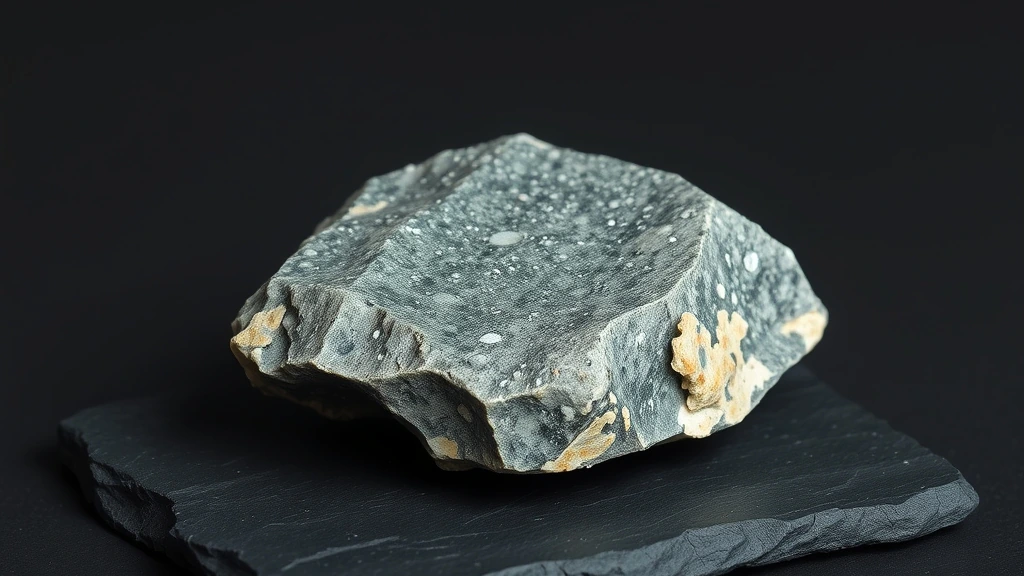
Chalcanthite belongs to the natural mineral group, specifically classified as a hydrated salt. It forms through the oxidation of copper-bearing sulfide ores in arid environments. This Natural Mineral / Crystal exhibits distinct crystalline habits rather than massive aggregates. Its formation is intimately linked to evaporation processes in desert climates. Consequently, it rarely survives prolonged exposure to atmospheric moisture.
What is Chalcanthite Gemstone? Geological Overview & Definition
Chalcanthite is a secondary mineral that precipitates from copper-rich waters. It typically forms in the oxidized zones of copper deposits. The hydrated sulfate structure allows it to trap significant water molecules. This makes it highly sensitive to environmental humidity changes.
As a gemstone, it is valued for its vivid color rather than durability. The delicate crystal structure limits its use in jewelry. It is often collected by mineralogists for scientific study. Its ephemeral nature requires careful preservation and handling.
Chalcanthite Gemstone Chemical Composition & Crystallographic Properties
Chalcanthite crystallizes in the triclinic crystal system, lacking high-order symmetry axes. Its lattice structure is defined by copper ions coordinated with sulfate groups. The CuSO₄·5H₂O formula indicates five water molecules per unit. This specific stoichiometry dictates its physical stability and appearance.
The primary chromophore is the copper(II) ion, responsible for the blue color. Cation substitution is minimal in pure specimens, maintaining spectral purity. The mineral exhibits strong acid sensitivity, dissolving readily in dilute acids. This reactivity complicates standard gemological testing procedures.
Thermal behavior reveals that chalcanthite dehydrates upon gentle heating. It loses water molecules sequentially, altering its crystal habit. The refractive index ranges from 1.514 to 1.543, indicating moderate dispersion. These optical properties are consistent with its triclinic geometry.
| Property | Specification |
|---|---|
| Mineral Group | Natural Mineral / Crystal |
| Chemical Formula | CuSO₄·5H₂O |
| Mohs Hardness | 2.5 |
| Crystal System | triclinic crystal system |
| Specific Gravity (Density) | 2.12–2.3 |
| Refractive Index | n α = 1.514 n β = 1.537 n γ = 1.543 |
| Color & Optical Properties | Natural Chalcanthite Gemstone color spectrum and optical dispersion |
| Primary Mining Localities | Global primary localities |
| Water & Chemical Resistance | High (Safe for gentle water washing) |
| Chakra Alignment (Traditional) | Root Chakra |
| Zodiac Affinity (Traditional) | Taurus, Virgo |
| Symbolic Meaning (Traditional) | Grounding, purification, and detoxification |
Chalcanthite Gemstone Varieties & Color Spectrum
Chalcanthite exhibits a distinct blue to greenish-blue hue derived from its copper sulfate composition. This intense coloration is often described as “chalcanthite blue” in mineralogical literature. The stone’s appearance can vary slightly based on hydration levels and impurities.
Classic Blue Chalcanthite
This primary variety displays a vibrant, sky-blue color typical of pure CuSO₄·5H₂O crystals. It forms in arid environments where evaporation concentrates copper-rich solutions. These specimens are highly prized for their clarity and saturation.
Greenish Chalcanthite
Impurities such as iron or other transition metals can shift the hue toward greenish-blue tones. This morph is less common and often found in mixed mineral deposits. The color variation provides valuable data on the geochemical environment of formation.
Hydrated Chalcanthite
This variety retains its full five water molecules per formula unit, ensuring maximum stability. It appears as well-formed, prismatic crystals with a vitreous luster. Dehydration can alter its structure, so preservation is critical for collectors.
Arid Zone Chalcanthite
Found in desert caves, this type often exhibits efflorescent crusts on host rock surfaces. It forms rapidly during seasonal humidity changes in semi-arid regions. These deposits are typically small but visually striking due to rapid crystal growth.
Coastal Chalcanthite
Rarely, this variety appears in saline coastal environments with high copper content. It often co-occurs with other evaporite minerals like halite and gypsum. Its formation is linked to specific brine compositions in estuarine settings.
Where is Chalcanthite Gemstone Found? Geological Mining & Extraction
Chalcanthite primarily forms in arid and semi-arid regions where evaporation exceeds precipitation. It is commonly found in caves, mines, and desert washes with copper-rich groundwater. These environments allow the slow crystallization of soluble copper sulfate solutions.
Major deposits are located in Spain, the United States, and Australia. The Almaden mines in Spain have historically produced significant quantities of this mineral. Extraction is often incidental to copper mining or cave exploration rather than primary gemstone mining.
Historical Significance & Cultural Lore of Chalcanthite Gemstone
Ancient civilizations utilized chalcanthite as a source of copper sulfate for medicinal and industrial purposes. It was known as “blue vitriol” in alchemical texts and used in dyeing processes. Archaeological evidence suggests its use in early metallurgy and preservation techniques.
In modern esoteric traditions, it is associated with grounding and purification energies. Some practitioners link it to the Root Chakra for stability and detoxification. This spiritual interpretation complements its historical role as a practical chemical compound.
Modern Uses & Jewelry Applications of Chalcanthite Gemstone
Due to its extreme water solubility and low hardness, chalcanthite is rarely cut into durable faceted gems for everyday wear. Instead, lapidaries typically preserve it as cabochons or ornamental carvings, often sealed with heavy resin to prevent rapid dissolution. These pieces serve primarily as educational specimens or short-term display items rather than heirloom jewelry.
- Cabochon Cutting: Smooth, polished domes highlight the mineral’s vibrant blue color while minimizing stress fractures.
- Ornamental Carving: Artists create intricate sculptures that emphasize the crystal’s delicate, translucent appearance.
- Resin Encapsulation: A protective coating is applied to stabilize the structure against ambient humidity.
Safety & Mineral Profile of Chalcanthite
Safe handling and physical stability
Chalcanthite is a highly soluble copper sulfate mineral that dissolves readily in water and even in moist air, especially when exposed to acidic conditions. Its crystals are typically soft (Mohs hardness 1–2) and can be easily crushed or disintegrated, producing fine dust that may irritate the respiratory tract. Because the dust contains copper ions, inhalation or ingestion poses a risk of copper toxicity. For these reasons, chalcanthite is treated as a collector display mineral rather than a suitable material for jewelry or functional objects. Display cases should keep the specimen dry, and collectors should handle it with gloves and eye protection, avoiding prolonged contact with skin or inhalation of dust.
Scientific, educational, and mineralogical significance
Chalcanthite is an important reference material for studies of copper‑sulfate hydration, crystal chemistry, and the effects of environmental conditions on mineral solubility. Its well‑defined crystal habit and vivid blue color make it a valuable teaching aid for illustrating concepts such as crystal symmetry, lattice parameters, and the role of water molecules in mineral structures. In research, chalcanthite serves as a model for understanding the formation of secondary copper minerals in oxidizing environments and for exploring the geochemical pathways that lead to the deposition of copper sulfates in hydrothermal veins and evaporitic settings.
Mineralogical Group and Planetary Lore of Chalcanthite
Historically, chalcanthite was first described in the early 19th century by the mineralogist Johann Friedrich Wilhelm von Schlotheim, who noted its bright blue crystals and association with copper‑rich hydrothermal veins. The name derives from the Greek *chalcos* (copper) and *anthos* (flower), reflecting its flower‑like crystal clusters. According to early mineralogists, chalcanthite belonged to the copper sulfate group, a family of minerals characterized by the presence of the sulfate anion and variable hydration states. In lapidary texts, it has occasionally been linked symbolically to the planet Venus, due to its vivid blue hue, though such associations are purely ornamental and not supported by modern planetary geology.
How to Identify Real vs. Fake Chalcanthite Gemstone
Artificial imitations of chalcanthite often involve synthetic glass or dyed silica replicas designed to mimic the mineral’s distinctive blue color. These fakes lack the natural crystal structure and chemical composition of genuine specimens, making them durable but chemically inert. Identifying these replicas requires careful observation of physical properties that synthetic materials cannot easily replicate.
Practical At-Home Authenticity Tests
- Temperature Test (Thermal Feel): Genuine chalcanthite feels cool to the touch initially but warms up quickly due to its low thermal conductivity. Synthetic glass imitations often retain their temperature longer or feel uniformly warm.
- Specific Gravity & Weight Test: With a density of 2.12–2.3 g/cm³, real chalcanthite feels lighter than similarly sized glass or quartz. If the piece feels unexpectedly heavy, it is likely a dense synthetic substitute.
- Scratch & Hardness Test (Mohs Comparison): At 2.5 on the Mohs scale, chalcanthite is soft enough to be scratched by a copper coin or a fingernail. If the stone resists scratching from these objects, it is probably a harder imitation like glass.
- Microscopic & Loupe Inspection (Internal Inclusions): Use a 10x loupe to check for natural inclusions or crystal boundaries. Synthetic glass often contains tiny, perfectly round bubbles, whereas natural chalcanthite may show fluid inclusions or growth lines.
Chalcanthite Gemstone Valuation Factors, Grading & Pricing
Market valuation primarily hinges on Color Saturation, where deep, uniform azure tones command the highest premiums. Gemologists assess tone consistency across the entire specimen to ensure visual harmony. Additionally, high optical clarity and a vibrant vitreous luster significantly enhance the stone’s aesthetic appeal.
The Carat Weight of chalcanthite is critical, as larger specimens are exceedingly rare in the global market. Facet symmetry is less relevant for cabochons but remains vital for any cut gemstone applications. Furthermore, the presence of matrix or internal inclusions can either detract from value or add unique geological character.
Geographical Provenance Premium often dictates the final price, with specimens from historic mines fetching higher sums. Wholesale prices generally remain modest, but retail values can triple for certified, high-quality pieces. Current market trends show steady demand for educational and metaphysical collections.
How to Clean and Care for Chalcanthite Gemstone
Due to its extreme water solubility, chalcanthite requires exceptionally gentle handling to prevent dissolution. You must use warm soapy water and a soft cloth for immediate, brief cleaning only. Never submerge the stone for prolonged periods, as this will destroy its crystalline structure.
Strictly avoid ultrasonic cleaners, as the vibrations cause structural fractures in this soft mineral. Steam cleaning is also prohibited due to the heat and moisture sensitivity. Always dry the stone thoroughly with a lint-free cloth after any minimal contact with liquid.
Cleansing and Recharging Chalcanthite Gemstone (Energetic Care)
For energetic maintenance, utilize dry methods that respect the mineral’s hygroscopic nature. Smoke smudging with sage or palo santo is an effective, moisture-free cleansing technique. This approach purifies the stone without risking chemical degradation or physical damage.
To recharge the energy, place the chalcanthite on a selenite plate under moonlight. This method allows for spiritual renewal while keeping the stone completely dry. Avoid placing it in water bowls, as this will dissolve the crystal over time.
Frequently Asked Questions About Chalcanthite Gemstone
Is chalcanthite safe to wear in the shower?
No, chalcanthite is highly water-sensitive and should never be worn in the shower. As a hydrated sulfate mineral, prolonged exposure to water causes it to dissolve or lose its structural integrity. Always remove your jewelry before bathing or swimming to preserve the stone’s vibrant blue color and physical form.
Can I clean chalcanthite in an ultrasonic cleaner?
Absolutely not; ultrasonic cleaners will cause severe structural fractures in chalcanthite. The intense vibrations are too harsh for this soft mineral, which has a Mohs hardness of only 2.5. Instead, gently wipe the stone with a soft cloth and warm soapy water to maintain its clarity without risk of damage.
What is the chemical formula of chalcanthite?
The chemical formula for chalcanthite is CuSO₄·5H₂O, indicating it is a hydrated copper sulfate. This specific composition gives the mineral its distinctive bright blue color and crystalline structure. Understanding this formula helps explain why the mineral is highly soluble in water and requires careful handling during any cleaning or storage processes.
Which zodiac signs are aligned with chalcanthite?
Chalcanthite is traditionally aligned with the zodiac signs of Taurus and Virgo. These earth signs resonate with the stone’s grounding and purification properties, supporting stability and practicality. Wearing this mineral may help enhance the natural traits of these signs, fostering a deeper connection to earthly energies and personal balance.
Which chakra does chalcanthite activate?
Chalcanthite is primarily associated with the Root Chakra, also known as Muladhara. This energy center governs feelings of safety, security, and physical survival. By aligning with the Root Chakra, the stone promotes a sense of groundedness and helps anchor your energy to the physical plane, reducing anxiety.
How hard is chalcanthite on the Mohs scale?
Chalcanthite ranks at 2.5 on the Mohs hardness scale, making it a very soft mineral. This low hardness means it is easily scratched by common materials like steel or even fingernails. You must store it separately from harder gemstones to prevent surface abrasion and maintain the integrity of its delicate crystal faces.
What is the crystal system of chalcanthite?
Chalcanthite crystallizes in the triclinic crystal system, often forming elongated, needle-like clusters. This specific arrangement contributes to its unique aesthetic appeal and structural fragility. The triclinic symmetry results in crystals that are rarely perfectly symmetrical, adding a natural, organic beauty to each specimen found in arid environments.
Why is chalcanthite considered a grounding stone?
Chalcanthite is valued for its powerful grounding, purification, and detoxification properties. It is believed to help release stagnant energy and connect the wearer to the earth. This alignment with the Root Chakra supports emotional stability and helps clear mental clutter, promoting a calm and focused state of mind.