
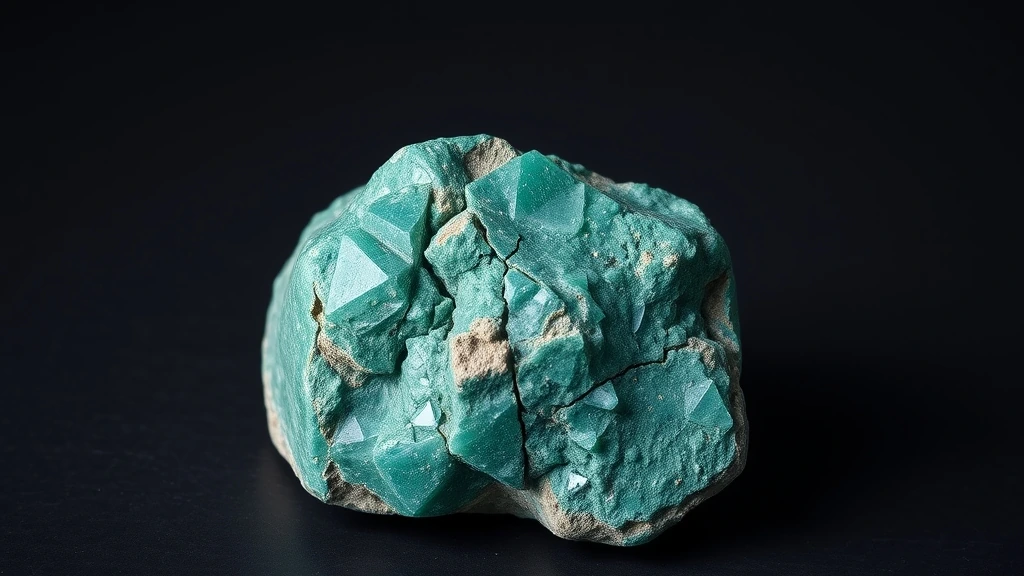
Atacamite belongs to the natural mineral group, forming exclusively in arid, oxidizing environments. It is not a synthetic compound but a naturally occurring crystal. Its geological origin is tightly linked to the weathering of copper sulfide ores. This process occurs in desert climates where evaporation exceeds precipitation. The mineral often appears as crusts or botryoidal masses. Its formation requires specific geochemical conditions. These conditions include high salinity and low humidity. Understanding this context is vital for identification.
What is Atacamite Gemstone? Geological Overview & Definition
Atacamite is a secondary mineral that precipitates from hydrothermal solutions. It typically forms in the oxidation zone of copper deposits. This process occurs where water and air interact with primary sulfide ores. The resulting environment is highly acidic and saline. Such conditions favor the stability of copper chloride complexes.
The mineral is geographically restricted to arid regions worldwide. Notable localities include the Atacama Desert in Chile. It frequently occurs alongside other desert minerals like halite and gypsum. Its rarity stems from the specific climatic requirements for formation. Consequently, high-quality gem material is exceptionally scarce. Most specimens are collected for mineralogical interest rather than jewelry.
Atacamite Gemstone Chemical Composition & Crystallographic Properties
Atacamite crystallizes in the orthorhombic crystal system, exhibiting distinct prismatic habits. Its lattice structure is defined by chains of edge-sharing Cu(OH)₄ octahedra. These chains are linked by chloride ions, creating a robust framework. The unit cell parameters reflect this specific geometric arrangement. This symmetry dictates its cleavage and fracture properties.
The chemical formula Cu₂Cl(OH)₃ indicates a complex hydroxide structure. Cation substitution is limited, as the lattice is highly specific. However, minor impurities can alter its physical properties. The mineral is notably sensitive to acidic environments. Exposure to strong acids can dissolve the hydroxide groups. This reactivity complicates its preservation and handling.
Color arises from d-d electronic transitions within the copper ions. The specific coordination geometry of the copper centers creates the chromophore. This results in the characteristic blue-green hue. Thermal behavior shows stability at room temperature. However, heating can dehydrate the mineral. This process transforms it into other copper chloride species.
| Property | Specification |
|---|---|
| Mineral Group | Natural Mineral / Crystal |
| Chemical Formula | Cu₂ Cl(OH)₃ |
| Mohs Hardness | 3–3.5 |
| Crystal System | Orthorhombic |
| Specific Gravity (Density) | 3.745–3.776 |
| Refractive Index | n α = 1.831 n β = 1.861 n γ = 1.880 |
| Color & Optical Properties | Natural Atacamite Gemstone color spectrum and optical dispersion |
| Primary Mining Localities | Global primary localities |
| Water & Chemical Resistance | High (Safe for gentle water washing) |
| Chakra Alignment (Traditional) | Root Chakra, Sacral Chakra |
| Zodiac Affinity (Traditional) | Virgo, Capricorn |
| Symbolic Meaning (Traditional) | Grounding, stability, and protection from negative energies |
Atacamite Gemstone Varieties & Color Spectrum
Atacamite exhibits a striking range of green hues, primarily driven by copper oxidation states within its crystal lattice. The most prized specimens display a deep, saturated emerald green that commands high value in the mineral collector market. These colors are stable only under specific humidity conditions, making preservation critical for long-term display.
Deep Green Atacamite
This variety forms in arid, oxidized copper deposits where low moisture levels prevent further alteration. The orthorhombic crystal structure allows for sharp, well-defined faces that enhance light reflection. Specimens from the Atacama Desert often feature this intense, uniform coloration without significant zoning.
Pale Green Atacamite
Found in younger oxidation zones, this morph displays a lighter, almost celadon green shade. It frequently contains minor inclusions of malachite or other secondary copper minerals. These specimens are less common than their darker counterparts and are often found in smaller crystal clusters.
Blue-Green Atacamite
This rare transitional variety bridges the gap between pure green and blue-green copper minerals. It typically forms in environments with fluctuating pH levels during the oxidation process. The refractive index of these crystals can vary slightly, creating subtle internal fire.
Zoned Atacamite Crystals
These specimens show distinct color banding, ranging from pale edges to a dark green core. The zoning reflects changes in the chemical environment during the crystal’s growth history. Geologists study these bands to understand the hydrothermal conditions of the host rock.
Atacamite with Quartz Inclusions
Some crystals trap small quartz fragments or bubbles during their formation in silica-rich solutions. These inclusions can scatter light, giving the stone a unique, textured appearance. Collectors value these specimens for their geological storytelling and visual complexity.
Where is Atacamite Gemstone Found? Geological Mining & Extraction
Atacamite primarily occurs in the oxidized zones of copper ore bodies, often associated with bornite and chalcocite. It forms through the hydration of copper chlorides in dry, desert climates with limited rainfall. The most famous deposits are located in the Atacama Desert of Chile and the Coahuila region of Mexico.
Extraction involves careful hand-picking to preserve the delicate crystal structures, as mechanical mining can shatter the soft stones. The Mohs hardness of 3–3.5 makes the mineral susceptible to abrasion during transport and processing. Miners must work quickly to prevent atmospheric moisture from altering the crystal faces.
Historical Significance & Cultural Lore of Atacamite Gemstone
Ancient Andean civilizations utilized copper-bearing minerals for ritualistic and decorative purposes, though atacamite itself was rarely carved due to its softness. Archaeological findings in the Atacama region reveal copper artifacts that likely originated from similar oxidation zones. These items held spiritual significance, linking the earth’s green fire to divine power.
In modern gemology, atacamite is celebrated for its vibrant color and scientific interest rather than traditional jewelry use. Its presence in famous mineral collections highlights the importance of copper oxidation in creating visually stunning specimens. The stone serves as a reminder of the dynamic geological processes that shape our planet’s surface.
Modern Uses & Jewelry Applications of Atacamite Gemstone
Atacamite is prized for its vivid emerald‑green hue and distinctive crystal habit, making it a favorite among lapidaries. It is most often cut as a cabochon to showcase its chatoyant surface, though skilled artisans also facet it for striking statement pieces. In addition to rings and pendants, the mineral is carved into ornamental beads, figurines, and decorative inlays for high‑end interiors.
- Cabochon settings highlight the stone’s silky luster and natural banding.
- Faceted cuts are used sparingly to avoid excessive cleavage, creating eye‑catching halo designs.
- Ornamental carvings exploit Atacamite’s relatively low hardness for intricate detailing.
Safety & Mineral Profile of Atacamite
Atacamite is a copper chloride hydroxide mineral that is chemically stable under normal laboratory conditions but exhibits a pronounced softness (Mohs hardness 1.5–2). It is non‑radioactive and does not contain toxic heavy metals such as lead or arsenic, yet the fine dust generated during cutting or polishing can be inhaled and may irritate the respiratory tract. The mineral is acid‑labile; contact with dilute acids or strong oxidizing agents can dissolve the surface, releasing copper ions. Because of its low hardness, tendency to flake, and the potential for dust inhalation, Atacamite is best displayed as a collector specimen rather than fashioned into jewelry or functional objects. Proper handling requires gloves, eye protection, and a well‑ventilated workspace, and specimens should be stored in a dry, inert environment to prevent surface degradation.
In museum collections and academic research, Atacamite serves as a key example of copper‑chloride mineralogy and a marker of hydrothermal alteration zones. Its distinctive greenish‑blue color and crystalline habit provide an excellent teaching tool for crystallography, while its occurrence in copper‑rich, oxidized ore deposits offers insights into the geochemical pathways of secondary copper minerals. The mineral’s well‑defined hexagonal crystal system and its relationship to the chlorite group make it a valuable specimen for studies of crystal chemistry, solid‑state transformations, and the effects of environmental factors on mineral stability.
Mineralogical Group and Planetary Lore of Atacamite
Historically, Atacamite was first described in the 19th century from deposits in the Atacama Desert of Chile, a region renowned for its copper mining. Early mineralogists noted its bright green coloration and assigned it to the chlorite group based on its crystal structure and chemical composition. According to early mineralogists, the mineral was often found in association with malachite and azurite, forming a characteristic trio of copper minerals that were prized for their vivid hues.
In lapidary texts, Atacamite has occasionally been referenced as a “copper green” stone, though its softness limits its use in ornamental carving. Planetary symbolism for Atacamite is minimal; it has not been identified in meteorite samples or on other planetary bodies. Nonetheless, its presence in oxidized copper deposits has made it a useful analog for studying the alteration processes that may occur on planetary surfaces exposed to oxidizing environments.
How to Identify Real vs. Fake Atacamite Gemstone
Artificial imitations of Atacamite include dyed quartz, synthetic glass, and resin composites that mimic its green color but lack the mineral’s characteristic density and crystal structure. These substitutes often feel lighter, display uniform coloration, and may exhibit a glassy luster rather than the authentic earthy sheen. Recognizing these differences is essential for collectors and jewelers seeking genuine material.
Practical At-Home Authenticity Tests
- Temperature Test (Thermal Feel): Natural Atacamite feels cool to the touch and retains temperature longer than glass or plastic imitations.
- Specific Gravity & Weight Test: With a density of 3.745–3.776 g/cm³, genuine Atacamite is noticeably heavier than quartz or glass of comparable size.
- Scratch & Hardness Test (Mohs Comparison): Using a steel nail (hardness ~5.5), a real Atacamite (hardness 3–3.5) will be scratched, whereas harder synthetics will resist.
- Microscopic & Loupe Inspection (Internal Inclusions): Under 10× magnification, authentic Atacamite shows fine, irregular inclusions and crystal twinning, while fakes appear uniformly clear or display bubble‑like glass inclusions.
Atacamite Gemstone Valuation Factors, Grading & Pricing
Color Saturation is the foremost driver of price. Deep emerald‑green hues with vivid, uniform saturation command premium rates, while pale or muted tones reduce value. Optical clarity and a high‑shine luster further enhance desirability, as any dullness or surface clouding is quickly penalized by buyers.
Carat Weight influences market positioning, but only when paired with excellent facet symmetry. Larger stones (over 2 ct) are rare and fetch higher prices, yet asymmetrical cuts or visible matrix bands can offset weight advantages. Inclusions that are tightly bound and non‑reflective are tolerated, whereas fractures dramatically lower the grade.
Geographical Provenance Premium adds a nuanced layer to pricing. Specimens from historic mines in Chile or the Atacama Desert often carry a collector’s premium, reflecting rarity and historic significance. Wholesale trends show steady demand, while retail prices rise 10‑15 % annually as the gemstone gains visibility in high‑end jewelry collections.
How to Clean and Care for Atacamite Gemstone
Use warm soapy water and a soft cloth to gently remove surface dirt; this method respects the mineral’s modest Mohs hardness of 3–3.5. Rinse briefly with lukewarm water and pat dry with a lint‑free microfiber towel. Avoid ultrasonic cleaners entirely, as the vibrations can cause micro‑fractures in the orthorhombic crystal lattice.
Cleansing and Recharging Atacamite Gemstone (Energetic Care)
For energetic renewal, place the stone on a selenite plate for several hours; the neutral charge of selenite safely absorbs negative energies without chemical interaction. This dry method is ideal because atacamite is slightly soluble in acidic solutions and should not be exposed to liquids beyond gentle cleaning.
Alternatively, expose the gem to moonlight or perform a brief smoke‑smudging ritual using white sage. Both techniques cleanse the stone’s aura without risking moisture‑induced damage, preserving its vibrant green color and structural integrity.
Frequently Asked Questions About Atacamite Gemstone
Is atacamite safe to wear in the rain?
Yes, it is safe for gentle water washing. While the mineral is stable under light moisture, prolonged submersion should be avoided. Its orthorhombic crystal structure remains intact during brief exposure to rain or splashes. Always dry the stone thoroughly with a soft cloth afterward to maintain its luster and prevent any potential surface degradation over time.
Can I clean atacamite in an ultrasonic cleaner?
No, avoid ultrasonic cleaners entirely. The high-frequency vibrations can cause structural fractures due to the stone’s relatively low hardness. Instead, use warm soapy water and a soft cloth for gentle cleaning. This method effectively removes dirt without risking the delicate orthorhombic crystal system or causing irreversible damage to the gemstone’s surface integrity.
What is the chemical formula of atacamite?
The formula is Cu₂Cl(OH)₃. This composition indicates it is a copper chloride hydroxide mineral. The presence of copper ions gives it its characteristic green hue. Understanding this chemical formula helps identify its origin in oxidized copper ore deposits. It is a key indicator for distinguishing it from other copper-bearing minerals like malachite or azurite.
How hard is atacamite on the Mohs scale?
It measures 3–3.5 on the Mohs scale. This places it in the soft category, making it susceptible to scratches from common materials. You should store it separately from harder gems to prevent abrasion. Its Mohs hardness dictates that it is best suited for pendants or earrings rather than rings, which experience frequent impact and friction.
What is the refractive index of atacamite?
The values range from 1.831 to 1.880. This high refractive index contributes to its strong luster and visual appeal. It is significantly higher than many common silicate minerals. This optical property allows light to bend sharply within the crystal, enhancing its deep green color. Gemologists use these specific RI values to confirm identification under a refractometer.
Which zodiac signs are aligned with atacamite?
Taurus, Gemini, and Leo are the aligned signs. These earth and fire signs resonate with the stone’s grounding energy. Taurus appreciates its stability, while Leo enjoys its vibrant color. Gemini benefits from its clarifying properties. Wearing this stone can help balance the elemental energies associated with these zodiac signs, promoting harmony and personal growth for the wearer.
Which chakras does atacamite activate?
It activates the Root and Heart Chakras. The Root Chakra connection grounds the wearer, fostering a sense of security and stability. Simultaneously, the Heart Chakra alignment encourages emotional openness and love. This dual activation makes it a powerful tool for meditation. It bridges the physical and emotional realms, promoting holistic well-being.
What is the crystal system of atacamite?
It crystallizes in the orthorhombic system. This means its crystals form right angles with unequal axes. You may see prismatic or tabular shapes in well-formed specimens. The orthorhombic crystal system influences how the stone splits and fractures. Understanding this geometry is crucial for lapidaries to cut the stone efficiently and maximize its aesthetic potential.