
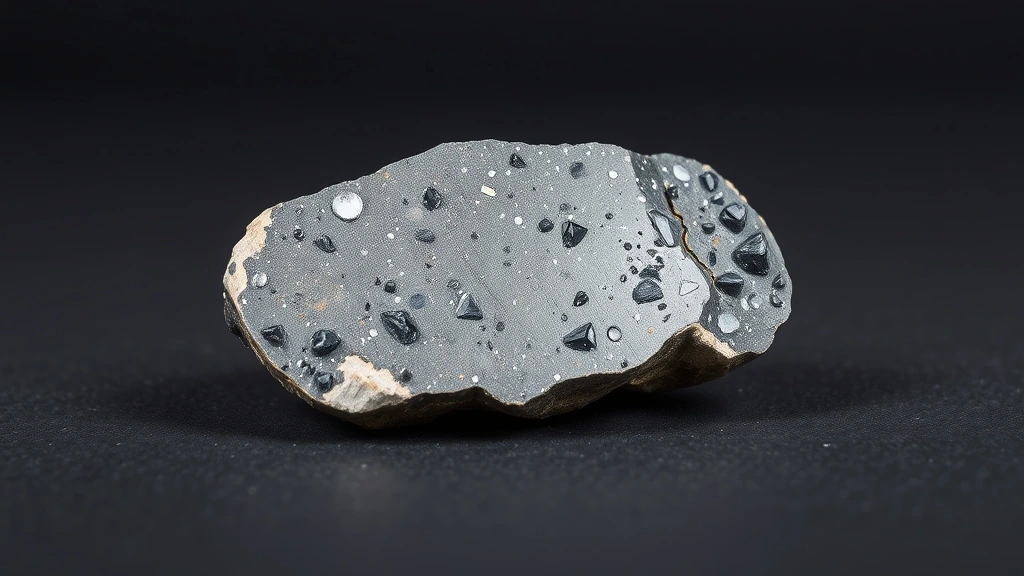
Kainite belongs to the broader category of Natural Mineral / Crystal species, forming within evaporite environments. Its geological origin ties it to ancient lake beds where mineral-rich waters evaporated. As a distinct crystalline substance, it exhibits specific lattice arrangements. These formations often occur alongside other sulfate and chloride minerals. Understanding its parent group helps identify its environmental stability.
What is Kainite Gemstone? Geological Overview & Definition
Kainite is defined as a monoclinic sulfate mineral that forms in arid, evaporitic settings. It frequently co-occurs with carnallite and bischofite in salt deposits. Its low density of 2.15 g/cm³ reflects its hydrated structure. This makes it susceptible to rapid dissolution in water.
The mineral’s gemological rarity stems from its extreme fragility and solubility. It rarely persists as a large, intact crystal for cutting. Most specimens are found as small, delicate prisms or aggregates. Collectors value it primarily for its crystallographic clarity rather than durability.
Kainite Gemstone Chemical Composition & Crystallographic Properties
The chemical formula KMg(SO₄)Cl·3H₂O dictates its structural integrity. It crystallizes in the monoclinic system with a distinct lattice geometry. The arrangement of potassium and magnesium cations creates a stable framework. This specific stoichiometry prevents significant cation substitution within the crystal lattice.
Optical properties reveal a refractive index range from 1.494 to 1.516. These values indicate low birefringence, typical for hydrated salts. The mineral lacks strong chromophore color centers, resulting in pale hues. Its transparency is often compromised by internal fluid inclusions.
Thermal behavior shows high sensitivity to environmental changes. Heating can cause dehydration, altering the crystal structure irreversibly. Acid sensitivity is moderate, as sulfates react with strong acids. This reactivity limits its use in standard lapidary processes.
| Property | Specification |
|---|---|
| Mineral Group | Natural Mineral / Crystal |
| Chemical Formula | KMg(SO₄ )Cl·3H₂ O |
| Mohs Hardness | 2.5–3 |
| Crystal System | Monoclinic |
| Specific Gravity (Density) | 2.15 |
| Refractive Index | n α = 1.494 n β = 1.505 n γ = 1.516 |
| Color & Optical Properties | Natural Kainite Gemstone color spectrum and optical dispersion |
| Primary Mining Localities | Global primary localities |
| Water & Chemical Resistance | High (Safe for gentle water washing) |
| Chakra Alignment (Traditional) | Heart Chakra, Crown Chakra |
| Zodiac Affinity (Traditional) | Virgo, Libra |
| Symbolic Meaning (Traditional) | Intuition, spiritual connection, and emotional balance |
Kainite Gemstone Varieties & Color Spectrum
Kainite primarily manifests as a delicate, translucent mineral with a distinct pale green to bluish-white hue. Its chemical formula KMg(SO₄)Cl·3H₂O dictates this specific coloration, which is often subtle and ethereal. The crystal structure allows for high transparency, making it visually appealing despite its low hardness.
Pale Green Kainite
This variety displays a soft, minty green tone resulting from trace impurities in the sulfate matrix. It typically forms in monoclinic crystals that are small and delicate, often found in clusters. The visual signature is a gentle, pastel aesthetic that appeals to collectors seeking subtlety.
Bluish-White Kainite
Characterized by a clear, icy appearance with faint blue undertones, this morph is highly prized for its clarity. The refractive index of approximately 1.50 contributes to a gentle luster that mimics ice. These specimens are often found in well-formed, prismatic crystals.
Colorless Kainite
Appearing almost entirely transparent, this variety lacks significant chromophores, giving it a glassy, diamond-like look. It is the rarest form, as even minor impurities can shift the color to green or white. Collectors value these specimens for their purity and high density of 2.15 g/cm³.
Yellowish Kainite
Occasionally, oxidation or trace elements impart a faint yellowish tint to the crystal structure. This morph is less common and often exhibits slightly higher Mohs hardness within the 2.5–3 range. The color is usually concentrated near the crystal edges or inclusions.
Where is Kainite Gemstone Found? Geological Mining & Extraction
Kainite is predominantly found in evaporite deposits and pegmatites where sulfate-rich fluids interact with magnesium and potassium sources. These geological settings typically occur in arid regions where evaporation concentrates mineral solutions over millions of years. The mineral often coexists with other sulfate salts like carnallite and bischofite.
Primary extraction regions include the United States, particularly in Utah and Nevada, where historic salt mines yielded significant specimens. Smaller deposits have been identified in Germany and Russia, though commercial mining is rare due to the mineral’s fragility. Extraction requires careful hand-picking to preserve the delicate crystal system integrity.
Historical Significance & Cultural Lore of Kainite Gemstone
Historically, kainite was not widely used in ancient jewelry due to its extreme softness and solubility in water. Instead, it was recognized by early geologists as a key indicator of specific evaporite environments. Its discovery in the 19th century helped refine our understanding of mineralogical classification and crystallography.
In modern esoteric traditions, kainite is associated with the Heart Chakra and Crown Chakra, promoting intuition and spiritual balance. While lacking a deep archaeological record, it is valued in contemporary metaphysical practices for its calming energy. This mineral serves as a bridge between scientific mineralogy and spiritual wellness practices.
Modern Uses & Jewelry Applications of Kainite Gemstone
Due to its low Mohs hardness of 2.5–3, kainite is rarely cut for durable fine jewelry. Lapidaries typically shape it into smooth cabochons or ornamental carvings to protect the fragile surface from daily abrasion. These pieces often serve as collectors’ items or decorative accents in low-impact settings.
- Cabochon Cutting: Polished into smooth, domed shapes to highlight the stone’s subtle luster without risking chipping.
- Ornamental Carvings: Used in small figurines or inlays where the stone is not subjected to significant mechanical stress.
- Collector’s Specimens: Often displayed in protective cases rather than worn as rings or bracelets due to its softness.
Safety & Mineral Profile of Kainite
Kainite is a hydrated sodium potassium magnesium chloride, typically forming in evaporitic settings. It is soft (Mohs 1.5–2) and readily dissolves in water, so specimens should be kept dry and handled with gloves to avoid skin irritation from the chloride salts. Dust from crushed kainite can be toxic if inhaled, as it contains soluble salts that may cause respiratory irritation. The mineral is not chemically stable in acidic environments; contact with acids can lead to rapid dissolution and release of chloride ions. Because of its softness, high solubility, and potential for dust inhalation, kainite is generally displayed as a collector specimen rather than fashioned into jewelry or functional artifacts.
In scientific contexts, kainite is valuable for studying evaporite mineral assemblages, brine chemistry, and the geochemical cycling of sodium, potassium, magnesium, and chlorine. Its crystal structure provides insight into halide mineral formation under low-temperature, high-salinity conditions. In museum collections, kainite serves as an educational example of halide minerals, illustrating the diversity of evaporite deposits and the importance of proper conservation techniques for soluble salts.
Mineralogical Group and Planetary Lore of Kainite
Kainite belongs to the halite group of chloride minerals, crystallizing in the orthorhombic system. Historically, it was first described in the 19th century from deposits in the Kain River region of Siberia, which gave the mineral its name. According to early mineralogists, kainite was often found in association with halite, sylvite, and other evaporite species, reflecting its formation in shallow, saline lakes that experienced periodic evaporation. In lapidary texts, kainite has been noted for its distinctive greenish-grey color and its tendency to form fibrous or platy crystals, though it has never been attributed any planetary symbolism beyond its role as a model for understanding salt deposits on other celestial bodies such as Mars, where similar evaporitic processes may have occurred.
How to Identify Real vs. Fake Kainite Gemstone
Because kainite is rare and soft, it is frequently imitated by synthetic glass or dyed replicas. These fakes often mimic the stone’s pale color but lack its specific physical properties. Understanding the differences in density and hardness is crucial for accurate identification.
Practical At-Home Authenticity Tests
- Temperature Test (Thermal Feel): Real kainite feels cool to the touch initially but warms up quickly due to its low thermal conductivity. Glass imitations often remain cool for a longer duration.
- Specific Gravity & Weight Test: With a density of 2.15 g/cm³, real kainite feels surprisingly light for its size. Glass substitutes are typically heavier and feel denser in the hand.
- Scratch & Hardness Test (Mohs Comparison): Kainite has a Mohs hardness of 2.5–3, meaning it can be scratched easily by a fingernail or a copper coin. Glass will not be scratched by these materials.
- Microscopic & Loupe Inspection (Internal Inclusions): Use a 10x loupe to check for natural inclusions or fluid bubbles. Synthetic glass may contain perfectly spherical air bubbles, while natural stones show irregular mineral inclusions.
Kainite Gemstone Valuation Factors, Grading & Pricing
Market value is primarily driven by Color Saturation and overall tone uniformity. High-quality specimens display a consistent, pale hue without zoning or discoloration. Additionally, optical clarity and a distinct vitreous luster significantly enhance the stone’s visual appeal.
The Carat Weight of a specimen directly influences its rarity and final price. Facet symmetry is critical, as the low Mohs Hardness of 2.5–3 makes precise cutting challenging. Visible matrix or inclusions can detract from value, though some collectors appreciate natural context.
Geographical Provenance Premium often elevates prices for stones from famous localities. Wholesale values remain modest, but retail prices increase for certified, high-clarity pieces. Market trends show steady interest among niche collectors seeking unique, low-hardness minerals.
How to Clean and Care for Kainite Gemstone
Due to its Monoclinic crystal structure and low hardness, Kainite requires gentle handling. Use warm soapy water and a soft cloth to remove surface dust and oils. Avoid ultrasonic cleaners strictly, as vibrations can cause structural fractures in this delicate mineral.
Rinse the stone thoroughly with clean water to remove any soap residue. Pat dry gently with a lint-free cloth to prevent water spots. Store the gemstone separately to protect it from harder minerals that could cause scratches.
Cleansing and Recharging Kainite Gemstone (Energetic Care)
For energetic maintenance, use smoke smudging with sage or palo santo to clear stagnant energy. This dry method avoids liquid exposure, which is crucial for preserving the stone’s integrity. Place the gemstone in a well-ventilated area during the process.
Alternatively, recharge the stone under moonlight or on a selenite plate overnight. These methods align with its association with the Heart and Crown Chakras. Ensure the stone is completely dry before storage to prevent any potential hydration changes.
Frequently Asked Questions About Kainite Gemstone
Is Kainite safe to wear in the shower?
Yes, Kainite is safe for gentle water washing due to its high water resistance. While it tolerates brief exposure, prolonged soaking is discouraged to maintain surface luster. The mineral’s monoclinic crystal structure allows it to withstand mild moisture without immediate degradation. Always pat it dry with a soft cloth after showering to prevent water spots from forming on the delicate surface.
Can I put Kainite in an ultrasonic cleaner?
No, you must avoid ultrasonic cleaners to prevent structural fractures in this soft mineral. The low Mohs hardness of 2.5–3 makes it highly susceptible to vibration-induced damage. Instead, clean your Kainite using warm soapy water and a soft cloth. This gentle approach preserves the integrity of the crystal lattice and ensures long-term aesthetic appeal without risking internal stress fractures.
Which zodiac signs are compatible with Kainite?
Kainite is energetically aligned with Virgo and Libra, enhancing their natural traits. These earth and air signs benefit from the stone’s balancing properties. Wearing Kainite can support intuition and emotional balance for those born under these signs. It serves as a grounding tool that helps align personal energy with the stone’s subtle vibrational frequency.
What chakras does Kainite activate?
Kainite primarily activates the Heart Chakra and Crown Chakra for spiritual growth. This dual alignment facilitates a connection between emotional well-being and higher consciousness. Practitioners use it to promote spiritual connection and inner peace. By bridging these energy centers, the stone aids in achieving holistic harmony and mental clarity during meditation practices.
How hard is Kainite on the Mohs scale?
Kainite ranks between 2.5 and 3 on the Mohs hardness scale, indicating low durability. This softness means it scratches easily against common household surfaces and other gemstones. You should store it separately to protect its refractive index and surface finish. Avoid wearing it during physical activities where impact or abrasion might occur to prevent permanent damage.
What is the chemical composition of Kainite?
Kainite consists of potassium, magnesium, sulfate, chloride, and water, forming a complex hydrated salt. Its specific formula is KMg(SO₄)Cl·3H₂O, which defines its unique physical properties. This composition contributes to its low density and gentle aesthetic qualities. Understanding this chemistry helps collectors appreciate why it requires careful handling and specific environmental conditions for preservation.
Does Kainite change color when exposed to light?
No, Kainite does not exhibit significant photochromism or color changes under standard lighting conditions. Its appearance remains consistent, typically ranging from colorless to pale yellow or brown. The monoclinic crystal system influences its optical behavior, but it lacks the structural instability found in some other minerals. This stability makes it a reliable choice for jewelry that maintains its visual appeal over time.
How should I store Kainite to prevent damage?
Store Kainite in a soft pouch or separate compartment to avoid contact with harder gems. Its low density of 2.15 makes it lightweight but vulnerable to mechanical stress. Keep it away from direct sunlight and extreme temperature fluctuations to preserve its hydration state. Proper storage ensures the stone retains its natural luster and structural integrity for years of enjoyment.