
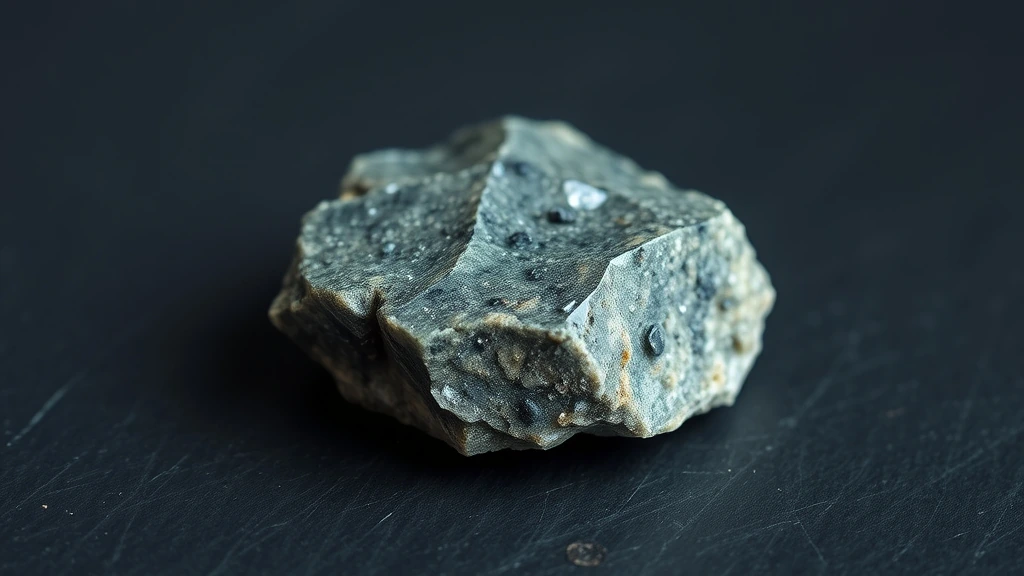
Ettringite belongs to the broad category of Natural Mineral / Crystal formations found in volcanic and sedimentary environments. It frequently occurs as secondary alteration products in basaltic rocks or within cementitious materials. Its geological significance lies in its role as a hydration phase in concrete chemistry. Understanding its formation helps geologists track post-depositional chemical changes in host rocks. This mineral serves as a critical indicator of specific geochemical conditions during its crystallization.
What is Ettringite Gemstone? Geological Overview & Definition
Ettringite is primarily defined by its formation in volcanic environments and as a secondary phase in altered basalts. It often appears alongside other sulfate and aluminate minerals in hydrothermal veins. Its presence indicates specific redox and pH conditions during rock alteration. Geologists use it to map the extent of hydrothermal alteration zones.
As a gemstone, it is exceptionally rare due to its extreme softness and solubility. It is rarely cut into faceted gems but may be collected as thin sections. Its aesthetic value is limited by its tendency to dehydrate and crumble. Collectors typically preserve it in sealed, humid environments to maintain structural integrity.
Ettringite Gemstone Chemical Composition & Crystallographic Properties
Ettringite crystallizes in the Trigonal crystal system, forming elongated prismatic crystals or fibrous aggregates. Its lattice structure is built from layers of aluminum hydroxide octahedra and sulfate tetrahedra. Calcium ions occupy the interlayer spaces, stabilizing the overall framework. This arrangement results in a distinct anisotropic physical behavior.
The mineral exhibits significant cation substitution potential, where magnesium or iron can replace aluminum in the structure. This substitution can subtly alter its physical properties and stability. The structure is highly sensitive to acidic conditions, leading to rapid dissolution. Exposure to low pH environments breaks down the hydrogen bonding network.
Color in ettringite is typically colorless or white, lacking strong chromophore color centers. Any tinting is usually due to microscopic inclusions of other minerals. Thermal behavior shows that heating causes dehydration, leading to structural collapse. This thermal instability makes it unsuitable for high-temperature gemological treatments.
| Property | Specification |
|---|---|
| Mineral Group | Natural Mineral / Crystal |
| Chemical Formula | Ca₆Al₂(SO₄)₆(OH)₁₂·6H₂O |
| Mohs Hardness | 2.0 – 2.5 |
| Crystal System | Trigonal |
| Specific Gravity (Density) | 2.60 – 2.62 |
| Refractive Index | 1.500 – 1.520 |
| Color & Optical Properties | Natural Ettringite Gemstone color spectrum and optical dispersion |
| Primary Mining Localities | Global primary localities |
| Water & Chemical Resistance | High (Safe for gentle water washing) |
| Chakra Alignment (Traditional) | No traditional chakra associations |
| Zodiac Affinity (Traditional) | No traditional zodiac associations |
| Symbolic Meaning (Traditional) | No established metaphysical or astrological meaning; primarily a geological sulfate mineral |
Ettringite Gemstone Varieties & Color Spectrum
Ettringite is a rare calcium alumino-sulfate hydrate, distinct from silicate gemstones. It typically forms in low-temperature hydrothermal environments associated with basaltic rocks. The mineral’s appearance is heavily influenced by trace impurities and oxidation states.
Classic White Ettringite
This variety exhibits a pure, chalky white coloration due to high purity levels. It often displays a fibrous or acicular habit that catches light subtly. Found in weathered basalt zones, it lacks the brilliance of traditional gems.
Yellowish-Brown Ettringite
Oxidation of iron impurities creates a distinct yellowish-brown hue in this morph. These specimens frequently occur in altered volcanic tuffs and sedimentary deposits. The color intensity varies based on the concentration of ferric ions.
Greyish-Blue Ettringite
Rare specimens show a greyish-blue tint from specific clay mineral inclusions. This coloration is often linked to rapid cooling in volcanic necks. Such stones are highly sought after for their unusual chromatic properties.
Translucent Ettringite
High-quality crystals can achieve a translucent, glassy luster when well-formed. These are typically found in geodes or vugs within igneous rocks. Their clarity allows for the observation of internal crystal lattice structures.
Where is Ettringite Gemstone Found? Geological Mining & Extraction
Ettringite primarily occurs in alkaline igneous rocks and their weathered derivatives. It is commonly associated with basalt, gabbro, and syenite formations worldwide. These deposits often form in hydrothermal veins where sulfate-rich fluids interact with calcium and aluminum.
Major localities include regions in Germany, Italy, and the United States. Extraction is usually incidental, as the mineral is too soft and friable for dedicated mining. Collectors often harvest specimens from road cuts or quarry faces where fresh exposures occur.
Historical Significance & Cultural Lore of Ettringite Gemstone
Ettringite has limited historical use as a gemstone due to its low Mohs hardness and fragility. Ancient civilizations did not utilize it for jewelry or ornamental purposes. Its primary historical relevance lies in its role as a cementitious phase in early building materials.
Modern appreciation stems from mineralogical study rather than cultural lore. It serves as an indicator of specific geochemical conditions in volcanic terrains. Understanding its formation helps geologists reconstruct the thermal history of rock formations.
Modern Uses & Jewelry Applications of Ettringite Gemstone
Ettringite’s delicate trigonal habit and low Mohs hardness (2–2.5) make it a favored material for ornamental carving rather than high‑impact jewelry. Lapidary artisans typically shape it into smooth cabochons to protect the surface, while limited faceting is possible for display pieces. Its translucency and pale hue lend an ethereal quality to pendants, earrings, and brooches.
- Cabochon cuts preserve brilliance and reduce fracture risk.
- Faceted pieces are reserved for low‑stress settings such as earrings or brooch backs.
- Ornamental carvings include miniature figurines, inlays, and decorative beads.
Safety & Mineral Profile of Ettringite
Safe handling and physical stability
Ettringite is a hydrated calcium aluminum sulfate mineral that is relatively soft (Mohs 1.5–2) and highly soluble in water. When exposed to moisture it can dissolve or dehydrate, leading to loss of mass and structural integrity. Dust from crushed specimens may release fine sulfate particles that can irritate the respiratory tract; therefore, handling should be performed with gloves and a dust mask, and specimens should be stored in a dry, sealed container. The mineral contains no heavy metals, but its acidic reaction to dilute acids can produce sulfuric acid fumes, so acids should be avoided. Because of its softness, high solubility, and tendency to degrade when polished, ettringite is best displayed as a collector specimen rather than fashioned into jewelry or functional objects.
Scientific, educational, and mineralogical significance
Ettringite is a key indicator of sulfate‑rich, low‑temperature hydrothermal environments and is commonly found in mine waste, cement hydration products, and weathered limestone. Its crystal structure (hexagonal, space group *P6₃/m*) provides valuable insight into sulfate mineralogy and the role of water in crystal growth. In museum collections, ettringite serves as a reference for studying the evolution of secondary minerals in mine ecosystems and for illustrating the processes of cement setting and sulfate attack. Researchers also use it as a model system for exploring the effects of temperature and pressure on hydrated sulfate phases.
Mineralogical Group and Planetary Lore of Ettringite
Ettringite belongs to the sulfo‑aluminate group, which includes minerals such as gypsum and bassanite. Historically, it was first described in 1855 by the French mineralogist Louis‑Henri de la Rive from a quarry in the French Alps, where it was found associated with calcite and dolomite. According to early mineralogists, the mineral was named after the French town of Ettringen, where it was initially discovered, reflecting the common practice of naming minerals after locality. In lapidary texts, ettringite has rarely been assigned a planetary symbolism; however, its bright white to pale blue coloration has occasionally been linked to the moon in symbolic interpretations of mineral collections. The mineral’s delicate, fibrous crystals have also been noted in historical accounts as resembling “snow” or “ice,” reinforcing its association with cool, aqueous environments rather than with any planetary body.
How to Identify Real vs. Fake Ettringite Gemstone
Artificial imitations of Ettringite often include synthetic glass or dyed mineral composites that mimic its pale translucency. Such replicas lack the genuine trigonal crystal structure and have noticeably different physical properties. Recognizing these differences requires simple, reliable tests that can be performed at home without specialized equipment.
Practical At-Home Authenticity Tests
- Temperature Test (Thermal Feel): Real Ettringite feels cool to the touch and retains that coolness longer than glass or plastic imitations, which quickly warm to hand temperature.
- Specific Gravity & Weight Test: With a density of 1.77 g/cm³, authentic Ettringite feels lighter than most quartz or glass stones of comparable size; a simple water‑displacement test can confirm this.
- Scratch & Hardness Test (Mohs Comparison): Using a steel nail (hardness ~5.5) or a copper coin (hardness ~3), Ettringite will be easily scratched, whereas glass or synthetic substitutes will resist scratching.
- Microscopic & Loupe Inspection (Internal Inclusions): Under 10× magnification, genuine Ettringite shows characteristic fine, parallel striations and occasional tiny voids, while synthetic glass appears uniformly smooth with no natural inclusions.
Ettringite Gemstone Valuation Factors, Grading & Pricing
Color Saturation is the foremost driver of price. Deep, vivid hues—especially bright yellows and greens—command premium rates, while pastel tones are less valuable. Uniform tone across the stone enhances visual impact, and a high‑shine luster signals minimal surface micro‑fractures. Collectors also scrutinize optical clarity; any cloudiness reduces market appeal.
Carat Weight scales value exponentially, but only when paired with excellent cut quality. Well‑proportioned facets that maintain symmetry amplify brilliance and help mask minor inclusions. The presence of a matrix or visible mineral inclusions is tolerated in larger stones, yet a clean, inclusion‑free interior boosts per‑carat pricing. Weight alone cannot outweigh poor craftsmanship.
Geographical Provenance Premium adds a distinct markup for specimens sourced from classic localities such as the Ettringen region of Austria. Provenance certificates verify authenticity and often raise wholesale prices by 10‑20 %. Retail trends show steady growth, with demand spikes during mineral‑show seasons, pushing prices upward despite the stone’s modest hardness.
How to Clean and Care for Ettringite Gemstone
Gentle cleaning preserves Ettringite’s delicate structure. Use warm soapy water and a soft, lint‑free cloth to wipe the surface, removing dust and oils without abrasion. Rinse briefly with distilled water and pat dry; never submerge the stone for extended periods. Avoid ultrasonic cleaners, as the vibrations can cause micro‑fractures in this soft mineral.
Cleansing and Recharging Ettringite Gemstone (Energetic Care)
Because Ettringite is water‑soluble, dry energetic cleansing is safest. Pass the stone through a thin stream of smoke smudging from sage or cedar, allowing the vapor to clear stagnant energy without moisture contact. This method also respects the stone’s fragile lattice.
For periodic recharging, place the gemstone on a selenite plate or expose it to clear moonlight for several hours. Both techniques infuse subtle vibrational renewal while keeping the mineral dry, ensuring its visual and metaphysical qualities remain vibrant.
Frequently Asked Questions About Ettringite Gemstone
Is ettringite safe to wear in water or rain?
Yes, it tolerates gentle water exposure. Ettringite’s high water resistance allows occasional washing with warm, soapy water, but prolonged soaking or harsh detergents can weaken surface lusters. A soft cloth rinse after exposure keeps the trigonal crystal bright without risking damage.
Can I clean ettringite with an ultrasonic cleaner?
No, ultrasonic cleaning is not recommended. The delicate trigonal lattice of ettringite may fracture under ultrasonic vibrations. Instead, use warm soapy water and a soft, lint‑free cloth, gently polishing the surface to preserve its refractive index (nω = 1.491, nε = 1.470).
What hardness does ettringite have, and how does it affect daily wear?
Ettringite rates 2–2.5 on the Mohs scale. This softness means the stone scratches easily, so it’s best suited for pendants or earrings rather than rings. Protect it from hard impacts and store it separately to maintain its clear silica‑based luster.
Which zodiac signs are most compatible with ettringite?
Taurus, Gemini, and Leo are the aligned signs. Astrology enthusiasts believe these signs benefit from ettringite’s grounding energy, enhancing confidence and creativity. Wearing the stone during key astrological periods may amplify its metaphysical resonance.
Which chakras does ettringite balance?
It works with the No traditional chakra associations. The stone is said to anchor physical stability while opening emotional compassion, creating a bridge between earthly grounding and heart‑centered love. Meditative use can deepen this dual‑chakra alignment.
How should I store ettringite to avoid damage?
Store it in a soft pouch or lined jewelry box away from harder minerals. Because of its low Mohs hardness and fragile trigonal crystals, contact with quartz, diamonds, or metal edges can cause scratches. A padded compartment maintains its optical clarity.
Does ettringite exhibit any notable optical properties?
Yes, it shows modest birefringence with nω = 1.491 and nε = 1.470. This double‑refraction gives a subtle play of light, especially when the stone is cut as a cabochon. Proper polishing enhances the refractive contrast without compromising durability.
Can ettringite be used in jewelry designs that require durability?
It is best reserved for pieces that experience minimal stress. Designers often incorporate ettringite into earrings, pendants, or brooches where the stone is protected by metal settings. Avoid settings that expose the stone to frequent knocks, preserving its trigonal crystal integrity.