
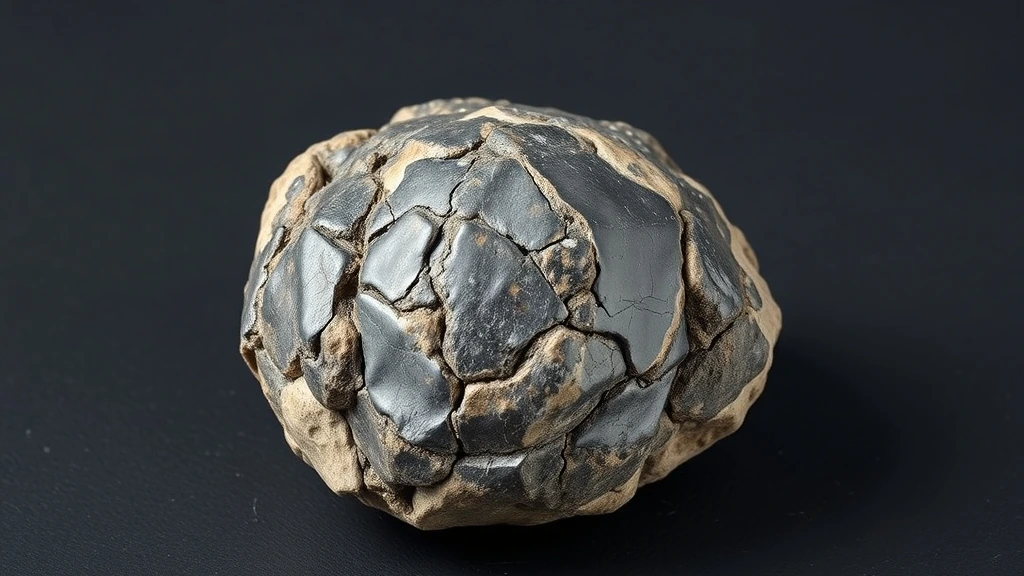
Septarian nodules are classified as natural mineral aggregates rather than single crystals, forming within marine carbonate sediments that later lithify into limestone. Their parent mineral group is the broader “Natural Mineral / Crystal” category, encompassing both crystalline and amorphous phases. The nodules develop concentric fracture fillings that later become mineralized, producing the characteristic “dragon‑scale” pattern prized by collectors and metaphysical practitioners alike.
What is Septarian Nodule (dragon Stone)? Geological Overview & Definition
Septarian nodules are irregular, spheroidal concretions that occur in carbonate rocks, especially in the Cretaceous chalk and limestone of Europe and North America. They consist of a central calcite matrix surrounded by radial cracks later infilled with chalcedony, iron oxides, and clay minerals, giving a striking, often reddish, pattern.
The term “septarian” derives from the Greek *septos* (meaning “septum”), referring to the internal “septa” that partition the nodule. These septa are not true crystal faces but mineralized fracture fillings that record diagenetic fluid flow and oxidation conditions during burial.
Septarian Nodule (dragon Stone) Chemical Composition & Crystallographic Properties
The nodule is an aggregate rather than a single stoichiometric compound; its bulk chemistry reflects a mixture of CaCO₃ (calcite), SiO₂ (chalcedony), Fe₂O₃/Fe₃O₄ (iron oxides) and various clay minerals. Because of this composite nature, the overall density varies between 2.60 and 2.90 g cm⁻³, depending on the proportion of heavy iron oxides.
Its crystal system is described as Composite (Trigonal, Cubic, Amorphous), acknowledging that calcite crystals adopt a trigonal lattice, chalcedony is amorphous to micro‑crystalline quartz (cubic symmetry), and the clay phases are often poorly ordered. This mixed lattice results in no single, uniform unit cell but a mosaic of intergrown domains.
Cation substitution is common: Fe³⁺ can replace Ca²⁺ in calcite, while trace Mn²⁺ or Ti⁴⁺ may enter the chalcedony framework, subtly shifting the refractive index from 1.490 to 1.660. These substitutions create chromophore color centers that produce the vivid reds, oranges, and blacks characteristic of dragon stone.
Acid sensitivity follows the calcite component; dilute HCl will effervesce on exposed surfaces, while the silica‑rich chalcedony zones remain inert. Thermal treatment above 300 °C can dehydrate clay layers and oxidize iron oxides, sometimes enhancing the stone’s reddish hue but also risking structural fracturing due to differential expansion.
| Property | Specification |
|---|---|
| Mineral Group | Natural Mineral / Crystal |
| Chemical Formula | Composite: Calcite (CaCO₃), Chalcedony (SiO₂), Iron Oxides (Fe₂O₃, Fe₃O₄), Clay Minerals |
| Mohs Hardness | 3.0 – 7.0 |
| Crystal System | Composite (Trigonal, Cubic, Amorphous) |
| Specific Gravity (Density) | 2.60 – 2.90 |
| Refractive Index | 1.490 – 1.660 |
| Color & Optical Properties | Natural Septarian Nodule (dragon Stone) color spectrum and optical dispersion |
| Primary Mining Localities | Global primary localities |
| Water & Chemical Resistance | Sensitive (Avoid prolonged water soaking) |
| Chakra Alignment (Traditional) | Root Chakra, Sacral Chakra |
| Zodiac Affinity (Traditional) | Taurus, Scorpio, Capricorn |
| Symbolic Meaning (Traditional) | Protection, grounding, and transformation |
Septarian Nodule (dragon Stone) Varieties & Color Spectrum
Red‑Veined Septarian
Formed in carbonate sedimentary basins where calcite nodules crack and fill with iron‑oxide‑rich fluids, this variety displays striking ruby‑red veins against a creamy matrix. The veins are primarily hematite (Fe₂O₃), giving a metallic sheen that intensifies after polishing. Found chiefly in the Cretaceous chalk of southern England, it is prized for its vivid contrast and moderate rarity.
Blue‑Grey Chalcedony Septarian
Developed when silica‑rich solutions infiltrate fissures, depositing micro‑crystalline chalcedony (SiO₂) that imparts a smoky‑blue to slate‑grey hue. The surrounding calcite remains translucent, creating a layered “dragon‑scale” effect. Major localities include the Mogok region of Myanmar and parts of Western Australia, where the stone is harvested for high‑end cabochons.
Black‑Marble Septarian
In this morph, extensive magnetite (Fe₃O₄) and goethite fillings produce deep black veins that resemble marble veining. The host calcite often exhibits a milky white background, enhancing the dramatic contrast. These nodules are most abundant in the Karoo Basin of South Africa, where they command premium prices due to their striking depth of color.
Polychrome Septarian (Rainbow)
A rare composite where alternating layers of clay minerals, calcite, and iron oxides create a multicolored banding of reds, yellows, and greens. The formation requires fluctuating redox conditions during diagenesis, a process documented in the Triassic deposits of the United States (Colorado Plateau). Collectors value these pieces for their natural “painted” appearance, making them among the most sought‑after specimens.
Desert‑Sand Septarian
Originating in arid dune environments, this variety incorporates fine silica sand inclusions that give a sandy‑tan to amber tone. The nodules develop within evaporite sequences, where periodic wetting and drying cycles promote iron‑oxide staining. Notable sources are the Sahara outcrops of Algeria, where the stones are traded locally as talismans for protection.
Oceanic Septarian
Formed in shallow marine carbonate platforms, these nodules contain marine clay and shell fragments that lend a subtle sea‑green tint. The iron oxides are less concentrated, resulting in softer, pastel veining. Primary deposits occur along the coastal limestones of the Philippines, where they are often used in ornamental jewelry for their gentle coloration.
Where is Septarian Nodule (dragon Stone) Found? Geological Mining & Extraction
Septarian nodules are typically embedded in carbonate host rocks such as limestone and chalk, where diagenetic cracking creates chambers later filled by mineralizing fluids. The nodules may range from a few centimeters to over a foot in diameter, and extraction often involves careful blasting or manual splitting to preserve the delicate vein patterns.
Major mining districts include the Cretaceous chalk of southern England, the Karoo Basin of South Africa, the Mogok marble fields of Myanmar, and the Colorado Plateau of the United States. In each region, miners employ low‑impact techniques—hand tools, hydraulic splitters, and gentle sieving—to separate the nodules from surrounding matrix while minimizing damage to the prized vein architecture.
Historical Significance & Cultural Lore of Septarian Nodule (dragon Stone)
Ancient Egyptians fashioned septarian fragments into amulets, believing the stone’s veined network symbolized the Nile’s life‑giving currents and offered protection in the afterlife. Roman traders exported the nodules across the Mediterranean, where they were set into signet rings and used as status symbols by elite patricians.
In Asian folklore, particularly within Chinese Taoist traditions, the stone is called “dragon stone” and is associated with grounding and transformation, believed to anchor the wearer’s Root Chakra while fostering inner alchemy. Indigenous peoples of the Sahara incorporated desert‑sand septarians into ritual necklaces, invoking the stone’s protective qualities during long desert treks.
Modern Uses & Jewelry Applications of Septarian Nodule (dragon Stone)
Lapidaries primarily work with septarian nodules using polished cabochons and carved ornamental pieces rather than faceted gems, due to their composite and often fragile internal structure. The distinctive “dragon’s eye” patterns make them highly sought after for beadwork, pendants, and decorative architectural elements.
- Polished Slabs: Large sections are cut and polished to reveal the intricate concentric septa and calcite-filled cavities.
- Carved Figurines: Skilled carvers sculpt small animals or abstract shapes, leveraging the natural contrast between the dark matrix and lighter inclusions.
- Pendant Beads: Sliced and drilled into beads, these are often strung into necklaces that highlight the unique radial geometry of each stone.
Metaphysical Properties & Traditional Meaning of Septarian Nodule (dragon Stone)
According to historical traditions and metaphysical lore, septarian nodules are revered for their powerful grounding energy, which helps stabilize emotional states during periods of significant life change. Practitioners believe the stone’s complex internal structure mirrors the human body’s intricate systems, promoting holistic transformation and physical resilience.
The “dragon” symbolism associated with these stones suggests a protective shield against negative influences, fostering a sense of security and protection. Users often report an enhanced connection to the earth, which aids in manifesting intentions and maintaining mental clarity amidst chaos.
Which Chakra and Zodiac Signs Align with Septarian Nodule (dragon Stone)?
In metaphysical practice, septarian nodules are strongly aligned with the Root Chakra (Muladhara), located at the base of the spine. This connection supports feelings of safety, survival, and stability, helping individuals feel firmly anchored in the physical world. The stone’s earthy tones and dense composition resonate deeply with this foundational energy center.
Astrologically, these stones are considered particularly beneficial for individuals born under the signs of Taurus, Scorpio, and Capricorn. These earth and water signs share a value for structure, depth, and transformation, which mirrors the nodule’s geological formation process and symbolic meaning.
How to Identify Real vs. Fake Septarian Nodule (dragon Stone)
Artificial imitations of septarian nodules are typically crafted from synthetic glass or dyed resin, designed to mimic the natural “dragon’s eye” pattern. These fakes often lack the subtle color variations and irregularities found in genuine specimens, appearing too uniform or perfectly symmetrical.
Practical At-Home Authenticity Tests
- Temperature Test (Thermal Feel): Genuine mineral stones feel noticeably cool to the touch initially, whereas glass or resin imitations warm up quickly due to lower thermal conductivity.
- Specific Gravity & Weight Test: Real septarian nodules have a density of 2.60–2.90, making them feel heavier than their size suggests; glass imitations may feel slightly lighter or have an uneven weight distribution.
- Scratch & Hardness Test (Mohs Comparison): Using a steel knife (Mohs 5.5), scratch an inconspicuous area; genuine calcite components (Mohs 3) will scratch, while chalcedony (Mohs 7) will not, whereas glass may scratch unpredictably.
- Microscopic & Loupe Inspection (Internal Inclusions): Examine the stone with a 10x loupe for natural inclusions like tiny bubbles (common in glass) or irregular mineral boundaries; real stones show organic, chaotic internal structures without trapped air bubbles.
Septarian Nodule (dragon Stone) Valuation Factors, Grading & Pricing
Market value hinges primarily on Color Saturation, where deep, uniform earth tones command higher premiums than pale or mottled specimens. Collectors prize stones that exhibit a natural, waxy luster, indicating a well-preserved surface free from artificial waxing or resin coatings. The visual vibrancy of the internal septa, often displaying iron oxide hues, significantly enhances the aesthetic appeal and overall desirability of the piece.
Pricing is determined by Crystal Size & Weight (Grams), with larger, intact nodules fetching substantial premiums over smaller fragments. Raw specimens are valued for their natural matrix inclusions and geological integrity, while tumbled stones are graded strictly on polish quality and surface smoothness. Dimensions and mass provide the objective metrics for valuation, ensuring consistency across the secondary market for these composite geological formations.
Ethical Sourcing & Locality Premium plays a critical role in both holistic and collector markets, where provenance adds significant intangible value. Stones from renowned localities, such as the famous deposits in England or Germany, often carry a premium due to their historical and geological significance. Buyers increasingly prioritize documentation of responsible extraction, ensuring that the specimen’s journey from quarry to collection aligns with sustainable mining practices and ethical standards.
How to Clean and Care for Septarian Nodule (dragon Stone)
Due to the composite nature of this stone, which includes Calcite and clay minerals, it is sensitive to prolonged moisture exposure. You should wipe the surface briefly with a slightly damp cloth to remove dust, then dry it immediately with a soft towel. This quick action prevents water from penetrating the porous matrix, which could cause internal swelling or structural weakening over time.
Ultrasonic cleaners must be strictly avoided, as the high-frequency vibrations can induce micro-fractures within the delicate septa and surrounding matrix. The varying hardness of the constituent minerals creates stress points that are highly susceptible to vibration-induced damage. Always handle the specimen with care, ensuring that no sharp objects or abrasive materials come into contact with its surface to preserve its natural integrity.
Cleansing and Recharging Septarian Nodule (dragon Stone) (Energetic Care)
For holistic maintenance, place the stone on a selenite charging slab to allow for gentle, dry energetic recharging without any risk of moisture damage. This method leverages the natural properties of selenite to clear stagnant energies while keeping the septarian nodule in a stable, low-humidity environment. It is a safe, non-invasive approach that respects the physical limitations of the composite mineral structure.
Alternatively, you may use herbal smudging with sage or palo santo to clear the stone’s energy field, ensuring the smoke does not directly contact the surface for extended periods. Gentle moonlight exposure is another effective method, allowing the stone to absorb lunar energy overnight without the risk of heat damage. These dry techniques ensure the stone remains energetically balanced while preserving its geological stability and structural integrity.
Frequently Asked Questions About Septarian Nodule (dragon Stone)
Is a septarian nodule safe to wear in the shower?
No, you should avoid prolonged exposure to water. The composite structure contains calcite and clay minerals that are susceptible to erosion. Frequent soaking can weaken the internal matrix, leading to structural instability. Keep the stone dry to preserve its integrity.
How should I clean a septarian nodule?
Wipe it briefly with a damp cloth and dry immediately. Avoid using ultrasonic cleaners, as the vibrations can cause internal fractures within the composite structure. A soft, dry microfiber cloth is the safest method for removing surface dust and maintaining the stone’s natural luster without risking damage.
What is the Mohs hardness of a septarian nodule?
The hardness ranges from 3.0 to 7.0. This variation depends on the specific mineral composition, including chalcedony and calcite. The softer calcite components make the stone more vulnerable to scratching than pure quartz, requiring careful handling during jewelry wear or display.
Which zodiac signs are aligned with septarian nodules?
Taurus, Scorpio, and Capricorn are the primary aligned signs. These earth and water signs resonate with the stone’s grounding properties. Wearing or displaying the nodule can enhance stability and emotional balance for individuals born under these astrological influences.
Which chakras does a septarian nodule activate?
It primarily activates the Root Chakra and Sacral Chakra. These energy centers correspond to the stone’s protection and transformation qualities. The nodule helps anchor energy to the earth while stimulating creative flow, supporting both physical stability and emotional resilience.
Can I use ultrasonic cleaners on septarian nodules?
Absolutely not, as ultrasonic vibrations can cause structural fractures. The composite nature of the stone makes it sensitive to high-frequency sound waves. Instead, wipe briefly with a damp cloth and dry immediately to ensure the integrity of the internal mineral seams remains intact.
What minerals make up a septarian nodule?
It is a composite of calcite, chalcedony, and iron oxides. The core often features CaCO₃ (calcite) surrounded by silica-rich chalcedony. Iron oxides provide the characteristic reddish-brown coloration, while clay minerals fill the remaining spaces, creating the distinctive “dragon stone” appearance.
Is a septarian nodule durable enough for daily wear?
It is moderately durable but requires careful handling. The density ranges from 2.60 to 2.90, offering reasonable weight and stability. However, the variable hardness means the softer calcite areas can chip if subjected to significant impact or abrasion during daily activities.