
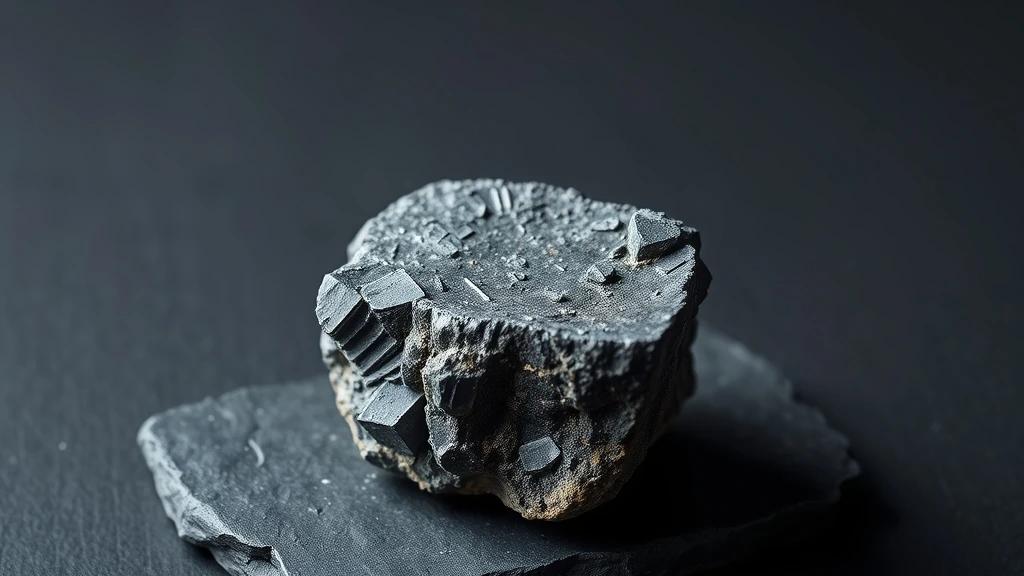
Torbernite belongs to the autunite group, a family of uranyl phosphate minerals. It is classified as a natural mineral crystal formed in oxidized uranium deposits. These formations typically occur in the late stages of hydrothermal alteration. The mineral often associates with other uranium-bearing species like autunite and metatorbernite. Its geological context indicates significant water involvement during crystallization.
What is Torbernite? Geological Overview & Definition
Torbernite is a secondary mineral that precipitates from uranium-rich solutions. It commonly forms in the oxidized zones of uranium ore bodies. The tetragonal crystal habit often presents as prismatic or tabular crystals. These structures frequently occur in radiating clusters or massive aggregates.
The mineral serves as a key indicator of uranium mineralization. It is chemically distinct from its anhydrous counterpart, metatorbernite. Hydration levels significantly influence its physical stability and optical properties. Geologists use it to trace paleohydrological conditions in ancient ore deposits. Its presence signals specific redox environments during formation.
Torbernite Chemical Composition & Crystallographic Properties
The chemical formula Ca(UO₂)₂(PO₄)₂·10-12H₂O defines its stoichiometric structure. It crystallizes in the tetragonal system with a distinct lattice arrangement. The structure features uranyl ions coordinated with phosphate groups. Water molecules occupy specific sites within the crystal lattice.
Cation substitution can occur, where calcium may be replaced by other alkaline earth metals. This substitution slightly alters the unit cell dimensions. The mineral is highly sensitive to acidic conditions, which can dissolve the structure. Acid exposure breaks down the phosphate framework, leading to amorphous residues.
Color arises from chromophore centers within the uranyl ion. The U⁶⁺ ion absorbs light in the visible spectrum. This results in the characteristic blue to green hues observed. Thermal behavior shows that heating drives off structural water. Dehydration transforms torbernite into the anhydrous metatorbernite phase.
| Property | Specification |
|---|---|
| Mineral Group | Natural Mineral / Crystal |
| Chemical Formula | Ca(UO₂)₂(PO₄)₂·10-12H₂O |
| Mohs Hardness | 2–2.5 |
| Crystal System | Tetragonal |
| Specific Gravity (Density) | measured: 3.22; calculated: 3.264(1) |
| Refractive Index | nω = 1.590 – 1.592 nε = 1.581 – 1.582 |
| Color & Optical Properties | Natural Torbernite color spectrum and optical dispersion |
| Primary Mining Localities | Global primary localities |
| Water & Chemical Resistance | High (Safe for gentle water washing) |
| Chakra Alignment (Traditional) | Third Eye Chakra, Crown Chakra |
| Zodiac Affinity (Traditional) | Aquarius, Pisces |
| Symbolic Meaning (Traditional) | Intuition, spiritual insight, and psychic clarity |
Torbernite Varieties & Color Spectrum
Torbernite exhibits a striking range of hues driven by uranium content and trace impurities. The most common presentation is a deep, vibrant blue that commands attention in mineral collections. This intense saturation results from the specific oxidation state of uranium within the crystal lattice.
Classic Blue Torbernite
This variety displays a rich, azure to sapphire-blue coloration typical of high-purity specimens. It often forms in pegmatite environments where uranium-rich fluids interact with phosphate minerals. The crystals frequently exhibit a distinct prismatic habit with well-defined faces.
Collectors prize this morph for its clarity and lack of significant inclusions. The refractive index remains consistent, allowing light to penetrate and enhance the gemstone’s visual depth. Rarity increases with crystal size, as large, intact formations are uncommon in the field.
Green Torbernite
Occasionally, trace amounts of iron or other transition metals shift the hue toward a pale green. This color morph is less common and often associated with specific geological zones in the host rock. The green tint may appear as a subtle overlay on the primary blue structure.
These specimens are valued for their unique chromatic deviation from the standard blue. The chemical formula remains unchanged, but the optical properties shift slightly due to impurity absorption. Finding large, clean green crystals is a significant challenge for serious collectors.
Mixed-Color Torbernite
Some deposits yield crystals that display a gradient from blue to green or even yellowish-brown. This zonation reflects changing chemical conditions during the crystallization process. The tetragonal crystal system allows for these internal color variations without disrupting the external shape.
Such specimens offer a complex visual narrative of the geological history. The transition zones can be sharp or gradual, depending on fluid dynamics. These mixed-color stones are highly sought after for their scientific and aesthetic value.
Crystalline Cluster Torbernite
This variety features multiple small crystals growing in dense, radiating clusters. The interlocking nature of the crystals creates a textured, three-dimensional appearance. Inclusions of other minerals, such as quartz or calcite, are frequently present in these formations.
Clusters are often found in cavities where space allowed for unimpeded growth. The Mohs hardness of 2–2.5 makes these delicate structures susceptible to damage during extraction. Careful handling is essential to preserve the intricate details of the cluster.
Rare Yellowish Torbernite
A very rare variety exhibits a yellowish or brownish tint, often due to advanced oxidation. This color change indicates a different environmental condition during formation. The density remains consistent, but the optical absorption bands shift significantly.
These specimens are extremely scarce and highly prized by specialized collectors. The yellow hue is often associated with older, more weathered deposits. Their rarity makes them a significant addition to any high-end mineral collection.
Where is Torbernite Found? Geological Mining & Extraction
Torbernite primarily forms in pegmatite dikes and hydrothermal veins associated with uranium deposits. These geological settings provide the necessary phosphate and calcium sources for crystal growth. The mineral is often found in association with other uranium-bearing minerals like autunite.
Extraction requires careful manual digging to avoid fracturing the delicate crystals. The low Mohs hardness makes the mineral vulnerable to mechanical damage during mining operations. Specialized tools are used to separate the torbernite from the host rock without causing irreversible harm.
Major deposits are located in regions with significant uranium mining history, such as the Colorado Plateau in the United States. Other notable locations include the Ural Mountains in Russia and various sites in Europe. These areas have produced some of the finest specimens known to science.
Historical Significance & Cultural Lore of Torbernite
Although not widely used in ancient jewelry due to its radioactivity and softness, torbernite has been known to mineralogists since the late 18th century. It was first described in 1784 by the French mineralogist Jean-Baptiste Bouchard. The mineral was named after the French chemist Jean-Charles de Borda, who contributed to early chemical analyses.
In modern esoteric practices, torbernite is associated with the Third Eye Chakra and Crown Chakra. Practitioners believe it enhances intuition, spiritual insight, and psychic clarity. These metaphysical attributes align with the mineral’s vibrant color and crystalline structure.
The mineral’s historical significance lies primarily in its role in the discovery of radioactivity. Early studies of uranium minerals, including torbernite, paved the way for nuclear physics. Its cultural lore remains niche, focused on modern spiritual and scientific appreciation rather than ancient artifact use.
Modern Uses & Jewelry Applications of Torbernite
Torbernite’s vivid green‑yellow hue and tabular crystal habit make it a niche favorite among lapidary artists, though its low Mohs hardness (2–2.5) limits extensive cutting. Artisans typically fashion thin cabochons or shallow facets to showcase the mineral’s natural fluorescence under UV light, while larger specimens are carved into ornamental plaques for display. The material’s brittleness demands careful handling, but when set in protective settings it can add an exotic, radioactive accent to high‑end jewelry.
- Cabochon pendants set in bezel mounts with lead‑free backing
- Shallow‑faceted earrings highlighting the crystal’s tetragonal symmetry
- Decorative carvings for mineral cabinets or scientific exhibits
Safety & Mineral Profile of Torbernite
Torbernite contains uranium, so it is mildly radioactive and chemically toxic; handling should be limited to short periods, with gloves, eye protection, and storage in sealed containers to prevent inhalation of dust. The mineral is hydrous, losing water over time, which can alter its appearance and increase surface fragility, so stable indoor humidity (≈45 %) is recommended. While historically some metaphysical circles claimed it enhances intuition and psychic clarity, reputable gemological sources stress that its primary value lies in scientific study and specimen display, not crystal healing.
Mineralogical Group and Planetary Lore of Torbernite
Torbernite belongs to the uranium‑phosphate group, sharing structural features with autunite and meta‑autunite, and crystallizes in the tetragonal system with a measured density of 3.22 g/cm³. Its composition, Ca(UO₂)₂(PO₄)₂·10‑12H₂O, reflects a complex hydration state that can vary with ambient conditions, influencing both its optical properties and stability.
In planetary lore, the mineral’s uranium content links it symbolically to the planet Mars and the alchemical concept of transformation, while its green‑yellow coloration has been associated with the Third Eye and Crown Chakras in modern esoteric frameworks. Such associations are cultural interpretations and hold no scientific weight; safety considerations always supersede any symbolic use.
How to Identify Real vs. Fake Torbernite
Artificial imitations of torbernite often use dyed glass, polymer resins, or painted gypsum to mimic its characteristic color and translucency, but they lack the mineral’s intrinsic radioactivity and crystal lattice. Synthetic replicas may display uniform coloration without the natural striations or hydration streaks seen in authentic specimens. A reliable assessment combines visual inspection with simple physical tests to differentiate genuine mineral from counterfeit.
Practical At-Home Authenticity Tests
- Temperature Test (Thermal Feel): Real torbernite feels cool to the touch and retains a lower temperature longer than glass or plastic, due to its higher density and thermal conductivity.
- Specific Gravity & Weight Test: Using a small scale and water displacement, genuine torbernite will register a specific gravity around 3.2, noticeably heavier than most glass imitations (≈2.5).
- Scratch & Hardness Test (Mohs Comparison): A copper coin (hardness ~3) will easily scratch a fake, while authentic torbernite (hardness 2–2.5) will be scratched with a fingernail or a mineral of hardness 2.5, confirming its softness.
- Microscopic & Loupe Inspection (Internal Inclusions): Under 10×–30× magnification, natural torbernite shows fine, irregular fractures, water‑loss staining, and occasional uranyl fluorescence, whereas synthetic glass appears uniformly smooth with no internal inclusions.
Torbernite Valuation Factors, Grading & Pricing
Specimen aesthetic quality drives the highest premiums in the mineral market. Collectors prize crystal habit perfection, where the tabular, radiating sheets display vivid green‑yellow fluorescence without surface blemishes. An undamaged matrix that showcases the natural luster and clear cleavage planes adds considerable visual appeal and market value.
Rarity and specimen dimensions are the next decisive elements. Large, intact clusters measured in centimeters and grams command top prices, especially when the crystals retain their original hydration and display no handling fractures. Specimens that have been carefully extracted and preserved without any chips or surface loss are markedly more valuable to scientific and private collections.
Mineralogical provenance and locality value often determine a specimen’s ultimate price tag. Torbernite from classic uranium‑rich districts such as the Shinkolobwe mine (Democratic Republic of Congo) or the historic St. Germain‑les‑Bains locality (France) carries a premium due to documented geological significance. Provenance certificates and museum‑grade documentation further enhance desirability among institutional buyers.
How to Clean and Care for Torbernite
Cleaning torbernite should be gentle to preserve its delicate hydration layers. Use warm soapy water and a soft cloth, lightly wiping the surface to remove dust without applying pressure that could fracture the crystal lattice. After cleaning, pat the specimen dry with a clean, dry microfiber cloth and store it in a stable, low‑humidity environment. Avoid ultrasonic cleaners entirely, as the high‑frequency vibrations can cause micro‑fractures and degrade the mineral’s structural integrity.
Cleansing and Recharging Torbernite (Energetic Care)
For holistic energetic maintenance, place the torbernite on a selenite charging slab in a quiet space, allowing the neutral energy of selenite to gently cleanse any absorbed negative vibrations. Limit exposure to natural moonlight for a few hours, which is safe and can subtly refresh the stone’s metaphysical properties without introducing heat.
Alternatively, a brief herbal smudging session using sage or sweetgrass can clear lingering energetic residue; hold the specimen at a respectful distance to avoid ash contact and ensure the smoke passes lightly over the surface. After smudging, return the stone to its display case, where it can continue to radiate intuition and spiritual insight for the collector.
Frequently Asked Questions About Torbernite
What is the chemical composition of torbernite?
Torbernite is a hydrated calcium uranyl phosphate with the formula Ca(UO₂)₂(PO₄)₂·10‑12H₂O. This complex structure contains uranium in the hexavalent UO₂²⁺ ion, calcium, and phosphate groups, all coordinated by ten to twelve water molecules that give the mineral its characteristic green‑yellow hue.
How hard is torbernite on the Mohs scale?
Torbernite rates between 2 and 2.5 on the Mohs hardness scale. Such low hardness makes it extremely soft, comparable to gypsum, so it should be handled with care, stored away from harder gemstones, and never subjected to impact or abrasion that could cause surface damage.
Can torbernite be worn in water or the shower?
Yes, torbernite has high water resistance and is safe for gentle water washing. A brief rinse with warm, soapy water followed by drying with a soft cloth will not degrade the mineral, but prolonged immersion or harsh detergents should be avoided to preserve its delicate crystal habit.
What is the recommended cleaning method for torbernite?
Use warm soapy water and a soft cloth, avoiding ultrasonic cleaners. The mineral’s fragile, hydrated structure can fracture under ultrasonic vibration, so gently wipe the surface with a damp microfiber cloth, then pat dry; never soak it for extended periods.
Which zodiac signs are associated with torbernite?
Torbernite is linked to the zodiac signs Aquarius and Pisces. These water‑element signs are believed to resonate with the stone’s intuitive and psychic qualities, enhancing emotional flow and spiritual insight for individuals born under these constellations.
Which chakras does torbernite activate?
Torbernite aligns with the Third Eye Chakra and Crown Chakra. Activation of these energy centers is said to promote spiritual insight, heightened intuition, and a clearer connection to higher consciousness, making the stone popular in meditation practices.
Is torbernite radioactive and safe to handle?
Torbernite contains uranium and is mildly radioactive, but safe for handling with precautions. Its radioactivity is low enough for display and occasional wear; however, prolonged skin contact should be minimized, and storage in a well‑ventilated area is advisable to limit exposure.
How can I identify genuine torbernite versus synthetic look‑alikes?
Key identifiers include its tetragonal crystal system, green‑yellow fluorescence under UV light, and a measured density around 3.22 g/cm³. Authentic specimens also exhibit the characteristic hydrated layers and a distinct uranium‑yellow coloration, which synthetic imitations often lack.