
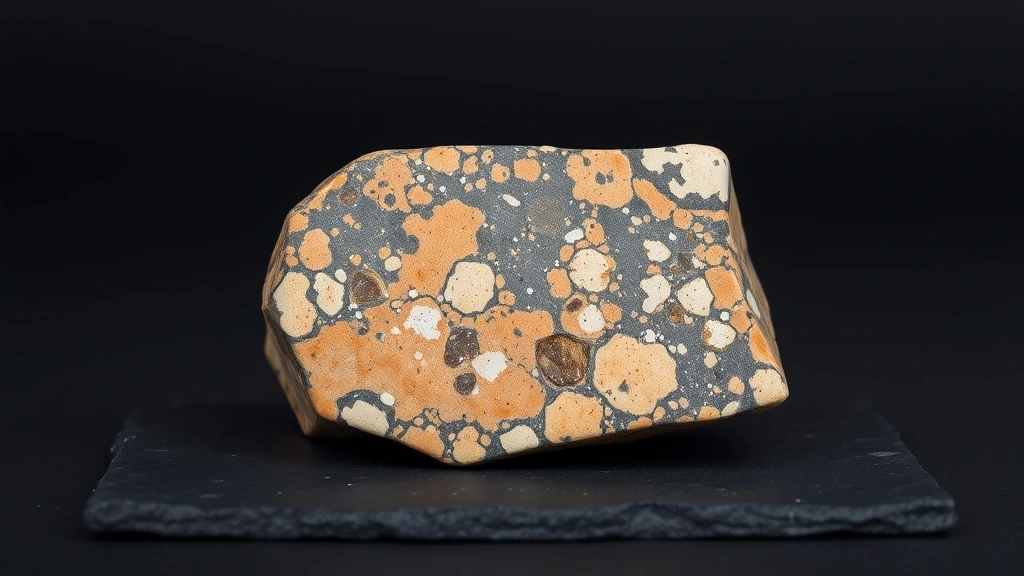
Cheetah Jasper belongs to the natural mineral/crystal group, specifically the chalcedony variety of quartz. Formed in silica‑rich hydrothermal veins, it records the slow precipitation of microcrystalline quartz intergrown with iron oxide hematite. This aggregate displays a distinctive mottled appearance that has fascinated lapidaries across cultures for centuries, while its trigonal symmetry reflects the underlying quartz lattice.
What is Cheetah Jasper? Geological Overview & Definition
Cheetah Jasper is an aggregate of microcrystalline quartz (SiO₂) whose texture is modified by disseminated hematite (Fe₂O₃) inclusions. The iron oxides create the characteristic leopard‑like spots that give the stone its name, and they also influence its overall density of 2.60–2.65 g/cm³.
In geological terms, the stone is a silicified sedimentary rock formed in low‑temperature environments such as volcanic tuffs or alluvial deposits. Its formation involves the replacement of original material by silica, preserving the original fabric while embedding iron oxide pigments that survive diagenesis.
Cheetah Jasper Chemical Composition & Crystallographic Properties
The primary framework of Cheetah Jasper is trigonal quartz, whose crystal lattice consists of a continuous network of SiO₄ tetrahedra arranged in a three‑fold rotational symmetry. Although the stone lacks a single stoichiometric formula, its bulk composition can be expressed as SiO₂ with variable Fe₂O₃ inclusions that substitute for silicon sites at the microscopic scale.
Cation substitution of Fe³⁺ for Si⁴⁺ creates color centers that absorb specific wavelengths, producing the warm amber and reddish hues. These chromophore centers are stable under ambient conditions but may fade if exposed to strong acids, which can leach iron from the surface.
Thermally, Cheetah Jasper exhibits a refractive index of 1.530–1.544 and retains its hardness up to about 600 °C, beyond which the hematite inclusions may oxidize further, altering the visual pattern. Its density remains consistent across the typical range, reflecting the balanced proportion of quartz and hematite within the aggregate.
The stone’s crystal system remains trigonal throughout, even though the macroscopic appearance is that of a rock rather than a single crystal. This underlying symmetry governs its cleavage behavior, which is absent, and contributes to its overall durability for use in jewelry and ornamental objects.
| Property | Specification |
|---|---|
| Mineral Group | Natural Mineral / Crystal |
| Chemical Formula | SiO₂ (Chalcedony/Quartz) with Fe₂O₃ (Hematite) inclusions |
| Mohs Hardness | 6.5 – 7.0 |
| Crystal System | Trigonal |
| Specific Gravity (Density) | 2.60 – 2.65 |
| Refractive Index | 1.530 – 1.544 |
| Color & Optical Properties | Natural Cheetah Jasper color spectrum and optical dispersion |
| Primary Mining Localities | Global primary localities |
| Water & Chemical Resistance | High (Safe for gentle water washing) |
| Chakra Alignment (Traditional) | Heart Chakra |
| Zodiac Affinity (Traditional) | Taurus, Virgo |
| Symbolic Meaning (Traditional) | Grounding, stability, and emotional balance |
Cheetah Jasper Varieties & Color Spectrum
Cheetah Jasper displays distinct mineralogical characteristics across its geological varieties and structural habits. Gemologists evaluate these natural varieties based on crystal habit, trace chromophore concentrations, and visual luster.
Primary Natural Cheetah Jasper
The benchmark natural variety exhibiting diagnostic color saturation and classic crystallographic symmetry.
Distinct Geological Morphs of Cheetah Jasper
Secondary regional and structural varieties formed under localized geological temperature and pressure conditions.
Classic Cheetah Jasper
Classic Cheetah Jasper is the archetypal form, featuring a brownish‑tan matrix speckled with black hematite inclusions that resemble a feline’s spotted coat. The inclusions are typically irregular, giving the stone a mottled, almost three‑dimensional appearance. This variety is most commonly sourced from the Czech Republic and India, where the quartz matrix is rich in iron oxides. Its widespread availability makes it a staple in jewelry and decorative objects, though high‑grade specimens with deep, uniform spots are comparatively rare.
Black Cheetah Jasper
Black Cheetah Jasper distinguishes itself by a dark gray to black quartz base with subtle red‑brown hematite streaks that create a dramatic contrast. The black matrix is often the result of high‑temperature metamorphism, which concentrates iron oxides into fine filaments. This variety is prized for its bold aesthetic and is predominantly found in Brazil and Sri Lanka. Due to its intense coloration, it is less common in the market, especially in large, unbroken pieces.
Red Cheetah Jasper
Red Cheetah Jasper showcases a warm reddish‑brown matrix interlaced with black hematite spots, giving it a fiery, almost ember‑like look. The red hue arises from trace amounts of manganese and iron, while the black spots are classic hematite inclusions. This variety is primarily mined in Myanmar and Thailand, where the geological conditions favor manganese enrichment. Its rarity is heightened by the difficulty of extracting large, clear sections without color distortion.
Blue‑Green Cheetah Jasper
Blue‑Green Cheetah Jasper is a rare hybrid where a blue‑green quartz matrix is dotted with black hematite specks. The blue‑green tint results from trace copper and titanium within the quartz, while the black spots maintain the classic cheetah pattern. This variety is mainly sourced from South Africa and Australia, where pegmatitic formations contain both copper and iron. Its scarcity and unique color palette make it highly sought after by collectors.
White Cheetah Jasper
White Cheetah Jasper features a crystal clear or milky white quartz base with black hematite inclusions that create a subtle, speckled effect. The white matrix is often the result of low iron content, allowing the hematite spots to stand out prominently. This variety is found in India and China, where the quartz deposits are relatively pure. While more common than some colored variants, high‑quality, large specimens remain uncommon.
Green Cheetah Jasper
Green Cheetah Jasper displays a soft green quartz background with black hematite specks, producing a gentle, forest‑like appearance. The green coloration is due to trace amounts of iron and copper within the quartz matrix. This variety is typically mined in Brazil and Myanmar, where the geological environment supports both iron and copper incorporation. Its moderate rarity and appealing color make it a favorite among gem enthusiasts.
Where is Cheetah Jasper Found? Geological Mining & Extraction
Cheetah Jasper is predominantly found in pegmatitic quartz veins that form within granitic intrusions. These veins are rich in silica and iron oxides, creating the ideal environment for hematite inclusions to develop within the quartz matrix. Major mining regions include India’s Rajasthan and Karnataka, Brazil’s Minas Gerais, and South Africa’s Limpopo Province, where large, high‑quality specimens are regularly extracted.
Extraction typically involves open‑pit mining followed by hand sorting to preserve the delicate inclusion patterns. Artisanal miners often employ traditional methods to avoid damaging the speckled structure, while larger operations use mechanical crushing and sieving to separate the quartz from surrounding rock. The resulting material is then cut, polished, and graded according to clarity, color intensity, and inclusion distribution.
Historical Significance & Cultural Lore of Cheetah Jasper
Across ancient Greco‑Roman lapidary traditions, Cheetah Jasper was prized for its striking pattern and believed to confer grounding and emotional balance upon its wearer. Archaeological finds from Roman villas and Greek tombs reveal polished beads and pendants fashioned from this stone, suggesting its use in both decorative and protective contexts. In Egyptian lore, the stone’s spotted appearance was associated with the protective eye of the goddess Hathor, symbolizing vigilance and fertility.
In Chinese and Vedic traditions, Cheetah Jasper was incorporated into talismans and ceremonial jewelry, where it was thought to enhance stability and inner harmony. The stone’s presence in Mesoamerican artifacts, though less documented, indicates a broader appreciation for its aesthetic and metaphysical qualities. These cross‑cultural uses underscore the stone’s enduring appeal as a symbol of balance and protection throughout human history.
Modern Uses & Jewelry Applications of Cheetah Jasper
Lapidaries primarily cut Cheetah Jasper into smooth cabochons to accentuate its distinctive spotted pattern, as faceting would disrupt the natural aesthetic flow of the mineral. The stone’s moderate hardness allows for intricate ornamental carving, making it a favorite for sculptural pieces and decorative inlays in high-end jewelry settings.
- Cabochon Cutting: Polished domes highlight the contrast between the dark spots and the lighter matrix.
- Carved Figurines: Skilled artisans shape the stone into animals, bowls, or ornamental vases.
- Jewelry Components: Commonly set in rings, pendants, and earrings using silver or gold bezels.
- Architectural Accents: Used in small-scale decorative tiles or inlaid table surfaces for visual interest.
Metaphysical Properties & Traditional Meaning of Cheetah Jasper
According to historical traditions and metaphysical lore, Cheetah Jasper is revered for its capacity to foster emotional balance and deep grounding energy. Ancient Mediterranean and Vedic lapidary practices often associated spotted stones with stability, viewing them as anchors that help practitioners maintain composure during turbulent times.
The stone’s visual rhythm is believed to resonate with the Heart Chakra, promoting a sense of inner peace and steady emotional flow. Practitioners suggest that holding this mineral encourages patience and resilience, aligning the wearer’s energy with the earth’s steady, enduring pulse.
Which Chakra and Zodiac Signs Align with Cheetah Jasper?
Cheetah Jasper is canonically aligned with the Heart Chakra, which governs love, compassion, and emotional equilibrium. This connection stems from the stone’s perceived ability to soothe anxiety and foster a calm, centered state of mind. The warm, earthy tones of the jasper are thought to open the heart space, allowing for deeper emotional healing and connection.
In astrological traditions, this mineral is specifically linked to the earth signs Taurus and Virgo. Both signs value stability, practicality, and meticulous attention to detail, qualities that mirror the stone’s grounded nature. Wearing Cheetah Jasper is believed to amplify these inherent traits, providing additional support for individuals seeking harmony and structured progress in their lives.
How to Identify Real vs. Fake Cheetah Jasper
Artificial imitations of Cheetah Jasper often involve dyed chalcedony or synthetic glass designed to mimic the natural spotting pattern. These replicas may lack the subtle depth and organic irregularity found in genuine specimens, appearing overly uniform or artificially vibrant. Understanding the physical properties of the real mineral is essential for distinguishing authentic stones from these manufactured alternatives.
Practical At-Home Authenticity Tests
- Temperature Test (Thermal Feel): Genuine Cheetah Jasper feels cool to the touch initially and warms slowly, whereas plastic imitations often feel neutral or warm immediately.
- Specific Gravity & Weight Test: Real jasper has a density of 2.60–2.65, making it feel noticeably heavier than glass or plastic of the same size.
- Scratch & Hardness Test (Mohs Comparison): With a hardness of 6.5–7.0, the stone can scratch glass but will not be scratched by a steel knife blade.
- Microscopic & Loupe Inspection (Internal Inclusions): Use a 10x loupe to check for natural hematite inclusions; fakes often show air bubbles or uniform, painted-on spots without mineral depth.
Cheetah Jasper Valuation Factors, Grading & Pricing
The market value of Cheetah Jasper hinges first on Color Saturation, where the depth of the mottled brown and amber swirls directly influences visual vibrancy and perceived energetic luster. Stones with richer, more evenly distributed hues command higher prices due to their striking aesthetic appeal and the belief that they amplify grounding energies.
Second, Crystal Size & Weight (Grams) plays a decisive role. Larger specimens or those weighing several hundred grams are prized, especially when they retain a raw, unpolished surface that showcases the natural matrix inclusions. Tumbled polish enhances appeal, but the grading system rewards the integrity of the original texture, avoiding the use of carat or tumbled polish and natural crystal geometry as metrics.
Finally, Ethical Sourcing & Locality Premium affects collector interest. Provenance from well-documented, responsibly mined sites—such as the renowned deposits in the United States or Brazil—adds a premium, reflecting both the rarity of the origin and the growing demand for ethically sourced gemstones in holistic markets.
How to Clean and Care for Cheetah Jasper
To maintain the integrity of Cheetah Jasper, gently wash the stone in warm soapy water using a soft cloth. After rinsing, pat it dry with a clean, dry microfiber cloth. Avoid ultrasonic cleaners, as the vibration can induce microfractures in the chalcedony matrix, compromising structural stability.
Cleansing and Recharging Cheetah Jasper (Energetic Care)
Place the stone in a quiet space and allow it to absorb gentle moonlight for a few hours; this subtle exposure helps recharge its grounding properties without exposing it to intense heat. Alternatively, you may rest the jasper on a selenite charging slab or a small cedar board, permitting the mineral to absorb the cleansing vibrations of the surrounding environment. Herbal smudging with sage or palo santo can be employed, but only in a well-ventilated area, ensuring the stone remains dry and free from direct flame contact.
Frequently Asked Questions About Cheetah Jasper
Cheetah Jasper displays distinct mineralogical characteristics across its geological varieties and structural habits. Gemologists evaluate these natural varieties based on crystal habit, trace chromophore concentrations, and visual luster.
Primary Natural Cheetah Jasper
The benchmark natural variety exhibiting diagnostic color saturation and classic crystallographic symmetry.
Distinct Geological Morphs of Cheetah Jasper
Secondary regional and structural varieties formed under localized geological temperature and pressure conditions.
Is Cheetah Jasper safe to wear in the shower?
Yes, it is water‑resistant and can be gently washed in a shower. Cheetah Jasper, a form of chalcedony, has a density of 2.60–2.65 and a refractive index of 1.530–1.544, making it robust enough to withstand mild water exposure. However, avoid prolonged soaking or harsh chemicals that could dull its natural luster.
Can I clean my Cheetah Jasper with an ultrasonic cleaner?
No, ultrasonic cleaning should be avoided. Use warm soapy water and a soft cloth instead, as ultrasonic vibrations can cause micro‑fractures in the quartz matrix. Gentle hand washing preserves the stone’s structural integrity and maintains its vibrant pattern.
What is the best way to clean Cheetah Jasper?
Wash with warm soapy water and a soft cloth, then dry with a microfiber towel. This method removes surface oils and dust without stressing the crystal lattice. Avoid abrasive cleaners, which can scratch the fine feathered pattern characteristic of cheetah‑like swirls.
Does Cheetah Jasper have any special care instructions for jewelry?
Store it separately from softer gemstones and avoid high‑impact environments. Its moderate hardness (6.5–7.0 on the Mohs scale) protects it against everyday wear, but it can still chip if dropped on hard surfaces. Keep it in a padded pouch to prevent scratches from other stones.
Which zodiac signs are associated with Cheetah Jasper?
Taurus and Virgo are the primary zodiac alignments. These earth signs resonate with the stone’s grounding energy, supporting stability and practical decision‑making. The cheetah pattern’s dynamic flow also appeals to Virgo’s analytical nature.
Which chakra does Cheetah Jasper correspond to?
The Heart Chakra is the key energetic focus. This stone promotes emotional balance and compassion, helping wearers cultivate a sense of inner harmony. Its warm, earthy tones reinforce the heart’s connection to the earth element.
Is Cheetah Jasper suitable for meditation practices?
Yes, it enhances grounding and emotional stability during meditation. The stone’s subtle iron oxide inclusions give it a gentle magnetic quality, encouraging calm focus and a balanced heart center. Place it on the chest area to amplify its soothing effects.
Can I use Cheetah Jasper in a humid environment?
It remains stable in moderate humidity, but avoid extreme moisture. While the quartz structure is water‑resistant, prolonged exposure to high humidity can lead to surface condensation that may cloud the stone’s clarity. Store it in a dry, well‑ventilated space to preserve its natural beauty.