
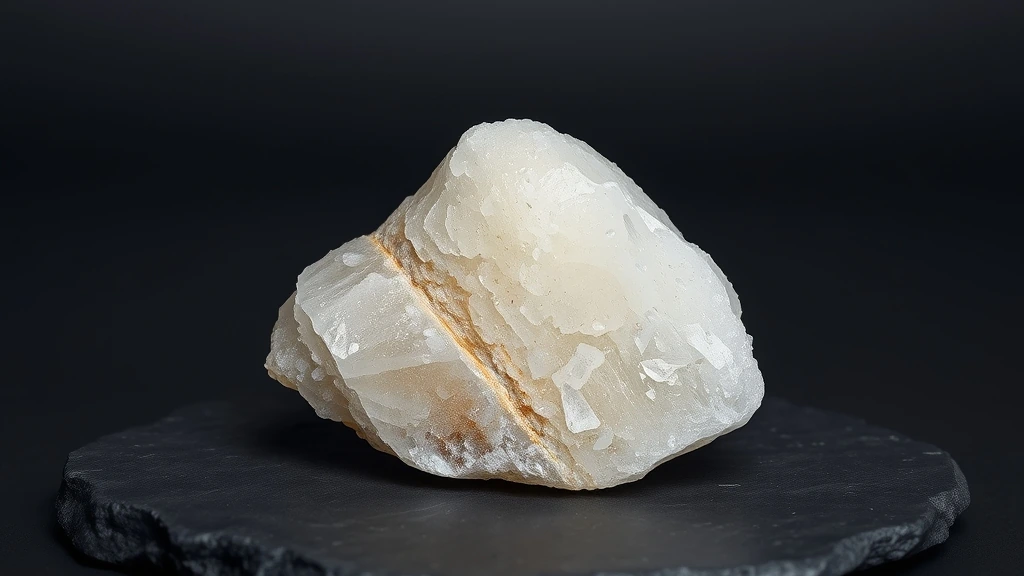
Dali Calcite belongs to the carbonate family of minerals and is classified as a natural mineral within the broader category of crystalline solids. Its formation typically occurs in sedimentary environments where calcium-rich waters precipitate calcite, often through the dissolution–reprecipitation of limestone or the alteration of volcanic ash. The resulting crystals can grow in a variety of morphologies, from perfect rhombohedra to fibrous aggregates, depending on local geochemical conditions.
What is Dali Calcite? Geological Overview & Definition
Dali Calcite is a member of the calcite group, distinguished by its trigonal crystal system and the carbonate ion (CO₃²⁻) framework. In natural settings, it crystallizes as rhombohedral prisms or as fibrous masses, frequently exhibiting striking color variations due to trace element incorporation.
The mineral’s identity is confirmed by its characteristic trigonal symmetry, which manifests in a 3‑fold rotational axis and a distinctive rhombohedral habit. When examined under polarized light, Dali Calcite displays a strong pleochroic effect, with colors shifting dramatically between different crystallographic directions.
Dali Calcite Chemical Composition & Crystallographic Properties
The stoichiometric formula for Dali Calcite is CaCO₃, with calcium occupying the A‑site in the trigonal lattice and carbonate groups forming the structural backbone. The lattice parameters are typically a ≈ 4.99 Å and c ≈ 17.06 Å, giving the mineral its characteristic rhombohedral shape.
Cation substitution is common, with magnesium, iron, or manganese replacing calcium in small amounts, creating chromophore centers that give rise to the stone’s diverse hues. These substitutions alter the electronic environment of the carbonate groups, producing visible color centers that are detectable by spectroscopic methods.
Dali Calcite is moderately acid‑reactive; dilute hydrochloric acid will effervesce, confirming its carbonate nature. However, it is relatively stable under neutral to mildly alkaline conditions, and its optical properties remain largely unchanged until temperatures exceed 200 °C, at which point the mineral begins to decompose into calcium oxide and carbon dioxide.
The thermal behavior of Dali Calcite is marked by a phase transition near 150 °C, where the crystal lattice undergoes a subtle rearrangement that can affect its refractive indices. This transition is reversible upon cooling, allowing the mineral to retain its original optical characteristics after moderate heating.
| Property | Specification |
|---|---|
| Mineral Group | Natural Mineral / Crystal |
| Chemical Formula | CaCO₃ |
| Mohs Hardness | 3.0 |
| Crystal System | Trigonal |
| Specific Gravity (Density) | 2.65 – 2.71 |
| Refractive Index | 1.486 – 1.658 |
| Color & Optical Properties | Natural Dali Calcite color spectrum and optical dispersion |
| Primary Mining Localities | Global primary localities |
| Water & Chemical Resistance | EXTREMELY SENSITIVE: Water Soluble / Moisture Sensitive! (Avoid liquids) |
| Chakra Alignment (Traditional) | Root Chakra, Sacral Chakra |
| Zodiac Affinity (Traditional) | Taurus, Virgo, Capricorn |
| Symbolic Meaning (Traditional) | Grounding, stability, and connection to the earth |
Dali Calcite Varieties & Color Spectrum
Dali Calcite displays distinct mineralogical characteristics across its geological varieties and structural habits. Gemologists evaluate these natural varieties based on crystal habit, trace chromophore concentrations, and visual luster.
Primary Natural Dali Calcite
The benchmark natural variety exhibiting diagnostic color saturation and classic crystallographic symmetry.
Distinct Geological Morphs of Dali Calcite
Secondary regional and structural varieties formed under localized geological temperature and pressure conditions.
White (Snow) Dali Calcite
Formed in low‑temperature hydrothermal veins, White Dali Calcite crystallizes as translucent, colorless to milky aggregates. Microscopic fluid inclusions often produce a soft opalescent glow when backlit. Its uniform appearance makes it a popular base stone, yet high‑clarity blocks are relatively scarce, driving modest market value.
Blue‑Green (Aquamarine) Dali Calcite
Blue‑Green Dali Calcite develops in limestone caverns where trace copper and iron ions tint the crystal lattice. The resulting hue ranges from pale aqua to deep teal, frequently displaying chatoyant banding caused by oriented micro‑inclusions. Large, vivid specimens are rare, and collectors prize them for their striking chromatic depth.
Pink (Rose) Dali Calcite
Pink varieties arise from manganese enrichment during diagenesis, imparting a delicate rose‑pink translucency. Fine needle‑like calcite fibers create a subtle sheen reminiscent of silk, especially under angled light. While pink stones are more abundant in certain Chinese deposits, flawless, uniformly colored pieces remain highly sought after.
Yellow (Canary) Dali Calcite
Canary‑yellow Dali Calcite is the product of natural iron oxide staining within the crystal matrix. Its bright, buttery hue is often accompanied by radiating growth sectors that enhance visual interest. The most prized specimens exhibit a vivid, even color without brown veining, a combination that is uncommon in the primary mining districts.
Black (Onyx) Dali Calcite
The Black Dali Calcite, occasionally called “Calcite Onyx,” forms where organic matter and manganese create deep graphite‑like inclusions. This results in a dramatic, opaque black body with occasional translucent veining that mimics true onyx. Because the formation requires precise geochemical conditions, high‑quality black stones are among the rarest and most valuable.
Multi‑Color (Iridescent) Dali Calcite
Iridescent Dali Calcite displays a play of rainbow‑like interference colors due to layered micro‑fractures filled with mineral dust. Typically harvested from the Yunnan region, these stones show shifting hues of green, violet, and gold when rotated. Their unique optical effect makes them prized for artistic cabochons, though the delicate internal structure limits large‑scale extraction.
Where is Dali Calcite Found? Geological Mining & Extraction
Dali Calcite occurs chiefly within carbonate host rocks such as limestone and dolostone, often filling fissures and vugs created by late‑stage hydrothermal activity. The mineral precipitates as rhombohedral crystals that coalesce into massive aggregates, frequently intergrown with quartz, gypsum, and barite, which influence its clarity and color development.
Primary extraction zones lie in the Dali region of Yunnan Province, China, where open‑pit and underground mines exploit steeply dipping karstic deposits. Smaller but notable occurrences have been documented in the limestone belts of northern Vietnam and the Appalachian carbonate platforms of the United States, where artisanal miners employ hand‑sorting to isolate the finest translucent blocks.
Historical Significance & Cultural Lore of Dali Calcite
Across ancient lapidary traditions, Dali Calcite was valued for its grounding properties, a belief echoed in Greco‑Roman texts that described clear calcite as a stone of stability for architects and engineers. Egyptian artisans incorporated polished calcite tablets into temple altars, attributing to them the power to anchor the soul to the earth during funerary rites.
In early Chinese alchemy, the stone’s soft Mohs hardness made it ideal for carving talismans intended to harmonize the Root and Sacral Chakras, a practice recorded in Tang‑dynasty mineral compendia. Vedic scholars referenced calcite’s luminous quality in Ayurvedic treatises, recommending it for meditation to foster stability and connection to the earth. Throughout these cultures, Dali Calcite’s subtle glow and tactile coolness cemented its role as a bridge between the material and the metaphysical.
Modern Uses & Jewelry Applications of Dali Calcite
Dali calcite is prized for its vibrant hues and translucency, making it a favorite for lapidary artisans. Skilled cutters transform the mineral into elegant cabochons or delicately faceted pieces that accentuate its natural play of color. The stone’s moderate hardness allows for intricate ornamental carvings, from filigree pendants to sculpted tableware.
- Precision lapidary cutting to enhance optical brilliance
- Cabochon and faceted jewelry for necklaces, rings, and earrings
- Ornamental carving in decorative panels and architectural accents
Metaphysical Properties & Traditional Meaning of Dali Calcite
According to historical traditions and metaphysical lore, Dali calcite is revered for its grounding energy and capacity to stabilize emotional turbulence. Across ancient Mediterranean and Vedic lapidary lore, the stone is believed to anchor the soul to the earth, fostering resilience and practical wisdom. Its warm tones are thought to soothe the Root Chakra, encouraging a sense of safety and belonging, while its subtle vibrancy supports the Sacral Chakra, nurturing creativity and emotional balance.
Which Chakra and Zodiac Signs Align with Dali Calcite?
The Root Chakra, located at the base of the spine, aligns with Dali calcite’s grounding properties, helping to cultivate a firm connection to the physical world. The Sacral Chakra, situated in the lower abdomen, resonates with the stone’s creative and sensual energies, encouraging emotional expression and harmonious relationships.
The stone’s astrological affinity is firmly rooted in the signs of Taurus, Virgo, and Capricorn. These earth signs share the stone’s themes of stability, practicality, and disciplined growth, making Dali calcite a natural companion for those born under these constellations.
How to Identify Real vs. Fake Dali Calcite
Collectors often encounter artificial imitations, such as dyed glass or synthetic calcium carbonate, that mimic the natural stone’s appearance. Genuine Dali calcite exhibits subtle internal inclusions and a characteristic thermal feel, whereas replicas may feel unusually warm or lack natural imperfections.
Practical At-Home Authenticity Tests
- Temperature Test (Thermal Feel): Hold the stone in your palm; authentic calcite feels cool to the touch due to its low thermal conductivity, whereas glass or synthetic replicas tend to feel warmer.
- Specific Gravity & Weight Test: Weigh the stone against a known sample of similar size; real Dali calcite will be slightly heavier (specific gravity ~2.65–2.71) than glass or dyed alternatives.
- Scratch & Hardness Test (Mohs Comparison): Use a reference mineral of known hardness (e.g., quartz at 7). Dali calcite should scratch with a softer tool (hardness 3.0) but be scratched by harder materials, confirming its true Mohs rating.
- Microscopic & Loupe Inspection (Internal Inclusions): Examine the stone under a loupe; natural calcite often displays fine fibrous or vein-like inclusions, whereas synthetic versions may show uniform, glassy textures or artificial patterns.
Dali Calcite Valuation Factors, Grading & Pricing
The market places the highest premium on color saturation and visual vibrancy. Deep, uniform hues that range from translucent milky white to vivid orange‑red are especially prized, as they reveal the stone’s natural energetic luster. Specimens displaying a vivid, consistent color without surface clouding command significantly higher prices in both metaphysical and collector circles.
Crystal size & weight (grams) is the second key driver, with larger, heavier pieces valued for their presence and stability. Raw, unpolished blocks fetch lower prices than tumbled or polished stones that showcase a smooth, reflective surface, yet natural matrix inclusions can add intrigue and raise value when they are aesthetically integrated. Buyers assess dimensions and mass directly, preferring pieces that balance heft with a flawless polish.
Ethical sourcing & locality premium increasingly influences pricing, especially among holistic practitioners and serious collectors. Dali Calcite sourced from responsibly managed mines in the Yunnan region, with documented labor standards and minimal environmental impact, commands a noticeable premium. Provenance that links the stone to its historic cultural context further enhances its desirability and market value.
How to Clean and Care for Dali Calcite
Water and moisture dissolve or damage this mineral. Never wash with water or liquid soap; clean strictly with a dry soft microfiber cloth. Gently dust the surface to remove any loose particles, and store the stone in a low‑humidity environment away from direct contact with liquids. Ultrasonic cleaning is strictly forbidden, as the vibrations can fracture the crystal lattice and accelerate dissolution.
Cleansing and Recharging Dali Calcite (Energetic Care)
For energetic maintenance, place the stone in a gentle stream of herbal smudging smoke, allowing the aromatic vapors to pass over the surface without touching it with moisture. A brief exposure to moonlight, preferably during a full moon, can also refresh the crystal’s subtle vibrations while keeping it dry and safe.
Alternatively, rest the Dali Calcite on a clean selenite charging slab for several hours, allowing the neutral selenite to absorb and release any stagnant energy. This dry method respects the mineral’s sensitivity while renewing its grounding and stabilizing properties.
Frequently Asked Questions About Dali Calcite
Dali Calcite displays distinct mineralogical characteristics across its geological varieties and structural habits. Gemologists evaluate these natural varieties based on crystal habit, trace chromophore concentrations, and visual luster.
Primary Natural Dali Calcite
The benchmark natural variety exhibiting diagnostic color saturation and classic crystallographic symmetry.
Distinct Geological Morphs of Dali Calcite
Secondary regional and structural varieties formed under localized geological temperature and pressure conditions.
Is Dali Calcite safe to wear in the shower?
No, it is not safe to expose Dali Calcite to water or moisture. The mineral is highly soluble; even brief contact with rain, sweat, or shower steam can cause it to dissolve or develop surface etching. Keep it away from humid environments to preserve its clarity and structural integrity.
How should I clean a Dali Calcite jewelry piece?
Use a dry, soft microfiber cloth or a gentle brush for cleaning. Avoid any liquid, soap, or ultrasonic cleaning, as moisture can dissolve the calcite. Lightly dusting with a dry brush removes surface debris while maintaining the stone’s natural luster.
Can I use ultrasonic cleaning on Dali Calcite?
Ultrasonic cleaning is strictly forbidden for Dali Calcite. The vibrations and water used in ultrasonic baths will dissolve the mineral’s structure, leading to loss of clarity and potential fragmentation. Stick to dry cleaning methods only.
What are the zodiac signs associated with Dali Calcite?
The stone aligns with Taurus, Virgo, and Capricorn. These signs are traditionally linked to the mineral’s grounding and stabilizing properties, reflecting its earthy calcium carbonate composition and rhythmic crystal habit.
Which chakras does Dali Calcite influence?
Dali Calcite is linked to the Root Chakra and the Sacral Chakra. Its grounding energy supports physical stability, while its fluidity encourages emotional balance and creative flow, resonating with the trigonal crystal system of the stone.
Is Dali Calcite durable enough for everyday wear?
Its Mohs hardness of 3.0 makes it relatively soft and prone to scratching. While it can be worn daily, it requires careful handling and protection from abrasive surfaces to maintain its aesthetic appeal and structural soundness.
What is the best storage method for Dali Calcite?
Store it in a dry, padded compartment away from moisture. A soft cloth pouch or a lined jewelry box prevents accidental contact with humid air, preserving the stone’s clarity and preventing surface dissolution.
Does Dali Calcite have any special care instructions for travel?
Pack it in a moisture‑proof container and keep it dry. Avoid leaving it in damp luggage or near hot showers, as even brief exposure can damage the stone. Use a dry microfiber cloth for quick surface cleaning during travel.