
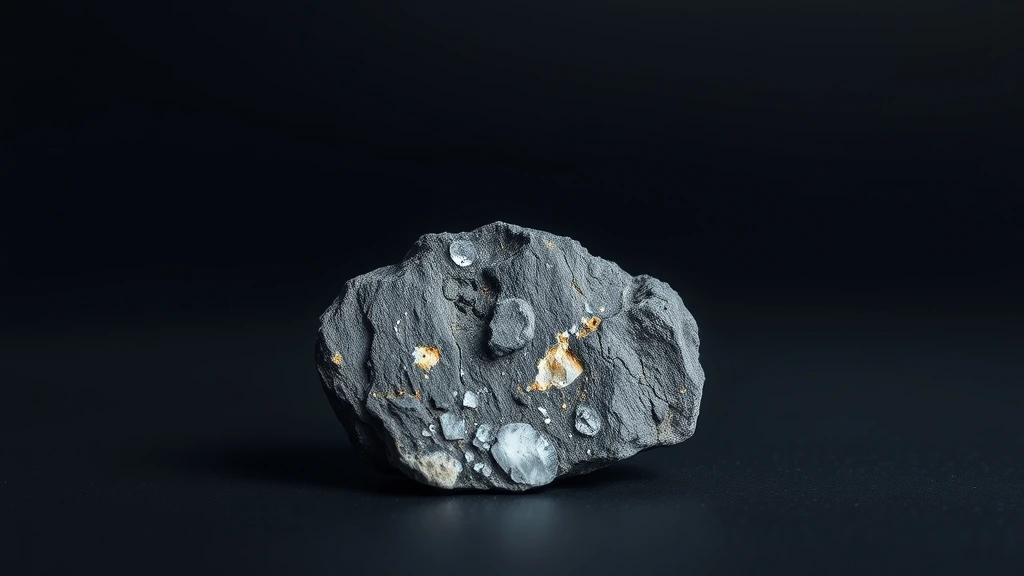
Eclogite forms in subduction zones where oceanic crust is driven to mantle depths, undergoing rapid recrystallization under pressures exceeding 12 kbar. As a natural mineral aggregate, it belongs to the broader parent group of rocks and crystals rather than a single mineral species. The rock’s distinctive texture results from interlocking garnet cubes and monoclinic pyroxene blades, creating a durable matrix prized by gem cutters for its vivid color and resilience.
What is Eclogite? Geological Overview & Definition
Eclogite is a high‑pressure metamorphic rock that records the conditions of deep‑earth subduction, typically found in blueschist‑to‑eclogite facies terranes. Its name derives from the Greek “ek‑logos” meaning “outside the rock,” reflecting its occurrence as xenoliths within mantle peridotites.
The rock’s diagnostic mineral assemblage—principally pyrope‑almandine garnet and omphacite (a jadeite‑augite solid solution)—distinguishes it from other metamorphic suites. Minor phases such as grossular garnet, rutile, ilmenite, and zoisite may appear, adding subtle variations in color and density.
Eclogite Chemical Composition & Crystallographic Properties
Eclogite does not possess a single stoichiometric formula; instead, it is an aggregate of cubic garnet crystals and monoclinic pyroxene blades. The garnet component follows the solid‑solution series Mg₃Al₂(SiO₄)₃ (pyrope) ↔ Fe₃Al₂(SiO₄)₃ (almandine), while omphacite varies between NaCa₂(Mg,Fe)Si₂O₆ (jadeite) and Ca(Mg,Fe)Si₂O₆ (augite).
The composite crystal system—cubic for garnet and monoclinic for omphacite—produces a tightly interlocked lattice that resists cleavage, contributing to the rock’s overall hardness of 6–7.5. Cation substitution of Fe²⁺ for Mg²⁺ and Na⁺ for Ca²⁺ modulates both density (3.2–3.6 g/cm³) and refractive index (1.73–1.77).
Color in eclogite arises from chromophore ions such as Fe²⁺ and Cr³⁺ occupying octahedral sites in garnet and pyroxene, generating deep greens and blues through crystal‑field absorption. These centers are stable under surface conditions but may fade if the stone is exposed to strong acids, which can leach Fe and alter surface optics.
Thermally, eclogite remains stable up to ~800 °C; beyond this, garnet may break down to pyroxene‑rich assemblages, and omphacite can transform to lower‑pressure clinopyroxenes. This thermal resilience underpins its suitability for jewelry, as it retains structural integrity during cutting and polishing processes.
| Property | Specification |
|---|---|
| Mineral Group | Natural Mineral / Crystal |
| Chemical Formula | Garnet (pyrope-almandine) + Omphacite (jadeite-augite) ± Garnet (grossular) ± Accessory minerals (rutile, ilmenite, zoisite) |
| Mohs Hardness | 6.0 – 7.5 |
| Crystal System | Composite (Cubic Garnet, Monoclinic Pyroxene) |
| Specific Gravity (Density) | 3.2 – 3.6 |
| Refractive Index | 1.73 – 1.77 |
| Color & Optical Properties | Natural Eclogite color spectrum and optical dispersion |
| Primary Mining Localities | Global primary localities |
| Water & Chemical Resistance | High (Safe for gentle water washing) |
| Chakra Alignment (Traditional) | Root Chakra, Sacral Chakra |
| Zodiac Affinity (Traditional) | Capricorn, Scorpio |
| Symbolic Meaning (Traditional) | Grounding, resilience, and transformation through adversity |
Eclogite Varieties & Color Spectrum
Eclogite is not a single mineral but a high-pressure metamorphic rock composed primarily of garnet and pyroxene. Its visual appeal stems from the contrasting colors of its constituent minerals, which vary significantly by geographic origin.
The most common visual signature features deep red pyrope-almandine garnet paired with green omphacite pyroxene. This distinct two-tone appearance is the hallmark of classic eclogite specimens found in alpine regions.
Alpine Eclogite
Alpine eclogites form in the subduction zones beneath mountain ranges like the Alps and Himalayas. These rocks typically exhibit a coarse-grained texture with large, visible crystals of garnet and omphacite.
The garnets in these specimens often display a deep, wine-red hue, while the pyroxene appears as a vibrant, translucent green. This variety is highly prized by collectors for its clear mineral boundaries and educational value.
Himalayan Eclogite
Himalayan eclogites are renowned for their exceptional clarity and intense color saturation due to rapid cooling rates. The garnet crystals often exhibit a brilliant, ruby-red color that commands high market value.
These specimens frequently contain minor inclusions of rutile or zoisite, adding complexity to their internal structure. The high-pressure environment of the Himalayan orogeny produces exceptionally pure mineral phases.
Scandinavian Eclogite
Found in the Scandinavian Caledonides, this variety often displays a more muted color palette with greyish-green pyroxene. The garnet crystals may appear darker, ranging from brownish-red to deep purple, reflecting varying iron content.
These rocks are significant for understanding the ancient collision of continental plates. They often contain accessory minerals like ilmenite, which appear as small, metallic black flecks within the matrix.
Oceanic Eclogite
Oceanic eclogites form from the metamorphism of oceanic crust during subduction, making them rare in surface exposures. They typically feature a fine-grained texture with small, interlocking crystals of garnet and pyroxene.
The colors are often less vibrant than alpine varieties, with the pyroxene appearing as a pale, celadon green. These specimens are crucial for studying the recycling of oceanic lithosphere into the mantle.
Garnet-Dominant Eclogite
In some regions, the rock is heavily dominated by garnet, with pyroxene appearing only as minor veins or inclusions. This variety is often marketed as garnet eclogite due to its overwhelming red appearance.
The garnet crystals can be exceptionally large, sometimes exceeding five centimeters in diameter. These specimens are popular for cutting into cabochons, showcasing the deep, internal luster of the pyrope component.
Where is Eclogite Found? Geological Mining & Extraction
Eclogite forms exclusively in high-pressure environments, typically within subduction zones where oceanic crust is forced into the mantle. Surface exposures occur where tectonic uplift has brought these deep-seated rocks to the surface, such as in the Alps, Himalayas, and Scandinavia.
These rocks are rarely mined for gemstone purposes but are collected by geologists and enthusiasts from road cuts, quarries, and exposed outcrops. The extraction process involves careful hand-picking to preserve the integrity of the large garnet crystals.
Historical Significance & Cultural Lore of Eclogite
While eclogite itself is not a traditional gemstone, its constituent minerals have been valued for millennia. Ancient Greco-Roman scholars recognized the hardness and beauty of garnet, often associating it with strength and protection in military contexts.
In Vedic traditions, the red garnet was revered as a symbol of vitality and was frequently incorporated into royal jewelry. The green pyroxene, though less commonly used, was appreciated for its earthy tones in decorative arts.
Archaeological evidence suggests that polished garnet stones from eclogite sources were traded along ancient Silk Road routes. These artifacts indicate a long history of cross-cultural appreciation for the mineral’s durability and vivid coloration.
Modern Uses & Jewelry Applications of Eclogite
Eclogite is primarily valued as a rare ornamental rock rather than a standard gemstone, owing to its composite nature and variable hardness. Lapidaries typically cut these specimens into polished cabochons or thin slices to showcase the striking contrast between deep red garnet and green omphacite. Because the rock contains multiple mineral phases, faceting is rare and usually limited to isolated, high-quality garnet crystals extracted from the matrix.
- Ornamental Carvings: Skilled carvers utilize the banded or speckled patterns to create unique lapidary boxes, paperweights, and small statues.
- Cabochon Jewelry: The smooth, glossy surface of polished eclogite highlights the garnet-omphacite intergrowth, making it ideal for pendants and brooches.
- Collector Specimens: Geologists and collectors prize well-preserved crystals for their scientific significance in high-pressure metamorphism studies.
- Architectural Accents: Rarely, large slabs are used in high-end interior design to add dramatic, earthy visual texture.
Metaphysical Properties & Traditional Meaning of Eclogite
According to historical traditions and metaphysical lore, eclogite is revered for its ability to foster resilience and profound transformation. Ancient Mediterranean and Vedic lapidary texts often associated deep red and green stones with the balance of blood and earth energy. Practitioners believe that holding this stone helps individuals navigate adversity by grounding their spirit while encouraging emotional growth.
The stone’s dual-color composition symbolizes the integration of masculine and feminine energies, or the union of fire and water elements. In esoteric circles, it is viewed as a talisman for spiritual endurance, helping users remain steadfast during periods of significant life change. This belief system emphasizes the stone’s capacity to transmute negative experiences into sources of inner strength and wisdom.
Which Chakra and Zodiac Signs Align with Eclogite?
Eclogite is canonically aligned with the Root Chakra, which governs stability, survival, and physical security. The stone’s dense, earthy energy is believed to anchor the wearer, helping them feel grounded and connected to the physical world. This connection supports the development of a strong sense of self and practical decision-making abilities.
Additionally, the stone resonates with the Sacral Chakra, influencing creativity, emotional flow, and personal power. For zodiac signs, eclogite is specifically associated with Capricorn and Scorpio. These earth and water signs share the stone’s themes of deep transformation, strategic resilience, and the ability to endure and overcome significant challenges.
How to Identify Real vs. Fake Eclogite
Identifying genuine eclogite requires distinguishing its natural composite structure from artificial imitations. Synthetic glass or dyed quartzite may mimic the color palette but lack the distinct mineral boundaries seen in natural samples. Be wary of stones that appear uniformly colored or possess an overly perfect, glassy luster without visible mineral variation.
Practical At-Home Authenticity Tests
- Temperature Test (Thermal Feel): Genuine eclogite feels noticeably cool to the touch initially due to its high thermal conductivity. Synthetic plastics or resins warm up much faster when held in the hand.
- Specific Gravity & Weight Test: Natural eclogite has a density of 3.2 – 3.6 g/cm³, making it feel heavier than its size suggests. Glass imitations are often lighter, while leaded glass may feel unnaturally heavy for its volume.
- Scratch & Hardness Test (Mohs Comparison): The garnet component has a hardness of 6.5 – 7.5, while omphacite is around 6.0. A steel knife (hardness 5.5) should not scratch the surface, whereas softer imitations may show visible marks.
- Microscopic & Loupe Inspection (Internal Inclusions): Under a 10x loupe, real eclogite displays clear boundaries between red garnet and green pyroxene crystals. Glass imitations often show bubbles or swirls, while dyed stones may have color concentrated along cracks.
Eclogite Valuation Factors, Grading & Pricing
The market first assesses color saturation, noting the deep green to bluish‑gray hues that emerge from the garnet‑pyrope and omphacite matrix. Stones displaying vivid, uniform chroma without surface weathering command higher premiums, as collectors prize visual vibrancy that mirrors the rock’s metamorphic origin. Natural energetic luster, observed under angled light, further enhances perceived value in holistic circles.
Next, crystal size & weight (grams) dominate pricing, with larger, dense specimens measured in gram increments offering greater market appeal. Raw blocks retain a rugged charm, yet tumbled pieces with a high‑gloss polish fetch additional dollars because the finish accentuates internal reflections. Inclusions of rutile or zoisite are tolerated when they contribute to a unique pattern rather than detract from overall clarity.
Finally, ethical sourcing & locality premium influences both collector and metaphysical markets. Eclogite extracted from regions with transparent mining practices and fair‑trade certifications commands a noticeable surcharge, reflecting growing consumer demand for responsibly obtained minerals. Provenance from historically significant metamorphic belts, such as the Alpine or Himalaya zones, adds cultural cachet that can further elevate price points.
How to Clean and Care for Eclogite
Cleaning should begin with warm soapy water and a soft cloth, gently wiping the surface to remove dust and fingerprints without abrading the stone. Rinse briefly with clean lukewarm water, then pat dry with a lint‑free microfiber towel to prevent water spots. Avoid ultrasonic cleaners entirely, as the rapid vibrations can induce micro‑fractures in the composite garnet‑pyroxene structure. Store the finished piece in a padded pouch or a low‑humidity display case to maintain its luster over time.
Cleansing and Recharging Eclogite (Energetic Care)
For holistic maintenance, a brief herbal smudging with sage or cedar can be passed over the stone, allowing the aromatic smoke to clear stagnant energy while leaving the mineral physically untouched. Follow this with a night of gentle moonlight exposure, positioning the eclogite on a windowsill where soft lunar rays can bathe it without heating the crystal lattice.
Alternatively, resting the specimen on a clean selenite charging slab for several hours provides a non‑thermal method to replenish its vibrational field. The selenite’s own stable lattice gently aligns with the eclogite, promoting a balanced energetic state without any risk of thermal shock. This dry, low‑impact practice respects both the stone’s physical integrity and its metaphysical reputation.
Frequently Asked Questions About Eclogite
Eclogite displays distinct mineralogical characteristics across its geological varieties and structural habits. Gemologists evaluate these natural varieties based on crystal habit, trace chromophore concentrations, and visual luster.
Primary Natural Eclogite
The benchmark natural variety exhibiting diagnostic color saturation and classic crystallographic symmetry.
Distinct Geological Morphs of Eclogite
Secondary regional and structural varieties formed under localized geological temperature and pressure conditions.
What is the primary mineral composition of eclogite gemstones?
Eclogite is a metamorphic rock composed chiefly of garnet (pyrope‑almandine) and omphacite (jadeite‑augite). In gem‑grade material the garnet crystals are cubic and the omphacite pyroxene is monoclinic, giving the stone its distinctive speckled appearance and a density of 3.2–3.6 g/cm³.
How hard is eclogite compared with other popular gemstones?
Its Mohs hardness ranges from 6.0 to 7.5, placing it between quartz and topaz. This makes eclogite suitable for everyday jewelry, though care should be taken to avoid hard impacts that could chip the more fragile omphacite lamellae.
Is eclogite safe to wear in the shower or during swimming?
Yes, eclogite has high water resistance and tolerates gentle water washing. A brief rinse with warm, soapy water followed by drying with a soft cloth will not affect its refractive index of 1.73–1.77 or cause discoloration, but prolonged submersion should still be avoided.
What is the recommended cleaning method for eclogite jewelry?
Clean with warm soapy water and a soft, lint‑free cloth; avoid ultrasonic cleaners. Ultrasonic vibrations can create micro‑fractures in the omphacite component, compromising structural integrity. Gently wipe the surface, rinse, and pat dry to preserve the stone’s luster and clarity.
Which zodiac signs are traditionally associated with eclogite?
Capricorn and Scorpio are the aligned zodiac signs for eclogite. In astrological lore these signs value endurance and transformation, mirroring the stone’s grounding and resilient energy that is believed to support personal growth through adversity.
Which chakras does eclogite influence in metaphysical practice?
The Root Chakra and Sacral Chakra are the primary energy centers linked to eclogite. Activation of these chakras is said to promote stability, creativity, and emotional balance, helping wearers feel more anchored while fostering passionate expression.
Can eclogite be used in high‑impact settings like rings?
Its hardness and density make it suitable for many ring settings, though caution is advised. The composite nature—hard garnet crystals embedded in softer omphacite—means that a protective bezel or channel setting can mitigate the risk of chip or fracture during daily wear.
How does eclogite’s optical property compare to other garnet gemstones?
Eclogite exhibits a refractive index of 1.73–1.77, slightly lower than typical red garnets. This results in a subtle sparkle and a moderate brilliance that is enhanced by the contrasting dark omphacite, giving the stone a unique visual depth prized by collectors.