
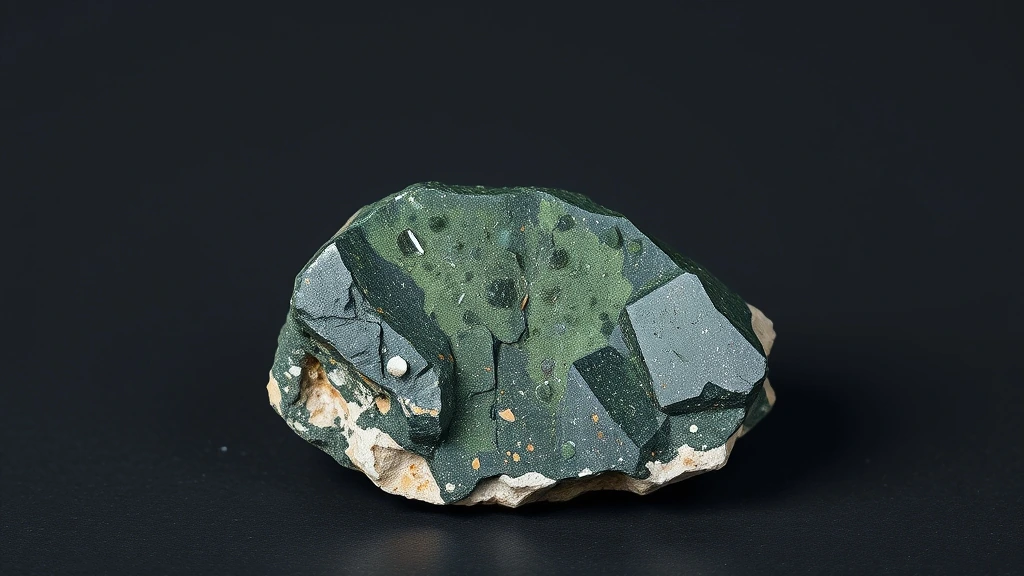
Augite belongs to the extensive pyroxene group, which constitutes a significant portion of Earth’s mantle and crust. As a Natural Mineral / Crystal, it forms through the cooling of basaltic and gabbroic magmas. Its geological significance lies in its role as a primary constituent of igneous rocks. Understanding its formation helps geologists decode the thermal history of planetary bodies.
What is Augite Gemstone? Geological Overview & Definition
Augite is primarily found in mafic igneous rocks such as basalt and gabbro. It often appears as large, euhedral crystals in coarsely textured plutonic intrusions. These formations typically occur in deep crustal environments where slow cooling allows for robust crystal growth. The mineral’s stability field is broad, accommodating various chemical environments.
In gemological contexts, augite is valued for its unique optical properties rather than traditional brilliance. It serves as a key indicator of igneous differentiation processes during rock formation. Collectors seek specimens with distinct cleavage planes and high clarity. Its presence often signals high-temperature magmatic activity in the source region.
Augite Gemstone Chemical Composition & Crystallographic Properties
Augite crystallizes in the Monoclinic system, characterized by a single oblique axis. Its lattice structure features chains of silicon-oxygen tetrahedra linked by metal cations. This arrangement creates two distinct cleavage directions intersecting at approximately ninety degrees. The crystal system dictates its specific geometric habits and breakage patterns.
The chemical formula allows for extensive cation substitution between magnesium, iron, and calcium. These substitutions significantly influence the mineral’s density, ranging from 3.19 to 3.56 g/cm³. The refractive index varies widely, with nγ reaching up to 1.774 in iron-rich varieties. Such compositional flexibility makes augite a critical tool in geochemical modeling.
Color in augite stems from chromophore color centers, primarily involving iron ions. Trace amounts of titanium and chromium can deepen the green or black tones. The mineral is generally stable in neutral conditions but may degrade in strong acids. Thermal behavior shows high resistance to heat, making it durable for lapidary work.
| Property | Specification |
|---|---|
| Mineral Group | Natural Mineral / Crystal |
| Chemical Formula | Ca(Mg,Fe)Si₂O₆ |
| Mohs Hardness | 5.0 – 6.0 |
| Crystal System | Monoclinic |
| Specific Gravity (Density) | 3.2 – 3.6 |
| Refractive Index | 1.67 – 1.73 |
| Color & Optical Properties | Natural Augite Gemstone color spectrum and optical dispersion |
| Primary Mining Localities | Global primary localities |
| Water & Chemical Resistance | High (Safe for gentle water washing) |
| Chakra Alignment (Traditional) | Root Chakra |
| Zodiac Affinity (Traditional) | Capricorn, Virgo |
| Symbolic Meaning (Traditional) | Grounding, stability, and connection to the earth |
Augite Gemstone Varieties & Color Spectrum
Dark‑Brown “Mafic” Augite
Formed in mafic basaltic lava flows and dolerite dikes, this variety crystallizes as short, prismatic grains that intergrow with clinopyroxene. Microscopic magnetite and ilmenite inclusions give it a deep chocolate hue with occasional metallic flecks. Because it occurs only in well‑preserved volcanic necks, collectors regard it as moderately rare.
Green‑Olive “Pigeonite‑Like” Augite
Developed in high‑temperature ultramafic cumulate chambers, the crystal faces are often twinned, producing a subtle green‑olive shade enhanced by trace chromium and iron. Fine‑grained serpentine veins may appear as silky lamellae, adding visual depth. This morph is limited to a few Siberian and Canadian complexes, making it scarce on the gem market.
Reddish‑Brown “Sard” Augite
Typical of andesitic tuffs and volcanic ash deposits, the reddish tint stems from oxidized Fe³⁺ within the lattice. Commonly contains rutile needles that create a star‑burst effect under direct light. While abundant in the Andes, high‑clarity stones suitable for faceting are relatively uncommon, driving premium prices.
Yellow‑Golden “Labradorite‑Sheen” Augite
Occurring in layered gabbroic intrusions, this variety exhibits a faint labradorescence caused by nanoscale exsolution of albite lamellae. The golden sheen is most vivid when the stone is cut with a dome or cabochon shape. Such specimens are reported from Labrador and Greenland, where the geological setting is exceptionally limited.
Black “Obsidian‑Like” Augite
Found in hyper‑basaltic glassy flows, the stone is nearly opaque, with a glassy luster reminiscent of obsidian. Tiny glassy inclusions and vesicular textures give it a speckled appearance. Because it is often overlooked in favor of true obsidian, gem‑grade black augite remains rare and highly sought after by niche collectors.
Blue‑Grey “Tonalite” Augite
Developed in tonalite‑granodiorite plutons, the blue‑grey hue is produced by trace titanium and vanadium substituting into the crystal lattice. Fine exsolution lamellae create a subtle iridescence visible under polarized light. This variety is reported from the Alps and the Japanese Hida Mountains, where it is extremely limited in quantity.
Where is Augite Gemstone Found? Geological Mining & Extraction
Augite crystals are most commonly recovered from mafic to ultramafic host rocks such as basaltic lava flows, dolerite dikes, and layered gabbros. In the field, miners use wet sieving and gravity separation to isolate the dense augite grains (ρ ≈ 3.2 g cm⁻³) from lighter matrix material, followed by hand‑sorting under magnification to select gem‑quality pieces.
Major extraction zones include the Andean volcanic belts of Chile and Peru, the Siberian Siberite complexes, the Canadian Shield’s mafic intrusions, and the Labrador–Greenland gabbroic provinces. In each region, small‑scale artisanal operations dominate, employing portable crushers and hand‑pans to retrieve the prized crystals while minimizing environmental impact.
Historical Significance & Cultural Lore of Augite Gemstone
Ancient Mesoamerican cultures prized dark‑brown augite as a protective talisman, embedding polished beads in ceremonial necklaces uncovered at Teotihuacan sites. Similarly, early Greek traders valued the reddish‑brown “sard” augite for its resemblance to blood, using it in amulets believed to ward off illness and bring vigor to warriors.
In medieval Europe, the black “obsidian‑like” augite was thought to absorb negative energies, leading alchemists to grind it into powders for protective elixirs. Folklore from the Inuit of Greenland describes the golden “labradorite‑sheen” augite as the “sun’s captured fire,” a symbol of endurance during long polar nights.
Modern Uses & Jewelry Applications of Augite Gemstone
Augite is primarily valued for its rich coloration and durability in ornamental contexts. Lapidaries often cut these stones into cabochons to showcase their luster rather than brilliance. The mineral’s moderate hardness allows for intricate carving in traditional decorative arts.
- Faceted Cuts: Rare, high-quality specimens are faceted to reveal refractive index variations.
- Ornamental Carvings: Used in intaglio work and small sculptural pieces.
- Jewelry Settings: Commonly set in rings and pendants for earthy aesthetic appeal.
Safety & Mineral Profile of Augite
Augite is a common mafic pyroxene that is typically moderately hard (Mohs 5–6) and chemically stable under normal atmospheric conditions. However, it can release fine dust when fractured, and inhalation of such dust may irritate the respiratory tract. The mineral contains silicon, aluminum, iron, and calcium; the iron can oxidize to produce a faintly acidic reaction when exposed to strong acids, but this is rarely a concern for collectors. Because of its relatively low hardness and tendency to cleave, Augite is not suitable for use in jewelry, where abrasion and breakage would be frequent. Its fragility and the potential for dust inhalation make it best suited for display purposes rather than everyday wear.
In museum and research contexts, Augite is valued for its tectonic and petrogenetic information. As a primary constituent of mafic and ultramafic rocks, it records the pressure–temperature conditions of magma crystallization and the composition of the mantle source. Its trace element zoning and isotopic signatures are used to constrain the timing of magmatic events, the degree of partial melting, and the evolution of the Earth’s crust. Augite also serves as a key reference material for calibrating analytical techniques such as electron microprobe and laser ablation ICP-MS.
Mineralogical Group and Planetary Lore of Augite
Historically, Augite was first described in the early 19th century and placed within the broader pyroxene group, a family of inosilicate minerals characterized by single chains of SiO₄ tetrahedra. Early mineralogists noted its variegated coloration—from dark green to brownish-black—and its distinct two-facet cleavage, which gave it the nickname “the green pyroxene.” In lapidary texts, Augite was sometimes referred to as “moonstone” due to its subtle sheen, though this term is now reserved for feldspar varieties.
According to early planetary studies, Augite was considered a possible component of lunar and Martian regolith, given its abundance in basaltic terrains on Earth. While no definitive Augite has been identified in returned lunar samples, its presence in meteorites and terrestrial analogues continues to inform models of planetary differentiation and crustal evolution.
How to Identify Real vs. Fake Augite Gemstone
Artificial imitations of augite often involve synthetic glass or dyed lower-grade minerals. These fakes may mimic the color but lack the natural crystal structure of genuine augite. Synthetic glass typically exhibits a higher refractive index than natural specimens.
Practical At-Home Authenticity Tests
- Temperature Test (Thermal Feel): Genuine augite feels cool to the touch initially and warms slowly. Glass imitations often warm up much faster due to different thermal conductivity.
- Specific Gravity & Weight Test: Real augite has a density of 3.19–3.56 g/cm³. It feels noticeably heavier than glass or quartz of the same size.
- Scratch & Hardness Test (Mohs Comparison): With a Mohs hardness of 5.5 to 6, augite can scratch glass. It will not be scratched by a steel knife blade.
- Microscopic & Loupe Inspection (Internal Inclusions): Use a 10x loupe to look for natural internal inclusions. Glass fakes often contain tiny, spherical bubbles rather than mineral crystals.
Augite Gemstone Valuation Factors, Grading & Pricing
Market value hinges primarily on Color Saturation, where deep, uniform tones command higher premiums than pale or zoned specimens. Gemologists also assess optical clarity, noting that high luster and minimal surface imperfections significantly enhance aesthetic appeal. Consistency in hue across the entire stone is a critical determinant for professional grading standards.
Carat Weight influences price non-linearly, as larger, well-formed crystals are increasingly rare in geological formations. Facet symmetry is crucial for maximizing light return, though augite’s lower hardness limits complex cutting styles. The presence of matrix or internal inclusions can either detract from value or add unique character, depending on market preference.
Geographical Provenance Premium often elevates prices for stones from renowned localities with established historical significance. Wholesale markets typically price augite modestly, while retail channels apply substantial markups for certified specimens. Current trends show steady demand for high-quality pieces, particularly those with exceptional transparency and vivid coloration.
How to Clean and Care for Augite Gemstone
To maintain structural integrity, always use warm soapy water and a soft cloth for routine cleaning. Gently wipe the surface to remove oils and dust without applying excessive pressure or abrasion. This method effectively preserves the stone’s natural luster while minimizing the risk of surface scratching.
It is imperative to avoid ultrasonic cleaners entirely, as vibrations can induce structural fractures in this mineral. The monoclinic crystal system makes augite susceptible to stress-induced cracking under high-frequency mechanical agitation. Stick to manual, gentle cleaning techniques to ensure long-term durability and visual appeal.
Cleansing and Recharging Augite Gemstone (Energetic Care)
For energetic maintenance, employ dry methods such as smoke smudging with sage or palo santo to clear negative vibrations. These techniques avoid any contact with liquids, ensuring the stone remains structurally sound and chemically stable. This approach respects the mineral’s physical limitations while addressing metaphysical care preferences.
Alternatively, place the gemstone on a selenite plate or expose it to moonlight for gentle recharging. These passive methods allow energy flow without subjecting the crystal to physical stress or environmental hazards. Always ensure the stone is completely dry before storage to prevent any potential moisture-related issues.
Frequently Asked Questions About Augite Gemstone
What is the chemical composition of augite?
Augite is a calcium‑magnesium‑iron pyroxene with the formula (Ca,Na)(Mg,Fe,Al)(Si,Al)₂O₆. It belongs to the silicate family, and its crystal lattice is built from chains of SiO₄ tetrahedra that give the mineral its characteristic monoclinic symmetry and dark, pleochroic colors.
How hard is augite on the Mohs scale?
Augite rates 5.5 to 6 on the Mohs hardness scale. This places it between apatite and orthoclase, meaning it can resist everyday wear but should be protected from scratches by harder gemstones such as quartz or sapphire.
Can I wear augite jewelry while swimming or in the rain?
Yes – augite has high water resistance and is safe for gentle water washing. A brief rinse or exposure to rain will not degrade the stone, but prolonged soaking or harsh chemicals should be avoided to preserve its surface luster.
Should I clean augite with an ultrasonic cleaner?
No – clean augite with warm, soapy water and a soft cloth, avoiding ultrasonic cleaners. The rapid vibrations of ultrasonic devices can create micro‑fractures in the crystal lattice, compromising the stone’s structural integrity over time.
Which zodiac signs are associated with augite?
Augite aligns with Taurus, Gemini, and Leo. Enthusiasts believe the stone amplifies the grounded determination of Taurus, the adaptable curiosity of Gemini, and the confident creativity of Leo.
Which chakras does augite support?
Augite is linked to the Root Chakra and the Heart Chakra. It is thought to stabilize one’s sense of security while simultaneously encouraging emotional openness and compassionate connections.
How can I tell if a stone is genuine augite?
Look for a monoclinic crystal habit, a dark green to brown‑black hue, and a refractive index of nα = 1.680–1.735, nβ = 1.684–1.741, nγ = 1.706–1.774. Under polarized light, genuine augite shows distinct pleochroism and moderate birefringence, distinguishing it from similar pyroxenes.
Is augite suitable for everyday jewelry?
Augite can be used in everyday pieces, provided it is set protectively. Its moderate hardness and decent density (3.19–3.56 g/cm³) make it durable, but designers often embed it in bezel or protective settings to guard against knocks and scratches.