
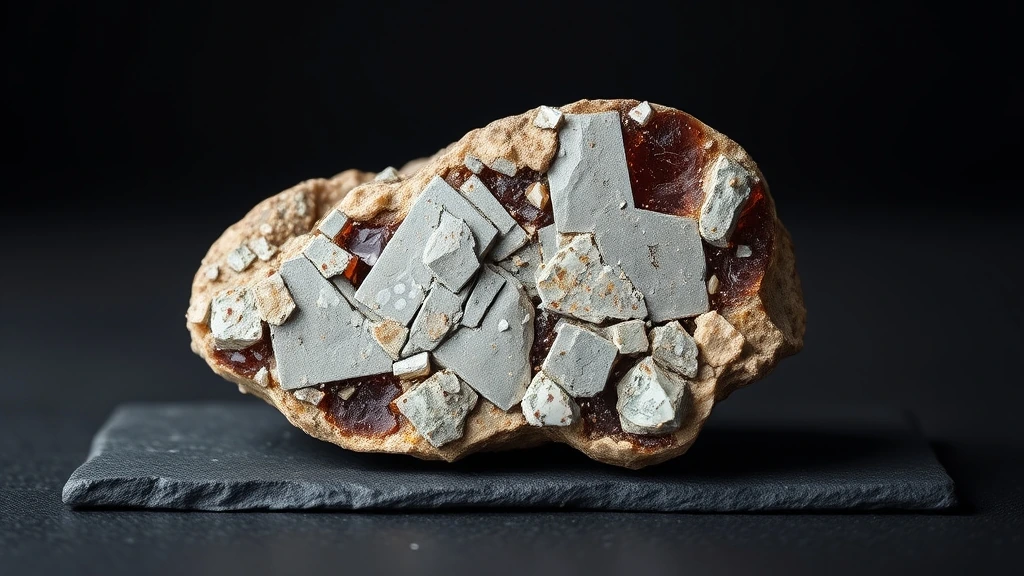
Grossular belongs to the nesosilicate subclass of the garnet group, a family of isometric silicate minerals that crystallize as isolated SiO₄ tetrahedra linked by divalent and trivalent cations. Its formation occurs in metamorphic marbles and skarn deposits where calcium‑rich fluids interact with aluminum‑bearing rocks, yielding the characteristic dodecahedral or trapezohedral habit.
What is Grossular Garnet Gemstone? Geological Overview & Definition
Grossular garnet is defined by its chemical formula Ca₃Al₂(SiO₄)₃, distinguishing it from other garnet species that contain iron, magnesium, or manganese. The mineral’s name derives from the Latin *grossularia*, referring to the “gooseberry” green stones first described in the 18th century.
In nature, grossular forms well‑developed dodecahedra or trapezohedra, reflecting its isometric symmetry. These crystal habits are commonly found in metamorphosed limestone (marble) and calcium‑silicate skarns, where high‑temperature fluids promote the exchange of Ca²⁺ and Al³⁺ into the garnet lattice.
Grossular Garnet Gemstone Chemical Composition & Crystallographic Properties
The true crystal system of grossular is Isometric (Cubic), producing either 12‑faced dodecahedral or 14‑faced trapezohedral crystals. Its unit cell is a single‑parameter lattice (a ≈ 11.88 Å) that repeats the SiO₄ tetrahedral framework throughout the structure, ensuring uniform physical properties in all directions.
Cation substitution is a key driver of color: trace amounts of Fe²⁺, Mn³⁺, or Cr³⁺ replace Al³⁺, creating chromophore centers that yield greens, yellows, and oranges. In some specimens, V⁴⁺ imparts a vivid emerald hue, while the absence of strong chromophores results in near‑colorless stones.
Grossular is relatively acid‑sensitive; prolonged exposure to strong acids can leach calcium and alter surface luster. However, it remains stable under typical jewelry cleaning agents, provided they are pH‑neutral.
Thermally, grossular exhibits a modest thermal expansion coefficient (~7 × 10⁻⁶ K⁻¹) and retains its crystal integrity up to ~1,200 °C before melting. Heating can temporarily enhance color saturation by activating additional chromophore sites, a technique sometimes employed in gemstone treatment.
| Property | Specification |
|---|---|
| Mineral Group | Silicates (Nesosilicates / Garnet Group) |
| Chemical Formula | X₃Y₂(SiO₄)₃ (Complex Silicate / Nesosilicate Group) |
| Mohs Hardness | 6.5 – 7.5 |
| Crystal System | Isometric / Cubic (Dodecahedral or trapezohedral crystals) |
| Specific Gravity (Density) | 3.50 – 4.30 |
| Refractive Index | 1.714 – 1.888 |
| Color & Optical Properties | Natural Grossular Garnet Gemstone color spectrum and optical dispersion |
| Primary Mining Localities | India, Madagascar, Sri Lanka, Mozambique, USA |
| Water & Chemical Resistance | High (Water-resistant; safe for gentle warm water washing) |
| Chakra Alignment (Traditional) | Root Chakra (Muladhara) and Sacral Chakra |
| Zodiac Affinity (Traditional) | Capricorn, Aquarius, Aries |
| Symbolic Meaning (Traditional) | Grounding, passion, loyalty, physical vitality, and steadfast courage |
Garnet Varieties & Comprehensive Sub-Types
Almandine
Almandine forms in high‑grade metamorphic rocks such as schist and gneiss, where iron‑rich fluids replace silicate minerals during regional metamorphism. Inclusions often consist of rutile needles and silicate exsolution lamellae, giving a subtle internal sparkle. Its deep red‑brown hue and robust Mohs hardness of 7.5–8.5 make it the most widely traded garnet for both industrial abrasives and jewelry.
Pyrope
Pyrope crystallizes in mantle‑derived kimberlite and basaltic lava flows, especially in the famed Bohemian deposits of the Czech Republic. Characteristic inclusions include chromian spinel and fluid‑filled cavities that produce a vivid “blood‑red” glow. The magnesium‑rich composition yields a Mohs hardness of 7–7.5, and its fiery color has kept it in high demand for luxury cabochons and collector pieces.
Spessartine
Spessartine originates in manganese‑rich metamorphic belts and skarn deposits, notably in Brazil and Austria. Its crystal faces frequently display manganese‑oxide inclusions and fine growth zoning that creates an orange‑to‑mandarin palette. With a hardness of 7–7.5, the stone’s brilliance and rarity command premium prices on the global market, especially for cut stones with strong fire.
Demantoid
Demantoid is the emerald‑green member of the andradite series, forming in oxidized, calcium‑rich skarns and metamorphosed limestone. The hallmark horsetail (needle‑like) inclusions of diopside give a distinctive “dragon‑tail” appearance under magnification. Its exceptional dispersion (0.057) rivals diamond fire, and the scarcity of gem‑quality crystals makes demantoid the most valuable garnet in high‑end jewelry.
Tsavorite
Tsavorite emerges from pegmatitic veins in the Kenya‑Tanzania border region, where chromium‑rich fluids infiltrate grossular garnet crystals. The stone is celebrated for its vivid chrome‑green color and minimal inclusions, often limited to tiny silica needles. With a Mohs hardness of 7–7.5, tsavorite competes directly with emeralds in both price and brilliance, earning a reputation as a premier collector’s gem.
Rhodolite
Rhodolite represents a solid‑solution blend of pyrope and almandine, crystallizing in metamorphic marbles and schists of the Himalayas and Brazil. Its internal structure shows pleochroic zoning that shifts from purplish‑red to raspberry pink, and occasional inclusion clusters of spinel. The stone’s hardness of 7–7.5 and striking hue make it a favorite for high‑visibility cabochons and polished beads.
Hessonite (Cinnamon Stone)
Hessonite forms in granitic pegmatites and basaltic lava flows, especially in Sri Lanka and Madagascar, where calcium‑rich fluids introduce iron and manganese. The resulting cinnamon‑orange to honey‑brown color is often accentuated by treacle‑like swirl inclusions that give a warm, oily appearance. Its Mohs hardness of 6.5–7 places it slightly below other garnets, yet its unique tone secures a niche market for artisanal jewelry.
Comparative Summary – Gemologists differentiate these garnet varieties by examining chemical composition (Fe, Mg, Mn, Cr, Ca), color zoning, and diagnostic inclusions such as rutile, spinel, or horsetail diopside. Refractive index, specific gravity, and dispersion values further refine identification, while cutting style (cabochon vs. faceted) often reflects each variety’s optical strengths.
Where is Grossular Garnet Gemstone Found? Geological Mining & Extraction
Grossular garnet occurs chiefly in calcium‑rich pegmatitic and metasomatic environments, where hydrothermal fluids replace limestone or dolomite. In Kenya and Tanzania, deep‑seated granitic intrusions host chrome‑rich tsavorite, while Sri Lanka’s lateritic weathering zones yield the honey‑colored hessonite.
Commercial extraction relies on selective open‑pit mining and hand‑sorting of pegmatite nodules, followed by crushing and dense‑media separation to isolate the dense garnet crystals. Modern operations employ X‑ray fluorescence (XRF) sorting to ensure grade consistency before the stones are sent to cutting workshops.
Historical Significance & Cultural Lore of Grossular Garnet Gemstone
Ancient Egyptians prized grossular for its vibrant green and orange hues, embedding tsavorite beads in funerary necklaces to symbolize rebirth. In the Roman Empire, hessonite was fashioned into intaglios and signet rings, believed to protect travelers from misfortune and to promote physical vitality.
Medieval European alchemists associated grossular with the Root and Sacral Chakras, attributing grounding, passion, and steadfast courage to its energy. Folklore from the Himalayas describes rhodolite as a stone of loyalty, worn by warriors to ensure victory and safe return from battle.
Modern Uses & Jewelry Applications of Grossular Garnet Gemstone
Lapidaries value grossular for its high refractive index and exceptional clarity, which allow for brilliant light return. Faceted cuts are standard for high-quality stones, maximizing sparkle in rings and earrings. Lower-grade material is often polished into smooth cabochons to showcase unique internal patterns or color zoning.
- Faceted Jewelry: Ideal for engagement rings and pendants due to durability.
- Ornamental Carving: Used in decorative objects where color saturation is prized.
- Cabochon Settings: Popular for displaying “snowflake” inclusions or vivid reds.
Carat, Quality Grades & Value Factors of Grossular Garnet
According to historical traditions and metaphysical lore, grossular garnet symbolizes grounding and physical vitality. Practitioners believe it fosters steadfast courage and loyalty during challenging life transitions. The stone is often associated with passion, helping users reconnect with their primal instincts.
This mineral is thought to anchor the wearer’s energy, preventing spiritual drift. It encourages a sense of physical vitality, supporting the body’s resilience. Many users report feeling more centered and emotionally stable when wearing this gemstone.
Which Chakra and Zodiac Signs Align with Grossular Garnet Gemstone?
In esoteric practice, grossular garnet is primarily aligned with the Root Chakra (Muladhara). This connection supports feelings of safety, security, and basic survival needs. It helps stabilize the wearer’s foundation in the physical world.
The stone also resonates with the Sacral Chakra, enhancing creativity and emotional flow. Astrologically, it is considered a powerful ally for Capricorn, Aquarius, and Aries. These signs benefit from its grounding and energizing properties.
How to Identify Real vs. Fake Grossular Garnet Gemstone
Distinguishing natural grossular from imitations requires careful observation of optical and physical properties. Common fakes include synthetic glass, which often contains tiny bubbles, and dyed lower-quality minerals. Lab-created synthetic garnets exist but are chemically identical to natural stones.
Practical At-Home Authenticity Tests
- Temperature Test (Thermal Feel): Genuine grossular feels cool to the touch initially and warms slowly. Glass imitations typically warm up much faster due to lower thermal conductivity.
- Specific Gravity & Weight Test: Natural grossular has a specific gravity of approximately 3.5–3.7. It should feel noticeably heavier than glass or plastic of the same size.
- Scratch & Hardness Test (Mohs Comparison): Grossular ranks 6.5–7.5 on the Mohs scale. It will scratch glass (hardness 5.5) but may be scratched by quartz (hardness 7).
- Microscopic & Loupe Inspection (Internal Inclusions): Use a 10x loupe to check for natural inclusions like silicate needles. Glass often shows circular bubbles, while dyed stones may show color concentration in cracks.
Grossular Garnet Gemstone Valuation Factors, Grading & Pricing
Market value hinges primarily on Color Saturation, which must exhibit deep, uniform green or yellow-green tones. Stones lacking vibrancy or showing zoned coloration command significantly lower prices in the trade. High optical clarity and a sharp, vitreous luster further enhance desirability among collectors.
Carat Weight influences pricing, though large stones with visible inclusions often see diminishing returns per carat. Precise facet symmetry is critical for maximizing light return and overall brilliance in cut specimens. The presence of matrix material or internal fractures can reduce value unless the inclusions create unique, artistic appeal.
Geographical Provenance Premium applies to stones from renowned locales like New York or Brazil, boosting collector interest. Wholesale prices fluctuate based on supply, while retail margins reflect brand prestige and certification. Understanding these dynamics helps buyers assess fair market value accurately.
How to Clean and Care for Grossular Garnet Gemstone
Maintain your grossular garnet by cleaning it with warm soapy water and a soft, lint-free cloth. This gentle method effectively removes oils and dust without risking surface damage. Avoid harsh chemicals that might degrade the stone’s natural vitreous luster over time.
Ultrasonic cleaners are generally safe for untreated garnets, provided the stone is free of significant fractures. Always inspect the gemstone before submersion to ensure structural integrity. For maximum safety, professional cleaning is recommended for high-value or antique pieces.
Cleansing and Recharging Grossular Garnet Gemstone (Energetic Care)
For energetic maintenance, use smoke smudging with sage or palo santo to clear stagnant energy. This dry method respects the mineral’s physical structure while addressing metaphysical concerns. Ensure the stone is completely dry before storing it in a safe place.
Place your garnet on a selenite plate under moonlight for gentle recharging without water exposure. This approach aligns with the stone’s affinity for grounding energies while avoiding potential moisture risks. Regular dry cleansing preserves both the gem’s aesthetic and spiritual properties.
Frequently Asked Questions About Grossular Garnet Gemstone
Is grossular garnet safe to wear in the shower?
Yes, grossular garnet is highly water-resistant and safe for gentle warm water washing. The stone’s durable structure allows it to withstand moisture without damage. However, avoid exposing it to harsh chemicals or extreme heat. Always dry it thoroughly after washing to maintain its luster.
Can I use an ultrasonic cleaner on my grossular garnet?
Ultrasonic cleaners should generally be avoided or used with extreme caution, as high-frequency vibrations can cause microscopic fissures. The stone’s hardness makes it resilient to vibrations. Always verify that your specific gem is untreated before using high-frequency cleaning. For the safest results, start with warm soapy water and a soft cloth.
Which zodiac signs are compatible with grossular garnet?
Grossular garnet is traditionally aligned with Capricorn, Aquarius, and Aries. These signs resonate with the stone’s energetic properties. Wearing this gemstone may enhance personal traits associated with these constellations. Many gemologists recommend it for its grounding influence on these specific zodiac profiles.
What chakras does grossular garnet activate?
This gemstone primarily activates the Root Chakra (Muladhara) and the Sacral Chakra. These energy centers govern stability, survival, and creative passion. The stone’s earthy tones support physical vitality and emotional balance. It helps anchor the wearer to the present moment while stimulating inner drive.
How hard is grossular garnet on the Mohs scale?
Grossular garnet rates between 6.5 and 7.5 on the Mohs hardness scale. This makes it quite durable for everyday jewelry use. It resists scratches from common materials like steel or copper. However, it can still be scratched by harder minerals like quartz or topaz.
What is the chemical composition of grossular garnet?
Grossular is a calcium-aluminum garnet with the formula Ca3Al2(SiO4)3. This specific composition distinguishes it from other garnet species like almandine or pyrope. The presence of calcium and aluminum defines its unique optical properties. Understanding this chemistry helps identify natural versus synthetic stones.
Does grossular garnet require special maintenance or care?
Routine care involves cleaning with warm soapy water and a soft cloth. Avoid abrasive materials that could scratch the surface. Store the gem separately to prevent contact with harder stones. Regular professional inspections ensure settings remain secure over time.
Is grossular garnet a good birthstone?
While not a traditional birthstone, it is valued for its esoteric benefits. It symbolizes loyalty, physical vitality, and steadfast courage. Many people choose it for its grounding energy. Its association with the Root Chakra makes it popular for meditation and personal growth practices.