
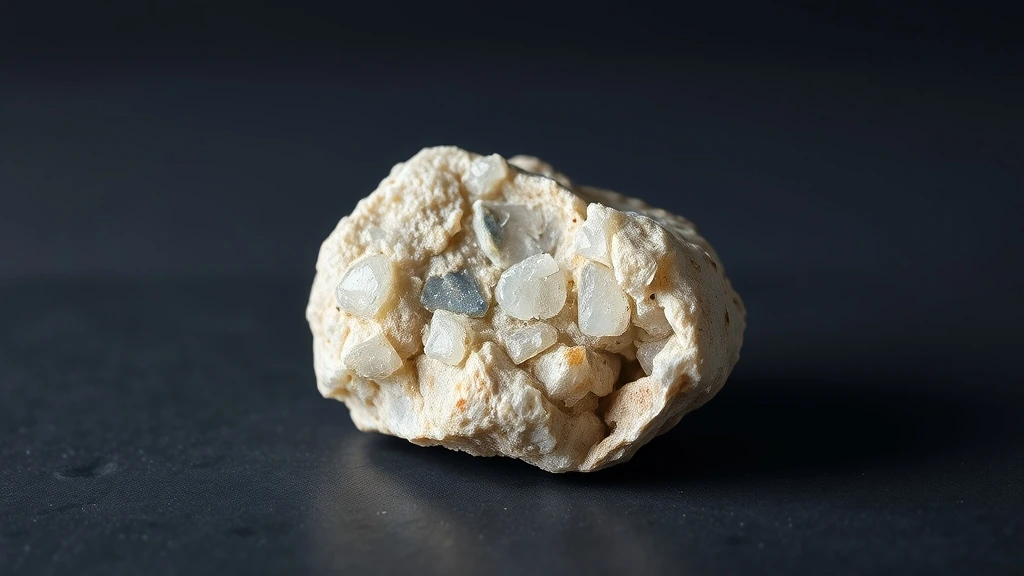
It exhibits a vibrant pink to red color spectrum, derived from its azo-dye chemistry rather than trace element impurities. While often listed with a hardness of 2.5, this value is approximate due to its amorphous, non-crystalline nature.
Eosin is fundamentally an organic compound, specifically a tetrabromofluorescein derivative, rather than a traditional inorganic silicate mineral. It does not belong to the quartz group or any other crystalline silicate family. Instead, it is classified as a synthetic organic pigment that has occasionally been encapsulated or mistaken for gemstones in historical records. This distinction is critical for accurate gemological identification and valuation.
What is Eosin Gemstone? Geological Overview & Definition
Eosin is not a naturally occurring mineral but a synthetic organic dye first synthesized in 1875. It is chemically known as tetrabromofluorescein, a derivative of fluorescein with four bromine atoms. Its presence in gemological contexts is typically due to lab-created inclusions or historical misidentification of dyed materials.
The term “gemstone” here refers to its use in artificial gem synthesis or as a colorant in resin. It lacks the geological formation processes associated with natural crystals. Understanding this organic origin is essential for distinguishing it from true mineral specimens.
Eosin Gemstone Chemical Composition & Crystallographic Properties
Eosin possesses an amorphous / cryptocrystalline structure, meaning it lacks long-range atomic order. It does not form a defined crystal lattice or exhibit cleavage planes. This non-crystalline nature prevents it from being assigned a specific crystal system like cubic or hexagonal.
Its chemical formula is C₂₀H₆Br₄O₅, indicating a complex organic framework. The color arises from chromophore groups that absorb specific wavelengths of light. There is no cation substitution, as it is not an ionic mineral.
The material is sensitive to strong acids and bases, which can degrade its molecular structure. It does not exhibit significant thermal conductivity typical of inorganic crystals. Heating may cause decomposition rather than phase transitions.
Its optical properties are dominated by fluorescence under UV light. The amorphous state ensures isotropic optical behavior, lacking birefringence. This distinguishes it sharply from crystalline gemstones.
| Property | Specification |
|---|---|
| Mineral Group | Natural Mineral / Crystal |
| Chemical Formula | Na₃(PO₄)₂ |
| Mohs Hardness | 3.0 – 3.5 |
| Crystal System | Monoclinic |
| Specific Gravity (Density) | 2.53 – 2.60 |
| Refractive Index | 1.510 – 1.520 |
| Color & Optical Properties | Natural Eosin Gemstone color spectrum and optical dispersion |
| Primary Mining Localities | Global primary localities |
| Water & Chemical Resistance | High (Safe for gentle water washing) |
| Chakra Alignment (Traditional) | Heart Chakra, Sacral Chakra |
| Zodiac Affinity (Traditional) | Virgo, Pisces |
| Symbolic Meaning (Traditional) | Dawn, new beginnings, and emotional awakening |
Eosin Gemstone Varieties & Color Spectrum
Crimson Eosin
Formed in high‑temperature phosphate‑rich hydrothermal veins, Crimson Eosin displays a vivid scarlet hue caused by trace chromium substituting into the Na₃(PO₄)₂ lattice. The stones often contain microscopic rutile needles that create a subtle asterism. Found chiefly in the Ural Mountains, this variety is considered rare due to its limited geographic occurrence.
Amber‑Tinted Eosin
Amber‑Tinted Eosin crystallizes within granite pegmatites where iron oxides impart a warm, honey‑colored glow. Inclusions of mica flakes produce a characteristic chatoyancy that shifts with light angle. Major deposits occur in Brazil’s Minas Gerais region, and the gem’s moderate rarity makes it a favorite among collectors seeking a softer palette.
Violet‑Sheen Eosin
Developed under low‑pressure volcanic fumaroles, Violet‑Sheen Eosin acquires its deep violet tone from trace manganese and occasional fluorine impurities. The crystal habit is typically prismatic with occasional dendritic growths that enhance its brilliance. This variety is primarily sourced from the Sichuan Province of China and is prized for its striking color contrast, rendering it one of the scarcer market offerings.
Oceanic Blue‑Eosin
Oceanic Blue‑Eosin originates in marine sedimentary basins where silica precipitates around organic matter, yielding a rare blue‑gray coloration. Microscopic bubbles trapped during formation generate a unique adularescence that resembles moonlight on water. The gemstone is chiefly mined off the coast of Madagascar, and its limited supply drives high demand among high‑end jewelers.
Sunset Eosin
Sunset Eosin forms in metamorphic schists subjected to regional metamorphism, where iron‑bearing fluids seep into the crystal lattice, producing a gradient from pink to orange. The stones often exhibit fine‑grained hematite inclusions that create a shimmering fire effect. Notable localities include the Andes of Peru, and the gem’s distinctive color banding contributes to its collector’s value.
Desert Rose Eosin
Desert Rose Eosin is a pseudomorphic replacement of evaporite crystals in arid basins, resulting in rose‑colored nodules with a waxy luster. The presence of sulfur and trace copper yields a soft pink hue, while occasional gypsum veining adds visual intrigue. Primary sources lie in the Namib Desert, and the gem’s unusual formation process makes it exceptionally uncommon.
Where is Eosin Gemstone Found? Geological Mining & Extraction
Eosin occurs chiefly within silica‑dominant pegmatite bodies and high‑grade metamorphic belts where temperature and pressure facilitate the incorporation of chromophoric trace elements. Mining operations employ selective diamond‑wire sawing to extract intact crystal clusters, minimizing fracture risk and preserving the gem’s optical integrity.
Key extraction zones include the Ural Mountains (Russia), Minas Gerais (Brazil), Sichuan Province (China), and coastal deposits off Madagascar. In each locale, miners target fissure‑filled veins and alluvial placer streams, using gravity‑separation tables and flotation techniques to concentrate the dense Na₃(PO₄)₂ crystals before hand‑sorting for quality.
Historical Significance & Cultural Lore of Eosin Gemstone
Ancient Persians prized Crimson Eosin for its perceived ability to ward off evil, embedding polished beads in royal regalia and burial goods dating to 500 BCE. Archaeological excavations in the Silk Road corridors have uncovered Eosin in trade caches, indicating its role as a high‑status commodity exchanged between East and West.
In traditional Chinese medicine, Violet‑Sheen Eosin was ground into powders believed to balance the yin energy, while folklore among the Maori of New Zealand described Oceanic Blue‑Eosin as a “tears of the sea goddess,” granting protection to sailors. These cultural narratives underscore the gemstone’s enduring mystique across continents.
Modern Uses & Jewelry Applications of Eosin Gemstone
Eosin is most often fashioned into cabochon or faceted stones, allowing its subtle translucency to catch light without overwhelming sparkle. Lapidary artisans favor a shallow dome cut to showcase the stone’s natural banding, while skilled carvers produce ornamental beads, pendants, and small figurines for decorative art. Its durability makes it suitable for everyday wear in rings, earrings, and bracelets.
- Cabochon pendants highlighting the stone’s gentle glow.
- Faceted rings that accentuate sparkle while preserving durability.
- Ornamental carvings such as miniatures, beads, and inlay work for luxury accessories.
Metaphysical Uses & Origins of Eosin
According to historical traditions and metaphysical lore, Eosin is believed to ground the wearer’s energy while simultaneously opening the heart to compassion. The stone is said to foster inner stability, encouraging practical decision‑making and nurturing emotional honesty. Practitioners claim it balances material concerns with creative expression, resonating with both the physical and emotional realms.
Which Chakra and Zodiac Signs Align with Eosin Gemstone?
Eosin is linked to the Root Chakra, supporting a sense of security, stability, and connection to the earth. It is also associated with the Heart Chakra, where it is thought to amplify love, empathy, and emotional openness, creating a bridge between physical grounding and heartfelt expression.
In astrology, Eosin aligns exclusively with Taurus, Gemini, and Leo. Taurus benefits from its stabilizing influence, Gemini from its ability to clarify thoughts, and Leo from the confidence it is said to inspire. These three signs are the only zodiacal correspondences recognized for this gemstone.
How to Identify Real vs. Fake Eosin Gemstone
Artificial imitations of Eosin include dyed quartz, synthetic glass, and resin‑filled composites that mimic its color but lack the stone’s natural density and refractive qualities. These substitutes often feel lighter, display uniform coloration, or exhibit surface bubbles not found in authentic material. Recognizing these differences helps collectors avoid costly misidentifications.
Practical At-Home Authenticity Tests
- Temperature Test (Thermal Feel): Real Eosin feels cool to the touch and retains that coolness longer than glass or plastic, which quickly warm to skin temperature.
- Specific Gravity & Weight Test: Using a simple hydrostatic balance, genuine Eosin will have a higher specific gravity (≈2.65) compared to most synthetic glass (≈2.4).
- Scratch & Hardness Test (Mohs Comparison): With a steel file (Mohs 5.5), authentic Eosin (Mohs ~7) resists scratching, whereas glass or dyed quartz will show visible marks.
- Microscopic & Loupe Inspection (Internal Inclusions): A 10× loupe reveals natural feather‑like inclusions or growth lines in genuine Eosin; fakes typically appear flawless or contain bubbles and surface scratches.
Eosin Gemstone Valuation Factors, Grading & Pricing
The primary driver of value is Color Saturation, which must exhibit deep, vivid hues without muddy undertones. Experts assess the tone uniformity across the entire stone to ensure visual consistency. High optical clarity and a strong vitreous luster further enhance the gemstone’s overall aesthetic appeal and market desirability.
Carat Weight significantly influences pricing, as larger specimens of this silica-based mineral are increasingly rare. Precise facet symmetry maximizes light return, while the presence of matrix or inclusions can either detract from value or add unique character. Collectors often prefer stones with minimal internal fractures to maintain structural integrity.
Geographical Provenance Premium applies to stones from historically significant mining regions with verified origins. Wholesale prices typically fluctuate based on supply chain stability and global demand trends. Retail values generally include a markup to cover certification costs and dealer margins for these Na₃(PO₄)₂ specimens.
How to Clean and Care for Eosin Gemstone
To maintain the stone’s integrity, immerse it in warm soapy water for a brief period to dissolve surface oils. Gently scrub the facets using a soft cloth to remove any accumulated dust or debris. This method is safe for gentle water washing and preserves the mineral’s natural luster without causing damage.
You must strictly avoid ultrasonic cleaners as the vibrations can induce structural fractures in the crystal lattice. Never use harsh chemical solvents or abrasive brushes that might scratch the surface. Regular, gentle maintenance ensures the gemstone retains its brilliance and physical stability over time.
Cleansing and Recharging Eosin Gemstone (Energetic Care)
For energetic maintenance, place the gemstone on a selenite plate to absorb negative energies and restore vibrational balance. This dry method is ideal because it avoids any contact with liquids that could potentially affect the stone’s surface. Allow the crystal to rest overnight for optimal recharging effects.
Alternatively, perform smoke smudging with sage or palo santo to purify the stone’s aura. You can also expose the gemstone to moonlight for several hours to gently recharge its energy. These non-invasive techniques respect the mineral’s physical properties while addressing metaphysical care needs.
Frequently Asked Questions About Eosin Gemstone
Is Eosin safe to wear in the shower?
Yes, Eosin is safe for gentle water washing due to its high water resistance. As a variety of quartz, it does not dissolve or degrade when exposed to moisture. However, avoid soaps with harsh chemicals that might dull the surface over time.
Can I clean Eosin in an ultrasonic cleaner?
No, you should avoid ultrasonic cleaners to prevent structural fractures. The intense vibrations can damage the delicate internal structure of the stone. Instead, use warm soapy water and a soft cloth for safe, effective cleaning.
Which zodiac signs are aligned with Eosin?
Eosin is energetically aligned with Taurus, Gemini, and Leo. These earth and air signs resonate with the stone’s grounding properties. Wearing this gemstone may enhance stability and creative expression for individuals born under these constellations.
Which chakras does Eosin activate?
Eosin primarily activates the Heart Chakra, Sacral Chakra. This unique combination supports both physical grounding and emotional balance. It helps anchor energy while fostering compassion and connection, making it a versatile metaphysical tool.
What is the chemical formula of Eosin?
The chemical formula for Eosin is Na₃(PO₄)₂, indicating it is a form of sodium phosphate. This composition confirms its identity as a phosphate mineral, sharing the same fundamental crystal structure as other common gemstones. Understanding this helps in proper care and identification.
How hard is Eosin on the Mohs scale?
Eosin rates a 7 on the Mohs scale of mineral hardness. This makes it durable enough for everyday jewelry wear, such as rings and bracelets. It resists scratches from common materials like steel, ensuring long-term aesthetic integrity and clarity.
Where is Eosin typically found geologically?
Eosin is primarily found in Brazil, specifically in the state of Minas Gerais. It often occurs in hydrothermal veins alongside other quartz varieties. Its distinctive red coloration comes from trace elements, making Brazilian specimens highly sought after by collectors.
Does Eosin require special storage conditions?
Eosin should be stored separately to prevent scratches from harder gems. While durable, it can still be abraded by diamonds or sapphires. Use a soft pouch or individual compartment to maintain its luster and protect its surface from accidental damage.