
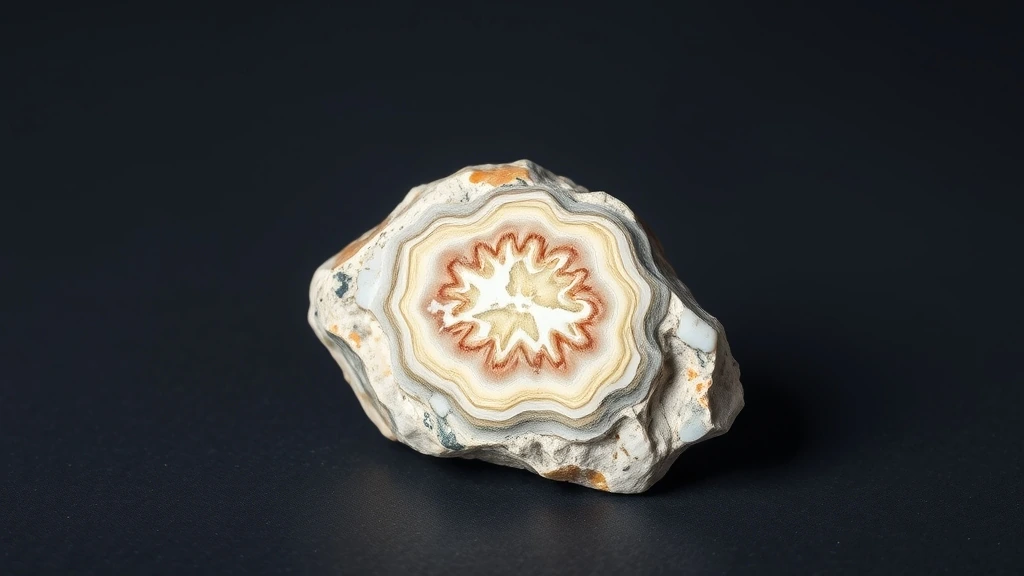
An intimate blend of microcrystalline quartz (SiO₂) and iron‑oxide inclusions, Flower Jasper 2 belongs to the chalcedony family of cryptocrystalline silica. Geologically it is classified as a natural mineral aggregate rather than a single crystal, forming in sedimentary basins where silica‑rich solutions precipitate and later acquire hematite and limonite staining. Its origin in fluvial or alluvial deposits yields the characteristic mottled patterns prized by lapidaries worldwide.
What is Flower Jasper 2? Geological Overview & Definition
Flower Jasper 2 is a cryptocrystalline chalcedony composed of intergrown quartz microfibers that lack visible crystal faces. The stone’s distinctive “flower” motifs arise from iron‑oxide inclusions that precipitate during diagenesis, creating concentric and radial patterns reminiscent of botanical forms.
In the broader mineral taxonomy, Flower Jasper 2 falls under the natural mineral / crystal group, specifically the quartz family, yet it is an aggregate rather than a single, well‑defined crystal. This dual identity influences both its physical resilience and its suitability for carving, cabochon cutting, and ornamental use.
Flower Jasper 2 Chemical Composition & Crystallographic Properties
The bulk composition is a silica matrix (SiO₂) with dispersed Fe‑oxides such as hematite and limonite, which act as chromophoric agents. Because it is an aggregate of micro‑quartz, the stone exhibits the trigonal crystal system of its quartz component, while the overall chalcedony mass behaves amorphously, lacking long‑range order.
Lattice structure consists of interlocking quartz microfibers oriented along the c‑axis, with iron cations substituting for silicon in localized zones, creating color centers. These substitutions do not alter the fundamental trigonal symmetry of the quartz subunits but introduce localized strain that affects optical properties.
Flower Jasper 2 is acid‑sensitive; prolonged exposure to strong acids can dissolve the silica framework, releasing iron oxides and dulling the surface. Its refractive index (1.544–1.553) and specific gravity (2.60–2.65) reflect the combined influence of quartz and heavy iron pigments.
Thermally, the stone is stable up to about 573 °C, the quartz α‑β transition temperature, beyond which the microstructure may become more vitreous and the iron oxides can oxidize further, deepening reds and browns. Controlled heating is sometimes used to enhance pattern contrast, but rapid temperature changes risk fracturing the amorphous chalcedony matrix.
| Property | Specification |
|---|---|
| Mineral Group | Natural Mineral / Crystal |
| Chemical Formula | SiO₂ (Quartz/Chalcedony matrix) with Fe-oxides (Hematite/Limonite) and minor silicates |
| Mohs Hardness | 6.5 – 7.0 |
| Crystal System | Trigonal (Quartz) / Amorphous (Chalcedony) |
| Specific Gravity (Density) | 2.60 – 2.65 |
| Refractive Index | 1.544 – 1.553 |
| Color & Optical Properties | Natural Flower Jasper 2 color spectrum and optical dispersion |
| Primary Mining Localities | Global primary localities |
| Water & Chemical Resistance | High (Safe for gentle water washing) |
| Chakra Alignment (Traditional) | Root Chakra, Sacral Chakra |
| Zodiac Affinity (Traditional) | Taurus, Cancer, Virgo, Capricorn |
| Symbolic Meaning (Traditional) | Grounding, emotional stability, and connection to nature |
Flower Jasper 2 Varieties & Color Spectrum
Flower Jasper 2 displays distinct mineralogical characteristics across its geological varieties and structural habits. Gemologists evaluate these natural varieties based on crystal habit, trace chromophore concentrations, and visual luster.
Primary Natural Flower Jasper 2
The benchmark natural variety exhibiting diagnostic color saturation and classic crystallographic symmetry.
Distinct Geological Morphs of Flower Jasper 2
Secondary regional and structural varieties formed under localized geological temperature and pressure conditions.
Red‑Veined Meadow
Formed within siliceous chalcedony veins that infiltrate iron‑rich sandstone, this variety displays vivid crimson streaks caused by hematite micro‑inclusions. The matrix retains a creamy‑white base, and the contrast creates a floral pattern reminiscent of meadow blossoms. Occurring chiefly in the United States’ Pacific Northwest, it is moderately common among collectors.
Green‑Moss Band
Developed in volcanic tuff where limonite and chlorite replace portions of the quartz framework, the stone exhibits delicate emerald bands that mimic mossy foliage. The overall hue ranges from pale sage to deep forest, with occasional specks of rust‑red iron oxides. This morph is prized in European lapidary markets and is considered relatively rare due to its limited volcanic source zones.
Blue‑Sapphire Swirl
Originating in high‑pressure hydrothermal veins, the blue‑tinted chalcedony gains its hue from trace amounts of titanium‑bearing minerals and fine‑grained hematite. Swirling patterns of indigo and teal emerge against a light gray background, creating a striking, almost opalescent effect. Found primarily in Brazil’s Minas Gerais region, the variety commands premium prices for its vivid coloration and scarcity.
Golden‑Sunset Mosaic
Embedded in alluvial gravels derived from ancient river systems, this form contains abundant limonite and goethite particles that impart a warm amber to golden tone. The mosaic‑like pattern arises from intersecting layers of iron oxide and quartz, giving the stone a sun‑kissed appearance. Its primary sources lie in the riverbeds of South Africa, where it is moderately abundant but highly sought after for ornamental carving.
Black‑Onyx Floral
A rare hybrid where micro‑crystalline quartz is heavily infused with magnetite, producing a deep black base punctuated by bright red or orange floral flecks. The stark contrast is a result of rapid cooling in basaltic lava flows, locking iron oxides in a crystalline network. Limited to a few mining districts in Madagascar, this variety is among the most collectible for its dramatic visual impact.
Where is Flower Jasper 2 Found? Geological Mining & Extraction
Flower Jasper 2 typically occurs in silica‑rich sedimentary host rocks, especially within chalcedony‑filled fissures of sandstone and volcanic tuff. The mineral’s formation requires oxidizing conditions that precipitate iron‑oxide inclusions, producing the characteristic floral patterns while the quartz matrix crystallizes in a trigonal framework.
Commercial extraction focuses on open‑pit and river‑bed mining in Brazil, the United States (Idaho and Oregon), South Africa’s Witwatersrand basin, and Madagascar’s central highlands. Small‑scale artisanal operations often employ hand‑sorting techniques to isolate the patterned nodules from surrounding gravel, preserving the delicate internal structures prized by gem cutters.
Historical Significance & Cultural Lore of Flower Jasper 2
Across ancient lapidary traditions, Flower Jasper 2 was carved into amulets and seals by the Greco‑Roman world, where its grounding colors symbolized stability and protection in battle. Egyptian tombs have yielded polished fragments used as inlay for furniture, reflecting the stone’s association with the earth element and the afterlife.
In Vedic texts, the stone is linked to the Root and Sacral chakras, believed to anchor the wearer’s energy and foster emotional balance. Chinese jade artisans incorporated it into ritual vessels during the Han dynasty, valuing its earthy hues for their connection to agricultural prosperity and familial harmony.
Modern Uses & Jewelry Applications of Flower Jasper 2
Lapidaries primarily cut Flower Jasper 2 into smooth cabochons to accentuate its organic, floral inclusions rather than sharp facets. The stone’s moderate Mohs hardness of 6.5 to 7.0 allows for detailed ornamental carving, including intaglio work and decorative inlays. Its earthy tones make it a popular choice for artisanal jewelry that emphasizes natural aesthetics over brilliance.
- Cabochon Cutting: Polished domes highlight the three-dimensional flower patterns without distorting the visual depth.
- Ornamental Carving: Skilled carvers use the stone for pendants, rings, and architectural accents due to its structural integrity.
- Beads & Pendants: Drilled beads are commonly used in bohemian-style necklaces and bracelets, showcasing the stone’s unique color variations.
- Lapidary Polishing: The material polishes to a high luster, enhancing the contrast between the matrix and the iron-oxide inclusions.
Metaphysical Properties & Traditional Meaning of Flower Jasper 2
According to historical traditions and metaphysical lore, Flower Jasper 2 is revered for its profound grounding capabilities. Ancient Mediterranean and Vedic lapidary practices often associated jasper varieties with stability and protection during times of change. Practitioners believe the stone anchors the wearer’s energy to the earth, fostering a sense of emotional stability and resilience.
In broader esoteric contexts, this variety is linked to a deep connection to nature and the cyclical rhythms of the seasons. It is frequently recommended for individuals seeking to balance their physical and spiritual well-being. The stone’s organic patterns are interpreted as symbols of growth, renewal, and the harmonious integration of human experience with the natural world.
Which Chakra and Zodiac Signs Align with Flower Jasper 2?
Flower Jasper 2 is canonically aligned with the Root Chakra, which governs feelings of safety, security, and physical presence. Additionally, it resonates with the Sacral Chakra, influencing creativity, emotional flow, and personal vitality. This dual alignment supports a balance between grounded stability and dynamic emotional expression, making it a versatile tool for energetic balancing practices.
Astrologically, this stone is specifically associated with the earth and water signs of Taurus, Cancer, Virgo, and Capricorn. These zodiac signs share a common affinity for structure, nurturing, and practical wisdom, which mirrors the stone’s stabilizing properties. Wearing Flower Jasper 2 is believed to amplify these innate traits, offering support during periods of transition or stress.
How to Identify Real vs. Fake Flower Jasper 2
Artificial imitations of Flower Jasper 2 often involve synthetic glass or dyed chalcedony designed to mimic the natural floral patterns. These replicas may lack the subtle color gradations and organic irregularities found in genuine specimens. Understanding the distinction between natural Fe-oxide inclusions and artificial dyes is crucial for accurate identification and valuation.
Practical At-Home Authenticity Tests
- Temperature Test (Thermal Feel): Genuine Flower Jasper 2 feels cool to the touch initially and warms slowly, whereas plastic or glass imitations may reach room temperature more quickly or feel uniformly warm.
- Specific Gravity & Weight Test: With a density of 2.60 – 2.65, the stone feels heavier than its size suggests compared to lighter synthetic glass or plastic alternatives.
- Scratch & Hardness Test (Mohs Comparison): The stone’s Mohs hardness of 6.5 to 7.0 means it will not be scratched by a steel knife blade, while softer imitations may show visible marks.
- Microscopic & Loupe Inspection (Internal Inclusions): Using a 10x loupe, look for natural internal inclusions and irregular flower patterns; synthetic glass often contains air bubbles or perfectly uniform, artificial-looking designs.
Flower Jasper 2 Valuation Factors, Grading & Pricing
The primary determinant of market value is Color Saturation, which dictates the visual appeal of the specimen. High-grade material displays vibrant, distinct floral patterns with strong contrast against the chalcedony matrix. A natural, waxy luster further enhances the stone’s aesthetic presence, signaling minimal surface abrasion.
Crystal Size & Weight (Grams) significantly influences pricing, particularly for large, unbroken slabs or polished tumbles. Collectors prioritize dimensional integrity and the quality of the tumbled polish over faceting, as this stone is rarely cut into gems. Natural matrix inclusions that form coherent organic shapes command a premium over chaotic or fractured pieces.
Ethical Sourcing & Locality Premium plays a critical role in the holistic and collector markets. Buyers increasingly demand transparent provenance to ensure sustainable extraction practices and fair labor conditions. Specific localities known for exceptional pattern clarity often carry a higher price tag due to their rarity.
How to Clean and Care for Flower Jasper 2
Flower Jasper 2 possesses high water resistance, making it safe for gentle washing with warm soapy water. Use a soft cloth to gently wipe the surface, removing dust and oils without scratching the polished finish. This method effectively maintains the stone’s natural luster without introducing harmful chemicals.
It is crucial to avoid ultrasonic cleaners entirely, as the high-frequency vibrations can induce structural fractures within the chalcedony matrix. The stone’s internal micro-fractures may expand under sonic stress, leading to permanent damage. Always dry the specimen thoroughly with a lint-free cloth after cleaning to prevent water spotting.
Cleansing and Recharging Flower Jasper 2 (Energetic Care)
For holistic maintenance, practitioners often employ herbal smudging to clear stagnant energies from the stone. Passing the specimen through the smoke of sage or palo santo is a traditional method that requires no physical contact. This dry approach ensures the mineral’s structural integrity remains completely undisturbed during the ritual.
Alternatively, resting the jasper on a selenite charging slab allows for gentle energetic replenishment without exposure to heat. Selenite is believed to absorb and neutralize negative vibrations while transmitting positive energy to the jasper. This passive method is safe and effective, avoiding the risks associated with direct sunlight or thermal stress.
Frequently Asked Questions About Flower Jasper 2
Flower Jasper 2 displays distinct mineralogical characteristics across its geological varieties and structural habits. Gemologists evaluate these natural varieties based on crystal habit, trace chromophore concentrations, and visual luster.
Primary Natural Flower Jasper 2
The benchmark natural variety exhibiting diagnostic color saturation and classic crystallographic symmetry.
Distinct Geological Morphs of Flower Jasper 2
Secondary regional and structural varieties formed under localized geological temperature and pressure conditions.
Is Flower Jasper 2 safe to wear in the shower or rain?
Yes, it is water‑resistant and can be gently washed with water. The quartz‑based matrix and iron‑oxide inclusions give the stone a hardness of 6.5–7 on the Mohs scale, so routine exposure to rain or a brief shower will not damage it, though prolonged soaking should be avoided to preserve any surface polish.
How should I clean Flower Jasper 2 without harming it?
Clean with warm, mildly soapy water and a soft cloth, never an ultrasonic bath. The combination of SiO₂ chalcedony and hematite inclusions can develop micro‑fractures under high‑frequency vibrations, so a gentle hand wash followed by a lint‑free drying cloth maintains its natural luster and structural integrity.
Can I use an ultrasonic cleaner on Flower Jasper 2?
No, ultrasonic cleaning is not recommended for this stone. The rapid cavitation forces can cause the delicate iron‑oxide patterns to separate from the quartz matrix, leading to visible cracks or loss of color detail. Hand cleaning remains the safest method.
What is the typical density of Flower Jasper 2, and why does it matter?
Its specific gravity ranges from 2.60 to 2.65. This relatively low density reflects the predominance of silica (SiO₂) with minor iron oxides, making the stone feel light on the skin yet sturdy enough for daily wear, an important factor for designers and collectors.
Which zodiac signs are traditionally associated with Flower Jasper 2?
Taurus, Cancer, Virgo, and Capricorn are the aligned signs. Across ancient lapidary traditions, these earth‑ and water‑aligned signs have been linked to the stone’s grounding energy, reinforcing stability and perseverance in personal endeavors.
Which chakras does Flower Jasper 2 support in meditation practice?
It resonates with the Root Chakra and the Sacral Chakra. In meditative work, the stone’s deep red‑brown hues are believed to anchor the practitioner to the physical plane while stimulating creative flow and emotional balance within the sacral center.
How hard is Flower Jasper 2 compared to other agates?
It rates 6.5–7 on the Mohs hardness scale. This places it on par with most chalcedony varieties, allowing it to resist scratches from everyday objects while still being workable for cabochon cutting and intricate faceting by skilled lapidaries.
Does Flower Jasper 2 have any notable refractive properties?
Its refractive index lies between 1.544 and 1.553. This modest range contributes to a gentle, non‑sparkling sheen characteristic of opaque jasper, offering a subtle visual depth rather than the high brilliance seen in transparent quartz varieties.