
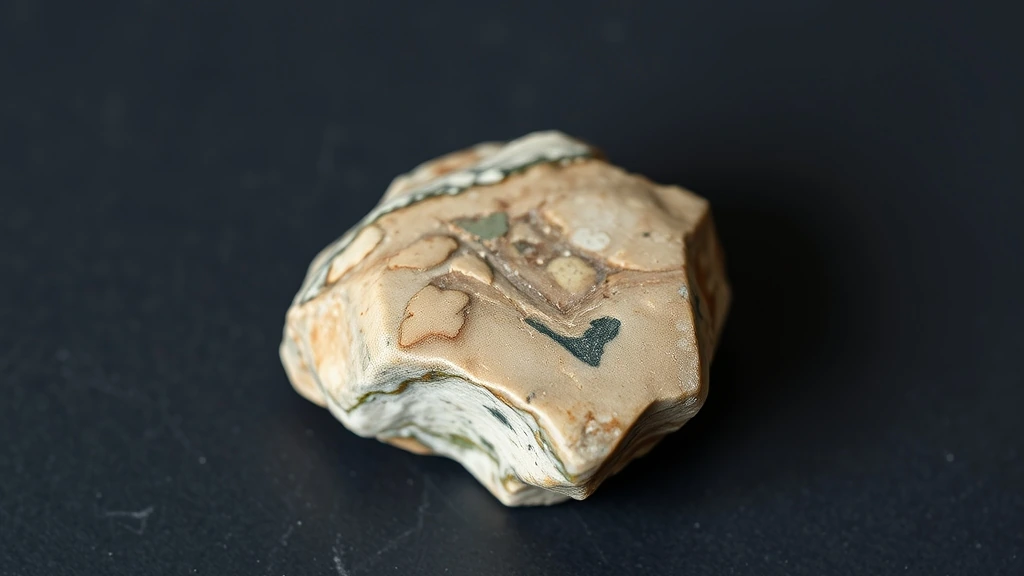
Flower Jasper belongs to the broader family of microcrystalline quartz and is classified as a natural mineral aggregate rather than a single crystal species. Its formation occurs in volcanic tuffs and sedimentary basins where silica‑rich fluids precipitate fine‑grained chalcedony, later colored by dispersed iron oxides. This chalcedony‑based rock is recognized for its distinctive floral patterns, a result of mineral layering and oxidation during diagenesis. The stone’s overall composition reflects a trigonal crystal system inherited from its quartz constituents, even though the aggregate lacks a single, continuous lattice.
What is Flower Jasper? Geological Overview & Definition
Flower Jasper is an aggregate of microcrystalline quartz (SiO₂) interspersed with hematite, goethite, and other iron‑oxide pigments that create its characteristic “flower” motifs. The stone forms in hydrothermal veins and volcanic ash deposits, where silica‑saturated solutions infiltrate and solidify into dense, banded nodules. Its coloration ranges from deep reds to golden yellows, each hue tied to the oxidation state and concentration of iron within the matrix.
In lapidary tradition, Flower Jasper is prized for its organic patterning, which resembles blossoms or foliage frozen in stone. These patterns arise from rhythmic fluctuations in fluid chemistry during deposition, producing alternating layers of iron‑rich and silica‑rich zones. The resulting visual texture is both aesthetically appealing and indicative of the stone’s complex geological history. In comparative mineralogical collections, practitioners and geologists frequently study Flower Jasper 2 alongside this crystal to appreciate their subtle energetic and structural differences.
Flower Jasper Chemical Composition & Crystallographic Properties
Although Flower Jasper lacks a single stoichiometric formula, its bulk chemistry is dominated by SiO₂ from the chalcedony framework, with iron oxides (Fe₂O₃, FeO·OH) providing chromatic contrast. The quartz component crystallizes in the trigonal crystal system, featuring a three‑fold rotational axis that governs the arrangement of SiO₄ tetrahedra. This underlying symmetry persists despite the rock’s aggregate nature, influencing its fracture and conchoidal breakage patterns. In comparative mineralogical collections, practitioners and geologists frequently study Flower Agate alongside this crystal to appreciate their subtle energetic and structural differences.
Cation substitution occurs when Fe³⁺ replaces Si⁴⁺ in the silica lattice, creating charge‑balanced defects that act as color centers. These centers absorb specific wavelengths, producing the stone’s reds, oranges, and browns. The degree of substitution varies locally, accounting for the mottled appearance that distinguishes Flower Jasper from uniform chalcedony.
Flower Jasper is relatively acid‑sensitive; exposure to strong acids can dissolve the silica matrix and leach iron oxides, dulling its color. However, mild acidic conditions (pH ≈ 5) typically cause only superficial etching, preserving the deeper chromophore layers. Careful cleaning with neutral pH solutions is therefore recommended for jewelry maintenance.
Thermally, the stone exhibits stability up to about 573 °C, the quartz α‑β transition temperature, beyond which the microcrystalline structure may recrystallize, altering its luster. Heating can also oxidize residual Fe²⁺ to Fe³⁺, intensifying red tones—a technique sometimes employed by artisans to enhance visual depth. Nonetheless, rapid temperature changes risk fracturing due to differential expansion between silica and iron‑oxide inclusions.
| Property | Specification |
|---|---|
| Mineral Group | Natural Mineral / Crystal |
| Chemical Formula | SiO₂ (Quartz/Chalcedony matrix with Fe-oxide inclusions) |
| Mohs Hardness | 6.5 – 7.0 |
| Crystal System | Trigonal |
| Specific Gravity (Density) | 2.60 – 2.70 |
| Refractive Index | 1.544 – 1.553 |
| Color & Optical Properties | Natural Flower Jasper color spectrum and optical dispersion |
| Primary Mining Localities | Global primary localities |
| Water & Chemical Resistance | High (Safe for gentle water washing) |
| Chakra Alignment (Traditional) | Heart Chakra |
| Zodiac Affinity (Traditional) | Taurus, Cancer, Virgo |
| Symbolic Meaning (Traditional) | Emotional stability, nurturing, and grounding |
Flower Jasper Varieties & Color Spectrum
Flower Jasper displays distinct mineralogical characteristics across its geological varieties and structural habits. Gemologists evaluate these natural varieties based on crystal habit, trace chromophore concentrations, and visual luster.
Primary Natural Flower Jasper
The benchmark natural variety exhibiting diagnostic color saturation and classic crystallographic symmetry.
Distinct Geological Morphs of Flower Jasper
Secondary regional and structural varieties formed under localized geological temperature and pressure conditions.
Red‑Veined Flower Jasper
Formed within siliceous chalcedony that infiltrates iron‑oxide‑rich veins, this variety displays striking crimson filaments against a creamy base. The red veins are microscopic hematite crystals that crystallize during low‑temperature hydrothermal circulation. Occurring primarily in Brazil’s Minas Gerais region, it is moderately common but prized for its vivid contrast.
Green‑Mottled Flower Jasper
Developed in volcanic tuff where silica precipitates around chlorite and epidote inclusions, the stone exhibits a verdant mosaic of speckles and swirls. The chlorite flakes impart a translucent green hue that deepens with light exposure. Found in the United States’ western states, especially Utah, it is relatively rare and sought after by collectors.
Blue‑Speckled Flower Jasper
This morph arises when microscopic azurite particles are trapped within a quartz matrix during sedimentary cementation. The resulting speckles shimmer with a sapphire‑like glint over a muted gray background. Primary sources include Madagascar’s Antsirabe district, where the combination of basaltic host rock and oxidizing fluids creates the unique coloration, making it a high‑value trade item.
Multi‑Color “Rainbow” Flower Jasper
A complex assemblage of iron‑oxide, goethite, and manganese oxides produces a kaleidoscopic pattern of reds, yellows, and browns. The goethite needles generate a feathery texture that catches light, while manganese adds subtle amber tones. This variety is mined chiefly in India’s Rajasthan state, where ancient river gravels concentrate the mineral, rendering it both abundant and highly decorative.
Black‑Band Flower Jasper
Formed in deep‑sea sedimentary basins, fine‑grained quartz layers are interleaved with dense magnetite bands that appear as stark black ribbons. The contrast creates a dramatic, almost topographic surface that is favored for cabochon cutting. South Africa’s Limpopo province supplies most of the commercial stock, and the rarity of well‑preserved banding elevates its market price.
Pink‑Floral Flower Jasper
Originating from weathered volcanic ash deposits, this stone incorporates fine hematite and kaolinite particles that produce delicate pink blossoms across a milky field. The subtle hue is enhanced by mild oxidation during diagenesis. Found in the Andes of Peru, the pink‑floral type is limited to a few small quarries, making it a collector’s specialty.
Where is Flower Jasper Found? Geological Mining & Extraction
Flower Jasper typically occurs in siliceous host rocks such as chalcedony veins, tuff, and basaltic breccias where hydrothermal fluids deposit iron‑oxide minerals. The mineral’s formation is linked to low‑temperature, oxidizing environments that precipitate quartz alongside hematite, goethite, or magnetite, creating the characteristic floral patterns. Extraction often involves careful hand‑picking from alluvial deposits to preserve the delicate inclusions.
Major producing regions include Brazil’s Minas Gerais, the United States’ Colorado‑Utah corridor, Madagascar’s central highlands, India’s Rajasthan, South Africa’s Limpopo, and Peru’s Andean foothills. In each locale, miners employ small‑scale, artisanal methods—often sifting river gravels or excavating shallow pit mines—to retrieve intact nodules, then cut and polish them for the gemstone market.
Historical Significance & Cultural Lore of Flower Jasper
Across ancient lapidary traditions, Flower Jasper was valued for its grounding energy and protective qualities. In Greco‑Roman texts, the stone was called “*jasper*” and associated with the heart chakra, believed to stabilize emotions and foster nurturing relationships, a belief echoed in later Vedic metaphysics. Egyptian tombs from the New Kingdom occasionally contain polished jasper beads, suggesting its use as a status ornament.
In Chinese imperial collections, Flower Jasper appeared in ritual vessels and decorative inlays, prized for its multicolored patterns that symbolized harmony between earth and sky. Mesoamerican artisans incorporated jasper shards into mosaic masks, attributing the stone’s earthy tones to fertility and agricultural abundance. Throughout these cultures, the gemstone’s enduring appeal reflects a universal reverence for its earthy beauty and perceived ability to anchor the spirit.
Modern Uses & Jewelry Applications of Flower Jasper
Flower Jasper is prized for its vivid, multicolored patterns, making it a favorite for cabochon settings that showcase its natural artistry. Lapidary artisans often cut the stone into smooth domes or shallow facets to preserve the flow of reds, yellows, and greens. Its durability (Mohs 6.5‑7) also allows for ornamental carving in decorative objects and small sculptures.
- Cabochon pendants and earrings that highlight the stone’s floral motifs
- Faceted beads or tumbled stones for beaded bracelets and necklaces
- Carved miniatures, such as animal figurines or decorative tiles
Metaphysical Properties & Traditional Meaning of Flower Jasper
According to historical traditions and metaphysical lore, Flower Jasper is regarded as a grounding stone that nurtures emotional stability and fosters a sense of inner calm. Across ancient Mediterranean and Vedic lapidary records, the stone is linked to the heart’s capacity for compassion, encouraging the wearer to release fear and embrace nurturing energy. Its earthy hues are thought to connect the physical body with the Heart Chakra, promoting balanced relationships and self‑acceptance.
Which Chakra and Zodiac Signs Align with Flower Jasper?
In universal esoteric systems, Flower Jasper resonates most strongly with the Heart Chakra, supporting emotional openness and the flow of love. Practitioners report that the stone amplifies heart‑centered meditation, helping individuals align their feelings with their intentions.
The gemstone’s astrological correspondences are limited to Taurus, Cancer, and Virgo. These earth‑ and water‑sign energies are said to benefit from Flower Jasper’s stabilizing influence, enhancing perseverance, nurturing instincts, and practical wisdom in the lives of those born under these signs.
How to Identify Real vs. Fake Flower Jasper
Artificial imitations of Flower Jasper include dyed chalcedony, colored glass, and resin composites that mimic its characteristic swirls. Synthetic glass pieces often lack the subtle internal iron‑oxide inclusions that give genuine Flower Jasper its depth. Dyed replicas may appear overly uniform in color, and their surface can feel slick rather than the natural matte texture of authentic stone.
Practical At-Home Authenticity Tests
- Temperature Test (Thermal Feel): Real Flower Jasper feels cool to the touch and retains that coolness longer than glass or plastic, which quickly warm to skin temperature.
- Specific Gravity & Weight Test: With a density of 2.60‑2.70 g/cm³, genuine Flower Jasper feels noticeably heavier than dyed quartz or glass of similar size.
- Scratch & Hardness Test (Mohs Comparison): Using a steel nail (Mohs ~5.5), a real specimen will resist scratching, whereas glass or softer imitations will show visible marks.
- Microscopic & Loupe Inspection (Internal Inclusions): Under 10× magnification, authentic Flower Jasper reveals fine iron‑oxide speckles and subtle cloudiness; synthetic glass appears uniformly clear or shows bubbles rather than natural inclusions.
Flower Jasper Valuation Factors, Grading & Pricing
Market value hinges primarily on Color Saturation, where deep, earthy reds and vibrant green floral patterns command premium prices. High-quality specimens exhibit a natural, waxy luster that enhances the visual depth of the organic inclusions. Stones with muted or washed-out tones are typically graded lower due to reduced aesthetic appeal.
Pricing is determined by Crystal Size & Weight (Grams), with larger, intact pieces fetching higher rates per gram. Tumbled stones are evaluated on polish quality, ensuring a smooth, glossy finish without visible polishing marks. Natural matrix inclusions, such as the distinct flower-like patterns, significantly increase desirability among collectors.
Ethical Sourcing & Locality Premium plays a critical role in the holistic and collector markets. Buyers increasingly prefer stones from verified, sustainable mines that adhere to strict environmental and labor standards. Specific localities known for exceptional floral clarity often carry a significant price premium over generic sources.
How to Clean and Care for Flower Jasper
Maintain the stone’s integrity by using warm soapy water and a soft, lint-free cloth for gentle cleaning. This method effectively removes oils and dust without damaging the chalcedony matrix or the delicate inclusions. Always rinse thoroughly with clean water and dry immediately to prevent water spots.
It is essential to avoid ultrasonic cleaners entirely, as high-frequency vibrations can cause structural fractures in the stone. The porous nature of jasper makes it susceptible to internal stress from such aggressive cleaning methods. Store the gemstone separately from harder minerals to prevent surface scratches during daily handling.
Cleansing and Recharging Flower Jasper (Energetic Care)
For holistic energy maintenance, place the stone in gentle moonlight overnight to restore its natural vibrancy. This low-impact method allows the crystal to absorb lunar energy without exposure to harmful heat or intense UV radiation. Ensure the stone is positioned on a stable surface to prevent accidental drops during the process.
Alternatively, use herbal smudging with sage or palo santo to clear stagnant energies from the specimen. Hold the stone in your hand or on a plate while passing the smoke around it for a few minutes. This traditional practice respects the mineral’s physical structure while addressing metaphysical cleansing needs.
Frequently Asked Questions About Flower Jasper
Flower Jasper displays distinct mineralogical characteristics across its geological varieties and structural habits. Gemologists evaluate these natural varieties based on crystal habit, trace chromophore concentrations, and visual luster.
Primary Natural Flower Jasper
The benchmark natural variety exhibiting diagnostic color saturation and classic crystallographic symmetry.
Distinct Geological Morphs of Flower Jasper
Secondary regional and structural varieties formed under localized geological temperature and pressure conditions.
What is the chemical composition of Flower Jasper?
Flower Jasper is a variety of chalcedony composed of silica (SiO₂) with iron‑oxide inclusions. The quartz matrix gives the stone its hardness of 6.5–7 on the Mohs scale, while the iron oxides create the characteristic red, yellow, and brown “flower” patterns that are prized in lapidary work.
How hard is Flower Jasper and can it be used in everyday jewelry?
With a Mohs hardness of 6.5–7, Flower Jasper is durable enough for rings, pendants, and bracelets. Its resistance to scratching rivals many common gemstones, yet it should still be protected from hard impacts. Regular wear is safe, but occasional polishing with a soft cloth will keep its surface luminous.
Is Flower Jasper safe to wear in the shower or while swimming?
Yes, Flower Jasper has high water resistance and is safe for gentle water washing. It will not absorb moisture or degrade in mild water exposure, making it suitable for occasional shower wear. Prolonged submersion in harsh chemicals or hot water should still be avoided to preserve its natural luster.
How should I clean my Flower Jasper jewelry at home?
Clean with warm soapy water and a soft cloth, then pat dry. Avoid abrasive pads that could abrade the silica surface. Because ultrasonic vibrations can cause micro‑fractures in the iron‑oxide inclusions, this method preserves both the stone’s structural integrity and its vivid coloration.
Can I use an ultrasonic cleaner on Flower Jasper?
No, ultrasonic cleaners should be avoided to prevent structural fractures. The rapid cavitation can dislodge tiny iron‑oxide particles, leading to loss of the distinctive “flower” patterns. Hand cleaning with mild soap and a soft cloth remains the safest approach.
Which zodiac signs are most compatible with Flower Jasper?
Flower Jasper aligns with Taurus, Cancer, and Virgo. In astrological tradition, these earth‑ and water‑signs benefit from the stone’s grounding energy, which is believed to enhance emotional stability and nurture personal well‑being.
Which chakra does Flower Jasper primarily activate?
The stone is associated with the Heart Chakra. By resonating with this energy center, Flower Jasper is thought to promote compassion, emotional balance, and a sense of inner peace, supporting both meditation and everyday emotional health.
Does Flower Jasper have any known metaphysical properties?
It is reputed to foster emotional stability, nurturing, and grounding. Practitioners claim that the stone’s iron‑oxide inclusions emit subtle vibrational frequencies that help anchor turbulent emotions, making it a popular talisman for those seeking calm and resilience.