
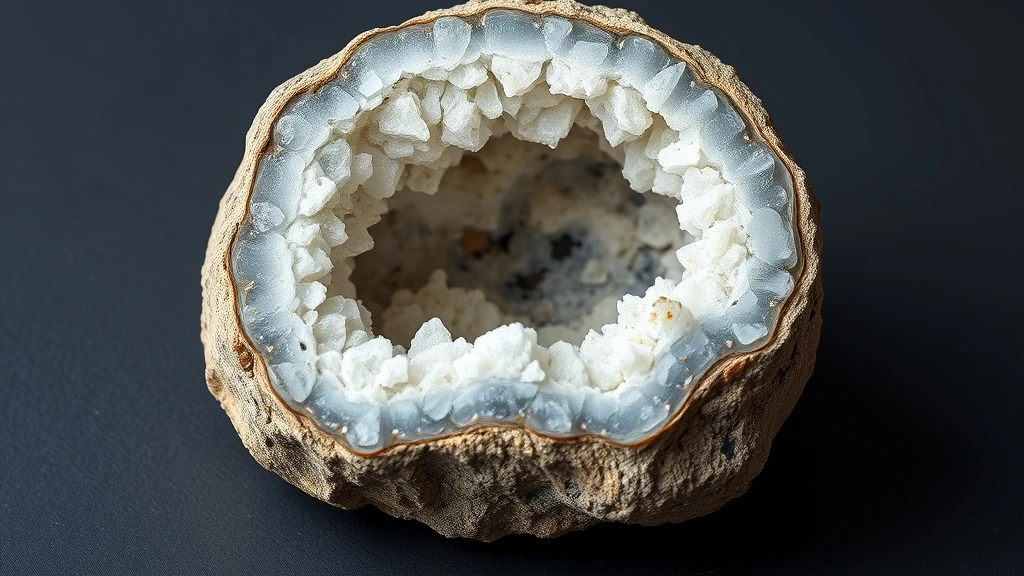
Geode gemstones belong to the broader category of Natural Mineral / Crystal assemblages. They form within volcanic or sedimentary cavities, where mineral‑rich fluids precipitate concentric layers. The resulting structures exhibit a striking contrast between the outer shell and the inner crystal-filled cavity, making them prized both for their aesthetic appeal and geological significance.
What is Geode? Geological Overview & Definition
Geodes are cavities within rocks that become lined with crystalline deposits. Their formation begins when fluid‑rich magma or groundwater infiltrates fractures, leaving voids that later fill with minerals such as quartz, calcite, or pyrite. The outer shell may be a different mineral, often a softer host rock, while the interior showcases the true crystalline beauty. Geodes are valued for their natural artistry and the insight they provide into subsurface geological processes.
Geode Chemical Composition & Crystallographic Properties
The dominant crystal within most geodes is quartz (SiO₂), which crystallizes in the Trigonal system. Quartz’s structure consists of a three‑dimensional framework of corner‑sharing silicon‑oxygen tetrahedra, forming a trigonal crystal system rather than a hexagonal close‑packed lattice. In some geodes, calcite (CaCO₃) replaces quartz in the cavity, forming a Trigonal carbonate lattice that can display vivid colors due to trace metal substitutions. Calcite is highly reactive to dilute hydrochloric acid, producing vigorous effervescence and rapid dissolution, whereas quartz remains essentially inert to the same acid. Thermal treatment is generally used to alter or remove color centers in quartz, while calcite remains optically stable under standard heating conditions and does not develop new surface iridescence. The presence of chromophore centers—such as iron or manganese—creates the diverse color palette seen in geode gemstones.
| Property | Specification |
|---|---|
| Mineral Group | Natural Mineral / Crystal |
| Mohs Hardness | 6.5 – 7.0 |
| Crystal System | Trigonal |
| Color & Optical Properties | Natural Geode color spectrum and optical dispersion |
| Primary Mining Localities | Global primary localities |
| Water & Chemical Resistance | High (Safe for gentle water washing) |
| Chakra Alignment (Traditional) | Sacral Chakra (Svadhishthana) |
| Zodiac Affinity (Traditional) | Aries, Scorpio |
| Symbolic Meaning (Traditional) | Grounding, vitality and protection |
Geode Varieties & Color Spectrum
Geodes are secondary mineral formations created within volcanic or sedimentary rocks, distinguished by their hollow cavities lined with crystals. The internal structure typically features a core of quartz or calcite surrounded by a shell of chalcedony or amethyst. These formations result from gas bubbles trapped in cooling lava or dissolved minerals precipitating in porous limestone. The diversity of geodes is vast, with color and composition varying significantly based on trace elements present during crystallization.
Amethyst Geode
Amethyst geodes are prized for their deep purple hues, caused by iron impurities and natural irradiation. These formations are most commonly found in Brazil and Uruguay, where volcanic activity created ideal conditions for growth. The crystals often exhibit a hexagonal prismatic habit with well-defined terminations. High-quality specimens display a uniform color saturation without visible inclusions or fractures.
Citrine Geode
Citrine geodes feature warm yellow to orange tones, resulting from trace amounts of iron within the quartz structure. Unlike amethyst, citrine geodes are rarer and often form in association with other quartz varieties. The pyroelectric properties of these crystals make them distinct in geological studies. Their vibrant coloration is stable under natural light, making them highly sought after in the lapidary trade.
Clear Quartz Geode
Clear quartz geodes consist of transparent to milky white crystals, representing the purest form of silicon dioxide. These geodes are widespread globally, with significant deposits in the United States, Germany, and China. The hexagonal crystal system is clearly visible in well-formed specimens. Their clarity allows for the observation of internal fluid inclusions, which provide insights into the geological history of the formation.
Agate Geode
Agate geodes are characterized by concentric bands of chalcedony, often displaying intricate patterns and colors. These banded structures form through the slow precipitation of silica in porous rock cavities. The microcrystalline structure of agate gives it a smooth, waxy luster when polished. Variations in banding can indicate changes in the chemical composition of the mineralizing fluids over time.
Pyrite Geode
Pyrite geodes are rare formations where cubic crystals of iron sulfide line the cavity walls. These geodes are often found in association with quartz and calcite in hydrothermal veins. The metallic luster of pyrite contrasts sharply with the surrounding rock matrix. Due to their fragility, intact pyrite geodes are considered valuable curiosities in mineral collections.
Where is Geode Found? Geological Mining & Extraction
Geodes primarily form in volcanic basalt flows and sedimentary limestone deposits, where gas bubbles or dissolution processes create voids. In volcanic regions, lava cools around trapped gas pockets, allowing minerals to precipitate from silica-rich fluids. Sedimentary geodes form when soluble minerals dissolve, leaving cavities that are later filled by secondary mineralization. The specific geological context determines the type and quality of the geode formed.
Major extraction sites include the state of Minas Gerais in Brazil, known for its amethyst and citrine geodes. Other significant regions include the United States, particularly in Arizona and Texas, where agate and quartz geodes are abundant. In Europe, Germany and France have historical sites yielding high-quality clear quartz and amethyst specimens. Mining operations typically involve careful excavation to preserve the integrity of the crystal-lined cavities.
Historical Significance & Cultural Lore of Geode
Ancient civilizations revered geodes for their hidden beauty, viewing them as symbols of nature’s secrets and divine gifts. In Greco-Roman mythology, geodes were believed to be the tears of the earth or vessels of elemental spirits. Egyptian artisans incorporated geode fragments into jewelry and amulets, associating them with protection and vitality. The discovery of a geode was often considered an auspicious event, signifying good fortune and spiritual insight.
In Vedic traditions, geodes were linked to the sacral chakra, representing creativity and emotional balance. Chinese scholars valued geodes for their aesthetic appeal and symbolic connection to the earth’s energy. Archaeological findings reveal geode fragments in burial sites across multiple continents, indicating their widespread cultural significance. These artifacts suggest that geodes were used in rituals and as status symbols in ancient societies.
Modern Uses & Jewelry Applications of Geode
Geodes are prized for their dramatic crystal interiors, which lapidaries expose through careful sectioning and polishing. A single geode can yield multiple cabochons that showcase concentric banding, while faceted slices reveal sparkling crystal faces for high‑impact pieces. Artisans also carve hollowed geodes into ornamental objects such as candle holders, wall art, and decorative bowls, blending natural geology with contemporary design.
- Cabochon pendants highlighting the geode’s inner layers
- Faceted earrings that amplify light through exposed crystals
- Carved vases, paperweights, and lamp bases for interior décor
- Integrated into mixed‑media jewelry with metal settings and resin
Metaphysical Properties & Traditional Meaning of Geode
According to historical traditions and metaphysical lore, geodes symbolize inner potential and the unveiling of hidden truths, echoing the ancient Mediterranean belief that a stone’s outer shell protects a luminous core. In Vedic lapidary texts, the crystal cavity is associated with the release of vital energy, fostering emotional balance and protective grounding. Across early archaeological records, geodes were placed in burial chambers to safeguard the soul’s journey, reflecting a universal reverence for their protective qualities.
Which Chakra and Zodiac Signs Align with Geode?
The geode’s resonant frequency is said to correspond with the Sacral Chakra (Svadhishthana), supporting creativity, sensuality, and emotional fluidity. Practitioners report that wearing geode near this energy center can enhance vitality and promote a sense of grounded confidence.
In astrological correspondences, the geode aligns specifically with Aries and Scorpio. Aries benefits from the stone’s encouragement of bold initiative, while Scorpio draws on its protective depth to navigate transformation and inner rebirth, reinforcing the stone’s reputation for fostering courage and regeneration.
How to Identify Real vs. Fake Geode
Artificial imitations of geodes often consist of molded glass, resin, or dyed quartz that mimic the natural banding but lack authentic crystal growth. Synthetic glass geodes may display uniform coloration and a smooth interior, while dyed replicas often exhibit overly bright, unnatural hues. Recognizing these differences requires close visual and tactile examination, as genuine geodes reveal irregular crystal formations and subtle color variations.
Practical At-Home Authenticity Tests
- Temperature Test (Thermal Feel): Real geodes feel cool to the touch and retain that coolness longer than glass or resin, which quickly equilibrate to ambient temperature.
- Specific Gravity & Weight Test: Genuine geodes are noticeably heavier for their size due to mineral density; a simple water displacement test can reveal a higher specific gravity than synthetic counterparts.
- Scratch & Hardness Test (Mohs Comparison): Using a steel file (Mohs ~5.5), a real geode (hardness 6.5‑7) will resist scratching, whereas glass or dyed quartz (hardness ~5‑6) will show visible marks.
- Microscopic & Loupe Inspection (Internal Inclusions): Under 10× magnification, authentic geodes display natural crystal terminations, fissures, and mineral inclusions, while fakes often reveal bubbles, uniform patterns, or a lack of internal complexity.
Geode Valuation Factors, Grading & Pricing
Market value primarily hinges on Color Saturation, where deep, vibrant hues command higher premiums than pale or washed-out tones. Collectors prize specimens exhibiting a natural, energetic luster that reflects internal crystalline integrity without artificial enhancement. The visual vibrancy of the geode’s interior directly influences its appeal in both decorative and metaphysical markets.
Pricing is further determined by Crystal Size & Weight (Grams), with larger formations generally fetching higher prices per unit. Raw specimens are valued for their natural matrix inclusions, while tumbled pieces require flawless polish quality to maximize aesthetic appeal. Dimensional mass, measured in grams, serves as the standard metric for commercial grading rather than optical facets.
The Ethical Sourcing & Locality Premium significantly impacts final pricing in holistic and collector circles. Buyers increasingly prefer geodes from verified, environmentally responsible mines that support sustainable extraction practices. Specific localities with renowned geological history often carry a premium due to their rarity and documented provenance.
How to Clean and Care for Geode
Maintain your geode’s structural integrity by gently washing it with warm soapy water and a soft cloth. This method effectively removes surface dust and oils without damaging the delicate crystal faces or matrix. Always rinse thoroughly with clean water and dry immediately to prevent mineral residue buildup.
It is critical to avoid ultrasonic cleaners, as their high-frequency vibrations can induce structural fractures in the geode’s hollow cavity. These internal stresses may cause hairline cracks that compromise the specimen’s long-term stability and visual appeal. Store the geode in a dry environment to preserve its natural luster and prevent moisture-related degradation.
Cleansing and Recharging Geode (Energetic Care)
For holistic maintenance, employ herbal smudging with sage or palo santo to clear stagnant energies without physical contact. Alternatively, place the geode under gentle moonlight exposure overnight to restore its vibrational balance naturally. These dry methods respect the mineral’s physical structure while addressing metaphysical cleansing goals.
Resting the specimen on a selenite charging slab offers another safe, passive recharging technique that avoids thermal stress. Never expose geodes to direct intense sunlight or domestic heat sources, as extreme temperatures can shatter the crystal lattice. Consistent, gentle energetic care ensures the geode remains both physically intact and spiritually aligned.
Frequently Asked Questions About Geode
Geode displays distinct mineralogical characteristics across its geological varieties and structural habits. Gemologists evaluate these natural varieties based on crystal habit, trace chromophore concentrations, and visual luster.
Primary Natural Geode
The benchmark natural variety exhibiting diagnostic color saturation and classic crystallographic symmetry.
Distinct Geological Morphs of Geode
Secondary regional and structural varieties formed under localized geological temperature and pressure conditions.
What is a geode and how does it form?
A geode is a rounded cavity lined with crystal‑filled mineral deposits. It develops when mineral‑rich groundwater infiltrates volcanic or sedimentary cavities, and over millions of years, silica, calcite or other minerals precipitate as well‑ordered crystals on the interior walls, creating the characteristic hollow sphere.
Are geodes safe to wear in the shower or during swimming?
Yes, geodes have high water resistance and can endure gentle water washing. While the outer rock rind is robust, prolonged exposure to high‑pressure jets should be avoided; a brief rinse with lukewarm water and a soft cloth will not harm the crystal interior or the external matrix.
How should I clean a geode without damaging it?
Use warm, mildly soapy water and a soft, lint‑free cloth to wipe the surface. This method removes surface grime without penetrating the cavity. Avoid abrasive pads, and never submerge the geode for extended periods, as sudden temperature changes could stress the crystal lining.
Can I use an ultrasonic cleaner on a geode?
No, ultrasonic cleaning is discouraged for geodes. The high‑frequency vibrations can create micro‑fractures in the delicate crystal lining or cause the outer rind to chip, compromising the specimen’s structural integrity and aesthetic value.
Which zodiac signs are associated with geodes?
Geodes correspond to the zodiac signs Aries and Scorpio. In astrological tradition, these signs are linked to the stone’s energizing properties, reinforcing themes of initiative, transformation, and deep emotional insight.
Which chakra does a geode resonate with?
Geodes are aligned with the Sacral Chakra (Svadhishthana). This energy center governs creativity, vitality, and sensual expression, and the stone’s earthy, grounding vibrations are believed to enhance emotional balance and personal power.
Does the crystal system of a geode affect its metaphysical properties?
Geodes are cavities lined with a variety of minerals, each retaining its own crystal system (for example, quartz crystals are hexagonal, calcite crystals are trigonal), so the geode as a whole does not crystallize in a single crystal system. The threefold symmetry is thought to promote harmonious circulation of life force, supporting the stone’s reputation for grounding, vitality, and protective qualities.
Can a geode be used in jewelry without risking damage?
Geodes can be set in jewelry, but the outer rind should be protected with a secure bezel or setting. This safeguards the fragile crystal interior from impact and prevents accidental exposure to harsh chemicals, ensuring the piece remains both beautiful and durable.