
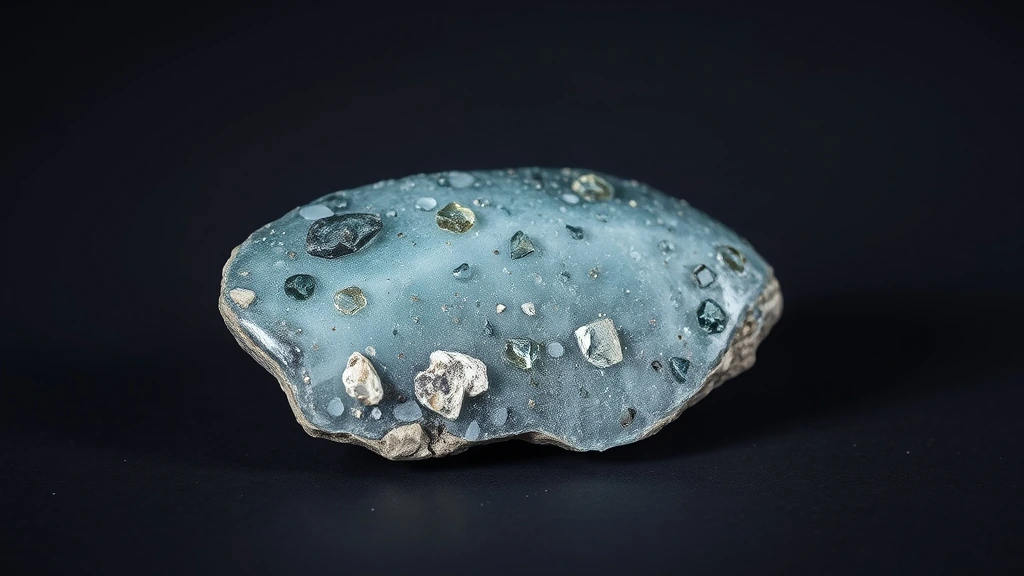
Glaucophane belongs to the amphibole group, a family of double‑chain silicates that crystallize in the monoclinic system. As a natural mineral/crystal, it forms in high‑pressure, low‑temperature metamorphic rocks such as blueschist facies, where it records subduction‑zone conditions. Its dense, elongated prisms reflect the characteristic amphibole habit and its geological story of deep‑earth transformation.
What is Glaucophane Gemstone? Geological Overview & Definition
Glaucophane is a blue amphibole mineral that serves as a key index mineral for blueschist metamorphism, indicating pressures of 0.6–1.0 GPa. It typically occurs as slender, bladed crystals embedded in serpentinite or greenschist assemblages, often intergrown with lawsonite and epidote.
In gemological terms, the stone’s striking azure color arises from Fe³⁺–Ti charge‑transfer chromophores within its crystal lattice. While prized by collectors for its vivid hue, its moderate hardness and perfect cleavage limit its use in mainstream jewelry, confining it to cabochons and ornamental pieces.
Glaucophane Gemstone Chemical Composition & Crystallographic Properties
The mineral’s monoclinic symmetry (space group C2/m) yields a single‑axis lattice with β ≈ 104°, producing elongated prisms that taper to sharp terminations. Its double‑chain Si₈O₂₂ silicate backbone is linked by (OH)₂ groups, imparting amphibole‑type cleavage on {010} and {100}.
Cation substitution is common: Mg²⁺ can be partially replaced by Fe²⁺, Fe³⁺, or Mn²⁺, while Al³⁺ may occupy tetrahedral sites, subtly shifting the refractive indices (nα = 1.606–1.637, nβ = 1.615–1.650, nγ = 1.627–1.655). These variations influence both optical dispersion and the depth of blue coloration.
Glaucophane is acid‑sensitive; exposure to strong acids can leach hydroxyl groups, weakening the crystal structure and dulling the color. Thermal treatment above 500 °C causes dehydroxylation, converting the mineral to a denser, less colorful phase, which is why careful handling is essential for gem preparation.
The mineral’s density ranges from 3.0 to 3.15 g/cm³, reflecting its relatively heavy cation content. Its birefringence (δ ≈ 0.021) and pleochroic behavior—displaying shades from deep blue to pale turquoise—make it a diagnostic specimen under polarized light microscopy.
| Property | Specification |
|---|---|
| Mineral Group | Natural Mineral / Crystal |
| Chemical Formula | ☐Na₂ (Mg₃ Al₂ )Si₈ O₂₂ (OH)₂ |
| Mohs Hardness | 6.0–6.5 |
| Crystal System | Monoclinic |
| Specific Gravity (Density) | 3–3.15 |
| Refractive Index | nα = 1.606 – 1.637 nβ = 1.615 – 1.650 nγ = 1.627 – 1.655 |
| Color & Optical Properties | Natural Glaucophane Gemstone color spectrum and optical dispersion |
| Primary Mining Localities | Global primary localities |
| Water & Chemical Resistance | High (Safe for gentle water washing) |
| Chakra Alignment (Traditional) | Heart Chakra, Throat Chakra |
| Zodiac Affinity (Traditional) | Taurus, Libra |
| Symbolic Meaning (Traditional) | Emotional healing, peace, and serenity |
Glaucophane Gemstone Varieties & Color Spectrum
Glaucophane is a rare bluish-green amphibole found primarily in metamorphic rocks associated with subduction zones. Its distinct coloration arises from trace elements within its complex silicate structure. Most specimens exhibit a deep, steel-blue hue that distinguishes them from common green amphiboles.
Classic Glaucophane
This primary variety displays a rich, steel-blue to dark green color typical of high-pressure metamorphism. It often forms in glaucophanite schists where fine-grained crystals aggregate into massive rocks. The stone typically lacks large, transparent crystals suitable for faceting, making it mostly cabochon material.
Alpine Glaucophane
Found in the Alps and similar orogenic belts, this variety features a lighter, turquoise-blue tint. It frequently occurs in ultramafic host rocks alongside other high-pressure minerals like lawsonite. These specimens are prized for their vivid, cool-toned appearance in polished slabs.
Lawsonite-Glaucophane Association
This geological morph occurs where lawsonite crystals intergrow with glaucophane in blueschist facies. The presence of white lawsonite inclusions creates a striking marbled effect against the blue background. Such specimens are highly sought after by mineral collectors for their diagnostic mineral associations.
Deep-Blue Glaucophane
Rare specimens exhibit an intense, sapphire-like blue color due to specific iron oxidation states. These stones often form in high-grade metamorphic environments with prolonged stability. Their rarity makes them significant in gemological studies of pressure-sensitive mineral indicators.
Where is Glaucophane Gemstone Found? Geological Mining & Extraction
Glaucophane forms exclusively in blueschist facies, indicating high-pressure, low-temperature conditions typical of subduction zones. Major deposits are located in the Alps, Appalachians, and Western Canada, where ancient oceanic crust has been preserved. These regions provide the necessary tectonic history for the stable formation of this eclogite-facies mineral.
Extraction is challenging because glaucophane rarely occurs in large, gem-quality crystals. Miners typically recover it from metamorphic schists or glaucophanites during road-cutting or quarrying operations. Commercial mining is limited, with most material collected by mineralogists and enthusiasts from specific outcrops.
Historical Significance & Cultural Lore of Glaucophane Gemstone
Ancient civilizations rarely used glaucophane as a gemstone due to its rarity and brittle nature. However, it was recognized in mineralogical texts as a distinct blue-green stone distinct from jade. Its presence in blueschist rocks served as a geological marker for ancient tectonic activity.
Modern lore associates the stone with emotional healing and inner peace, linking it to the heart and throat chakras. While lacking a long history of royal adornment, it is valued today for its metamorphic symbolism. This connection to deep earth pressures reinforces its reputation as a stone of resilience and calm.
Modern Uses & Jewelry Applications of Glaucophane Gemstone
Due to its distinct blue-green hue and moderate durability, glaucophane is primarily valued as a collector’s mineral rather than a high-end commercial gemstone. Lapidaries typically cut these specimens into cabochons to showcase their unique iridescent luster and complex internal structure. While rare faceted cuts exist, the mineral’s cleavage plane makes it susceptible to chipping during the precise polishing required for faceting.
- Cabochon Cutting: The most common form, preserving the stone’s natural sheen and avoiding stress fractures.
- Ornamental Carvings: Used in small pendants or beads for collectors who appreciate blueschist metamorphic history.
- Display Specimens: Often mounted in raw form to highlight the crystal’s monoclinic geometry.
Safety & Mineral Profile of Glaucophane
Safe handling and physical stability
Glaucophane is a hydrous sodium–potassium amphibole that is relatively soft (Mohs 4–5) and can be easily scratched or fractured by sharp objects. The mineral is chemically stable under normal atmospheric conditions but can release fine dust when ground or polished; inhalation of such dust may irritate the respiratory tract, so collectors should use a dust mask and work in a well‑ventilated area. Glaucophane contains only trace amounts of heavy metals, so it is not considered toxic, but its fibrous crystals can become airborne and pose a risk if handled without care. Because of its softness, tendency to fracture, and the potential for dust inhalation, glaucophane is best displayed as a collector specimen rather than fashioned into jewelry or functional objects.
Scientific, educational, and mineralogical significance
Glaucophane is a key indicator of subduction zone metamorphism and is commonly found in blueschist facies rocks. Its presence provides valuable information about the pressure–temperature conditions during continental collision and oceanic plate subduction. In museum collections, glaucophane specimens serve as tangible evidence of high‑pressure metamorphic processes and are frequently used in educational displays to illustrate the concept of blueschist facies and the role of water in deep‑earth tectonics. Researchers also study its crystal chemistry and deformation mechanisms to gain insights into the behavior of hydrous amphiboles under extreme conditions.
Mineralogical Group and Planetary Lore of Glaucophane
Glaucophane belongs to the amphibole group, a series of inosilicate minerals characterized by double chains of SiO₄ tetrahedra. Historically, it was first described in the early 19th century from the Bavarian Alps, where it was recognized as a distinct mineral due to its characteristic blue–green color and distinctive crystal habit. According to early mineralogists, glaucophane was named after the Greek word *glaukos*, meaning “blue‑green,” reflecting its typical hue. In lapidary texts, it has occasionally been referenced as a “blue stone of the deep earth,” though it has never been used as a gemstone due to its fragility. Planetary symbolism associated with glaucophane is minimal; however, its occurrence in high‑pressure metamorphic rocks has led some researchers to speculate about analogous mineral assemblages that might form in the interiors of icy moons where water and high pressure coexist.
How to Identify Real vs. Fake Glaucophane Gemstone
Distinguishing genuine glaucophane from artificial imitations requires careful observation, as synthetic glass and dyed replicas are occasionally used to mimic its appearance. Glass imitations often lack the natural inclusions and specific crystal structure found in authentic specimens. Additionally, dyed stones may show color concentration in fractures, which is not characteristic of naturally formed monoclinic crystals.
Practical At-Home Authenticity Tests
- Temperature Test (Thermal Feel): Genuine glaucophane feels cool to the touch initially and warms up slowly, whereas plastic imitations warm up almost instantly.
- Specific Gravity & Weight Test: With a density of 3–3.15, real glaucophane feels significantly heavier than glass or plastic of the same size.
- Scratch & Hardness Test (Mohs Comparison): At Mohs hardness 6.0–6.5, it can scratch glass but will be scratched by quartz or topaz.
- Microscopic & Loupe Inspection (Internal Inclusions): A 10x loupe should reveal natural mineral inclusions or crystal faces, unlike the bubbles often found in glass.
Glaucophane Gemstone Valuation Factors, Grading & Pricing
Market value hinges primarily on Color Saturation, where deep, uniform blue-green tones command the highest premiums. Consistent tone across the stone enhances visual appeal, while optical clarity and vitreous luster further elevate its desirability. Stones lacking these qualities typically see a significant reduction in overall market valuation.
Carat Weight significantly influences pricing, as larger, well-cut specimens are rarer and more valuable. Facet symmetry ensures optimal light reflection, maximizing the stone’s inherent brilliance and depth. The presence of matrix or inclusions can detract from clarity, often resulting in lower grades for commercial jewelry pieces.
Geographical Provenance Premium adds substantial value, with stones from renowned deposits fetching higher prices. Wholesale trends indicate steady demand for high-quality material, while retail prices reflect craftsmanship and certification. Investors should monitor market fluctuations to understand current valuation standards for this rare amphibole.
How to Clean and Care for Glaucophane Gemstone
Maintain your gemstone by using warm soapy water and a soft cloth for gentle cleaning. This method effectively removes surface oils and dust without risking damage to the crystal structure. Always dry the stone thoroughly with a lint-free cloth after washing.
Avoid ultrasonic cleaners entirely, as the vibrations can cause structural fractures in this mineral. The stone’s monoclinic structure makes it susceptible to stress from high-frequency sound waves. Stick to manual cleaning methods to preserve the integrity and longevity of your gemstone.
Cleansing and Recharging Glaucophane Gemstone (Energetic Care)
For energetic maintenance, use smoke smudging with sage or palo santo to clear stagnant energy. This dry method respects the mineral’s physical properties while addressing its spiritual attributes. Ensure the area is well-ventilated to disperse the smoke safely and effectively.
Place the gemstone on a selenite plate under moonlight for overnight recharging. This passive technique allows the stone to absorb lunar energy without exposure to water or heat. Such dry methods align with the stone’s care requirements and promote spiritual balance.
Frequently Asked Questions About Glaucophane Gemstone
Is glaucophane safe to wear in the shower or during swimming?
Yes, glaucophane is water‑resistant and can tolerate gentle water washing. Its monoclinic structure and modest Mohs hardness of 6–6.5 allow brief exposure to water, but prolonged soaking or harsh detergents may dull the surface. Rinse with lukewarm water and pat dry to preserve luster.
How should I clean my glaucophane jewelry?
Clean with warm soapy water and a soft cloth; avoid ultrasonic cleaners. The mineral’s layered amphibole lattice can develop micro‑fractures under ultrasonic vibration, so manual cleaning is safest. Gently wipe the stone, rinse, and dry to maintain its deep blue‑gray hue.
What is the typical hardness of glaucophane, and can it be set in rings?
Glaucophane rates 6.0–6.5 on the Mohs scale, making it suitable for pendants and earrings but marginal for daily‑wear rings. Its monoclinic crystal system provides good cleavage, so protective settings (e.g., bezel or channel) are recommended to guard against scratches and impact.
Which zodiac signs are most compatible with glaucophane?
Glaucophane aligns with Taurus and Libra. These earth and air signs are said to benefit from the stone’s calming energy, enhancing balance and fairness. In astrology, the gemstone is often gifted to individuals seeking steadiness in relationships and decision‑making.
Which chakras does glaucophane activate?
The Heart Chakra and Throat Chakra are the primary energy centers for glaucophane. When placed on the chest or throat, the stone is believed to promote emotional healing, clear communication, and a sense of inner peace, resonating with its cool, soothing color.
Does glaucophane have any notable optical properties for gem cutters?
Its refractive indices range from nα = 1.606–1.637 to nγ = 1.627–1.655, giving a modest birefringence. This produces a subtle pleochroic effect—shades of blue to greenish‑gray—making it attractive in cabochon or shallow cut faceting, though high brilliance is limited compared to quartz.
Can glaucophane be used in metaphysical practices for emotional balance?
Yes, practitioners cite glaucophane for emotional healing, peace, and serenity. The stone’s cool blue tones are thought to calm turbulent feelings, supporting meditation focused on the Heart Chakra and encouraging honest self‑expression through the Throat Chakra.
Is glaucophane prone to damage from chemicals or perfumes?
Glaucophane is relatively stable but should be kept away from harsh chemicals and strong perfumes. Acidic or alkaline solutions can etch the surface, especially along cleavage planes. After exposure, rinse with mild soap and water, then dry with a lint‑free cloth.