
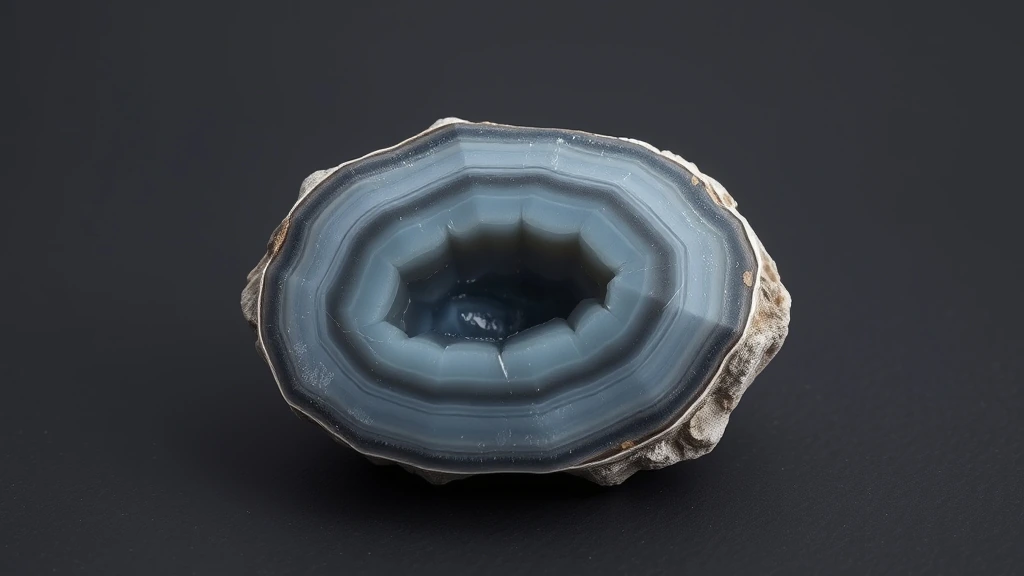
Gray agate belongs to the extensive chalcedony group, which consists of microcrystalline quartz varieties. As a member of the silicate mineral family, it forms through the slow precipitation of silica-rich solutions within volcanic or sedimentary rock cavities. This geological process creates dense, interlocking fibrous structures that define its physical character. Unlike macrocrystalline quartz, agate lacks visible individual crystals, resulting in a uniform, fine-grained texture. Its formation is intimately linked to hydrothermal activity, where silica gel deposits gradually solidify over millions of years.
What is Gray Agate? Geological Overview & Definition
Gray agate is defined as a banded variety of chalcedony, characterized by its distinct layering and muted coloration. It forms when silica-rich fluids infiltrate porous volcanic rocks or sedimentary basins, depositing thin layers of microcrystalline quartz. The gray hue typically results from the presence of trace amounts of iron oxides or other metallic impurities trapped within the crystal lattice. This geological origin ensures the stone exhibits high density and structural integrity.
The stone’s appearance is often marked by subtle banding patterns that reflect changes in chemical composition during formation. These bands can range from light ash to deep charcoal, creating a visually complex yet harmonious aesthetic. Geologists classify it under the broader category of cryptocrystalline minerals due to its extremely small crystal size. This classification distinguishes it from macrocrystalline quartz, which features visible, individual crystal faces.
Gray Agate Chemical Composition & Crystallographic Properties
The fundamental chemical identity of gray agate is SiO₂, representing pure silicon dioxide without significant stoichiometric variation. Its crystallographic structure is trigonal, consisting of tightly packed, microscopic fibers rather than large, distinct crystals. This cryptocrystalline arrangement gives the stone its characteristic waxy luster and high resistance to fracture. The lattice structure is highly stable, contributing to its exceptional durability in jewelry and decorative arts.
Cation substitution plays a minor role in coloration, where trace elements like iron are incorporated as impurity inclusions or substitute for aluminum in the lattice rather than replacing silicon atoms directly. These impurities create specific chromophore centers that absorb certain wavelengths of light, resulting in the observed gray tones. The stone exhibits low acid sensitivity, remaining chemically inert under standard environmental conditions. This stability ensures that the mineral does not degrade easily when exposed to moisture or mild acids.
Thermal behavior of gray agate is characterized by moderate heat resistance and low thermal expansion; it tolerates gradual temperature changes, but rapid heating or cooling can cause thermal shock and potential cracking, especially in fractured pieces. This property makes it suitable for carving and polishing processes that involve heat. The refractive index ranges from 1.544 to 1.553, contributing to its subtle vitreous to waxy luster.
| Property | Specification |
|---|---|
| Mineral Group | Silicates (Chalcedony / Cryptocrystalline Quartz) |
| Chemical Formula | SiO₂ (Silicon Dioxide) |
| Mohs Hardness | 6.5 – 7.0 |
| Crystal System | Trigonal (Microcrystalline / Cryptocrystalline fibrous aggregates) |
| Specific Gravity (Density) | 2.60 – 2.65 |
| Refractive Index | 1.544 – 1.553 |
| Color & Optical Properties | Natural Gray Agate color spectrum and optical dispersion |
| Primary Mining Localities | Brazil, Uruguay, Turkey, India, Madagascar |
| Water & Chemical Resistance | High (Safe for gentle warm water and mild soap; avoid harsh acids and chlorine) |
| Chakra Alignment (Traditional) | Root Chakra and Sacral Chakra |
| Zodiac Affinity (Traditional) | Gemini, Virgo, Taurus |
| Symbolic Meaning (Traditional) | Grounding, emotional balance, physical endurance, and protection |
Gray Agate Varieties & Color Spectrum
Gray Agate displays distinct mineralogical characteristics across its geological varieties and structural habits. Gemologists evaluate these natural varieties based on crystal habit, trace chromophore concentrations, and visual luster.
Primary Natural Gray Agate
The benchmark natural variety exhibiting diagnostic color saturation, though its microcrystalline structure does not display visible crystallographic symmetry.
Distinct Geological Morphs of Gray Agate
Secondary regional and structural varieties formed under localized geological temperature and pressure conditions.
Blue‑Gray Band Agate
Formed in silica‑rich volcanic tuffs, banded microcrystalline quartz fills cavities and fractures, creating parallel gray‑blue layers. Minute fluid inclusions of iron oxides impart a subtle metallic sheen, while the overall hue ranges from dove‑gray to deep slate. This variety is common in Brazil’s Minas Gerais region but prized for its consistent banding.
Dunalite (Gray Dunalite)
Dunalite originates in the cryptocrystalline aggregates of the Dunal region of France, where high‑temperature hydrothermal fluids precipitate fine‑grained silica. The stone exhibits a milky gray matrix pierced by darker, almost black, spherical inclusions of carbonaceous material. Its translucency and soft glow make it a collector’s favorite, though true dunalite is relatively scarce outside historic French quarries.
Gray Moss Agate
Developed within silica‑filled cavities of basaltic lava flows, gray moss agate displays delicate, fern‑like patterns of white to light gray calcite veining. The moss‑like inclusions are formed by secondary mineral growth during slow cooling, giving the stone a distinctive, organic appearance. Major sources include the United States (Idaho) and Madagascar, where the mineral is moderately abundant.
Montezuma Gray Agate
This Mexican variety forms in silica‑rich volcanic breccias of the Sierra Madre Occidental, where rapid cooling traps microscopic bubbles that later oxidize to produce a smoky gray tone. The stone often contains thin, iridescent rainbow‑colored layers that shift with light, a result of thin‑film interference. Montezuma gray agate is prized for its depth of color and is exported worldwide.
Gray Fire Agate
Found primarily in the silica‑filled veins of the Czech Republic’s Bohemian Massif, gray fire agate displays a dark gray base overlaid with bright, fiery orange‑red iridescent flashes caused by light diffraction on parallel lamellae. The interplay of colors is a hallmark of micro‑fracture lamination during crystallization. Though not as abundant as other Czech agates, its striking visual effect commands high market value.
Siberian Gray Agate
Emerging from the cryptocrystalline silica deposits of Siberian river gravels, this variety exhibits a uniform, cool gray tone with occasional metallic inclusions of pyrite that catch the eye. The stone’s formation is linked to prolonged weathering of volcanic ash in permafrost conditions, resulting in a dense, hard material. Siberian gray agate remains relatively rare due to limited mining infrastructure.
Where is Gray Agate Found? Geological Mining & Extraction
Gray agate typically occurs in silica‑rich volcanic host rocks such as tuffs, breccias, and basaltic lava flows, where hydrothermal fluids deposit microcrystalline quartz in voids and fissures. The resulting cryptocrystalline aggregates are often intergrown with iron oxides, calcite, or carbonaceous matter, giving each deposit a distinctive visual signature.
Major extraction zones include Brazil’s Minas Gerais, the United States (Idaho and Nevada), Mexico’s Sierra Madre Occidental, the Czech Republic’s Bohemian Massif, and Siberian river gravels. Mining is largely artisanal, employing hand‑sorting of alluvial gravels or small‑scale open‑pit methods to recover the dense, 2.60‑2.65 g/cm³ agate nodules while preserving delicate banding patterns.
Historical Significance & Cultural Lore of Gray Agate
Across ancient lapidary traditions, gray agate was valued for its protective qualities and grounding energy. In Greco‑Roman antiquity, it adorned signet rings and cameos, believed to shield the wearer from harm and to promote emotional balance, a belief echoed in Egyptian amulets where the stone symbolized durability and endurance.
In early Chinese texts, gray agate was associated with the Root Chakra, used in burial goods to ensure stability in the afterlife, while Vedic literature linked the stone to the Sacral Chakra, recommending it for physical stamina and protection during martial pursuits. These cross‑cultural attributions underscore the gemstone’s enduring role as a talisman of grounding and resilience.
Modern Uses & Jewelry Applications of Gray Agate
Gray agate’s cryptocrystalline texture makes it ideal for cabochon cutting, where its subtle banding is showcased in smooth, polished domes. Artisans also facet larger stones to highlight internal cloud‑like patterns, though cabochons remain the most popular form. In ornamental carving, the stone is shaped into beads, intaglios, and small sculpture elements for decorative panels.
- Cabochon pendants and earrings emphasizing the stone’s muted veining
- Faceted rings that play with light while preserving durability
- Carved cameos, seals, and decorative inlays for furniture or architectural accents
Metaphysical Properties & Traditional Meaning of Gray Agate
According to historical traditions and metaphysical lore, gray agate is regarded as a grounding stone that stabilizes emotional currents and fosters physical endurance. Across ancient Mediterranean lapidary practices, it was set in amulets to protect travelers, while Vedic texts associate it with calm deliberation and balanced judgment. The stone’s neutral hue is believed to absorb negative energies, promoting emotional balance and a sense of inner security.
Which Chakra and Zodiac Signs Align with Gray Agate?
In the chakra system, gray agate resonates most strongly with the Root Chakra, anchoring personal stability, and the Sacral Chakra, supporting creative flow and emotional vitality. Its vibration is said to reinforce the body’s foundational energy while encouraging healthy expression of feelings.
Astrologically, the stone aligns with the zodiac signs Gemini, Virgo, and Taurus. Gemini is said to have a calming influence on mental chatter, Virgo is believed to experience reinforcement of practical focus, and Taurus is thought to enjoy enhanced grounding and sensual appreciation, according to cultural associations. These alignments are consistent across classical astrological correspondences.
How to Identify Real vs. Fake Gray Agate
Artificial imitations of gray agate often include dyed quartz, synthetic glass, or resin composites that mimic the stone’s cloudy appearance. Such replicas lack the natural banding and micro‑crystalline structure of true agate, and they may feel lighter or display uniform coloration under close inspection. Recognizing these differences helps collectors avoid costly misidentifications.
Practical At-Home Authenticity Tests
- Temperature Test (Thermal Feel): Hold the stone; genuine agate feels cool to the touch and retains that coolness longer than glass or plastic.
- Specific Gravity & Weight Test: Compare the stone’s heft to a known quartz of similar size; agate’s density (2.60‑2.65 g/cm³) makes it noticeably heavier than most glass imitations.
- Scratch & Hardness Test (Mohs Comparison): Use a steel file (hardness ~5.5). Real agate (6.5‑7.0) will resist scratching, whereas glass or dyed quartz may show surface marks.
- Microscopic & Loupe Inspection (Internal Inclusions): Examine under 10× magnification; authentic agate reveals fine, irregular banding and micro‑crystals, while synthetic glass appears uniformly smooth or shows bubble patterns.
Gray Agate Valuation Factors, Grading & Pricing
Color Saturation remains the foremost determinant of market value. Stones exhibiting deep, evenly distributed gray tones with subtle veining command higher prices, as the visual vibrancy enhances their perceived aesthetic appeal. Buyers often seek specimens that display a natural, almost metallic sheen, which signals a well‑developed crystal structure and superior optical quality.
Crystal Size & Weight (Grams) directly influences pricing tiers. Larger, heavier agates—measured in grams—are prized for their commanding presence, while smaller pieces appeal to collectors seeking intricate detail. The distinction between raw, unpolished forms and tumbled, polished specimens also matters; polished stones typically fetch a premium due to their refined surface finish and ease of use in jewelry or display.
Ethical Sourcing & Locality Premium drives demand in both holistic and investment markets. Provenance from renowned localities such as the Caucasus, Turkey, or the United States’ Appalachian region adds a narrative layer that collectors value. Transparent, responsibly mined specimens often receive a locality premium, reflecting both ethical considerations and the rarity of well‑documented deposits.
How to Clean and Care for Gray Agate
Gentle cleaning of solid gray agates is best performed with warm soapy water. Use a mild dish soap diluted in lukewarm water, and apply the solution with a soft microfiber cloth. Avoid ultrasonic cleaners, especially for dyed, heavily fractured, or treated specimens, as the vibration can damage delicate inclusions or surface coatings. After rinsing, pat the stone dry with a clean, dry cloth and store it in a low‑humidity environment to preserve its natural luster.
Cleansing and Recharging Gray Agate (Energetic Care)
To cleanse the energetic field of gray agate, place the stone in a quiet space and allow gentle moonlight to bathe it overnight. The subtle lunar energy can help reset the stone’s vibration without exposing it to heat or direct sunlight, which could alter its crystalline structure. Alternatively, resting the agate on a selenite charging slab for a few hours can facilitate a subtle transfer of positive energy, as selenite is known for its ability to absorb and redistribute electromagnetic fields. These dry, low‑energy methods respect the mineral’s integrity while supporting its metaphysical properties.
Frequently Asked Questions About Gray Agate
Gray Agate displays distinct mineralogical characteristics across its geological varieties and structural habits. Gemologists evaluate these natural varieties based on crystal habit, trace chromophore concentrations, and visual luster.
Primary Natural Gray Agate
The benchmark natural variety exhibiting diagnostic color saturation, though its microcrystalline structure does not display visible crystallographic symmetry.
Distinct Geological Morphs of Gray Agate
Secondary regional and structural varieties formed under localized geological temperature and pressure conditions.
Is gray agate safe to wear in the shower?
Yes, it is safe for gentle warm water exposure. The stone’s high water resistance allows it to withstand mild soap and lukewarm temperatures without damage. However, you should strictly avoid harsh chlorine or acidic shower products that could degrade surface treatments over time.
How do I properly clean my gray agate jewelry?
Soak the piece in warm, soapy water for optimal results. Use a soft-bristled brush to gently remove dirt from crevices and intricate settings. This method effectively maintains the stone’s luster while preserving its structural integrity during regular maintenance routines.
Can I put gray agate in an ultrasonic cleaner?
Only if the specimen is solid, untreated, and unfractured. Ultrasonic vibrations can cause significant damage to dyed stones or those with internal fissures. Always inspect the piece for cracks or color treatments before subjecting it to high-frequency cleaning cycles.
Which zodiac signs are aligned with gray agate?
Gemini, Virgo, and Taurus are the primary aligned signs. These earth and air signs resonate with the stone’s stabilizing energy and practical nature. Wearing this gemstone is believed to enhance focus and emotional balance for individuals born under these astrological influences.
What chakras does gray agate activate?
It primarily activates the Root Chakra and Sacral Chakra. These energy centers govern physical endurance, grounding, and emotional stability. The stone’s muted tones support the flow of energy through these specific pathways, promoting a sense of security and balance.
What is the Mohs hardness of gray agate?
It measures between 6.5 and 7.0 on the Mohs scale. This high hardness makes it highly resistant to scratching during daily wear and physical activities. It is durable enough for rings and bracelets, though it can still be chipped by sharp impacts.
What is the chemical composition of gray agate?
It consists entirely of silicon dioxide, or SiO₂. This quartz variety features a cryptocrystalline fibrous aggregate structure, which gives it its characteristic waxy luster and durability. The specific gray hue often results from trace iron oxide impurities within the silica matrix.
Does gray agate require special storage conditions?
Store it separately to prevent surface scratches from harder gems. Although durable, its refractive index of 1.544 to 1.553 means it can be scratched by diamonds or sapphires. Keep it in a soft pouch or lined jewelry box to maintain its polished finish.