
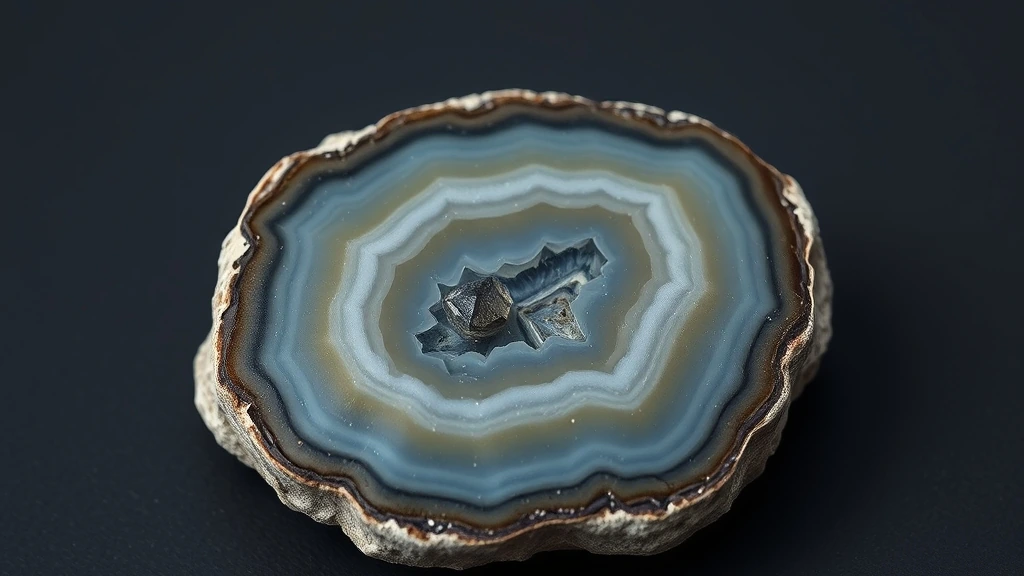
Moss agate belongs to the broader class of silicates, specifically the chalcedony subgroup of cryptocrystalline quartz. It forms through the slow precipitation of silica from hydrothermal fluids within volcanic or sedimentary host rocks. The fibrous, moss‑like inclusions arise when iron‑bearing minerals infiltrate the quartz matrix, giving the stone its characteristic mottled appearance.
What is Moss Agate? Geological Overview & Definition
Moss agate is a variety of chalcedony distinguished by its fibrous, greenish‑brown or gray inclusions that resemble moss or foliage. These inclusions are typically composed of iron‑rich hematite or goethite embedded within the quartz matrix, creating a natural, botanical pattern. The stone is usually found in volcanic tuff, basalt, or sedimentary limestone, where silica‑rich fluids have permeated fractures and cavities. Its fibrous texture and subtle color variations make it popular in ornamental jewelry and decorative objects.
Moss Agate Chemical Composition & Crystallographic Properties
The mineralogical identity of moss agate is SiO₂ arranged in a trigonal crystal system, specifically as a microcrystalline or cryptocrystalline aggregate. Within this framework, the quartz lattice is composed of SiO₄ tetrahedra linked by shared oxygen atoms, forming a continuous network that is highly resistant to chemical attack. The fibrous inclusions are not part of the quartz lattice but are interstitial, often containing iron oxides that act as chromophores, imparting the green or brown hues. Moss agate is chemically inert to most acids; it shows only slight etching in concentrated hydrofluoric acid, reflecting the robustness of the silica framework. Thermally, it remains stable up to about 1200 °C, beyond which it may begin to dehydrate and lose structural integrity. The presence of iron substitutions does not alter the fundamental trigonal symmetry of the quartz matrix, ensuring that moss agate retains the characteristic properties of cryptocrystalline quartz.
| Property | Specification |
|---|---|
| Mineral Group | Silicates (Chalcedony / Cryptocrystalline Quartz) |
| Chemical Formula | SiO₂ (Silicon Dioxide) |
| Mohs Hardness | 6.5 – 7.0 |
| Crystal System | Trigonal (Microcrystalline / Cryptocrystalline fibrous aggregates) |
| Specific Gravity (Density) | 2.60 – 2.65 |
| Refractive Index | 1.544 – 1.553 |
| Color & Optical Properties | Natural Moss Agate color spectrum and optical dispersion |
| Primary Mining Localities | Brazil, Uruguay, Turkey, India, Madagascar |
| Water & Chemical Resistance | High (Safe for gentle warm water and mild soap; avoid harsh acids and chlorine) |
| Chakra Alignment (Traditional) | Root Chakra and Sacral Chakra |
| Zodiac Affinity (Traditional) | Gemini, Virgo, Taurus |
| Symbolic Meaning (Traditional) | Grounding, emotional balance, physical endurance, and protection |
Moss Agate Varieties & Color Spectrum
Moss Agate (General)
Moss agate is a fibrous form of microcrystalline quartz that exhibits green, brown, or black banding resembling moss. The fibrous inclusions are formed by silica-rich fluids that deposit during the late stages of pegmatite crystallization. Its refractive index ranges from 1.544 to 1.553, giving it a subtle sparkle under light. The stone is moderately rare, prized for its delicate, natural patterns. In comparative mineralogical collections, practitioners and geologists frequently study Botswana Agate alongside this crystal to appreciate their subtle energetic and structural differences.
Green Moss Agate
Green moss agate displays fine, translucent green filaments that weave through a translucent white matrix. These filaments are typically silicon dioxide crystals grown in the presence of trace iron or manganese. The green hue is most pronounced in specimens from the Brazilian and Australian pegmatite fields. Its rarity is heightened by the difficulty of extracting clear, unblemished samples. In comparative mineralogical collections, practitioners and geologists frequently study Flower Jasper 2 alongside this crystal to appreciate their subtle energetic and structural differences.
Brown Moss Agate
Brown moss agate features darker, almost blackish filaments against a lighter quartz background. The brown coloration results from iron oxidation within the crystal lattice. This variety is commonly sourced from South African and Mexican deposits, where the mineral’s fibrous structure is well preserved. Brown moss agate is moderately common but still valued for its earthy aesthetic.
Black Moss Agate
Black moss agate showcases dense, dark filaments that create a striking contrast with the surrounding quartz. The black coloration is due to high iron content and sometimes trace carbon. This variety is often found in Czech Republic and India pegmatites, where the fibrous growth is particularly pronounced. Black moss agate is considered a premium variety because of its dramatic appearance.
Moss Agate with Amber Inclusions
Some moss agate specimens contain amber or fossilized resin inclusions, giving a warm, amber glow to the fibrous structure. These inclusions form when organic material becomes trapped during the late-stage crystallization of the pegmatite. Such specimens are rare, especially those from Sri Lanka and Thailand, where the amber is locally sourced. The combination of amber and moss creates a unique visual signature prized by collectors.
Moss Agate from the Himalayas
Himalayan moss agate is distinguished by its fine, almost translucent green filaments and a subtle, smoky background. The high-altitude pegmatites in the Indian Himalayas provide a unique environment for slow crystal growth, resulting in exceptionally delicate fibers. This variety is highly sought after for its purity and is considered one of the finest examples of moss agate worldwide.
Where is Moss Agate Found? Geological Mining & Extraction
Moss agate is typically hosted in pegmatitic veins and quartz-rich granitic intrusions where late-stage hydrothermal fluids deposit fibrous silica. The mineral forms during the final stages of crystallization, often in the cavities of larger quartz crystals, creating its characteristic moss-like patterns.
Primary extraction regions include Brazil, Australia, South Africa, and India, where large pegmatite bodies provide abundant, high-quality specimens. In these areas, mining operations focus on careful hand‑cutting and selective extraction to preserve the delicate fibrous structures that define moss agate.
Historical Significance & Cultural Lore of Moss Agate
Across ancient Greco-Roman lapidary traditions, moss agate was valued for its perceived grounding properties and used in amulets to promote emotional balance. In Egyptian funerary contexts, small moss agate beads were incorporated into burial jewelry, reflecting beliefs in protection and endurance.
Chinese artisans in the Tang dynasty incorporated moss agate into decorative panels, citing its symbolic connection to the root and sacral chakras, which were believed to stabilize physical and spiritual energy. Vedic texts also reference quartz varieties with fibrous inclusions, attributing them to the earth element and using them in ritualistic offerings to deities associated with stability and resilience.
Modern Uses & Jewelry Applications of Moss Agate
Moss agate is prized for its fibrous, green‑brown patterns that lend a natural, earthy aesthetic to fine jewelry. Skilled lapidaries cut the stone into smooth cabochons or delicate facets, enhancing its translucency while preserving the characteristic moss‑like veins. The stone is also carved into ornamental pieces such as pendants, brooches, and decorative panels, where its subtle color contrast provides a striking visual effect.
- Cabochon polishing for earrings, rings, and pendants
- Faceted cuts for solitaire or cluster settings
- Carved ornamental panels for home décor and ceremonial objects
Metaphysical Properties & Traditional Meaning of Moss Agate
According to historical traditions and metaphysical lore, moss agate is a stone of grounding and emotional balance. Ancient Mediterranean lapidaries believed it stabilizes the wearer’s energy, fostering resilience and patience. In Vedic texts, the stone is associated with the Root Chakra, encouraging a firm connection to the earth and the Sacral Chakra, which nurtures creativity and emotional harmony. Across early archaeological records, moss agate was used in amulets to protect against misfortune and to promote physical endurance.
Which Chakra and Zodiac Signs Align with Moss Agate?
Moss agate’s energetic profile aligns with the Root Chakra and the Sacral Chakra, supporting both foundational stability and emotional fluidity. These chakras are traditionally linked to the stone’s grounding properties and its ability to balance the body’s lower energy centers.
The stone’s celestial associations are firmly rooted in the Gemini, Virgo, and Taurus zodiac signs. Those born under these signs are believed to resonate with moss agate’s dual nature of adaptability and steadfastness, enhancing their natural qualities of communication, practicality, and sensual appreciation.
How to Identify Real vs. Fake Moss Agate
Artificial imitations of moss agate are often produced from synthetic glass or dyed quartz, mimicking the stone’s fibrous patterns. These replicas may lack the subtle color gradations and natural inclusions that characterize genuine moss agate.
Practical At-Home Authenticity Tests
- Temperature Test (Thermal Feel): Hold the stone in your hand; real moss agate feels cool to the touch, whereas synthetic glass warms quickly.
- Specific Gravity & Weight Test: Compare the stone’s weight to a known quartz sample of the same size; moss agate should be slightly heavier due to its higher density.
- Scratch & Hardness Test (Mohs Comparison): Use a steel file or a glass plate; moss agate should scratch with a hardness of 6.5–7, while glass typically scratches at lower values.
- Microscopic & Loupe Inspection (Internal Inclusions): Examine the stone under a loupe; genuine moss agate displays fibrous, microcrystalline inclusions, whereas synthetic replicas often show uniform, glassy textures.
Moss Agate Valuation Factors, Grading & Pricing
Color Saturation is the foremost determinant of market value. Stones exhibiting vivid, evenly distributed moss patterns command higher prices, as the natural energetic luster enhances visual appeal. A saturated green or blue hue, free from dulling or fading, signals superior mineral integrity. Collectors prize specimens that maintain their vibrancy over time, reflecting robust crystal chemistry.
Crystal Size & Weight (Grams) directly influences pricing, with larger, heavier pieces fetching premium rates. Raw agates are valued by gram and overall dimensions, while tumbled polish quality can increase desirability. Natural matrix inclusions, such as embedded quartz or calcite veins, add character and can boost value if they enhance the stone’s aesthetic. The absence of excessive fractures or surface blemishes also contributes to a higher market grade.
Ethical Sourcing & Locality Premium shapes both holistic and collector markets. Stones sourced from responsibly managed mines or reclaimed from historical sites often carry a premium due to their provenance. Provenance transparency, including documented origin and ethical extraction practices, reassures buyers and can elevate a specimen’s status. Additionally, rare localities with unique moss patterns can command higher prices in niche circles.
How to Clean and Care for Moss Agate
Cleaning moss agate should be performed with warm soapy water to gently remove surface dust without compromising the stone’s integrity. Use a mild, non‑abrasive soap and lukewarm water, rinsing with clean water and patting dry with a soft microfiber cloth. Avoid ultrasonic cleaners, especially for dyed, heavily fractured, or treated specimens, as vibration can exacerbate structural weaknesses. Store the cleaned agate in a dry, low‑humidity environment to preserve its natural luster.
Cleansing and Recharging Moss Agate (Energetic Care)
Energetic cleansing can be achieved through dry holistic methods such as gentle herbal smudging or placing the stone under soft moonlight. Resting moss agate on a selenite charging slab allows subtle electromagnetic resonance to refresh its energetic field. These practices should be performed in a calm setting, avoiding direct heat or intense sunlight, which can alter the crystal lattice. After recharging, the stone can be reintroduced to daily use, maintaining its protective and grounding properties.
Frequently Asked Questions About Moss Agate
Is moss agate safe to wear in the shower?
Yes, moss agate is safe for gentle warm water and mild soap. It is a quartz variety with a hardness of 6.5–7.0, making it resistant to everyday moisture. Avoid harsh acids or chlorine, which can etch the surface over time.
Can I clean moss agate with an ultrasonic cleaner?
Warm soapy water is the best cleaning method for solid moss agate. Ultrasonic cleaners should be avoided if the stone is dyed, heavily fractured, or treated, as the vibration can loosen delicate inclusions or damage surface patterns.
What is the best way to store moss agate to prevent damage?
Store moss agate in a soft pouch or lined jewelry box away from direct sunlight. The stone’s fibrous inclusions are delicate; keeping it protected from scratches and temperature fluctuations preserves its natural beauty.
Does moss agate have any specific metaphysical properties?
Moss agate is believed to ground emotions and enhance physical endurance. In esoteric traditions, it is linked to the Root and Sacral Chakras, fostering stability and emotional balance.
Which zodiac signs are associated with moss agate?
Moss agate is traditionally linked to Gemini, Virgo, and Taurus. These signs are thought to resonate with the stone’s grounding energy and its capacity to balance dualities.
Is moss agate suitable for use in jewelry that is exposed to sweat?
Yes, moss agate can tolerate sweat when cared for properly. Its quartz composition resists corrosion, but regular cleaning with mild soap and water will keep it bright and free from residue.
How does the density of moss agate compare to other agates?
Moss agate’s density ranges from 2.60 to 2.65 g/cm³, similar to other quartz agates. This moderate density contributes to its weighty feel while maintaining ease of carving and shaping.
What should I avoid when cleaning a dyed moss agate?
Avoid ultrasonic cleaners and harsh chemicals on dyed moss agate. Warm soapy water is sufficient; excessive vibration or acidic solutions can strip the dye and damage the stone’s surface.