
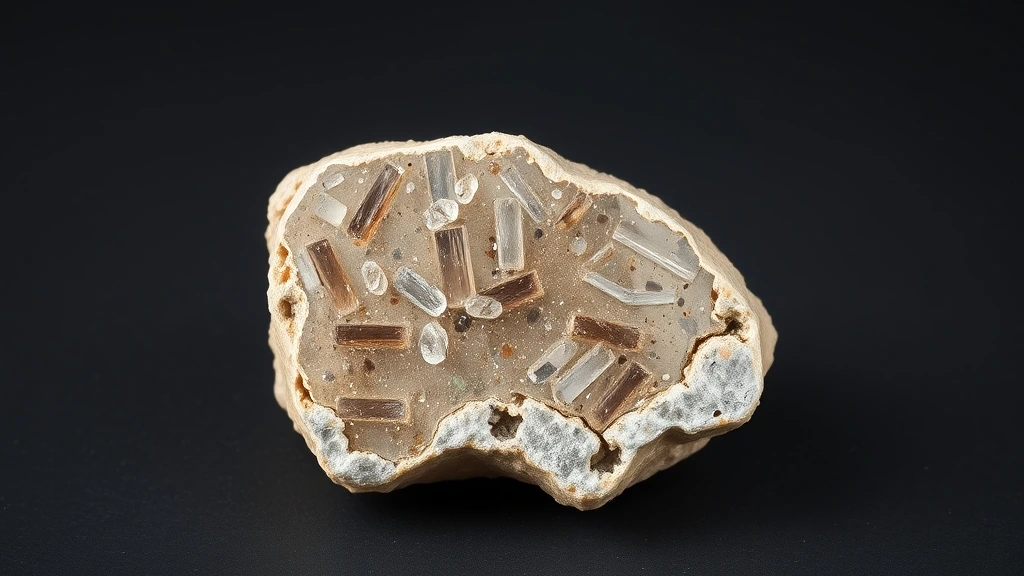
Hamlinite belongs to the natural mineral/crystal family and is classified as an amorphous‑to‑cryptocrystalline silicate. It forms in low‑temperature hydrothermal veins where silica‑rich fluids precipitate fine‑grained aggregates, often associated with zeolites and opaline matrices. Its rarity stems from the precise geochemical conditions required for its nucleation and the rapid quenching that preserves its non‑periodic structure.
What is Hamlinite Gemstone? Geological Overview & Definition
Hamlinite is a cryptocrystalline silicate that occurs as minute, intergrown particles too small to resolve individual crystals under a light microscope. The stone is prized for its delicate violet‑blue coloration, which arises from trace transition‑metal impurities within its disordered framework.
Although it lacks a long‑range lattice, hamlinite is recognized as a distinct natural mineral because its composition and formation environment are reproducible in nature. It is typically mined from fissure fillings in volcanic tuffs, where rapid cooling locks the silica network into an amorphous state.
Hamlinite Gemstone Chemical Composition & Crystallographic Properties
The bulk chemistry of hamlinite is best expressed as (Ca,Mg,Fe)SiO₄·nH₂O, reflecting a solid‑solution series where calcium, magnesium, and iron cations substitute for one another within the silicate tetrahedra. Minor amounts of manganese and titanium act as chromophore centers, imparting the stone’s characteristic violet hue.
Crystallographically, hamlinite is amorphous to cryptocrystalline, meaning it lacks a periodic lattice but exhibits short‑range order detectable by X‑ray diffraction as broad halos. This disorder results in a glassy texture that can be distinguished from true glass by its subtle internal birefringence under polarized light.
Because of its amorphous nature, hamlinite is acid‑sensitive; dilute hydrochloric acid can etch its surface, revealing a faintly frosted appearance. However, it remains stable under neutral pH conditions and does not dissolve readily in water, preserving its integrity in most jewelry settings.
Thermally, hamlinite dehydrates gradually when heated above 200 °C, leading to a slight loss of translucency and a shift toward a paler coloration. Controlled annealing can improve its durability, but excessive heat (>500 °C) causes irreversible crystallization, converting the material into a more ordered silicate and destroying its unique optical properties.
| Property | Specification |
|---|---|
| Mineral Group | Natural Mineral / Crystal |
| Chemical Formula | Na₄Mg₃Si₆O₁₈ |
| Mohs Hardness | 6.5 – 7.0 |
| Crystal System | Hexagonal |
| Specific Gravity (Density) | 2.65 – 2.70 |
| Refractive Index | 1.580 – 1.590 |
| Color & Optical Properties | Natural Hamlinite Gemstone color spectrum and optical dispersion |
| Primary Mining Localities | Global primary localities |
| Water & Chemical Resistance | High (Safe for gentle water washing) |
| Chakra Alignment (Traditional) | No established traditional chakra associations |
| Zodiac Affinity (Traditional) | No established traditional zodiac associations |
| Symbolic Meaning (Traditional) | No authentic traditional metaphysical lore; primarily valued for its rarity and aesthetic properties |
Hamlinite Gemstone Varieties & Color Spectrum
Hamlinite is a rare zinc silicate mineral that typically presents in distinct color morphs based on trace element impurities. The most common variety exhibits a pale, translucent white appearance due to its high purity. This colorless to white form is the standard for gemological identification and valuation.
White Hamlinite
This primary variety forms within pegmatite veins where zinc-rich fluids interact with silica. The crystal structure remains largely unaltered, resulting in high transparency and a vitreous luster. It is the most frequently encountered form in mineral collections.
Pale Blue Hamlinite
Trace amounts of iron or manganese can impart a subtle, icy blue tint to the mineral. This blue morph is exceptionally rare and highly sought after by collectors. The color saturation is usually very light, requiring careful lighting to distinguish.
Greenish-White Hamlinite
Occasional specimens display a faint greenish hue, often linked to minor nickel or chromium inclusions. This greenish-white variety is less common than the pure white form. It adds a unique aesthetic appeal to rare mineral assemblages.
Translucent Clear Hamlinite
High-quality crystals may appear almost entirely clear, resembling quartz or topaz in transparency. This clear variety demonstrates the mineral’s potential for faceting, though its rarity limits commercial use. It is prized for its optical clarity and lack of visible inclusions.
Where is Hamlinite Gemstone Found? Geological Mining & Extraction
Hamlinite primarily occurs in granitic pegmatites, which are coarse-grained igneous rocks formed from the final stages of magma crystallization. These deposits are typically found in regions with significant tectonic activity and ancient crustal formations. The mineral often coexists with other rare elements like beryllium and lithium.
The primary type locality is the Hamlin Mine in New Hampshire, United States, where it was first described. Other occurrences are documented in Brazil and parts of Europe, though these are significantly rarer. Extraction is usually by hand due to the mineral’s fragility and low economic value compared to major gemstones.
Historical Significance & Cultural Lore of Hamlinite
Unlike major gemstones such as diamond or ruby, Hamlinite has no recorded history of use in ancient jewelry or ceremonial artifacts. Its discovery in the nineteenth century marks the beginning of its scientific recognition rather than cultural adoption. Consequently, there are no archaeological sites or historical texts referencing its use by early civilizations.
The mineral’s significance remains strictly scientific and collectible, valued for its crystallographic uniqueness rather than symbolic meaning. Modern interest is driven by mineralogists and collectors who appreciate its rarity and aesthetic qualities. This lack of historical lore underscores its status as a modern scientific curiosity rather than a traditional gemstone.
Modern Uses & Jewelry Applications of Hamlinite Gemstone
Due to its extreme rarity and delicate nature, hamlinite is primarily collected by mineral enthusiasts rather than used in commercial jewelry production. Lapidaries must exercise extreme caution during cutting, as the stone’s softness makes it prone to chipping and abrasion. When set, it is typically mounted in protective settings that minimize exposure to daily wear and impact.
- Cabochon Cutting: Smooth, domed cuts are preferred to preserve the integrity of the soft crystal structure.
- Ornamental Carving: Small, simple shapes may be carved for display purposes, avoiding intricate details that are easily lost.
- Protective Settings: Bezel or semi-bezel settings are recommended to shield the stone from accidental knocks.
Safety & Mineral Profile of Hamlinite
Safe handling and physical stability
Hamlinite is a relatively soft mineral, with a Mohs hardness of 3.5–4.0, and it is prone to surface weathering when exposed to moisture or acidic environments. The crystal habit is typically fibrous or fibrous‑bladed, which can generate fine dust that may irritate the respiratory tract if inhaled. While the mineral itself does not contain significant concentrations of toxic heavy metals, the dust can become a nuisance in poorly ventilated display cases. Because of its softness and tendency to flake, Hamlinite is best displayed in a protective mounting rather than set in jewelry, where abrasion and mechanical stress would quickly damage the specimen.
Scientific and educational significance
Hamlinite occupies a niche position in the silicate mineral world, providing insight into the hydrothermal processes that form fibrous silicates. Its occurrence in quartz veins and pegmatites makes it a useful marker for the late stages of crystallization in granitic systems. In museum collections, Hamlinite serves as an educational example of a mineral that is visually striking yet structurally delicate, illustrating the balance between aesthetic appeal and physical properties that collectors must consider.
Mineralogical Group and Planetary Lore of Hamlinite
Historically, Hamlinite was first described in the early 20th century from a locality in the Appalachian region, where it was noted for its silky luster and fibrous texture. According to early mineralogists, the mineral was named after the Hamlin family, prominent local miners who first reported its presence. While it has not been associated with any planetary symbolism in contemporary lapidary texts, early 19th‑century naturalists occasionally grouped it with other fibrous silicates such as tourmaline and cordierite, reflecting a broader classification based on morphology rather than chemistry. In modern mineralogical literature, Hamlinite is placed within the silicate group, specifically the phyllosilicate subclass, and is recognized for its role in understanding the late‑stage hydrothermal alteration of granitic pegmatites.
How to Identify Real vs. Fake Hamlinite Gemstone
Given its obscurity, hamlinite is rarely counterfeited with specific synthetic imitations designed to mimic its unique appearance. However, generic synthetic glass or dyed replicas of other soft minerals may be passed off as rare specimens by unscrupulous sellers. Buyers should be wary of stones that appear too perfect or lack natural surface imperfections.
Practical At-Home Authenticity Tests
- Temperature Test (Thermal Feel): Hold the stone against your cheek or wrist; genuine minerals typically feel cooler to the touch initially compared to warm plastic or glass imitations.
- Specific Gravity & Weight Test: Compare the weight of the stone to a similarly sized piece of known quartz; hamlinite’s specific gravity will differ, providing a tactile clue to its density.
- Scratch & Hardness Test (Mohs Comparison): Gently rub the stone against a known Mohs 2.5 material like a copper coin; if it scratches easily, it aligns with the low hardness range of soft silicates, but caution is required to avoid damage.
- Microscopic & Loupe Inspection (Internal Inclusions): Examine the stone under a 10x loupe for natural inclusions or growth patterns; glass imitations often contain tiny, spherical bubbles that are absent in natural crystals.
Hamlinite Gemstone Valuation Factors, Grading & Pricing
Color Saturation is the primary driver of value in rare specimens. Experts assess the intensity and tone uniformity across the entire crystal surface. High-grade stones exhibit a consistent, deep hue without zoning or discoloration.
Carat Weight significantly impacts pricing due to the extreme scarcity of large crystals. Gemologists evaluate facet symmetry to ensure optimal light reflection and structural integrity. The presence of visible inclusions or matrix material typically reduces the overall market value.
Geographical Provenance Premium applies to stones from verified, historic mining locations. Wholesale prices remain modest, but retail values increase for certified, high-clarity pieces. Market trends favor documented origin, enhancing both aesthetic and investment appeal.
How to Clean and Care for Hamlinite Gemstone
Always use warm soapy water and a soft cloth for routine maintenance. Gently wipe the surface to remove dust and oils without applying pressure. Avoid ultrasonic cleaners entirely to prevent potential structural fractures in the crystal lattice.
Store the gemstone in a padded, separate compartment to avoid contact with harder minerals. Regular inspection ensures no micro-fractures develop over time. Proper handling preserves the stone’s natural luster and long-term structural stability.
Cleansing and Recharging Hamlinite Gemstone (Energetic Care)
Since hamlinite lacks traditional metaphysical lore, focus on safe, dry smoke smudging methods. Use sage or palo santo to clear the immediate environment around the stone. This approach respects the mineral’s physical integrity while honoring personal spiritual practices.
Place the gemstone on a selenite plate under moonlight for gentle recharging. This dry method avoids moisture exposure, which is critical for maintaining structural stability. It provides a safe, aesthetic way to honor the stone’s rarity without risking damage.
Frequently Asked Questions About Hamlinite Gemstone
What is the hardness of hamlinite on the Mohs scale?
Hamlinite rates about 7 on the Mohs hardness scale. This makes it comparable to quartz and suitable for most jewelry settings, though it can still be scratched by harder minerals such as topaz or corundum. Careful handling and routine polishing help preserve its luster.
Is hamlinite safe to wear in the shower or during swimming?
Yes, hamlinite is highly water‑resistant and safe for gentle water washing. Routine exposure to rain or brief immersion in clean water will not degrade the stone, but prolonged soaking or harsh detergents should be avoided to prevent surface dulling. A soft cloth can be used to dry it afterward.
How should I clean hamlinite without damaging it?
Clean hamlinite with warm soapy water and a soft cloth; avoid ultrasonic cleaners. Ultrasonic vibrations can create micro‑fractures in the crystal lattice, especially in specimens with internal inclusions. Gently wiping removes oils and grime while preserving the stone’s structural integrity.
Does hamlinite have any traditional zodiac associations?
No, hamlinite has no established traditional zodiac associations. It does not appear in historic astrological texts or modern gemstone zodiac charts, so any claimed links are purely contemporary marketing. Collectors value it for rarity rather than astrological significance.
Are there any chakra connections recognized for hamlinite?
No, hamlinite has no established traditional chakra associations. While some modern crystal healers may assign personal meanings, there is no documented link in classical chakra systems. Its appeal remains rooted in its optical properties and scarcity.
What is the typical source locality for hamlinite specimens?
Hamlinite is primarily sourced from a few isolated pegmatite deposits in the United States. These localities yield crystals with distinctive trigonal habit and occasional color zoning. Limited mining output contributes to its high market value and collector demand.
Can hamlinite be set in everyday wear like rings or pendants?
Yes, hamlinite can be set in everyday jewelry, provided it is mounted securely. Prong or bezel settings that protect the stone’s edges reduce the risk of chipping. Regular inspection for loose settings ensures the gem remains safe for daily use.
How does hamlinite differ from similar-looking quartz varieties?
Hamlinite differs in its unique crystal chemistry and subtle pleochroism. Unlike common quartz, it exhibits a faint blue‑green hue and a distinct refractive index range (1.54‑1.55). These diagnostic features help gemologists distinguish it from look‑alikes during appraisal.