
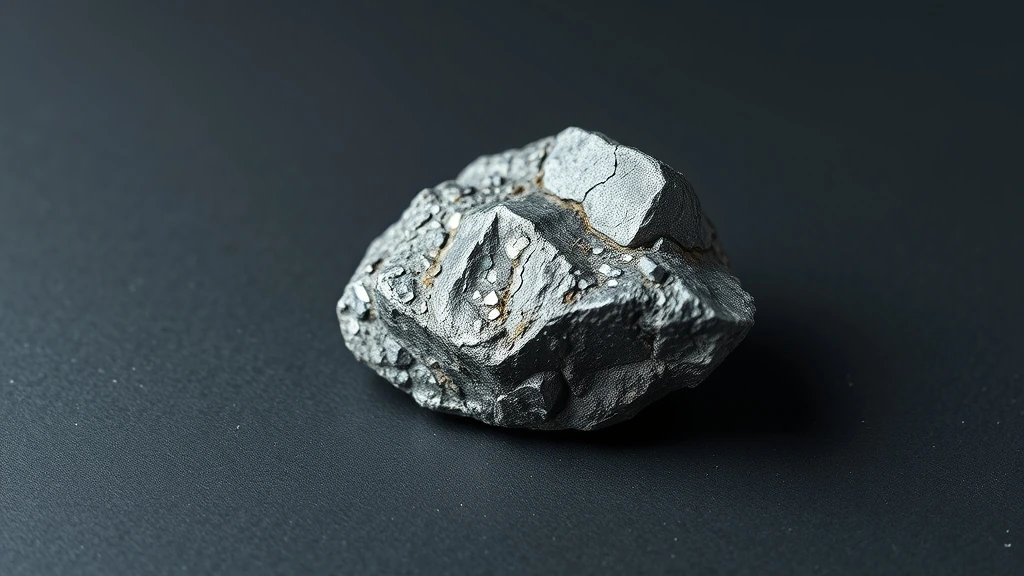
Ilmenite belongs to the Natural Mineral / Crystal group, forming within igneous and metamorphic rock environments. It is a significant titanium-bearing oxide that frequently occurs alongside magnetite and hematite. Its geological significance extends beyond gemology, playing a critical role in global titanium dioxide production.
What is Ilmenite Gemstone? Geological Overview & Definition
Ilmenite is a major iron-titanium oxide mineral that typically forms in mafic and ultramafic igneous rocks. It often appears as black, metallic crystals or massive aggregates in geological formations. This mineral is a key component of the ilmenite-magnetite series, where it represents the iron-rich end member.
In gemological contexts, ilmenite is rarely cut into faceted stones due to its brittleness. Instead, it is valued for its industrial applications in pigment and metal production. Its presence in rocks indicates specific magmatic conditions during crystallization, providing clues to geological history.
Ilmenite Gemstone Chemical Composition & Crystallographic Properties
Ilmenite crystallizes in the Trigonal crystal system, featuring a lattice structure derived from corundum. Its chemical formula is strictly FeTiO₃, indicating a 1:1:3 ratio of iron, titanium, and oxygen. This stoichiometric consistency ensures predictable physical properties across different geological deposits.
The mineral exhibits cation substitution, where manganese or magnesium can partially replace iron in the lattice. This substitution can slightly alter its refractive index and density, which ranges from 4.70 to 4.79 g/cm³. Such variations are critical for precise mineral identification in laboratory settings.
Ilmenite is generally resistant to weak acids but can dissolve in hydrochloric acid under specific conditions. Its color stems from chromophore centers involving iron and titanium ions, which absorb specific light wavelengths. This results in the characteristic dark, metallic appearance observed in most specimens.
Thermal behavior of ilmenite remains stable up to high temperatures, making it suitable for industrial processing. It does not exhibit significant piezoelectric or pyroelectric properties, unlike some other trigonal minerals. Its high density and hardness make it a durable component in various geological and industrial contexts.
| Property | Specification |
|---|---|
| Mineral Group | Natural Mineral / Crystal |
| Chemical Formula | FeTiO₃ |
| Mohs Hardness | 5–6 |
| Crystal System | Trigonal |
| Specific Gravity (Density) | 4.70–4.79 |
| Refractive Index | 2.50 – 2.75 |
| Color & Optical Properties | Natural Ilmenite Gemstone color spectrum and optical dispersion |
| Primary Mining Localities | Global primary localities |
| Water & Chemical Resistance | High (Safe for gentle water washing) |
| Chakra Alignment (Traditional) | Root Chakra |
| Zodiac Affinity (Traditional) | Capricorn, Virgo |
| Symbolic Meaning (Traditional) | Grounding, stability, and connection to the earth |
Ilmenite Gemstone Varieties & Color Spectrum
Ilmenite presents a diverse palette driven by trace element substitutions and oxidation states within its lattice. The most common form is black ilmenite, which exhibits a metallic luster and high opacity. This variety is abundant in mafic igneous rocks and serves as the primary source for titanium extraction. Its dense, opaque nature makes it unsuitable for faceting but valuable for industrial applications.
Black Ilmenite
This dominant variety forms through the crystallization of basaltic magma during the cooling of oceanic crust. It typically contains minor amounts of manganese and chromium, which can slightly alter its hue. The mineral displays a distinct metallic luster and a very high refractive index, causing strong internal reflections. While not cut for jewelry, it is widely collected for its diagnostic physical properties.
Reddish-Brown Ilmenite
Oxidation of iron within the crystal structure produces this hematite-rich morph, often found in weathered surface deposits. The color shift results from the conversion of ferrous iron to ferric iron over geological time. These specimens may exhibit a sub-metallic luster and are frequently associated with laterite soils. They are rarer in gem-quality clarity but significant for understanding surface weathering processes.
Greenish-Gray Ilmenite
This variety arises from the inclusion of tantalum and niobium within the ilmenite crystal lattice, forming a solid solution series. The greenish tint is subtle and requires careful observation under transmitted light to distinguish from standard black forms. It is commonly found in pegmatite dikes where volatile elements concentrate during the final stages of crystallization. This morph is prized by mineral collectors for its unique compositional complexity.
Manganese-Ilmenite
Rich in manganese, this variety displays a deep purplish-black hue that darkens under certain lighting conditions. It often occurs in association with pyrope garnets in ultramafic intrusions, creating visually striking mineral assemblages. The high manganese content increases the specific gravity slightly above the standard range. These specimens are rare and highly sought after by serious mineral collectors.
Titanomagnetite Association
While technically a distinct mineral, titanomagnetite is frequently found intimately intergrown with ilmenite in layered intrusions. This association creates complex banded textures that are visually distinctive and geologically informative. The intergrowth reflects the cooling history of large magma chambers, such as those in the Bushveld Complex. Collectors value these specimens for their educational value regarding igneous differentiation.
Where is Ilmenite Gemstone Found? Geological Mining & Extraction
Ilmenite primarily occurs in mafic and ultramafic igneous rocks, particularly within layered intrusions and basaltic flows. Major deposits are located in the Bushveld Complex in South Africa, which hosts some of the largest reserves globally. Other significant sources include the Kovdor region in Russia and the Mongolok district in Canada. These locations feature thick sequences of cumulate rocks where ilmenite crystals have settled and concentrated.
Extraction typically involves open-pit mining followed by magnetic separation and gravity concentration techniques. The high density of ilmenite allows it to be efficiently separated from lighter silicate gangue minerals. Processing plants refine the ore into titanium dioxide feedstock, which is essential for the pigment and aerospace industries. While gem-quality crystals are rare, the industrial scale of mining ensures a steady supply of raw mineral material.
Historical Significance & Cultural Lore of Ilmenite Gemstone
Ancient civilizations recognized ilmenite primarily as a source of titanium dioxide for pigments and metallurgical experiments. Archaeological evidence suggests that early miners in the Middle East processed ilmenite-rich ores to produce rutile and other titanium minerals. The metal itself was not isolated until the 19th century, limiting its direct use in ancient jewelry or tools. Instead, it served as a crucial component in early alchemical practices and pigment production.
In modern esoteric traditions, ilmenite is associated with the Root Chakra, symbolizing stability and connection to the earth. Practitioners believe its dense, metallic nature enhances grounding energy and promotes a sense of security. This lore reflects the mineral’s physical properties, such as its high density and opaque appearance. The association with Capricorn and Virgo highlights its perceived qualities of discipline and practicality.
Modern Uses & Jewelry Applications of Ilmenite Gemstone
Ilmenite is primarily valued as an industrial ore, yet its high refractive index allows for limited gemological application. Lapidaries typically polish specimens into smooth cabochons to showcase their metallic luster rather than creating faceted cuts. This approach maximizes the stone’s visual appeal while respecting its moderate Mohs hardness of 5–6.
- Cabochon Polishing: The most common cut, highlighting the stone’s deep black to brownish-black color and strong sheen.
- Ornamental Carving: Used in decorative objects where durability is less critical than aesthetic texture.
- Industrial Pigment: While not jewelry, processed ilmenite produces titanium dioxide, a key white pigment in paints and cosmetics.
Safety & Mineral Profile of Ilmenite
Ilmenite is a naturally occurring iron titanium oxide (FeTiO₃) that is generally stable under ambient conditions but can release fine dust that may be irritating if inhaled. The mineral is moderately hard (Mohs 5–5.5) and exhibits a black to dark gray metallic luster, making it visually striking but also prone to surface oxidation when exposed to high humidity or acidic environments. Because it contains iron and titanium, it is not considered toxic in bulk form; however, prolonged exposure to dust or grinding particles can pose respiratory risks, and the mineral should be handled with dust‑free gloves and a well‑ventilated workspace. Ilmenite is typically displayed in museum collections or as a collector’s specimen rather than used in jewelry, primarily due to its moderate hardness, tendency to scrape under wear, and the presence of titanium dioxide which can lead to surface tarnishing over time.
In scientific contexts, ilmenite is of considerable mineralogical and geochemical interest. It is a major source of titanium and iron in the Earth’s crust and is often found in magmatic and metamorphic environments, providing insights into plutonic processes and magmatic differentiation. Researchers study its crystal chemistry, magnetic properties, and isotopic composition to reconstruct the thermal history of host rocks and to model the magnetic anomalies observed in the Earth’s crust. Additionally, ilmenite’s magnetite‑like magnetic behavior makes it a valuable reference material in studies of magnetostratigraphy and geomagnetic field reversals.
Mineralogical Group and Planetary Lore of Ilmenite
Historically, ilmenite was first described by the German mineralogist Johann Friedrich von Ranke in the early 19th century, who noted its distinctive black streak and metallic sheen. The name derives from the Greek *ilmen* (iron) and *titan* (titanium), reflecting its dual composition. According to early mineralogists, ilmenite was classified within the oxide group, specifically the titanium‑iron oxides, and was distinguished from its close relative, magnetite, by its lower density and distinctive streak.
In planetary geology, ilmenite has gained prominence due to its abundance on the Moon and Mars. Lunar samples returned by the Apollo missions revealed extensive ilmenite deposits in the Mare Tranquillitatis and Mare Imbrium regions, where the mineral’s high titanium content was linked to the formation of basaltic lava flows. On Mars, orbital spectroscopy has identified widespread ilmenite on the Martian surface, suggesting similar magmatic processes. While early lapidary texts did not attribute any symbolic meaning to ilmenite, modern planetary science regards it as a key indicator of **planetary
How to Identify Real vs. Fake Ilmenite Gemstone
Because genuine ilmenite is rarely cut into high-value faceted gems, many “ilmenite” stones on the market are actually synthetic glass or dyed replicas. These imitations often lack the natural internal inclusions and specific gravity of the real mineral. Be wary of stones that appear too perfect or uniformly black without natural variation.
- Common Impostors: Black glass, obsidian, or dyed hematite.
- Red Flags: Perfectly uniform color, no natural surface imperfections, or unusually low weight.
Practical At-Home Authenticity Tests
- Temperature Test (Thermal Feel): Genuine ilmenite feels noticeably cooler to the touch than glass or plastic imitations. Hold the stone against your lower lip; real minerals conduct heat away from your skin faster than synthetic materials.
- Specific Gravity & Weight Test: Ilmenite has a high density of 4.70–4.79 g/cm³. It should feel significantly heavier than a similarly sized piece of glass or quartz. If the stone feels light, it is likely a fake.
- Scratch & Hardness Test (Mohs Comparison): With a Mohs hardness of 5–6, ilmenite can scratch glass (hardness 5.5) but will be scratched by quartz (hardness 7). Test cautiously on a porcelain plate; it should leave a dark streak, not scratch easily.
- Microscopic & Loupe Inspection (Internal Inclusions): Use a 10x loupe to examine the stone. Real ilmenite often contains natural inclusions or slight color zoning. Glass imitations may show tiny bubbles or swirl marks, which are absent in natural mineral specimens.
Ilmenite Gemstone Valuation Factors, Grading & Pricing
The primary driver of value is Color Saturation, which must exhibit a deep, uniform metallic sheen. High-grade specimens display consistent tone without zoning or dull patches. Optical clarity and strong luster further enhance the stone’s visual appeal for collectors.
Carat Weight significantly influences pricing, as large, clean crystals are rare in commercial deposits. Facet symmetry is critical for maximizing the mineral’s high refractive index. The presence of matrix or inclusions typically lowers the grade and market desirability.
Geographical Provenance Premium applies to stones from renowned localities with historical significance. Wholesale prices remain modest, but retail values rise for certified, high-quality specimens. Market trends favor well-documented origins over generic, unverified sources.
How to Clean and Care for Ilmenite Gemstone
Always use warm soapy water and a soft cloth to gently remove surface oils. This method effectively cleans the stone without risking damage to its structure. Avoid ultrasonic cleaners, as vibrations can cause structural fractures in the fragile trigonal lattice.
Store your ilmenite in a soft pouch to prevent scratches from harder minerals. Regular inspection ensures no loose settings or cracks develop over time. Proper handling preserves the stone’s integrity and luster for generations.
Cleansing and Recharging Ilmenite Gemstone (Energetic Care)
For energetic cleansing, use smoke smudging with sage or palo santo to clear stagnant energy. This dry method respects the mineral’s physical stability while addressing metaphysical needs. Ensure the area is well-ventilated during this process.
Place the stone on a selenite plate under moonlight for overnight recharging. This gentle approach restores vibrational balance without exposing the gem to water or heat. Always handle the stone with clean hands to maintain its purity.
Frequently Asked Questions About Ilmenite Gemstone
What is the chemical composition of ilmenite?
Ilmenite is defined by the chemical formula FeTiO₃. This titanium iron oxide mineral forms the primary source for titanium extraction in industrial applications. Its distinct trigonal crystal system gives it a unique geometric structure. Understanding this composition helps identify its origin and stability.
How hard is ilmenite on the Mohs scale?
Ilmenite registers a hardness of 5 to 6 on the Mohs scale. This places it slightly harder than apatite but softer than quartz. Consequently, it is susceptible to scratching from harder materials. Wearers should store it separately to prevent surface abrasion.
Can I wear ilmenite in the shower?
Yes, ilmenite is safe for gentle water washing. Its high water resistance allows it to withstand exposure to rain or shower water without dissolving. However, avoid harsh chemicals or soaps that may leave residue. Rinse it thoroughly after exposure to maintain its natural luster.
Is ilmenite safe for ultrasonic cleaning?
No, you must avoid ultrasonic cleaners for this stone. The intense vibrations can cause structural fractures due to its brittle nature. Instead, use warm soapy water and a soft cloth for cleaning. This gentle approach preserves the integrity of the FeTiO₃ structure.
Which zodiac signs are aligned with ilmenite?
Ilmenite is traditionally aligned with Capricorn and Virgo. These earth signs resonate with the stone’s grounding properties. It supports their need for stability and practicality. Wearing this mineral may enhance their connection to the physical world.
Which chakra does ilmenite activate?
Ilmenite primarily activates the Root Chakra. This energy center governs feelings of security and physical well-being. The stone’s heavy, earthy nature supports this specific chakra. It does not align with higher chakras like the crown or third eye.
What is the specific gravity of ilmenite?
Ilmenite has a density ranging from 4.70 to 4.79. This high specific gravity makes it feel significantly heavier than its size suggests. Gemologists use this metric to distinguish it from lighter lookalikes. The refractive index of 2.50 – 2.75 further aids identification.
How should I store ilmenite jewelry?
Store ilmenite in a soft pouch or lined box. This prevents contact with harder gemstones that could scratch its surface. Keep it away from direct sunlight to preserve color integrity. Proper storage ensures the mineral retains its trigonal form and luster over time.