
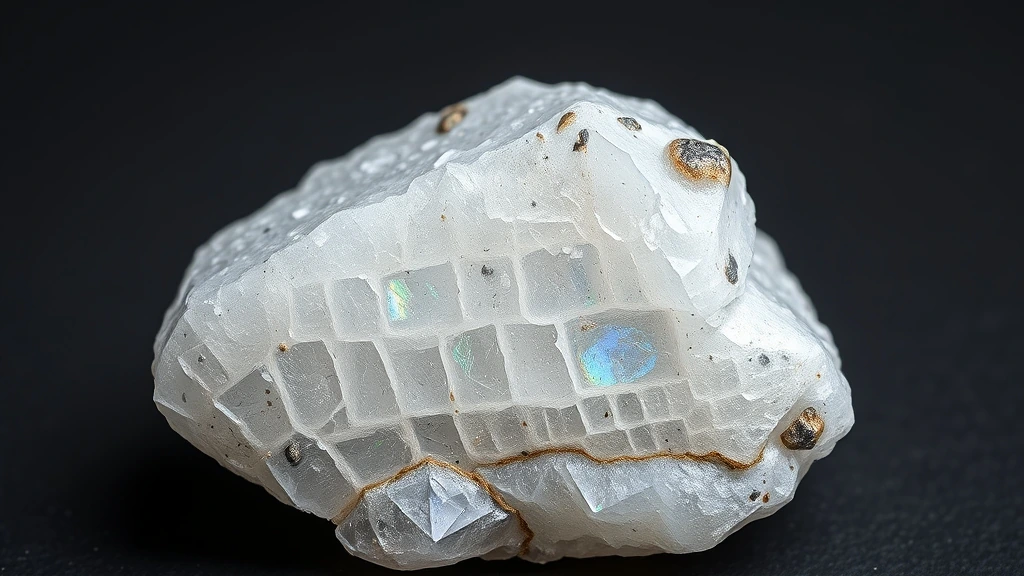
Iridescent Calcite is classified as a Natural Mineral and belongs to the broader category of crystals, characterized by its unique geological properties and formation processes. As a member of the mineral kingdom, it is shaped by geological forces and exhibits distinct physical and optical characteristics. Its geological classification is rooted in its Trigonal crystal system, which influences its overall structure and behavior.
What is Iridescent Calcite? Geological Overview & Definition
Iridescent Calcite is a mineral entity that owes its iridescence to the way microscopic layers or inclusions interact with light, producing a diffraction effect that gives it a shimmering appearance. This phenomenon is closely tied to the stone’s internal structure and the way it refracts light. The Trigonal crystal system of Iridescent Calcite plays a crucial role in its optical properties.
The geological definition of Iridescent Calcite is closely linked to its formation processes, which involve the precipitation of calcium carbonate from solution, often in hydrothermal veins or as a result of biogenic activity. This process can lead to the creation of a wide range of crystal forms and sizes, each with its unique characteristics and properties. The study of Iridescent Calcite’s geological context provides valuable insights into its mineralogical composition and behavior.
Iridescent Calcite Chemical Composition & Crystallographic Properties
Iridescent Calcite crystallizes in the Trigonal system, which is characterized by a three-fold axis of symmetry. This crystal system influences the stone’s lattice structure, which is composed of calcium, carbon, and oxygen atoms arranged in a specific pattern. The cation substitution of ions within the lattice can affect the stone’s optical and physical properties, including its color and hardness.
The lattice structure of Iridescent Calcite is sensitive to acid solutions, which can cause it to dissolve or react, leading to changes in its composition and properties. The stone’s color is attributed to the presence of chromophore color centers, which are defects or impurities within the lattice that absorb and reflect specific wavelengths of light. The thermal behavior of Iridescent Calcite is also of interest, as it can exhibit thermoluminescence or other thermal effects that provide clues to its composition and history.
The aggregate mineralogical composition of Iridescent Calcite can vary, depending on the presence of other minerals or impurities. In some cases, it may be associated with other carbonate minerals, such as dolomite or aragonite, which can affect its overall properties and behavior. The study of Iridescent Calcite’s composition and crystallographic properties requires a detailed understanding of its mineralogical context and the geological processes that shape it.
The Trigonal crystal system of Iridescent Calcite is a key factor in its unique properties and behavior, influencing its optical, physical, and chemical characteristics. The stone’s lattice structure and cation substitution patterns play a crucial role in determining its overall composition and properties, making it a fascinating subject for study and research.
| Property | Specification |
|---|---|
| Mineral Group | Natural Mineral / Crystal |
| Mohs Hardness | 6.5 – 7.0 |
| Crystal System | Trigonal |
| Color & Optical Properties | Natural Iridescent Calcite color spectrum and optical dispersion |
| Primary Mining Localities | Global primary localities |
| Water & Chemical Resistance | EXTREMELY SENSITIVE: Water Soluble / Moisture Sensitive! (Avoid liquids) |
| Chakra Alignment (Traditional) | Crown Chakra (Sahasrara) |
| Zodiac Affinity (Traditional) | Capricorn, Taurus |
| Symbolic Meaning (Traditional) | Clear communication, truth and serenity |
Iridescent Calcite Varieties & Color Spectrum
Iridescent calcite is a versatile mineral that occurs in various natural varieties, each with its unique color morph and geological characteristics. The most common varieties include Optical Calcite, Iceland Spar, and Calcite Rose. These varieties exhibit distinct inclusions and visual signatures, making them highly sought after by collectors and gemstone enthusiasts. The rarity of each variety also plays a significant role in determining its value.
Optical Calcite
Optical calcite is a rare variety of iridescent calcite that exhibits a double refraction phenomenon, causing it to display a rainbow-colored effect. This variety is formed through the metamorphism of limestone and dolostone rocks, resulting in a unique crystal structure. Optical calcite is highly prized for its clarity and luster, making it a popular choice for gemstone collectors. Its limited availability also contributes to its high value.
Iceland Spar
Iceland spar is a type of iridescent calcite that is characterized by its transparent to translucent appearance and tabular crystal habit. This variety is formed through the hydrothermal alteration of limestone and dolostone rocks, resulting in a distinctive cleavage pattern. Iceland spar is highly valued for its optical clarity and brilliance, making it a popular choice for optical instruments and gemstone collections. Its rarity and unique properties also make it a highly sought-after variety.
Calcite Rose
Calcite rose is a type of iridescent calcite that is characterized by its rosy pink to orange color and globular crystal habit. This variety is formed through the oxidation of iron-rich minerals, resulting in a distinctive coloration. Calcite rose is highly prized for its unique color and formation, making it a popular choice for gemstone collectors and mineral enthusiasts. Its limited availability and rarity also contribute to its high value.
Other Varieties
Other notable varieties of iridescent calcite include Honey Calcite, Luminous Calcite, and Phantasmagoric Calcite, each with its unique color morph and geological characteristics. These varieties exhibit distinct inclusions and visual signatures, making them highly sought after by collectors and gemstone enthusiasts. The rarity and unique properties of each variety also play a significant role in determining its value. Gemstone grading and certification are essential in evaluating the quality and authenticity of these varieties.
Where is Iridescent Calcite Found? Geological Mining & Extraction
Iridescent calcite is typically found in pegmatites and hydrothermal veins, often associated with limestone and dolostone rocks. The primary extraction regions for iridescent calcite include Mexico, China, and Brazil, where it is mined from open-pit and underground mines. The mining process involves careful extraction and crystal sorting to preserve the mineral’s unique properties and appearance. Geological mapping and exploration are crucial in identifying new deposits and extraction sites.
The extraction of iridescent calcite requires careful planning and execution to ensure the preservation of its delicate crystal structure and optical properties. Mining companies and gemstone traders work closely with geologists and mineralogists to identify and extract high-quality iridescent calcite specimens. The trade variety and market demand also play a significant role in determining the extraction and pricing of iridescent calcite. Certification and authentication are essential in ensuring the quality and authenticity of the extracted mineral.
Historical Significance & Cultural Lore of Iridescent Calcite
Across ancient lapidary traditions, iridescent calcite has been highly valued for its metaphysical properties and symbolism, often associated with clear communication, truth, and serenity. In historical metaphysical lore, iridescent calcite is believed to possess healing properties, making it a popular choice for meditation and energy work. The ancient Greco-Roman and Egyptian civilizations also prized iridescent calcite for its beauty and rarity, often using it in jewelry and ornamental objects. Throughout early archaeological records, iridescent calcite has been found in ancient artifacts and treasures, highlighting its significance in cultural and spiritual contexts.
In ancient Vedic and Chinese traditions, iridescent calcite is associated with the Crown Chakra, believed to promote spiritual growth and higher consciousness. The zodiac signs of Capricorn and Taurus are also linked to iridescent calcite, making it a popular choice for astrological and esoteric practices. Across these cultures, iridescent calcite has been revered for its unique properties and symbolism, reflecting its enduring significance in human history and cultural heritage. Iridescent calcite remains a highly valued and sought-after mineral, cherished for its beauty, rarity, and metaphysical properties.
Modern Uses & Jewelry Applications of Iridescent Calcite
Iridescent calcite is prized for its play‑of‑color and translucency, making it a versatile gemstone in contemporary design. Artisans often cut the stone into smooth cabochons that showcase its internal shimmer, while skilled faceting can accentuate the subtle rainbow hues along crystal edges. In addition to wearable pieces, the mineral is carved into ornamental objects such as decorative beads, pendants, and small sculpture fragments that serve as focal points in luxury interiors.
- Cabochon settings highlight the stone’s luminous depth.
- Faceted cuts reveal diffraction of light, enhancing iridescence.
- Carved beads and miniatures are used in high‑end beaded jewelry.
- Decorative inlays for watches, rings, and cufflinks add a unique sparkle.
Metaphysical Properties & Traditional Meaning of Iridescent Calcite
According to historical traditions and metaphysical lore, iridescent calcite is associated with clear communication and the gentle unfolding of truth. Across ancient Mediterranean lapidary practices, the stone was believed to calm turbulent emotions, fostering serenity and balanced thought. Vedic references describe it as a conduit for inner clarity, encouraging honest expression while soothing the mind’s agitation. In general lapidary folklore, the mineral’s shifting colors symbolize the fluid nature of consciousness, inviting wearers to align with truth‑filled serenity.
Which Chakra and Zodiac Signs Align with Iridescent Calcite?
The iridescent variety resonates strongly with the Crown Chakra (Sahasrara), the energy center governing spiritual connection and higher awareness. When placed at the crown of the head, the stone is thought to open channels for divine insight, supporting meditation and the pursuit of universal truth.
In astrological tradition, the gemstone is aligned with Capricorn and Taurus. Capricorn’s disciplined, earth‑grounded nature finds reinforcement in the stone’s stabilizing calm, while Taurus benefits from the stone’s ability to promote inner peace and honest self‑expression. Both signs are said to experience enhanced clarity and emotional balance when wearing iridescent calcite.
How to Identify Real vs. Fake Iridescent Calcite
Artificial imitations of iridescent calcite include dyed quartz, synthetic glass, and resin composites that mimic its rainbow sheen. These substitutes often lack the natural internal layering and subtle color shifts characteristic of genuine calcite. Synthetic glass may display a uniform glow without the nuanced play of light, while dyed replicas can appear overly saturated or uneven under different lighting conditions.
Practical At-Home Authenticity Tests
- Temperature Test (Thermal Feel): Real calcite feels cool to the touch and retains that coolness longer than glass or resin, which quickly warm to skin temperature.
- Specific Gravity & Weight Test: Genuine calcite has a specific gravity around 2.7; it feels noticeably heavier than glass of comparable size, which typically ranges near 2.4.
- Scratch & Hardness Test (Mohs Comparison): With a hardness of 6.5–7.0, calcite can be lightly scratched by a steel nail (≈5.5) but resists scratching by a copper coin (≈3.5); glass (≈5.5) will show more pronounced scratches.
- Microscopic & Loupe Inspection (Internal Inclusions): Under 10× magnification, natural calcite reveals fine growth lines, wispy inclusions, or subtle cloudiness, whereas synthetic glass appears uniformly clear with no internal structure.
Iridescent Calcite Valuation Factors, Grading & Pricing
The value of iridescent calcite is significantly influenced by Color Saturation, with more vibrant and intense colors commanding higher prices. Visual vibrancy and natural energetic luster also play a crucial role in determining the market value of this mineral. The overall aesthetic appeal of the specimen is a key factor in its valuation.
The size and weight of the crystal, measured in Crystal Size & Weight (Grams), are also important considerations in determining its value. The quality of the polish, whether raw or tumbled, and the presence of natural matrix inclusions can also impact the price. The condition and quality of the specimen are critical factors in its grading and pricing.
In holistic and collector markets, Ethical Sourcing & Locality Premium can significantly impact the value of iridescent calcite. The origin and history of the specimen, as well as the methods used to extract and trade it, can influence its value and desirability. Buyers are often willing to pay a premium for specimens that are sourced responsibly and have a rich cultural or historical significance.
How to Clean and Care for Iridescent Calcite
Iridescent calcite is extremely sensitive to water and moisture, and should never be washed with water or liquid soap. To clean this mineral, use a dry soft microfiber cloth to gently dust the specimen, and store it in a low-humidity environment away from liquids. Ultrasonic cleaning is strictly forbidden, as it can cause damage to the mineral.
Cleansing and Recharging Iridescent Calcite (Energetic Care)
To cleanse and recharge iridescent calcite, use safe dry holistic methods such as herbal smudging or gentle moonlight exposure. Resting the specimen on a selenite charging slab is also a gentle and effective way to recharge its energy. This method allows the mineral to absorb and balance the surrounding energies without causing damage.
Gentle moonlight exposure can be an effective way to recharge iridescent calcite, as it allows the mineral to absorb the subtle energies of the moon. Herbal smudging can also be used to cleanse and recharge the specimen, using herbs such as sage or sweetgrass to purify and balance its energy. By using these safe and gentle methods, you can help to maintain the health and vitality of your iridescent calcite specimen.
Frequently Asked Questions About Iridescent Calcite
Iridescent Calcite displays distinct mineralogical characteristics across its geological varieties and structural habits. Gemologists evaluate these natural varieties based on crystal habit, trace chromophore concentrations, and visual luster.
Primary Natural Iridescent Calcite
The benchmark natural variety exhibiting diagnostic color saturation and classic crystallographic symmetry.
Distinct Geological Morphs of Iridescent Calcite
Secondary regional and structural varieties formed under localized geological temperature and pressure conditions.
Is iridescent calcite suitable for everyday wear?
It is not recommended due to its sensitivity to moisture. Iridescent calcite is extremely sensitive to water and moisture, which can cause damage or dissolution, so it’s best to avoid wearing it in humid environments or during activities that involve exposure to liquids.
Can I clean iridescent calcite with water and soap?
No, cleaning with water and soap is not recommended. Iridescent calcite is water soluble, so using water or liquid soap can damage or dissolve the mineral; instead, clean it with a dry soft microfiber cloth to maintain its integrity.
How do I properly care for my iridescent calcite?
Handle it with care and avoid exposure to moisture. To keep your iridescent calcite gemstone in good condition, store it in a dry place, avoid wearing it in humid environments, and clean it gently with a dry soft microfiber cloth to prevent damage.
Is ultrasonic cleaning safe for iridescent calcite?
Ultrasonic cleaning is strictly forbidden. The use of ultrasonic cleaners can cause damage to iridescent calcite due to the moisture and vibrations involved in the process, so it’s best to avoid using them altogether.
Which zodiac signs are associated with iridescent calcite?
Iridescent calcite is associated with Capricorn and Taurus. These two zodiac signs are believed to be connected to the energies and properties of iridescent calcite, making it a popular choice for individuals born under these signs.
Can I wear iridescent calcite in the shower or while swimming?
No, it’s not recommended to wear iridescent calcite in water. As iridescent calcite is extremely sensitive to moisture, wearing it in the shower or while swimming can cause damage or dissolution, so it’s best to avoid exposing it to water altogether.
Which chakra is iridescent calcite associated with?
Iridescent calcite is associated with the Crown Chakra (Sahasrara). This chakra is believed to be connected to the energies and properties of iridescent calcite, making it a popular choice for those seeking to balance and align their Crown Chakra.
How can I protect my iridescent calcite from damage?
Store it in a dry place and handle it with care. To protect your iridescent calcite from damage, store it in a dry, cool place, avoid exposing it to moisture or extreme temperatures, and handle it gently to prevent scratches or breaks.