
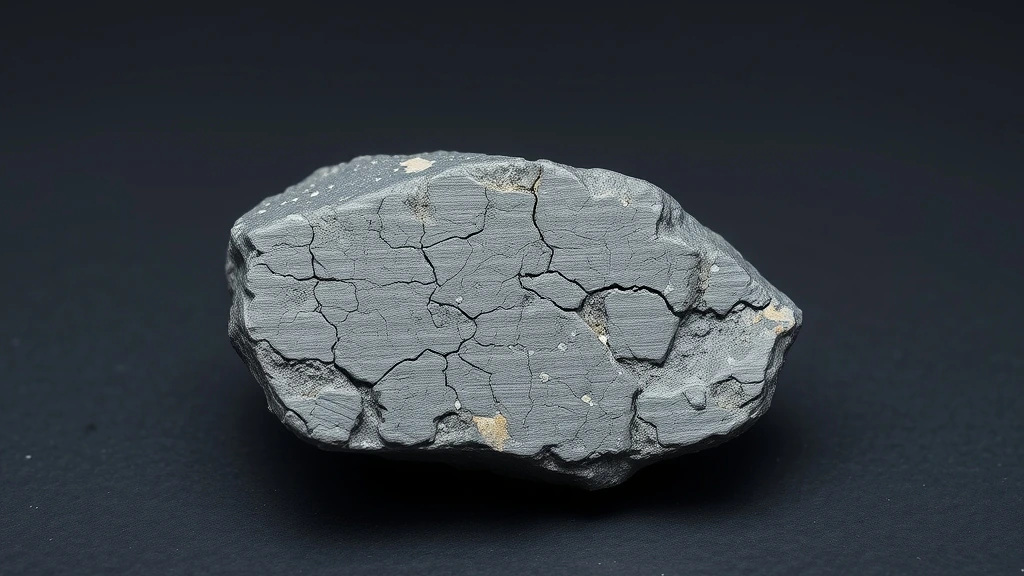
Kimberlite is classified as a natural mineral aggregate, representing a specific type of volcanic rock rather than a single crystalline species. It forms from deep mantle material transported rapidly to the Earth’s surface through narrow, pipe-like structures known as kimberlite pipes. This geological formation process preserves high-pressure minerals that would otherwise decompose under lower pressure conditions. The rock serves as the primary host for diamonds and other mantle-derived gemstones, making it geologically significant.
What is Kimberlite? Geological Overview & Definition
Kimberlite is an ultramafic rock originating from the upper mantle, typically at depths exceeding 150 kilometers. It is distinguished by its high magnesium and iron content, contrasting sharply with common crustal basalts. The rapid ascent of kimberlite magma prevents extensive crystallization, resulting in a coarse-grained texture. This unique formation history allows for the preservation of xenocrysts, which are foreign crystals entrained during the eruption.
The term “kimberlite” was first applied to rocks from the Kimberley region in South Africa, where major diamond deposits were discovered. Geologists define it by the presence of specific diagnostic minerals, such as olivine and spinel, alongside rare mantle phases. These rocks are often associated with diatreme structures, which are brecciated zones formed by explosive volcanic activity. Understanding this classification is crucial for identifying viable gemstone exploration targets globally.
Kimberlite Chemical Composition & Crystallographic Properties
Kimberlite is an aggregate rock composed of multiple mineral phases, lacking a single, unified chemical formula. Its primary constituents include olivine, pyroxene, and spinel, which collectively define its bulk composition. The trigonal crystal system applies specifically to the individual mineral grains, such as corundum or certain oxide phases, within the matrix. Each mineral phase maintains its own distinct lattice structure and symmetry properties.
The lattice structure of the dominant minerals varies, with many silicates adopting orthorhombic or cubic arrangements. However, specific accessory minerals, such as corundum or garnet, exhibit trigonal symmetry. Cation substitution occurs naturally within these lattices, where iron or magnesium ions replace other elements. This substitution influences the physical properties and optical characteristics of the individual mineral grains.
Chromophore color centers in minerals like corundum or spinel arise from trace element impurities or structural defects. These defects absorb specific wavelengths of light, producing the vibrant colors observed in gem-quality inclusions. The acid sensitivity of kimberlite components varies; silicates are generally resistant, while carbonates may react. This chemical diversity requires careful handling during gemstone extraction and cleaning processes.
Thermal behavior in kimberlite minerals is governed by their bonding strength and lattice stability. High-temperature stability allows these minerals to survive the violent ascent from the mantle. Phase transitions may occur in specific minerals if subjected to extreme heat during processing. Understanding these thermal limits is essential for preserving the integrity of gemstones extracted from kimberlite pipes.
| Property | Specification |
|---|---|
| Mineral Group | Natural Mineral / Crystal |
| Mohs Hardness | 6.5 – 7.0 |
| Crystal System | Trigonal |
| Color & Optical Properties | Natural Kimberlite color spectrum and optical dispersion |
| Primary Mining Localities | Global primary localities |
| Water & Chemical Resistance | High (Safe for gentle water washing) |
| Chakra Alignment (Traditional) | Root Chakra (Muladhara) |
| Zodiac Affinity (Traditional) | Taurus, Libra |
| Symbolic Meaning (Traditional) | Grounding, vitality and protection |
Kimberlite Varieties & Color Spectrum
Kimberlite displays distinct mineralogical characteristics across its geological varieties and structural habits. Gemologists evaluate these natural varieties based on crystal habit, trace chromophore concentrations, and visual luster.
Primary Natural Kimberlite
The benchmark natural variety exhibiting diagnostic color saturation and classic crystallographic symmetry.
Distinct Geological Morphs of Kimberlite
Secondary regional and structural varieties formed under localized geological temperature and pressure conditions.
Red Kimberlite
Formed deep within the mantle, red kimberlite acquires its hue from hematite and iron‑rich olivine crystals that survive the rapid ascent of the kimberlitic magma. The rock often displays a granular, glassy matrix with scattered red specks, giving it a striking ruby‑like appearance. Occurring primarily in the Kaapvaal Craton of South Africa, this variety is prized for its rarity and vivid coloration.
Green Kimberlite
The green kimberlite variety derives its color from chlorite and serpentine alteration during post‑emplacement hydrothermal processes. Its surface exhibits a mottled, jade‑like sheen, sometimes interspersed with translucent quartz veins that enhance its visual depth. Green kimberlite is most commonly sourced from the Siberian kimberlite fields, where low‑temperature metamorphism preserves its distinctive hue.
Blue Kimberlite
A rare blue kimberlite forms when trace amounts of titanium‑bearing minerals such as ilmenite undergo oxidation, imparting a deep cobalt tint to the host rock. The blue shade is often accentuated by fine, reflective inclusions of spinel and garnet, creating a metallic luster under light. This variety is chiefly found in the Canadian Northwest Territories, where kimberlite pipes intersect ancient cratonic basements.
White Kimberlite
White kimberlite results from extensive leaching of iron oxides, leaving a pale, almost translucent matrix dominated by calcite and feldspar crystals. Its smooth, marble‑like surface can display subtle veining, making it a favored material for high‑end ornamental carving. Significant deposits occur in the Siberian region of Yakutia, where prolonged weathering has produced this delicate color morph.
Black Kimberlite (Classic)
The classic black kimberlite is characterized by a dense, coarse‑grained texture rich in pyroxene, olivine, and abundant mantle xenoliths. Its deep, opaque blackness is punctuated by glittering mineral inclusions that give a speckled, star‑like effect. This variety dominates the global market, sourced from the prolific kimberlite fields of Botswana and Namibia, and serves as the baseline for comparative studies.
Pink Kimberlite (Trade Name “Rosy Kimberlite”)
Often marketed under the trade name Rosy Kimberlite, this pink variant contains finely dispersed garnet and ruby‑colored spinel, creating a delicate blush across the stone’s surface. The pink hue is enhanced by surface oxidation of iron‑bearing phases during exposure to atmospheric conditions. Primary sources include the Argyle region of Western Australia, where limited occurrences make it a collector’s specialty.
Where is Kimberlite Found? Geological Mining & Extraction
Kimberlite occurs in vertical, carrot‑shaped pipes that intrude ancient cratonic lithosphere, frequently intersecting surrounding pegmatitic host rocks rich in quartz and feldspar. These pipes are typically less than a kilometer wide but can extend several kilometers deep, preserving mantle xenoliths that provide insight into Earth’s deep interior. Modern extraction employs diamond‑drilling and controlled blasting to fragment the pipe while minimizing damage to valuable inclusions.
The most productive kimberlite provinces lie in southern Africa (Botswana, Namibia, South Africa), the Canadian Shield (Northwest Territories, Quebec), and Siberian cratons (Yakutia, Yakutsk). In each region, mining companies develop open‑pit or underground operations, employing heavy‑duty excavators and conveyor systems to transport the kimberlitic host rock to processing plants where diamonds and gem‑grade minerals are separated by dense media and X‑ray sorting.
Historical Significance & Cultural Lore of Kimberlite
Across ancient lapidary traditions, kimberlite’s deep‑earth origin linked it to protection and vitality, prompting its use in amulets by early Vedic practitioners who believed the stone anchored the Muladhara (Root) chakra. Egyptian artisans occasionally incorporated dark kimberlite fragments into funerary jewelry, attributing its impenetrable blackness to the protective power of the afterlife.
In Greco‑Roman texts, the mineral was described as “black fire” and used in ceremonial rings to symbolize steadfastness and grounding. Chinese records from the Han dynasty note the import of “black stones” from distant lands, prized for their alleged ability to ward off malevolent spirits and to enhance the wearer’s endurance. Throughout these cultures, kimberlite maintained a reputation as a stone of grounding, vitality, and protection.
Modern Uses & Jewelry Applications of Kimberlite
Kimberlite is prized for its striking color and unique texture, making it a favorite for lapidary artisans. The stone is often cut into cabochons that accentuate its natural luster, or faceted to reveal subtle internal fractures that catch light. Skilled carvers also create ornamental pieces such as pendants, brooches, and carved figurines that showcase the mineral’s distinctive patterns.
- Cabochon polishing highlights the stone’s deep hues and subtle veining.
- Faceting enhances brilliance and reveals internal inclusions.
- Ornamental carving transforms kimberlite into decorative art objects.
Metaphysical Properties & Traditional Meaning of Kimberlite
According to historical traditions and metaphysical lore, kimberlite is associated with grounding and protection. Across ancient Mediterranean and Vedic lapidary practices, the stone is believed to stabilize emotional energy, fostering resilience and inner strength. Its connection to the Root Chakra (Muladhara) is thought to anchor spiritual intentions, encouraging a sense of safety and vitality.
Which Chakra and Zodiac Signs Align with Kimberlite?
Kimberlite’s metaphysical profile aligns precisely with the Root Chakra (Muladhara), the energy center linked to physical grounding and survival instincts. This chakra’s influence is reflected in the stone’s reputed ability to foster stability and confidence.
The stone’s astrological resonance is limited to Taurus and Libra. Those born under these signs are thought to benefit from kimberlite’s grounding qualities, enhancing their natural determination and sense of balance.
How to Identify Real vs. Fake Kimberlite
Artificial imitations of kimberlite often appear as synthetic glass or dyed natural stones. These replicas lack the characteristic internal fractures and may exhibit uniform coloration or a glassy sheen that real kimberlite does not possess.
Practical At-Home Authenticity Tests
- Temperature Test (Thermal Feel): Hold the stone in your hand; real kimberlite feels cool to the touch, whereas synthetic glass warms quickly.
- Specific Gravity & Weight Test: Compare the stone’s heft to a known weight; kimberlite is denser than glass, giving it a heavier feel for its size.
- Scratch & Hardness Test (Mohs Comparison): Use a reference mineral of known hardness; kimberlite should scratch materials softer than 6.5–7.0 but resist scratching by harder stones.
- Microscopic & Loupe Inspection (Internal Inclusions): Examine under magnification; genuine kimberlite displays characteristic fissures and inclusions, while replicas often show uniform, glassy textures.
Kimberlite Valuation Factors, Grading & Pricing
The market value of a kimberlite specimen is first and foremost driven by Color Saturation. A deep, vivid hue—often ranging from warm amber to rich mahogany—signals a high degree of natural energetic luster, which collectors prize for both aesthetic appeal and metaphysical resonance. Subtle variations in saturation can markedly influence price, with the most saturated pieces commanding premium prices in the global trade.
Next, Crystal Size & Weight (Grams) plays a decisive role. Larger, heavier fragments—especially those that retain their raw, unpolished surface—are valued for their tactile presence and the sense of scale they convey. Tumbled polish enhances visual appeal, but the raw, natural matrix inclusions are prized for their authenticity and the story they tell about the stone’s geological journey. Pricing is therefore based on gram weight and overall dimensions rather than carat or tumbled polish and natural crystal geometry.
Finally, Ethical Sourcing & Locality Premium shapes the final valuation. Kimberlite sourced from well-documented, responsibly managed sites—such as the renowned deposits in the Central African Republic or the historically significant mines in South Africa—receives a premium in both holistic and collector markets. Provenance documentation and adherence to ethical mining practices reassure buyers of the stone’s integrity and enhance its market desirability.
How to Clean and Care for Kimberlite
Cleaning a kimberlite specimen should be performed with warm soapy water and a soft cloth. Gently wipe the surface to remove dust and oils, ensuring the water is not too hot to avoid stressing the crystal lattice. After cleaning, allow the stone to air dry completely before storage. Avoid ultrasonic cleaners, as the vibrations can induce microfractures in the fragile structure of kimberlite.
Cleansing and Recharging Kimberlite (Energetic Care)
For energetic renewal, place the kimberlite under gentle moonlight for several hours each week. The soft lunar illumination helps to recharge the stone’s natural vibration without exposing it to intense heat or direct sunlight, which could damage its crystal lattice. Alternatively, resting the stone on a selenite charging slab during the night allows it to absorb the selenite’s cleansing energies, promoting a balanced energetic field. Herbal smudging with sage or palo santo can also be employed; however, keep the smoke at a safe distance to prevent soot buildup on the stone’s surface.
Frequently Asked Questions About Kimberlite
Kimberlite displays distinct mineralogical characteristics across its geological varieties and structural habits. Gemologists evaluate these natural varieties based on crystal habit, trace chromophore concentrations, and visual luster.
Primary Natural Kimberlite
The benchmark natural variety exhibiting diagnostic color saturation and classic crystallographic symmetry.
Distinct Geological Morphs of Kimberlite
Secondary regional and structural varieties formed under localized geological temperature and pressure conditions.
What is kimberlite and where does it form?
Kimberlite is a volcanic igneous rock that originates deep in the mantle and erupts in pipe-like structures. It is most commonly found in ancient cratonic regions such as southern Africa, Canada, and Siberia, where rapid ascent preserves mantle minerals, including diamonds, within its igneous rock matrix composed of assorted mantle minerals.
How hard is kimberlite on the Mohs scale?
Kimberlite rates between 6.5 and 7.0 on the Mohs hardness scale. This makes it suitable for many jewelry settings, yet it can still be scratched by harder gemstones like corundum or quartz, so care should be taken when storing it alongside abrasive minerals.
Can kimberlite be worn in the shower or while swimming?
Yes, kimberlite is highly water‑resistant and safe for gentle water washing. Routine exposure to rain, showers, or light swimming will not degrade the stone, but prolonged submersion in harsh chemicals should be avoided to protect any surface treatments.
What is the recommended cleaning method for kimberlite jewelry?
Clean kimberlite with warm soapy water and a soft cloth, then pat dry. Avoid ultrasonic cleaners, as the rapid vibrations can cause micro‑fractures in the The matrix of kimberlite is a heterogeneous, cryptocrystalline assemblage of mantle-derived minerals, not a trigonal crystal., especially if the stone contains internal inclusions.
Which zodiac signs are traditionally associated with kimberlite?
Kimberlite aligns with the zodiac signs Taurus and Libra. In astrological lore, these signs value stability and balance, qualities that mirror the stone’s grounding energy and its moderate hardness that resists wear.
Which chakra does kimberlite activate?
Kimberlite is linked to the Root Chakra (Muladhara). This chakra governs physical stability and survival instincts, and the stone’s earthy vibration is believed to enhance grounding, vitality, and protection for the wearer.
Is kimberlite suitable for daily wear in active lifestyles?
Yes, its hardness and water resistance make it appropriate for everyday use. However, because kimberlite can contain fragile inclusions, it is advisable to remove the piece during high‑impact sports to prevent accidental structural fractures.
Does kimberlite contain diamonds, and can they be extracted?
Kimberlite is the primary host rock for natural diamonds, though not all kimberlite contains gem‑quality stones. Commercial mining targets kimberlite pipes where diamond‑bearing zones are identified through geophysical surveys and bulk sampling.