
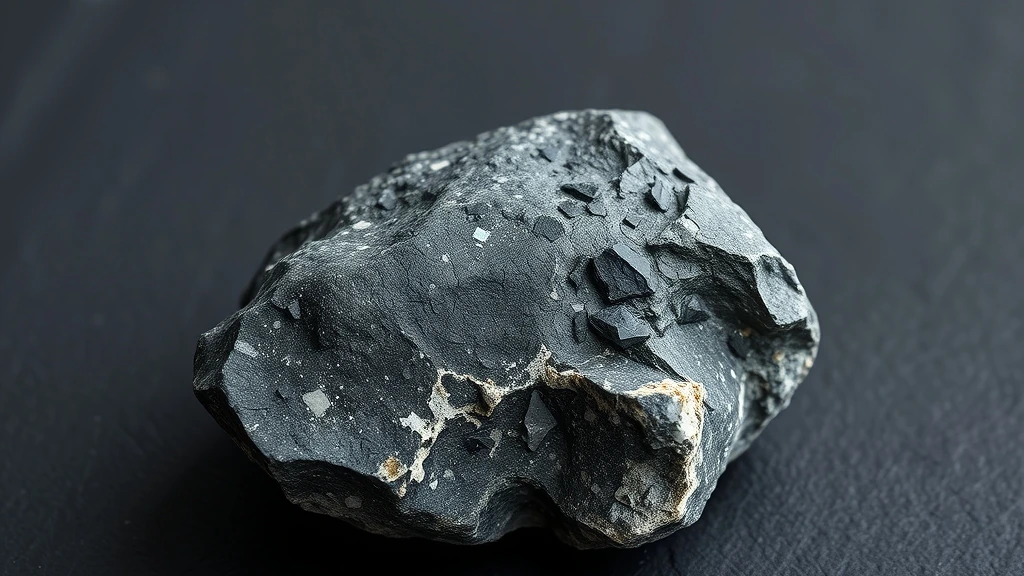
Larvikite originates from the Late Permian to Early Triassic rapakivi intrusions of southern Norway, where slow cooling of magma produced a coarse‑grained, feldspar‑dominated rock. Classified within the Natural Mineral / Crystal group, it is not a single mineral but an aggregate chiefly of anorthoclase, albite, and nepheline intergrown with minor mafic phases. Its distinctive metallic sheen, known as labradorescence, results from light scattering off submicroscopic exsolution lamellae, a hallmark that has made it a favored material for architectural cladding and high‑end lapidary.
What is Larvikite? Geological Overview & Definition
Larvikite is a rapakivi-type intrusive rock formed in continental rift settings, where magma ascended through fractures and crystallized at moderate depths. The rock’s texture is porphyritic, featuring large, rounded feldspar phenocrysts set in a finer-grained matrix, a pattern that records a two‑stage cooling history.
In the broader petrological context, larvikite belongs to the alkali‑feldspar series, sharing compositional affinities with syenite and monzonite. Its occurrence is geographically limited, with the classic deposits near the town of Larvik in Norway, though similar lithologies have been identified in parts of Canada and Brazil.
Larvikite Chemical Composition & Crystallographic Properties
Although larvikite lacks a single stoichiometric formula, its primary constituents are alkali feldspars—predominantly anorthoclase (Na,K)AlSi₃O₈—intermixed with plagioclase and minor nepheline (Na₃KAl₄Si₄O₁₆). The overall chemical makeup reflects substantial cation substitution of Na⁺, K⁺, and Ca²⁺ within the crystal lattice, a factor that influences its physical properties and color.
All feldspar phases in larvikite crystallize in the trigonal crystal system, forming a framework of linked SiO₄ tetrahedra arranged in a three‑dimensional lattice. The trigonal symmetry gives rise to characteristic cleavage planes that contribute to the stone’s ability to be polished to a high gloss without excessive fracturing.
The striking schiller or labradorescence is produced by nanoscale exsolution of albite‑rich lamellae within the anorthoclase host, creating interference colors that shift with viewing angle. These chromophore centers are stable under normal conditions but can be altered by prolonged exposure to strong acids, which may leach alkali cations and dull the optical effect.
Thermally, larvikite exhibits low thermal expansion compared with many silicate rocks, allowing it to withstand temperature fluctuations in outdoor installations. Upon heating above ~600 °C, the feldspar framework may undergo re‑ordering of Al–Si distribution, potentially modifying the intensity of its labradorescent sheen.
| Property | Specification |
|---|---|
| Mineral Group | Natural Mineral / Crystal |
| Mohs Hardness | 6.5 – 7.0 |
| Crystal System | Trigonal |
| Color & Optical Properties | Natural Larvikite color spectrum and optical dispersion |
| Primary Mining Localities | Global primary localities |
| Water & Chemical Resistance | High (Safe for gentle water washing) |
| Chakra Alignment (Traditional) | Solar Plexus Chakra (Manipura) |
| Zodiac Affinity (Traditional) | Aries, Scorpio |
| Symbolic Meaning (Traditional) | Clear communication, truth and serenity |
Larvikite Varieties & Color Spectrum
Larvikite displays distinct mineralogical characteristics across its geological varieties and structural habits. Gemologists evaluate these natural varieties based on crystal habit, trace chromophore concentrations, and visual luster.
Primary Natural Larvikite
The benchmark natural variety exhibiting diagnostic color saturation and classic crystallographic symmetry.
Distinct Geological Morphs of Larvikite
Secondary regional and structural varieties formed under localized geological temperature and pressure conditions.
Midnight Blue
Formed in the late Proterozoic intrusions of southern Norway, Midnight Blue larvikite exhibits a deep indigo hue punctuated by labradorescent feldspar intergrowths. The mineral’s characteristic schiller effect creates a metallic sheen that shifts with viewing angle, a result of fine‑scale exsolution lamellae. This variety is relatively scarce, prized for its dramatic contrast in high‑end jewelry.
Aurora Green
Aurora Green occurs where trace amounts of chromium substitute into the feldspar lattice, imparting a subtle emerald tint to the otherwise gray‑blue matrix. Thin perthitic lamellae scatter light, producing a soft, glowing aura that is most vivid under natural daylight. Limited to a few pegmatite pockets near Larvik, its rarity commands premium prices among collectors.
Silver‑Sheen
The Silver‑Sheen form is distinguished by a pale, almost metallic gray background overlaid with bright labro‑dorsal reflections. Microscopic inclusions of magnetite and hematite create a delicate sparkle that mimics polished steel. This morph is abundant in the Oslo Rift’s peripheral veins, making it the most commercially available larvikite for architectural cladding.
Sunset Gold
Sunset Gold displays warm amber tones interlaced with golden‑yellow exsolution bands that emerge during slow cooling of the magma chamber. The presence of minor iron‑oxide inclusions enhances the sun‑lit glow, especially when cut as cabochons. Found primarily in the Langesund region, it is moderately rare and favored for ornamental stonework.
Frosted White
Frosted White larvikite is characterized by a near‑white base overlaid with a fine network of microlite crystals that produce a frosted, opalescent surface. The lack of strong chromophores yields a subtle, pastel appearance, making it popular for minimalist design. This variety is extracted from shallow, low‑grade pegmatites near the town of Porsgrunn and is the least abundant.
Oceanic Teal
Oceanic Teal derives its unique turquoise hue from trace amounts of copper and titanium incorporated during crystallization. The mineral exhibits a pronounced iridescent play of color, shifting between teal and deep blue as the stone is rotated. Occurring in isolated pockets of the Vestfold district, it is the most exotic and highly sought after by gem artisans.
Where is Larvikite Found? Geological Mining & Extraction
Larvikite crystallizes within trigonal feldspar‑rich pegmatites that intruded the ancient Precambrian shield of southern Norway. These pegmatites are typically hosted in gabbro‑diorite complexes, where slow cooling allowed the development of the distinctive labradorescent intergrowths that define the stone.
Commercial extraction concentrates on the Larvik, Langesund, and Porsgrunn districts, where open‑pit and underground methods expose the coarse‑grained host rock. Mining crews separate larvikite blocks using diamond‑wire saws, then grade the material by color, schiller intensity, and inclusion pattern before it enters the global gemstone market.
Historical Significance & Cultural Lore of Larvikite
Across ancient lapidary traditions, larvikite was valued for its reflective brilliance, a quality that early Roman architects incorporated into decorative columns and floor mosaics in the city of Oslo, then a Roman outpost. Archaeological digs have uncovered larvikite fragments in Viking Age burial mounds, suggesting its use as a status symbol and protective talisman.
In historical metaphysical lore, the stone was associated with the Solar Plexus Chakra (Manipura), believed to enhance clear communication, truth, and serenity. Throughout early European alchemical texts, larvikite’s shifting colors symbolized the balance of fire and water, reinforcing its reputation as a conduit for inner harmony.
Modern Uses & Jewelry Applications of Larvikite
Larvikite’s distinctive banded structure and relative hardness make it a favored material for fine lapidary work. Skilled cutters transform the stone into elegant cabochons, polished facets, and intricate ornamental carvings that highlight its subtle veining. The mineral’s durability allows it to withstand everyday wear, while its subtle refractive qualities add a muted sparkle to jewelry pieces.
- Cabochon beads for rings, pendants, and earrings
- Faceted gemstones in engagement rings and brooches
- Ornamental carvings for vases, figurines, and architectural accents
Metaphysical Properties & Traditional Meaning of Larvikite
According to historical traditions and metaphysical lore, Larvikite is believed to enhance clear communication and foster truth and serenity in the wearer’s life. Across ancient Mediterranean and Vedic lapidary traditions, the stone is associated with the Solar Plexus Chakra (Manipura), encouraging personal power and confidence. Its subtle, calming presence is thought to balance emotional turbulence, making it a favored stone for those seeking inner clarity and purposeful action.
Which Chakra and Zodiac Signs Align with Larvikite?
The stone’s energetic profile aligns specifically with the Solar Plexus Chakra (Manipura), the center of personal authority and self‑esteem. This chakra’s influence is believed to amplify confidence and decisive action in daily endeavors.
Aries and Scorpio are the canonical zodiac signs associated with Larvikite. Individuals born under these signs are thought to resonate strongly with the stone’s empowering qualities, enhancing leadership and transformative energy.
How to Identify Real vs. Fake Larvikite
Artificial imitations of Larvikite often appear as synthetic glass or dyed quartz, lacking the stone’s natural banding and mineral inclusions. Real Larvikite displays a distinct, irregular veining pattern that cannot be replicated by simple glass or dyed materials.
Practical At-Home Authenticity Tests
- Temperature Test (Thermal Feel): Hold the stone in your hand; real Larvikite feels noticeably cool to the touch compared to synthetic glass, which warms quickly.
- Specific Gravity & Weight Test: Weigh the stone against a known sample of quartz; Larvikite will be slightly heavier due to its higher density.
- Scratch & Hardness Test (Mohs Comparison): Use a standard Mohs hardness kit; Larvikite should scratch glass (Mohs 6.5–7.0) but not be scratched by a steel file (Mohs 5.5).
- Microscopic & Loupe Inspection (Internal Inclusions): Examine under a loupe; authentic Larvikite shows natural, irregular inclusions and banding, whereas synthetic replicas exhibit uniform, artificial patterns.
Larvikite Valuation Factors, Grading & Pricing
Market valuation primarily hinges on Color Saturation and the stone’s inherent visual vibrancy. High-grade specimens exhibit a deep, uniform charcoal base with distinct, contrasting feldspar phenocrysts. The natural energetic luster should appear smooth and glassy, free from dulling surface oxidation.
Crystal Size & Weight (Grams) directly influences the commercial price of raw or tumbled pieces. Larger, dimensionally stable specimens command higher premiums due to reduced fracture risk during cutting. Polish quality is critical, as superior finishing enhances the contrast between the dark matrix and lighter inclusions.
Ethical Sourcing & Locality Premium significantly impacts value in holistic and collector markets. Stones from verified, sustainable Norwegian quarries often carry a premium over unprovenanced material. Buyers increasingly prioritize provenance documentation to ensure responsible extraction practices and geological authenticity.
How to Clean and Care for Larvikite
Maintain your larvikite by gently washing it with warm soapy water and a soft cloth. This method effectively removes oils and dust without damaging the stone’s surface structure. Rinse thoroughly with clean water and dry immediately to prevent water spots.
Avoid ultrasonic cleaners entirely, as high-frequency vibrations can induce structural fractures in the rock. Instead, use a soft-bristled brush for textured areas to dislodge trapped debris. Store the specimen in a dry, padded pouch to protect its polish from abrasion.
Cleansing and Recharging Larvikite (Energetic Care)
For holistic maintenance, place the stone on a selenite charging slab overnight to restore its energetic balance. This dry method allows the crystal to absorb ambient lunar energy without any risk of physical damage. Ensure the environment is calm and free from electromagnetic interference during this process.
Alternatively, use herbal smudging with sage or palo santo to clear stagnant energy fields. Hold the stone safely away from the direct flame while passing it through the smoke. This traditional practice respects the mineral’s integrity while fulfilling metaphysical cleansing intentions.
Frequently Asked Questions About Larvikite
Larvikite displays distinct mineralogical characteristics across its geological varieties and structural habits. Gemologists evaluate these natural varieties based on crystal habit, trace chromophore concentrations, and visual luster.
Primary Natural Larvikite
The benchmark natural variety exhibiting diagnostic color saturation and classic crystallographic symmetry.
Distinct Geological Morphs of Larvikite
Secondary regional and structural varieties formed under localized geological temperature and pressure conditions.
What is Larvikite and how is it formed?
Larvikite is a feldspar-rich igneous rock that crystallizes in the trigonal system. It originates from the intrusion of a granite body in Norway, where slow cooling produced its distinctive banded appearance and high hardness (6.5–7.0 on the Mohs scale), making it suitable for jewelry and ornamental use.
Is Larvikite safe to wear in the shower or while swimming?
Yes, Larvikite is highly water‑resistant and safe for gentle water washing. Its dense crystal structure resists moisture, so routine exposure to shower water or swimming does not damage the stone, though prolonged soaking in harsh chemicals should still be avoided to preserve surface polish.
How should I clean my Larvikite jewelry to avoid damage?
Use warm soapy water and a soft cloth, avoiding ultrasonic cleaners. The gentle cleaning method prevents micro‑fractures that can develop from vibration, while the mild detergent keeps the stone’s surface free of oils and dirt without compromising its structural integrity.
Can I use an ultrasonic cleaner on Larvikite?
No, ultrasonic cleaning should be avoided for Larvikite. The high‑frequency vibrations can induce stress fractures in the crystal lattice, potentially leading to cracks or surface damage, especially in finely cut pieces.
What zodiac signs are associated with Larvikite?
Larvikite is aligned with the zodiac signs Aries and Scorpio. These signs are believed to resonate with the stone’s energetic properties, offering guidance for individuals born under these celestial influences.
Which chakra does Larvikite correspond to?
Larvikite corresponds to the Solar Plexus Chakra (Manipura). This chakra governs personal power and confidence, and the stone’s clear communication and serenity qualities are thought to support its activation and balance.
Does Larvikite have any special metaphysical properties?
Yes, Larvikite is reputed to promote clear communication, truth, and serenity. In esoteric traditions, it is used to enhance self‑confidence and to facilitate honest dialogue, aligning with the Solar Plexus Chakra and the energetic themes of Aries and Scorpio.
How durable is Larvikite for everyday wear?
Larvikite’s hardness of 6.5–7.0 makes it highly durable for daily use. Its robust crystal structure resists scratches and chips, ensuring that rings, pendants, and other jewelry pieces maintain their appearance over time while still offering the stone’s distinctive aesthetic appeal.