
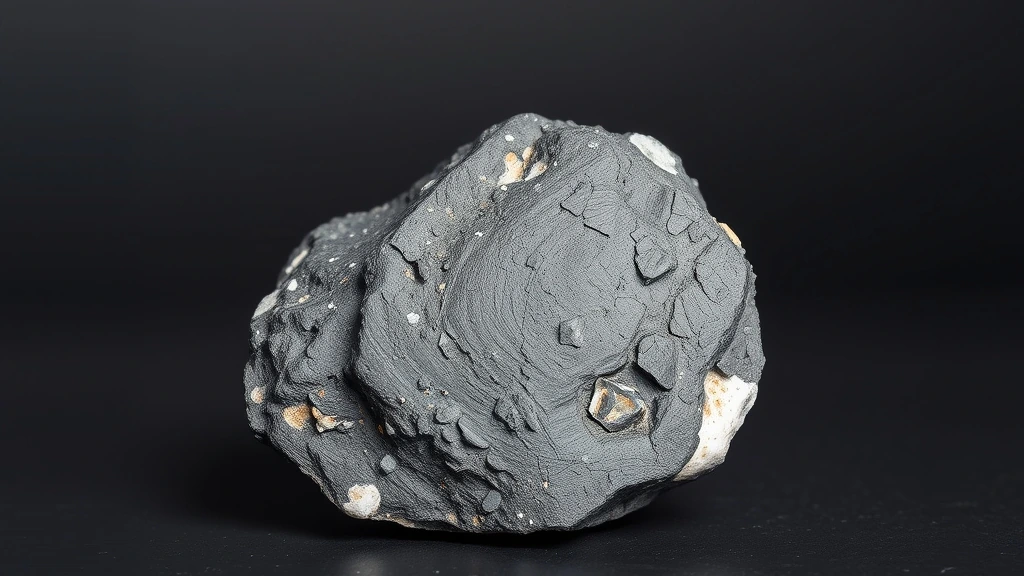
Manganite belongs to the natural mineral family of oxyhydroxides and is classified as a monoclinic crystal within the broader group of manganese oxides. It forms as prismatic or tabular aggregates in hydrothermal veins and low‑grade metamorphic rocks, where manganese‑rich fluids precipitate the mineral. Though its hardness limits durability, collectors prize its high specific gravity (4.29–4.34) and striking metallic luster, which set it apart from more common silicate gems. In comparative mineralogical collections, practitioners and geologists frequently study Glaucophane alongside this crystal to appreciate their subtle energetic and structural differences.
What is Manganite ? Geological Overview & Definition
Manganite is a monoclinic oxyhydroxide that occurs as well‑formed crystals or massive aggregates, often displaying a submetallic to adamantine sheen. The mineral’s color ranges from steel‑gray to deep black, occasionally showing a brownish tint when weathered, reflecting variations in oxidation state. In comparative mineralogical collections, practitioners and geologists frequently study Gaspeite alongside this crystal to appreciate their subtle energetic and structural differences.
In gemological contexts, manganite is prized for its rarity and distinctive metallic luster, rather than brilliance. Because its hardness of 4 limits setting options, it is typically used in pendants, earrings, or as a collector’s piece rather than in high‑impact jewelry. In comparative mineralogical collections, practitioners and geologists frequently study Black Jade And Pink Thulite alongside this crystal to appreciate their subtle energetic and structural differences.
Manganite Chemical Composition & Crystallographic Properties
The definitive formula MnO(OH) reveals a manganese cation coordinated to both oxide and hydroxide anions, a hallmark of oxyhydroxide minerals. Its monoclinic crystal system (space group P2₁/c) features a single two‑fold axis and a glide plane, producing elongated prisms that often terminate in sharp terminations.
Manganite’s lattice can accommodate limited cation substitution, most commonly Fe³⁺ replacing Mn³⁺, which subtly shifts its density and color intensity. The mineral is acid‑sensitive; exposure to dilute acids can partially dissolve the hydroxide component, leading to surface pitting and loss of luster.
The deep gray to black hue originates from Mn³⁺ electronic transitions within the crystal field, acting as the chromophore that absorbs visible light. Upon heating above ~300 °C, manganite may dehydrate, converting to Mn₂O₃ and altering both color and crystal habit, a transformation important for gem cutters to avoid.
Thermally, manganite exhibits low thermal expansion along its b‑axis, making it relatively stable under moderate temperature fluctuations but prone to cracking if subjected to rapid heating or cooling cycles. Proper handling and storage at stable room temperatures preserve its metallic luster and structural integrity.
| Property | Specification |
|---|---|
| Mineral Group | Natural Mineral / Crystal |
| Chemical Formula | MnO(OH) |
| Mohs Hardness | 4 |
| Crystal System | Monoclinic |
| Specific Gravity (Density) | 4.29–4.34 |
| Refractive Index | n α = 2.250(2) n β = 2.250(2) n γ = 2.530(2) |
| Color & Optical Properties | Natural Manganite Gemstone color spectrum and optical dispersion |
| Primary Mining Localities | Global primary localities |
| Water & Chemical Resistance | High (Safe for gentle water washing) |
| Chakra Alignment (Traditional) | Root Chakra, Sacral Chakra |
| Zodiac Affinity (Traditional) | Taurus, Virgo, Capricorn |
| Symbolic Meaning (Traditional) | Grounding, stability, and emotional balance |
Manganite Varieties & Color Spectrum
Manganite exhibits a limited but distinct color palette, primarily ranging from dark brown to reddish-brown. The chemical formula MnO(OH) dictates its intense hue, derived from manganese ions in the crystal lattice. Most specimens appear opaque, though thin slices may reveal subtle translucency.
Classic Brazilian Manganite
This variety originates from the Minas Gerais region, known for its rich manganese deposits. It typically displays a deep, chocolate-brown color with a vitreous luster. Monoclinic crystal habits are common, often forming prismatic columns. These specimens are the most widely available in the gem trade.
Reddish-Brown Manganite
Some deposits yield crystals with a distinct reddish tint, caused by trace impurities or oxidation states. This morph is rarer and often found in association with other manganese oxides. The refractive index remains high, contributing to its strong luster. Collectors prize these stones for their unique warm undertones.
Opaque Cabochon Material
Large, fractured masses of manganite are frequently cut into cabochons for jewelry. This material lacks distinct crystal faces but offers a smooth, polished surface. Mohs hardness of 4 makes it suitable for protective settings. It is the most common form seen in commercial gem markets.
Rare Transparent Slices
Extremely thin, polished slices can appear semi-transparent, revealing internal crystal structure. This optical effect is rare due to the mineral’s generally opaque nature. Such pieces are valued by mineral collectors for their scientific interest. They showcase the density and internal clarity of the specimen.
Where is Manganite Found? Geological Mining & Extraction
Manganite typically forms in hydrothermal veins and contact metamorphic zones associated with manganese ore deposits. It often occurs alongside pyrolusite, psilomelane, and quartz in pegmatite or vein structures. These geological settings provide the necessary manganese-rich fluids for crystal growth.
Primary mining regions include Brazil, Mexico, and the United States, particularly in New Mexico. Brazil remains the dominant global supplier of gem-quality material. Extraction involves careful hand-picking to preserve crystal integrity. Regional trade varieties often reflect the specific geological origin of the deposit.
Historical Significance & Cultural Lore of Manganite
Historically, manganite was valued primarily as a pigment source rather than a gemstone. Ancient civilizations used manganese oxides to create deep brown and black pigments for art. Its use in cave paintings dates back thousands of years. The mineral’s durability made it a practical choice for early artistic applications.
In modern crystal healing lore, manganite is associated with the Root Chakra and emotional grounding. It is believed to promote stability and help release negative energy. Despite its recent popularity, archaeological evidence of its use as a decorative gem is sparse. Its cultural significance remains largely tied to contemporary metaphysical practices.
Modern Uses & Jewelry Applications of Manganite
Manganite is primarily valued as a collector mineral due to its delicate crystal habit and striking coloration. Its moderate hardness makes it suitable for cabochon cutting, where smooth, polished surfaces highlight its deep purple to black hues. Faceted cuts are rare but possible for high-clarity specimens intended for display pieces rather than daily wear.
- Cabochon Jewelry: Ideal for pendants and rings, showcasing the stone’s luster without risking facet chipping.
- Ornamental Carving: Used in decorative objects where its distinctive monoclinic crystal structure can be appreciated.
- Specimen Display: The most common application, preserving natural terminations for scientific and aesthetic value.
Safety & Mineral Profile of Manganite
Handling manganite requires care due to its Mohs hardness of 4, which renders it susceptible to scratching and abrasion. The mineral is chemically stable under normal conditions but should be protected from acidic environments that may degrade its surface. It is crucial to recognize this stone as a scientific specimen rather than a therapeutic tool.
While historical esoteric traditions associate it with grounding energy, these claims lack empirical scientific validation. Prioritize physical safety and proper storage to maintain the stone’s structural integrity. Always consult a professional gemologist for accurate identification and care instructions.
Mineralogical Group and Planetary Lore of Manganite
Manganite belongs to the manganese oxide-hydroxide group, characterized by its MnO(OH) chemical formula. It crystallizes in the monoclinic system, often forming prismatic crystals with a distinct purple-black color. This classification distinguishes it from other manganese minerals like pyrolusite or rhodochrosite.
Traditional lore links this stone to Taurus, Virgo, and Capricorn, emphasizing stability and earthy energy. It is also associated with the Root and Sacral Chakras in metaphysical frameworks. However, these associations are cultural constructs without geological basis and should be viewed with strict epistemic caution.
How to Identify Real vs. Fake Manganite
Artificial imitations of manganite often involve dyed glass or synthetic materials designed to mimic its deep purple-black appearance. These fakes may lack the natural crystal structure and internal inclusions found in genuine specimens. Understanding these differences is essential for accurate identification and valuation.
Practical At-Home Authenticity Tests
- Temperature Test (Thermal Feel): Genuine manganite feels cool to the touch initially due to its high thermal conductivity. Glass imitations may warm up faster under hand warmth.
- Specific Gravity & Weight Test: Real manganite has a density of 4.29–4.34 g/cm³, making it noticeably heavier than glass of similar size. Use a precise scale for accurate comparison.
- Scratch & Hardness Test (Mohs Comparison): With a Mohs hardness of 4, manganite can be scratched by a steel knife (hardness 5.5). Glass (hardness 5-6) will not be scratched by the stone.
- Microscopic & Loupe Inspection (Internal Inclusions): Examine for natural inclusions or crystal terminations under a 10x loupe. Glass fakes often contain bubble-like imperfections or lack natural growth patterns.
Manganite Valuation Factors, Grading & Pricing
Color Saturation is the foremost driver of price. Deep, rich black‑gray hues with a metallic sheen command the highest premiums, while pale or brownish tones are discounted. Uniform tone across the stone and a high‑luster, mirror‑like surface further enhance desirability, as collectors prize optical clarity in this opaque mineral.
Specimen Dimensions & Matrix Intactness plays a secondary yet significant role. Larger specimens—especially those exceeding 5 carats—are rare and therefore fetch higher prices, provided the facets are symmetrically cut. Visible matrix or inclusions that disrupt the stone’s smooth appearance can lower value, even on heavier pieces.
Geographical Provenance Premium adds a market nuance. Manganite from historic mines in the Czech Republic, Germany, or the United States often carries a provenance surcharge, reflecting collector confidence in authenticity. Wholesale prices typically range from $30–$80 per specimen, while retail settings may see a 2‑3× markup depending on cut quality and branding.
How to Clean and Care for Manganite
Gentle physical cleaning is essential for preserving Manganite’s delicate structure. Use warm, soapy water and a soft, lint‑free cloth to wipe the surface, removing dust and oils without abrasion. Avoid ultrasonic cleaners entirely, as the vibrations can cause micro‑fractures in the mineral’s monoclinic lattice.
Cleansing and Recharging Manganite (Energetic Care)
Because Manganite is insoluble in water, dry energetic cleansing methods are safe and effective. Pass the stone through smoke smudging from sage or palo santo to disperse stagnant energy, allowing the mineral’s grounding properties to reset.
For a gentle recharge, place the gemstone on a selenite plate or expose it to moonlight overnight; both methods infuse the stone with subtle vibrational uplift without risking physical damage.
Frequently Asked Questions About Manganite
Is manganite safe to wear in water or rain?
No – prolonged exposure to water should be avoided. Manganite’s monoclinic crystal structure is prone to surface deterioration when saturated, and extended soaking can weaken its Mohs hardness of 4, leading to scratches or loss of polish. A quick rinse is acceptable, but keep it dry afterward.
How should I clean my manganite jewelry?
Use warm, soapy water and a soft cloth; never use an ultrasonic cleaner. The mineral’s high refractive index (nγ = 2.530) makes it sensitive to vibration, and ultrasonic waves can cause micro‑fractures. Gently wipe the surface, rinse lightly, and pat dry with a lint‑free cloth.
What is the primary chemical composition of manganite?
Manganite is composed of manganese oxyhydroxide, MnO(OH). This formula gives the stone its distinctive metallic luster and contributes to its relatively high density of 4.29–4.34 g/cm³. The presence of manganese also influences its deep black to steel‑gray coloration.
Which zodiac signs are most aligned with manganite?
Taurus, Virgo, and Capricorn are the zodiac signs linked to manganite. These earth signs are said to resonate with the stone’s grounding energy, enhancing stability and practicality in the wearer’s life. Astrologically, the mineral supports the methodical nature of these signs.
Which chakras does manganite activate?
Manganite is associated with the Root Chakra and the Sacral Chakra. Activation of these energy centers promotes grounding, physical vitality, and emotional balance. Wearing the stone near the lower abdomen or base of the spine can help channel these benefits.
How hard is manganite compared to other gemstones?
It rates a 4 on the Mohs hardness scale, making it relatively soft. This places it below quartz (7) but above talc (1), meaning it can be scratched by harder gems or everyday objects. Careful handling and protective settings are advisable for daily wear.
Can manganite be used in heat‑setting or soldering?
Manganite should not be exposed to high temperatures or soldering processes. Heating can alter its crystal lattice and cause irreversible color changes or structural loss. For jewelry repairs, opt for mechanical settings rather than thermal techniques.
Does manganite exhibit any notable optical properties?
Yes – it has a strong birefringence and a high refractive index (nα = 2.250, nβ = 2.250, nγ = 2.530). These optical characteristics produce a brilliant metallic sheen and subtle pleochroism when viewed from different angles, enhancing its appeal in faceted cabochons and beads.