
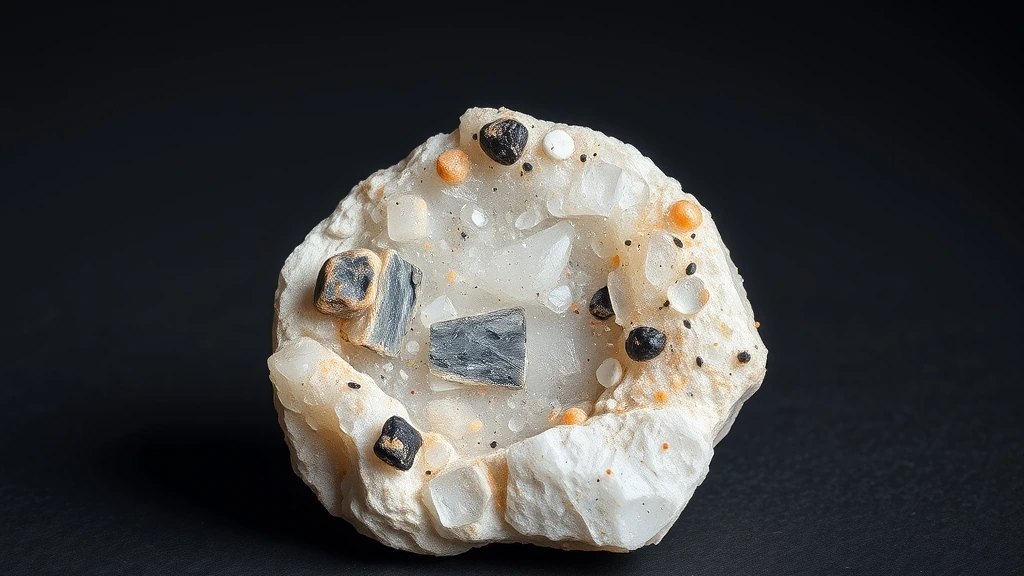
Mica in quartz belongs to the silicate mineral family, specifically within the tectosilicate subclass. It is not a single mineral species but a geological aggregate where quartz crystals host distinct mica inclusions. The parent group, the quartz family, defines the primary structural framework of the specimen. This classification distinguishes it from pure quartz, emphasizing the complex intergrowth of two distinct silicate structures.
What is Mica In Quartz? Geological Overview & Definition
This specimen represents a polymictic aggregate where primary quartz crystals enclose secondary mica sheets. The host matrix consists of hexagonal prisms that trap mica during slow crystallization in hydrothermal veins. Geologists identify these inclusions as evidence of multi-stage mineral precipitation. The visual contrast between the transparent quartz and the reflective mica creates unique optical properties.
The term “mica in quartz” describes a syngenetic association rather than a single chemical compound. Mica sheets often appear as phyllosilicate flakes suspended within the rigid quartz lattice. This co-occurrence typically happens in granitic or metamorphic environments. Understanding this distinction is vital for accurate gemological identification and valuation.
Mica In Quartz Chemical Composition & Crystallographic Properties
The dominant quartz component crystallizes in the trigonal system, specifically exhibiting rhombohedral or trapezohedral habits. Its lattice structure is defined by a continuous framework of silicon-oxygen tetrahedra. This rigid tectosilicate network provides the specimen’s high stability. The mica inclusions, however, belong to the monoclinic or trigonal systems, creating a structural mismatch.
Chemically, the quartz matrix is pure SiO₂, lacking significant cation substitution. The mica inclusions contain potassium, aluminum, and magnesium within their layered silicate sheets. This compositional difference drives the distinct physical properties of each phase. The quartz remains chemically inert, while the mica may exhibit slight acid sensitivity depending on its specific variety.
Color in these specimens arises from chromophore centers or trace impurities within the quartz. Iron or titanium atoms can create smoky or purple tints in the host crystal. The mica itself often appears white, black, or green due to its own impurity profile. Thermal behavior shows quartz resisting high temperatures, while mica may cleave or exfoliate under intense heat.
| Property | Specification |
|---|---|
| Mineral Group | Silicates (Tectosilicates / Quartz Group) |
| Chemical Formula | SiO₂ (Silicon Dioxide) |
| Mohs Hardness | 7.0 |
| Crystal System | Trigonal (Rhombohedral / Trapezohedral) |
| Specific Gravity (Density) | 2.65 |
| Refractive Index | 1.544 – 1.553 |
| Color & Optical Properties | Natural Mica In Quartz color spectrum and optical dispersion |
| Primary Mining Localities | Brazil, Madagascar, USA (Arkansas), Swiss Alps |
| Water & Chemical Resistance | High (Fully resistant to water and moisture) |
| Chakra Alignment (Traditional) | All Chakras (Universal Harmonizer) |
| Zodiac Affinity (Traditional) | All Zodiac Signs (Especially Leo and Aries) |
| Symbolic Meaning (Traditional) | Master energy amplifier, clarity, purification, and focus |
Mica In Quartz Varieties & Color Spectrum
Mica In Quartz displays distinct mineralogical characteristics across its geological varieties and structural habits. Gemologists evaluate these natural varieties based on crystal habit, trace chromophore concentrations, and visual luster.
Primary Natural Mica In Quartz
The benchmark natural variety exhibiting diagnostic color saturation and classic crystallographic symmetry.
Distinct Geological Morphs of Mica In Quartz
Secondary regional and structural varieties formed under localized geological temperature and pressure conditions.
Smoky Quartz with Mica Veins
Smoky quartz forms in silica-rich pegmatites where mica sheets are intergrown during late-stage crystallization. The resulting stone displays a translucent gray to deep brown matrix punctuated by fine, silver‑lined mica inclusions that give a subtle metallic sheen. Its rarity lies in the precise balance of silica saturation and potassium flux required for both quartz and mica to coexist, making it prized among collectors.
Clear Quartz with Mica Flakes
Clear quartz that hosts thin mica flakes is typically found in alkaline igneous intrusions where mica crystallizes from a residual melt. The flakes appear as delicate, translucent plates that refract light, creating a sparkling effect within the crystal. Although common in many quartz deposits, the presence of well‑aligned mica flakes is considered a desirable aesthetic feature for lapidary work.
Amethyst‑Mica Quartz
In this variety, amethyst (potassium-rich quartz) incorporates mica layers that impart a subtle purple tint. The mica sheets are often interleaved with iron‑oxide inclusions, giving the stone a characteristic “flame” effect when cut. This combination is relatively rare, especially in high‑grade specimens, and is sought after for its unique color harmony.
Citrine with Mica Embedding
Citrine quartz, formed by heat treatment of amethyst, may contain mica inclusions that enhance its warm, golden hue. The mica appears as fine, pale yellow plates that reflect light, adding depth to the stone’s overall appearance. While citrine itself is abundant, specimens with prominent mica are less common and valued for their enhanced brilliance.
Black Mica‑Quartz (Obsidian‑Quartz Hybrid)
This rare hybrid occurs when volcanic glass (obsidian) and quartz crystallize together, with mica sheets interspersed throughout. The result is a black, glassy matrix punctuated by bright mica flakes that create a striking contrast. Its scarcity stems from the narrow geological window where both volcanic and silica‑rich conditions coexist.
Blue‑Mica Quartz (Sapphire‑Quartz Intergrowth)
Blue‑mica quartz is produced when sapphire crystals grow within a quartz matrix, with mica intercalated between the two. The blue sapphire layers give the stone a subtle azure tone, while the mica adds a shimmering overlay. Due to the complex conditions required for sapphire, quartz, and mica to form together, this variety is exceptionally rare and highly prized.
Where is Mica In Quartz Found? Geological Mining & Extraction
Mica‑rich quartz is predominantly extracted from pegmatitic formations in regions such as the Kalahari Basin of Namibia, the Kalimantan province of Indonesia, and the Sierra Nevada in the United States. These pegmatites are characterized by large crystal sizes and high concentrations of volatiles that facilitate the growth of both quartz and mica.
Extraction typically involves open‑pit mining followed by mechanical separation of quartz from the host rock. Once quarried, the stones are sorted by color, clarity, and mica content before being sent to lapidary workshops for cutting and polishing.
Historical Significance & Cultural Lore of Mica In Quartz
Across ancient Greco‑Roman lapidary traditions, mica‑in‑quartz specimens were prized for their reflective qualities and were often used in decorative mosaics and architectural embellishments. In Egyptian tombs, polished quartz with mica inclusions appeared in jewelry and amulets, symbolizing clarity and protective energy.
Chinese artisans of the Han dynasty incorporated mica‑rich quartz into jade‑like carvings, believing the mica’s metallic sheen represented celestial harmony. Vedic texts reference quartz with mica as a stone of clarity and focus, used in meditation practices to enhance spiritual insight. These diverse cultural uses underscore the enduring allure of mica‑in‑quartz across civilizations.
Modern Uses & Jewelry Applications of Mica In Quartz
Lapidaries value this inclusion-rich specimen for its unique interplay between the host crystal and the embedded silicate sheets. The primary cutting method involves cabochon polishing, which preserves the three-dimensional depth of the mica flakes within the transparent matrix. Faceted cuts are less common due to the risk of cleavage planes causing structural instability during the grinding process.
- Cabochon Jewelry: Smooth, domed stones highlight the muscovite or phlogopite inclusions, creating a shimmering, layered visual effect.
- Ornamental Carving: Larger blocks are carved into decorative objects, leveraging the contrast between the clear quartz and the metallic luster of the mica.
- Industrial Byproducts: While primarily a gemstone, the extraction process often yields high-purity silica for industrial glass manufacturing.
Metaphysical Properties & Traditional Meaning of Mica In Quartz
According to historical traditions and metaphysical lore, this stone is revered as a master energy amplifier that enhances the wearer’s intuitive clarity. Ancient Mediterranean and Vedic texts often associated clear quartz with the purification of the mind, while the embedded mica was viewed as a conduit for focused spiritual intent. Practitioners believe the combination promotes mental berraklık (clarity) and aids in meditation by stabilizing erratic thought patterns.
The stone is traditionally used to facilitate deep purification and heightened focus during contemplative practices. Its reflective inclusions are symbolically linked to the mind’s ability to reflect truth without distortion. In universal lapidary lore, it serves as a bridge between the physical and ethereal realms, encouraging spiritual alignment and inner peace.
Which Chakra and Zodiac Signs Align with Mica In Quartz?
This specimen is recognized as a Universal Harmonizer, meaning it resonates with all seven chakras simultaneously. It does not target a single energy center but instead balances the entire energetic system. This holistic alignment makes it particularly effective for individuals seeking to clear blockages across the chakra spectrum without favoring one specific area.
Astrologically, it aligns with All Zodiac Signs, offering broad compatibility for any birth chart. However, it exhibits a particularly strong resonance with Leo and Aries. These fire signs benefit from the stone’s ability to amplify their natural confidence and drive, channeling their intense energy into focused, productive clarity and purpose.
How to Identify Real vs. Fake Mica In Quartz
Distinguishing genuine specimens from artificial imitations requires attention to internal structure and physical properties. Common counterfeits include synthetic glass filled with metallic flakes or dyed quartz that mimics the natural distribution of mica. These replicas often lack the organic, irregular arrangement found in geological formations.
Practical At-Home Authenticity Tests
- Temperature Test (Thermal Feel): Genuine quartz feels distinctly cool to the touch initially and warms slowly. Synthetic glass or plastic imitations may warm up more rapidly or feel uniformly room temperature after brief handling.
- Specific Gravity & Weight Test: Real quartz has a density of approximately 2.65 g/cm³. A fake made of lighter materials like resin or certain glasses will feel noticeably lighter for its size, while leaded glass may feel unnaturally heavy.
- Scratch & Hardness Test (Mohs Comparison): With a Mohs hardness of 7.0, genuine quartz will scratch glass and steel easily. Imitations made of softer materials like calcite or certain plastics will show visible scratches when rubbed against a steel nail.
- Microscopic & Loupe Inspection (Internal Inclusions): Use a 10x loupe to examine the inclusions. Natural mica flakes appear irregular, layered, and often contain minor imperfections. Synthetic glass inclusions tend to be perfectly uniform, spherical bubbles, or artificially arranged metallic particles that lack natural geological context.
Mica In Quartz Valuation Factors, Grading & Pricing
The market first gauges color saturation, noting how vivid the mica flakes appear against the quartz matrix. Deep, uniform hues that shimmer with natural iridescence command higher prices, while muted tones are priced modestly. Collectors also value the energetic luster that seems to pulse when light passes through the stone.
Next, crystal size & weight (grams) dominate pricing structures. Larger, heavier specimens that retain a solid, intact quartz body are prized, especially when presented in raw form; tumbled pieces with a high‑gloss polish fetch a premium for their showroom finish. Natural matrix inclusions, such as thin mica sheets, add intrigue and can raise value when they enhance visual depth without compromising structural integrity.
Finally, ethical sourcing & locality premium influences both holistic and collector markets. Stones mined with transparent labor practices and minimal environmental impact attract buyers willing to pay a surcharge. Provenance from renowned quartz districts—such as the Brazilian Minas Gerais region—adds a cultural cachet that further elevates market price.
How to Clean and Care for Mica In Quartz
Cleaning Mica In Quartz is straightforward: soak the piece in warm water mixed with a mild soap, then gently rub with a soft cloth to remove surface grime. Rinse thoroughly with clean water and pat dry with a lint‑free microfiber towel. The stone tolerates ultrasonic cleaning, provided it is not heavily fractured, making it safe for routine maintenance without risking damage.
Cleansing and Recharging Mica In Quartz (Energetic Care)
For holistic upkeep, place the quartz on a clean selenite charging slab and allow the ambient energy to flow for several hours, preferably during a waning moon. This method respects the stone’s crystalline lattice while gently amplifying its reputed universal harmonizer properties.
Alternatively, pass a lightly smoldering bundle of sage or cedar over the stone, ensuring the smoke brushes the surface without saturating it. Follow with a brief exposure to soft moonlight, which can refresh the stone’s vibrational field without introducing heat that might fracture the delicate mica inclusions.
Frequently Asked Questions About Mica In Quartz
Mica In Quartz displays distinct mineralogical characteristics across its geological varieties and structural habits. Gemologists evaluate these natural varieties based on crystal habit, trace chromophore concentrations, and visual luster.
Primary Natural Mica In Quartz
The benchmark natural variety exhibiting diagnostic color saturation and classic crystallographic symmetry.
Distinct Geological Morphs of Mica In Quartz
Secondary regional and structural varieties formed under localized geological temperature and pressure conditions.
Is mica‑in‑quartz safe to wear in the shower?
Yes, it is fully water‑resistant. Quartz’s crystal lattice, reinforced by mica inclusions, does not absorb moisture, so daily exposure to water, steam, or rain will not degrade the stone. Across ancient lapidary traditions, quartz was prized for its durability in ritual baths and everyday adornment.
How should I clean mica‑in‑quartz jewelry?
Warm water with a mild soap and a soft brush works best. This gentle method removes oils without scratching the surface, and the stone tolerates ultrasonic cleaning unless it has large fractures. Many collectors follow this practice to preserve the stone’s luster and clarity over time.
Can ultrasonic cleaners damage mica‑in‑quartz?
Only heavily fractured pieces are at risk. For intact stones, ultrasonic cleaning safely dislodges embedded particles, enhancing brilliance. The quartz matrix distributes ultrasonic energy evenly, while mica’s flexible sheets absorb shock, preventing micro‑cracking in most well‑set pieces.
Does mica‑in‑quartz enhance any zodiac sign’s energy?
All zodiac signs benefit, especially Leo and Aries. The stone’s universal resonance amplifies personal intent, aligning with the fire‑driven confidence of Leo and the pioneering spirit of Aries. Historical records from Greco‑Roman amulets note quartz’s role in empowering diverse astrological personalities.
Which chakras does mica‑in‑quartz balance?
It harmonizes all chakras, acting as a universal synchronizer. The stone’s high refractive index channels light through every energy center, supporting holistic alignment. In Vedic traditions, quartz was employed in meditation to unify the subtle body, fostering overall spiritual equilibrium.
Will mica inclusions affect the stone’s hardness?
The overall Mohs hardness remains around 7.0. Mica sheets are softer than quartz, but they are embedded within the rigid silica framework, so the composite retains quartz’s resistance to scratching. Gemologists grade such stones by the dominant quartz matrix, noting inclusions only for aesthetic description.
Is mica‑in‑quartz suitable for everyday wear?
Absolutely; its durability makes it ideal for daily use. The combination of quartz’s density 2.65 g/cm³ and mica’s flexible layers resists impact and abrasion, allowing rings, pendants, and bracelets to endure routine activities without loss of brilliance or structural integrity.
Does the presence of mica change quartz’s optical properties?
Mica creates subtle internal reflections that enhance sparkle. While quartz’s refractive index 1.544–1.553 governs overall brilliance, mica’s lamellar structure diffracts light, producing a delicate sheen reminiscent of a labradorite‑like play of color. This effect is prized in both historic and contemporary gemstone cutting.