
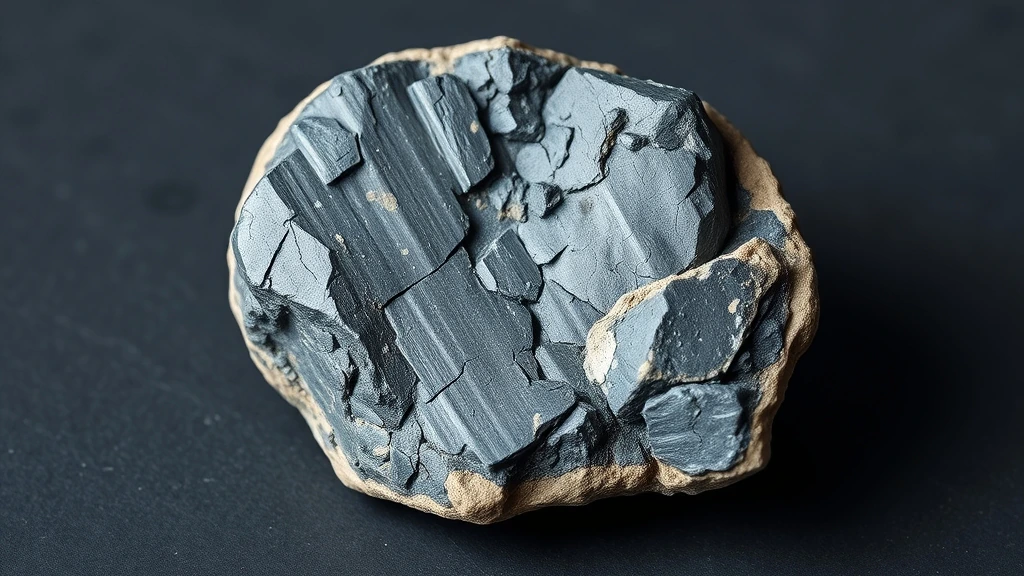
Migmatite forms when a pre‑existing metamorphic rock is subjected to extreme temperatures, causing partial melting and recrystallization. The resulting texture is a composite of high‑temperature minerals and residual, unmelted fragments. Across the globe, migmatites are most frequently found in continental collision zones, where deep crustal heating drives the partial melt. Their complex mineralogy reflects a history of intense thermal and pressure conditions, making them valuable records of tectonic evolution.
What is Migmatite? Geological Overview & Definition
Migmatite is a metamorphic rock that has undergone partial melting, producing a mixture of melt‑derived and solid fragments. The melt fraction typically crystallizes into granoblastic or foliated textures, while the unmelted portions retain their original metamorphic fabric. This dual nature gives migmatite its characteristic banded appearance, often described as “marble‑like” or “granite‑like” depending on the dominant mineralogy. The presence of both melt‑derived and solid components makes migmatite an important indicator of high‑temperature metamorphic processes in the Earth’s crust.
The term “migmatite” derives from the Greek *migma*, meaning “mixture,” reflecting its composite nature. Migmatites are commonly associated with orogenic belts where continental crust is thickened and heated, such as the Himalayas, the Alps, and the Appalachian Mountains. Their study provides insights into the thermal gradients, fluid activities, and tectonic stresses that shape continental lithosphere.
Migmatite Chemical Composition & Crystallographic Properties
Migmatite itself does not possess a single stoichiometric chemical formula; instead, it is an aggregate of multiple minerals that together form a complex rock. The dominant minerals are typically granite‑type feldspars (orthoclase, plagioclase), quartz, and mica, interspersed with high‑temperature phases such as garnet, sillimanite, or kyanite. The exact mineral assemblage depends on the protolith composition and the peak temperature–pressure conditions during partial melting.
The crystallographic framework of migmatite is governed by the individual minerals it contains. In many cases, the dominant feldspar component crystallizes in the trigonal system, specifically within the *albite–orthoclase* series. These feldspars exhibit a rhombohedral lattice, with lattice parameters that allow for subtle cation substitution (e.g., Na⁺ for K⁺) without altering the overall crystal symmetry. This substitution can influence the color and refractive index of the rock.
Because migmatite is a composite rock, its acid sensitivity varies with mineral content. Quartz and feldspar are generally resistant to dilute acids, whereas mica and certain high‑temperature phases may react slowly. The presence of chromophore color centers—defects that trap electrons or holes—can impart subtle hues to the rock, especially in the feldspar component. These centers are often activated by exposure to radiation or thermal cycling.
Thermal behavior in migmatite is dominated by the partial melt fraction. Upon cooling, the melt crystallizes into new minerals, often forming granoblastic textures that contrast with the pre‑existing foliated fabric. This recrystallization can lead to the development of high‑temperature metamorphic minerals such as sillimanite or kyanite, which are diagnostic of the peak conditions. The resulting rock therefore records a complex history of heating, melting, and recrystallization, making migmatite a key target for studies of crustal evolution.
| Property | Specification |
|---|---|
| Mineral Group | Natural Mineral / Crystal |
| Mohs Hardness | 6.5 – 7.0 |
| Crystal System | Trigonal |
| Color & Optical Properties | Natural Migmatite color spectrum and optical dispersion |
| Primary Mining Localities | Global primary localities |
| Water & Chemical Resistance | High (Safe for gentle water washing) |
| Chakra Alignment (Traditional) | Crown Chakra (Sahasrara) |
| Zodiac Affinity (Traditional) | Sagittarius, Pisces |
| Symbolic Meaning (Traditional) | Clear communication, truth and serenity |
Migmatite Varieties & Color Spectrum
Migmatite is not a single mineral species but a complex metamorphic rock defined by its partial melting characteristics. It typically exhibits a banded or swirled appearance where igneous and metamorphic components are intimately interwoven. The visual spectrum ranges from deep charcoal grey to vibrant whites, often accented with streaks of pink, red, or black. This unique leucosome texture creates a dynamic, marble-like aesthetic that distinguishes it from standard gneiss.
Classic Banded Migmatite
This variety features distinct, parallel layers of light-colored leucosome and dark-colored leucocrate material. The light bands consist primarily of quartz and feldspar, while the dark bands contain mica and amphibole. This high-contrast pattern is the most common form found in regional metamorphic belts worldwide. Its structural integrity makes it suitable for large-scale architectural cladding and decorative stone applications.
Swirled or Sigmoidal Migmatite
Characterized by fluid-like, swirling patterns, this morph results from intense shear stress during partial melting. The melt pockets migrate and fold, creating organic, cloud-like designs rather than straight bands. These specimens often display a more chaotic and artistic appearance compared to classic banded types. Collectors prize these pieces for their unique, one-of-a-kind visual complexity and fluid dynamics.
Garnet Migmatite
This variety is distinguished by the presence of large, eye-catching garnet crystals embedded within the migmatitic matrix. The garnet porphyroblasts can range from deep red to purplish-brown, providing striking contrast against the lighter leucosome. These crystals often survive the melting process, acting as index minerals for high-grade metamorphism. The rarity of large, intact garnets within a stable matrix increases its desirability among mineral collectors.
Amphibole Migmatite
Rich in dark green to black amphibole minerals, this type offers a rugged, earthy aesthetic. The hornblende or biotite-rich leucocrate bands create a dense, dark background for the lighter melt veins. This variety is often associated with mafic protoliths that underwent significant thermal alteration. Its robust density and dark tones make it popular for high-end interior design elements.
Pegmatitic Migmatite
This rare form incorporates coarse-grained pegmatite crystals directly into the migmatite fabric. Large, translucent quartz or feldspar crystals may be visible, adding sparkle and depth to the stone. The interaction between the pegmatitic melt and the surrounding metamorphic rock creates a complex, multi-textured surface. Such specimens are highly sought after for their gemological interest and exceptional visual clarity.
Where is Migmatite Found? Geological Mining & Extraction
Migmatite forms in high-grade metamorphic terrains where crustal rocks experience temperatures sufficient for partial melting. These deposits are typically located within ancient cratonic regions or orogenic belts that have undergone intense tectonic compression. The host rocks are often granitic or gneissic, providing the necessary silica and feldspar content for melt generation. Geological surveys identify these zones through their characteristic magnetic and seismic signatures.
Primary extraction occurs in regions with significant Precambrian or Paleozoic basement exposures. Notable sources include the Scandinavian Caledonides, the Canadian Shield, and parts of the Himalayan orogen. Mining operations focus on open-pit methods to extract large blocks for dimension stone processing. The stability of the rock allows for the production of large slabs, making it a viable commercial material for global construction markets.
Historical Significance & Cultural Lore of Migmatite
Ancient civilizations recognized the aesthetic value of banded and swirled stones long before modern geological classification. In Greco-Roman architecture, similar metamorphic rocks were used for decorative flooring and column bases, symbolizing the dynamic nature of the earth. Egyptian artisans also utilized high-grade metamorphic stones for ceremonial objects, appreciating their durability and visual complexity. These early uses highlight the stone’s enduring appeal across diverse ancient cultures.
In historical metaphysical lore, stones with swirling patterns were often associated with cosmic energy and spiritual clarity. Vedic traditions respected such rocks for their perceived ability to channel divine wisdom and tranquility. The intricate interplay of light and dark bands was interpreted as a representation of universal balance. This symbolic resonance continues to influence contemporary lapidary practices and spiritual healing traditions today.
Modern Uses & Jewelry Applications of Migmatite
Migmatite is prized for its subtle banding and translucent quality, making it a favorite for lapidary artisans. Skilled cutters produce cabochons that highlight the stone’s natural veining, while faceted pieces accentuate its refractive play. In addition, artisans carve ornamental motifs for pendants, rings, and decorative plaques.
- Cabochon cuts emphasize the stone’s soft, smoky hues.
- Faceted designs enhance brilliance and depth.
- Carved ornaments showcase intricate banding patterns.
Metaphysical Properties & Traditional Meaning of Migmatite
According to historical traditions and metaphysical lore, Migmatite is believed to foster clear communication and promote truth and serenity. Across ancient Mediterranean and Vedic lapidary traditions, the stone is thought to calm emotional turbulence, encouraging honest dialogue and inner calm. Its subtle translucence is interpreted as a bridge between the material and the spiritual realms, aiding seekers in finding balance and clarity.
Which Chakra and Zodiac Signs Align with Migmatite?
Migmatite aligns with the Crown Chakra (Sahasrara), the center of spiritual insight and higher consciousness. This association encourages wearers to connect with universal wisdom and transcendental thought.
The stone is also linked to the zodiac signs Sagittarius and Pisces. Those born under these signs are said to resonate with Migmatite’s qualities of expansive vision, compassion, and intuitive depth, enhancing their natural affinity for truth and serenity.
How to Identify Real vs. Fake Migmatite
Artificial imitations of Migmatite often appear as dyed glass or synthetic composites that lack the stone’s characteristic banding and optical properties. Genuine Migmatite exhibits a distinct, layered texture and a subtle, smoky translucence that cannot be replicated by simple glass.
Practical At-Home Authenticity Tests
- Temperature Test (Thermal Feel): Hold the stone in your hand; real Migmatite feels cool to the touch, whereas glass warms quickly.
- Specific Gravity & Weight Test: Compare the stone’s weight to a known sample of similar size; Migmatite is denser than glass but lighter than many quartz varieties.
- Scratch & Hardness Test (Mohs Comparison): Use a calibrated Mohs hardness kit; Migmatite should scratch glass (Mohs 6.5–7.0) but be scratched by a steel file (Mohs 5.5).
- Microscopic & Loupe Inspection (Internal Inclusions): Under magnification, real Migmatite shows natural mineral inclusions and irregular banding, unlike the uniform patterns of synthetic replicas.
Migmatite Valuation Factors, Grading & Pricing
The market first assesses color saturation, noting the depth of banded hues that range from smoky gray to pinkish leucocratic veins. A vivid, high‑contrast pattern is prized for its visual vibrancy and the natural energetic luster that appears when light catches the migmatite’s mixed granitic and metamorphic layers. Specimens with a uniform, intense coloration command higher prices in both decorative and metaphysical circles.
Next, crystal size & weight (grams) dominate pricing, with larger, heavier blocks valued for their structural presence. Raw migmatite slabs are priced lower than those that have been professionally tumbled and polished to a glassy finish, which enhances the contrast between migmatitic bands. Natural matrix inclusions such as quartz or feldspar flecks add character, but excessive fracturing can reduce the stone’s market appeal.
Finally, ethical sourcing & locality premium influences collector demand, especially when the stone originates from renowned metamorphic belts in Scandinavia, the Canadian Shield, or the Himalayas. Provenance documentation that confirms sustainable quarry practices and respect for indigenous land rights adds a premium in holistic markets. Buyers often pay extra for pieces that carry a clear traceable history, reflecting both environmental stewardship and cultural reverence.
How to Clean and Care for Migmatite
Gentle cleaning of migmatite is best performed with warm soapy water and a soft cloth, taking care to avoid abrasive scrubbing that could mar the polished surface. After rinsing, dry the stone promptly with a clean microfiber towel to prevent water spots. Ultrasonic cleaners should be avoided, as the rapid vibrations can create micro‑fractures within the mixed granitic matrix. Store the specimen in a stable, low‑vibration environment to maintain its structural integrity.
Cleansing and Recharging Migmatite (Energetic Care)
For energetic maintenance, a brief herbal smudging session using sage or cedar can clear lingering static without exposing the stone to moisture; simply pass the migmatite through the rising smoke for a few seconds. Alternatively, placing the piece under gentle moonlight for an hour or resting it on a selenite charging slab allows the stone to absorb subtle lunar and crystalline energies, enhancing its reputed clarity and serenity. Both methods respect the mineral’s physical stability while honoring its metaphysical attributes.
Frequently Asked Questions About Migmatite
Migmatite displays distinct mineralogical characteristics across its geological varieties and structural habits. Gemologists evaluate migmatite varieties based on the proportion and distribution of constituent minerals, overall banding patterns, and surface luster rather than trace chromophore concentrations.
Primary Natural Migmatite
The benchmark natural variety exhibits distinctive banding and a mix of mineralogic components, but it does not have a single crystallographic symmetry because it is a composite rock.
Distinct Geological Morphs of Migmatite
Secondary regional and structural varieties formed under localized geological temperature and pressure conditions.
Is migmatite safe to wear in the shower or while swimming?
Yes, migmatite tolerates gentle water exposure. Its interlayered granitic‑metamorphic texture resists moisture, so routine showering or brief swimming poses no risk. However, prolonged immersion in hot water or aggressive scrubbing can weaken surface lusters, so a quick rinse and gentle pat‑dry is advisable.
How should I clean a migmatite at home?
Use warm, mildly soapy water and a soft cloth, avoiding ultrasonic devices. The warm solution loosens dust without attacking the mineral’s delicate foliation, while a soft cloth prevents micro‑abrasions. After cleaning, rinse with lukewarm water and gently blot dry with a lint‑free microfiber pad.
Can I use an ultrasonic cleaner on migmatite jewelry?
No, ultrasonic cleaning is not recommended for migmatite. The high‑frequency vibrations can propagate along the migmatite’s layered structure, causing micro‑fractures or delamination of any bonded setting. Manual cleaning with a soft cloth preserves both clarity and structural integrity.
What is the typical hardness of migmatite on the Mohs scale?
Migmatite rates between 6.5 and 7.0. This places it near quartz, allowing it to resist everyday scratches from most metals, yet it remains vulnerable to harder abrasives such as topaz or corundum. Protective settings and careful handling extend its lifespan.
Which zodiac signs are traditionally associated with migmatite?
Sagittarius and Pisces are the aligned zodiac signs. In astrological gem lore, these signs are thought to benefit from migmatite’s stabilizing energy, fostering optimism for Sagittarius and intuitive flow for Pisces. The association is rooted in historic lapidary traditions across cultures.
Which chakra does migmatite correspond to in metaphysical practice?
Migmatite is linked to the Crown Chakra (Sahasrara). This highest chakra governs spiritual connection and universal consciousness; migmatite’s translucent bands are said to amplify clear communication and serenity, supporting meditative insight and inner truth.
Does migmatite have any notable refractive properties?
Migmatite exhibits a modest refractive index typical of silicate aggregates. Light passing through its interleaved quartz‑rich layers creates a subtle play of brilliance, though it lacks the fire of true gemstones. This optical behavior contributes to its appeal in ornamental stonework.
Is migmatite suitable for everyday jewelry such as rings or bracelets?
Yes, migmatite can be set in everyday pieces, provided it is protected from hard impacts. Its 6.5–7.0 hardness offers reasonable durability, but designers often embed it in protective bezels or use it as a cabochon to shield vulnerable edges from daily wear.