
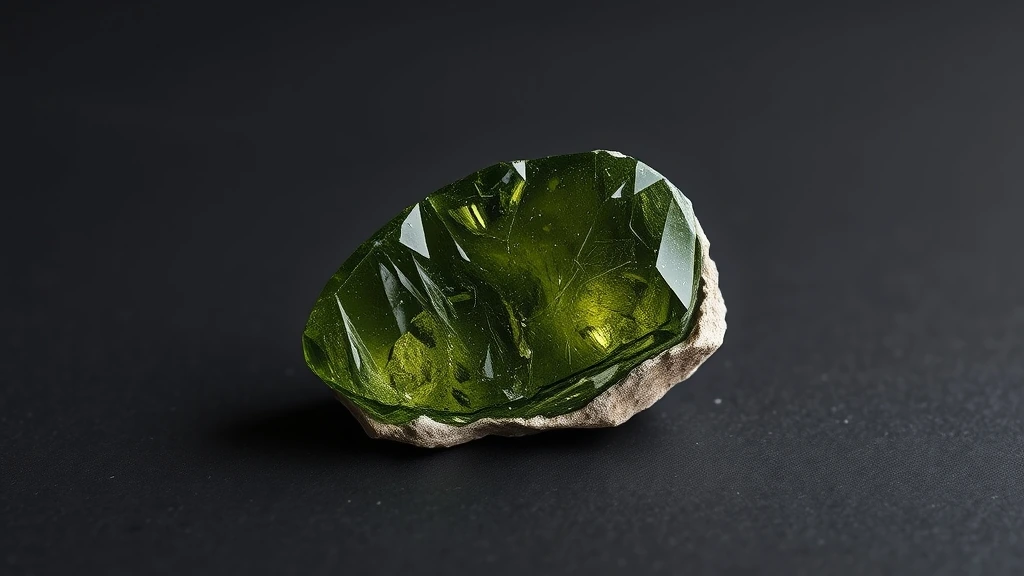
Moldavite belongs to the natural mineral group, specifically classified as a tektite. Unlike crystalline rocks, it formed from molten material ejected during a meteorite impact. This geological event created a unique amorphous structure without any internal lattice order. Its origin distinguishes it from volcanic obsidian, linking it directly to extraterrestrial collision events in Central Europe.
What is Moldavite Gemstone? Geological Overview & Definition
Moldavite is a tektite formed approximately 14.8 million years ago during a massive meteorite impact. It is found exclusively in the Moldau River valley in the Czech Republic. This specific geographic limitation makes it a rare and geologically significant specimen.
The stone is not a traditional mineral but a natural glass resulting from extreme heat and pressure. Its formation involved the melting of terrestrial sand and rock. This process created a chaotic internal structure devoid of crystalline order. Understanding this origin is crucial for accurate gemological identification.
Moldavite Gemstone Chemical Composition & Crystallographic Properties
Moldavite is strictly amorphous, meaning it lacks a long-range crystal lattice structure. Its chemical formula is primarily SiO₂ with minor Al₂O₃ substitutions. This composition results from the rapid cooling of silicate melt. The absence of a defined crystal system distinguishes it from crystalline quartz.
The cation substitution of aluminum for silicon creates a complex glass network. This structure is chemically stable but susceptible to acid etching over time. Surface weathering can alter its appearance, forming a patina or lechatelierite transformation. Proper handling is essential to preserve its integrity.
Color in moldavite arises from chromophore centers and iron impurities. The green shade is due to Fe³⁺ ions within the silicate matrix. Thermal behavior shows a glass transition temperature rather than a sharp melting point. Heating can cause devitrification, where crystals begin to form within the glass.
| Property | Specification |
|---|---|
| Mineral Group | Natural Mineral / Crystal |
| Chemical Formula | SiO₂ (+Al₂ O₃ ) |
| Mohs Hardness | 5.5 to 7 https://ntrs.nasa.gov/archive/nasa/casi.ntrs.nasa.gov/19750015372.pdf O’Keefe A., John. “Tektites and their Origin”., Goddard Space Centre, NASA. Retrieved 9 December 2017. |
| Crystal System | Amorphous |
| Specific Gravity (Density) | 2.32 to 2.38 |
| Refractive Index | 1.48 to 1.54 |
| Color & Optical Properties | Natural Moldavite Gemstone color spectrum and optical dispersion |
| Primary Mining Localities | Global primary localities |
| Water & Chemical Resistance | High (Safe for gentle water washing) |
| Chakra Alignment (Traditional) | Crown Chakra, Third Eye Chakra |
| Zodiac Affinity (Traditional) | Sagittarius, Aquarius, Scorpio |
| Symbolic Meaning (Traditional) | Spiritual awakening, protection from negative energy, and cosmic connection |
Moldavite Gemstone Varieties & Color Spectrum
Moldavite exhibits a distinct range of green hues derived from trace elements within its amorphous silica structure. The coloration typically shifts from pale olive to deep forest green, influenced by the concentration of iron and other impurities. Understanding these variations is crucial for accurate gemological identification and valuation in the market.
Classic Forest Green Moldavite
This is the most common variety, characterized by a deep, saturated green tone with a matte finish. It often contains numerous gas bubbles and internal fractures that create a distinctive, chaotic texture. Collectors prize this type for its authentic, unpolished appearance that highlights its extraterrestrial origin.
Pale Olive Moldavite
Pale olive specimens display a lighter, more translucent green with subtle yellowish undertones. These pieces often feature fewer internal inclusions, allowing for a clearer view of the flow structures formed during rapid cooling. This variety is frequently cut into cabochons to enhance its natural luster and visual depth.
Dark Bottle Green Moldavite
Dark bottle green moldavite is the rarest and most valuable color morph, appearing almost black in low light. It possesses a high density of microscopic bubbles that scatter light, creating a unique, shimmering effect. Its scarcity makes it a highly sought-after item among serious mineral collectors and investors.
Textured “Moldavite” (Trade Grade)
Often sold as raw, textured pieces, this trade variety emphasizes the rough, pitted surface over color purity. The surface features complex swirl patterns and ridges that result from the intense friction during atmospheric entry. While less refined, it remains geologically authentic and popular for spiritual and decorative purposes.
Translucent Green Moldavite
Rare translucent specimens allow light to pass through, revealing intricate internal flow lines and bubble trails. This variety is highly prized for its clarity and the way it captures and refracts ambient light. Such pieces are often displayed as standalone art objects rather than set in jewelry.
Where is Moldavite Gemstone Found? Geological Mining & Extraction
Moldavite is exclusively found in the Moldau River valley in the Bohemian Forest region of the Czech Republic. This unique locality corresponds to the impact site of a meteorite that struck approximately 14.8 million years ago. The material is embedded in sedimentary deposits rather than traditional crystalline rock formations, distinguishing it from other gemstones.
Extraction involves careful excavation from riverbanks and surrounding hillsides, where the glass is often mixed with sand and gravel. Geologists and local miners use sieving techniques to separate the tektite fragments from the host sediment. This limited geographic origin ensures that all genuine moldavite shares a specific geological history and chemical signature.
Historical Significance & Cultural Lore of Moldavite Gemstone
Ancient Slavic peoples revered moldavite as a sacred stone, often incorporating it into amulets and protective talismans. Archaeological findings reveal that these artifacts were buried with the dead, suggesting a belief in its power to guide souls to the afterlife. The stone’s unique green color and texture likely contributed to its mystical association with nature and vitality.
Modern spiritual traditions have further elevated moldavite’s status, linking it to cosmic energy and higher consciousness. Unlike ancient uses focused on protection, contemporary lore emphasizes its role in facilitating spiritual awakening and emotional healing. This enduring legacy ensures that moldavite remains a significant cultural artifact as well as a geological curiosity.
Modern Uses & Jewelry Applications of Moldavite Gemstone
Moldavite’s amorphous glassy texture makes it a favorite for lapidary artists who favor both cabochon and faceted cuts. Its vivid green hue is most striking when polished to a high gloss, allowing it to catch light in rings, pendants, and earrings. Designers also carve ornamental beads and small sculptures, capitalizing on its natural inclusions for a mystical aesthetic.
- Cabochon pendants for maximal color depth
- Faceted rings that showcase internal striations
- Carved beads for beaded necklaces and bracelets
- Small ornamental figurines for display
Metaphysical Uses & Origins of Moldavite Gemstone
Practitioners use Moldavite in meditation to amplify spiritual awakening, believing its extraterrestrial origin channels cosmic energy into the wearer. Grounding rituals often pair the stone with crystal grids, while its striking appearance inspires architectural accents and bespoke lapidary art that echo its meteoritic heritage.
Which Chakra and Zodiac Signs Align with Moldavite Gemstone?
Moldavite resonates most strongly with the Crown Chakra, facilitating higher consciousness and connection to universal wisdom. It also stimulates the Third Eye Chakra, sharpening intuition and inner vision during contemplative practice.
Astrologically, the stone is linked to Sagittarius, Aquarius, and Scorpio. These signs are associated with exploration, innovation, and transformation—qualities that mirror Moldavite’s dynamic, otherworldly energy.
How to Identify Real vs. Fake Moldavite Gemstone
Artificial imitations of Moldavite include dyed glass, synthetic silica, and resin composites that mimic its green hue but lack the stone’s characteristic inclusions and density. These replicas often feel lighter, display uniform coloration, and lack the subtle internal bubbles that signal genuine tektite formation.
Practical At-Home Authenticity Tests
- Temperature Test (Thermal Feel): Real Moldavite feels cool to the touch and retains that coolness longer than glass or resin, which quickly warm to skin temperature.
- Specific Gravity & Weight Test: With a density of 2.32‑2.38 g/cm³, genuine Moldavite feels noticeably heavier than glass (≈2.5 g/cm³) of the same size; a precise scale can confirm this range.
- Scratch & Hardness Test (Mohs Comparison): Using a steel file (hardness ~6.5), a genuine piece (hardness 5.5‑7) will resist scratching, whereas glass or resin will show visible marks.
- Microscopic & Loupe Inspection (Internal Inclusions): Under 10× magnification, authentic Moldavite reveals microscopic bubbles, flow lines, or tiny mineral specks; fakes appear uniformly clear or display air bubbles typical of glass.
Moldavite Gemstone Valuation Factors, Grading & Pricing
Color Saturation serves as the primary determinant for high-end specimen valuation and market desirability. Collectors prioritize deep olive-green tones with exceptional uniformity across the entire surface area. High optical clarity and a distinct glassy luster further elevate the stone’s aesthetic appeal.
Carat Weight significantly influences pricing, with larger, intact fragments commanding substantial premiums over smaller pieces. Facet symmetry is less relevant here, as most moldavite is sold as rough, uncut specimens. The presence of natural matrix or internal inclusions can either enhance uniqueness or reduce value.
Geographical Provenance Premium applies strictly to stones originating from the verified Czech Republic impact site. Authenticity documentation is critical, as synthetic imitations frequently flood the global wholesale and retail markets. Verified provenance ensures long-term investment stability and protects buyers from fraudulent purchases.
How to Clean and Care for Moldavite Gemstone
Due to its amorphous structure, moldavite requires gentle handling to prevent micro-fractures during routine maintenance. You should use warm soapy water and a soft cloth to gently wipe the surface. This method effectively removes dust and oils without stressing the fragile glass matrix.
It is strictly necessary to avoid ultrasonic cleaners to prevent structural fractures in the stone. High-frequency vibrations can exploit existing internal stress points, leading to catastrophic breakage. Always dry the specimen thoroughly with a lint-free cloth after washing.
Cleansing and Recharging Moldavite Gemstone (Energetic Care)
For energetic maintenance, practitioners often employ dry methods that respect the stone’s physical fragility. Smoke smudging with sage or palo santo is a popular technique for clearing negative energy. This process involves wafting the smoke around the stone without direct contact.
Alternatively, placing the gemstone on a selenite plate under moonlight facilitates passive recharging. This method leverages natural light and crystal resonance to restore the stone’s vibrational balance. Ensure the stone is in a secure, dry location during this process.
Frequently Asked Questions About Moldavite Gemstone
What is moldavite made of?
Moldavite is a natural glass composed primarily of SiO₂ with trace Al₂O₃. This silicate glass formed from a meteorite impact about 15 million years ago, giving it a distinctive green hue and an amorphous structure that lacks a true crystal lattice, unlike most gemstones.
How hard is moldavite on the Mohs scale?
Moldavite ranges from 5.5 to 7 on the Mohs hardness scale. The variability reflects differences in impact‑formed vesicles and internal stress; softer pieces may scratch easily, while the harder end approaches quartz. Consequently, care should be taken when setting moldavite in jewelry.
Can I wear moldavite while swimming or showering?
Yes, moldavite is water‑resistant and safe for gentle water washing. Its high water resistance means brief exposure to rain, pools, or showers won’t damage the stone, but prolonged soaking or harsh detergents can degrade surface polish, so rinse with mild soap afterward.
Should I clean moldavite with an ultrasonic cleaner?
No, avoid ultrasonic cleaners; use warm soapy water and a soft cloth instead. The rapid vibrations of ultrasonic baths can cause micro‑fractures in the amorphous glass, leading to chips or loss of clarity. Hand cleaning preserves its natural luster and structural integrity.
Which zodiac signs are most compatible with moldavite?
Moldavite aligns with Sagittarius, Aquarius, and Scorpio. These signs are traditionally associated with exploration, transformation, and deep insight, mirroring the stone’s reputed ability to spark spiritual awakening and broaden consciousness. Many wear it as a talisman for personal growth.
Which chakras does moldavite activate?
Moldavite is linked to the Crown Chakra and the Third Eye Chakra. Energy work suggests it helps open higher‑dimensional perception and supports meditation by stimulating the pineal gland, facilitating intuitive insight and a sense of cosmic connection.
How should I store moldavite to prevent damage?
Store moldavite separately in a soft pouch or lined compartment. Because the glassy matrix is prone to scratches and chipping, keeping it away from harder gemstones like diamonds or sapphires reduces abrasion, while a stable, low‑humidity environment prevents surface clouding.
Is moldavite suitable for everyday jewelry?
Moldavite can be worn daily but requires mindful handling. Its moderate hardness and glassy nature mean it may chip under impact; setting it in protective bezel settings and avoiding heavy physical activity prolongs its brilliance, making it a striking yet delicate choice for daily wear.