
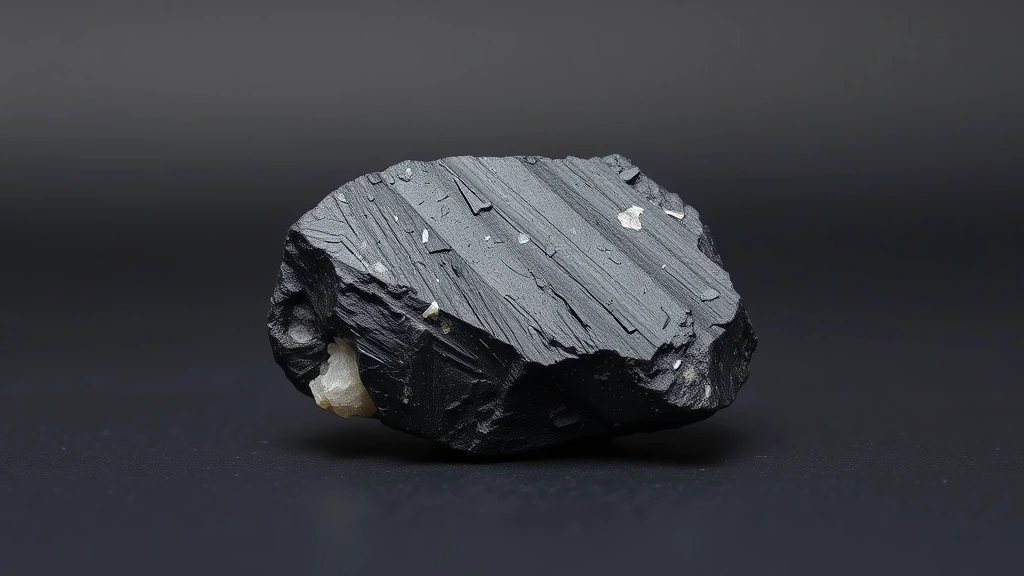
Black tourmaline belongs to the Elbaite and Schorl species within the broader tourmaline supergroup. This natural mineral forms through the slow cooling of silica-rich magmas in granitic pegmatites. Its geological origin is strictly igneous, requiring specific volatile elements like fluorine and boron for crystallization. The Namibian deposits are renowned for producing large, well-formed prismatic crystals. These specimens often exhibit distinct striations along their vertical axes.
What is Namibian Black Tourmaline? Geological Overview & Definition
Namibian Black Tourmaline is primarily composed of Schorl, the iron-rich end member of the tourmaline group. It forms in high-temperature, low-pressure environments typical of the Namibian pegmatite fields. The mineral’s formation is intimately linked to the presence of volatile fluorine and boron in the melt. This specific geochemical environment allows for the growth of robust, elongated crystals.
The stone is classified as a pyroelectric and piezoelectric mineral, generating an electric charge under heat or pressure. These unique physical properties distinguish it from other black gemstones like obsidian or onyx. Its geological stability makes it highly resistant to weathering and chemical alteration. Consequently, it survives extensive erosion, often found in alluvial deposits alongside other heavy minerals.
Namibian Black Tourmaline Chemical Composition & Crystallographic Properties
The mineral crystallizes in the Trigonal crystal system, specifically within the R3m point group. Its lattice structure features a complex arrangement of silicon-oxygen tetrahedra and boron-oxygen triangles. This intricate framework creates a highly stable, anisotropic material with distinct directional properties. The crystal habit typically displays hexagonal prisms with pyramidal terminations.
Chemically, tourmaline is a complex borosilicate with a general formula involving aluminum, iron, magnesium, and lithium. Cation substitution within the crystal lattice varies significantly between Schorl and Elbaite species. In black varieties, iron and manganese dominate the cation sites, replacing aluminum. This substitution pattern directly influences the stone’s optical and magnetic characteristics.
The deep black color is not due to a single chromophore but rather light absorption across the visible spectrum. Trace amounts of iron and manganese create broad absorption bands that block transmitted light. This results in the characteristic opaque, jet-black appearance of Namibian specimens. The color remains stable under normal lighting and thermal conditions.
Tourmaline exhibits significant pyroelectricity, generating surface charges when heated or cooled. This thermal behavior is a direct consequence of its non-centrosymmetric crystal structure. The mineral is also resistant to dilute acids, maintaining its structural integrity in most geological settings. Its high hardness and chemical durability ensure long-term preservation in sedimentary environments.
| Property | Specification |
|---|---|
| Mineral Group | Natural Mineral / Crystal |
| Mohs Hardness | 6.5 – 7.0 |
| Crystal System | Trigonal |
| Color & Optical Properties | Natural Namibian Black Tourmaline color spectrum and optical dispersion |
| Primary Mining Localities | Global primary localities |
| Water & Chemical Resistance | High (Safe for gentle water washing) |
| Chakra Alignment (Traditional) | Solar Plexus Chakra (Manipura) |
| Zodiac Affinity (Traditional) | Capricorn, Taurus |
| Symbolic Meaning (Traditional) | Clear communication, truth and serenity |
Namibian Black Tourmaline Varieties & Color Spectrum
Black tourmaline, known mineralogically as dravite, exhibits a distinct lack of visible pleochroism in its primary black morph. This variety is characterized by high iron and manganese content, which absorbs most visible light wavelengths. Consequently, the stone appears opaque to semi-opaque with a deep, charcoal-black hue.
Classic Black Dravite
The most common commercial form is the classic black dravite, which dominates the Namibian market. These crystals often display a prismatic habit with striated vertical faces. The interior typically contains fine, needle-like inclusions that contribute to its dense, jet-black appearance. This variety is prized for its consistent color saturation and structural integrity.
Schorlite Transition Morphs
Some specimens exhibit subtle schorlite transition morphs, where trace elements alter the crystal lattice slightly. These stones may reveal faint greenish or brownish tints under strong transmitted light. Such color variations are rare in high-grade gem material but indicate specific geological conditions. Collectors value these nuances for their scientific interest and unique visual depth.
Indicolite-Infused Blacks
Rarely, black tourmaline from Namibia shows indicolite-infused blacks, indicating minor lithium substitution. These stones possess a slightly bluish-black sheen that distinguishes them from pure dravite. The presence of lithium affects the refractive index subtly, enhancing the stone’s luster. This variety is highly sought after by advanced collectors for its complex chemistry.
Striated Prismatic Crystals
Many Namibian specimens feature prominent striated prismatic crystals, a hallmark of the trigonal system. These longitudinal grooves form during growth and serve as key identification markers. The surface texture is rough yet geometrically precise, reflecting the crystal’s internal symmetry. Such formations are often left unpolished to showcase their natural architectural beauty.
Where is Namibian Black Tourmaline Found? Geological Mining & Extraction
Namibian black tourmaline primarily occurs in alkaline pegmatites located within the Erongo Region. These geological formations are rich in boron and silica, essential for dravite formation. The Erongo pegmatite district is the most significant source, yielding large, well-formed crystals. Mining operations focus on extracting high-quality material from these specific intrusive bodies.
Extraction involves careful manual and mechanical removal to preserve crystal integrity. The host rock is often hard, requiring precise cutting techniques to access the tourmaline pockets. Post-extraction, stones are sorted by clarity, size, and color consistency. This rigorous process ensures that only the finest specimens reach the global gem market.
Historical Significance & Cultural Lore of Namibian Black Tourmaline
Although Namibian deposits were formally mapped in the twentieth century, tourmaline lore extends across ancient civilizations. In Greco-Roman antiquity, dark tourmaline was associated with protective talismans and grounding energies. Historical texts reference its use in amulets designed to ward off negative influences. These artifacts highlight the stone’s enduring role in early metaphysical practices.
In Vedic traditions, black tourmaline was revered for its ability to anchor spiritual energy. Ancient Indian texts describe its use in meditation to promote mental clarity and stability. Similarly, Mesoamerican cultures valued dark silicate minerals for their perceived connection to the earth. This cross-cultural reverence underscores the stone’s universal significance in historical lapidary lore.
Modern Uses & Jewelry Applications of Namibian Black Tourmaline
Namibian black tourmaline is prized for its deep, lustrous hue and strong piezoelectric response, making it a favorite among contemporary lapidaries. Artisans often cut the stone into sleek cabochons that showcase its uniform black surface, while skilled faceters produce brilliant step‑cut or brilliant‑cut gems for high‑end rings and pendants. Ornamental carving also thrives, with the mineral shaped into intricate beads, intaglios, and decorative inlays for luxury watches and ceremonial objects.
- Cabochon pendants for protective jewelry
- Brilliant‑cut earrings highlighting light play
- Carved beads for mala strands and spiritual accessories
- Inlaid motifs in watch dials and high‑fashion accessories
Carat, Quality Grades & Value Factors of Namibian Black Tourmaline
The market evaluates Namibian black tourmaline primarily through the 4Cs—Color, Clarity, Cut, and Carat weight. Deep, uniform black with a subtle metallic sheen scores highest in Color, while the absence of visible fractures or cloudiness defines superior Clarity. Expert Cut enhances the stone’s natural luster and maximizes durability, and larger Carat specimens command premium prices, especially when they retain structural integrity.
Durability is a key commercial attribute; with a Mohs hardness of 6.5‑7.0, the gemstone resists everyday wear yet requires careful setting to avoid chipping. Grading standards follow GIA‑aligned protocols, assigning grades such as “Excellent” for cut precision, “VVS” for near‑flawless clarity, and “Deep Black” for color intensity. Provenance from Namibia adds a geographic premium, as collectors value the distinct crystal habit and traceable mining origin.
Zodiac and Astrological Lore of Namibian Black Tourmaline
Across ancient lapidary traditions, black tourmaline has been linked to the Solar Plexus Chakra (Manipura), fostering confidence and personal power. In modern astrological practice, the stone aligns with Capricorn and Taurus, reinforcing perseverance, grounded ambition, and the steady accumulation of wealth—qualities revered by both cultures.
Historical records from early African trade routes note that Namibian black tourmaline was exchanged as a talisman for protection against negative energies, a belief that persists in contemporary metaphysical circles. Its enduring reputation as a stone of clear communication and serenity reflects a universal heritage that transcends regional folklore, resonating with seekers worldwide.
How to Identify Real vs. Fake Namibian Black Tourmaline
Artificial imitations of Namibian black tourmaline include dyed quartz, synthetic glass, and resin composites that mimic its deep black appearance but lack the mineral’s characteristic piezoelectric response and specific gravity. Synthetic tourmaline produced in labs may exhibit identical chemistry but often displays a flawless internal structure, distinguishing it from natural specimens.
Practical At-Home Authenticity Tests
- Temperature Test (Thermal Feel): Natural tourmaline feels cool to the touch and retains that coolness longer than glass or plastic, due to its higher thermal conductivity.
- Specific Gravity & Weight Test: Hold the stone against a known weight; genuine tourmaline is noticeably heavier (specific gravity ~3.0‑3.2) than most glass or quartz imitations.
- Scratch & Hardness Test (Mohs Comparison): Gently scratch the surface with a steel file (hardness ~5.5). Real tourmaline resists scratching, whereas glass or dyed quartz will show visible marks.
- Microscopic & Loupe Inspection (Internal Inclusions): Examine under 10×–30× magnification; natural tourmaline often contains fine, hair‑like inclusions or striations, while synthetic or glass pieces appear uniformly clear.
Namibian Black Tourmaline Valuation Factors, Grading & Pricing
The first key determinant of value is color saturation. A deep, uniform black hue with minimal brown or gray undertones commands the highest premiums, while slight variations in tone can reduce desirability. Optical clarity and luster also play a role; a polished surface that reflects light evenly without visible inclusions is prized by collectors and jewelers alike.
Carat weight, facet symmetry, and adherence to the 4Cs grading standards are the next critical factors. Larger specimens with well-proportioned facets and minimal fracture lines score higher on the market. Consistency in cut quality ensures that the stone’s intrinsic beauty is fully expressed, which directly influences its resale potential.
Geographical provenance adds a unique premium to Namibian Black Tourmaline. Stones certified as originating from Namibia’s rich mineral deposits often carry a higher market value, reflecting both rarity and cultural significance. Current certified gem market trends show a steady appreciation for Namibian specimens, especially those with documented provenance and traceability.
How to Clean and Care for Namibian Black Tourmaline
Gentle cleaning of Namibian Black Tourmaline should be performed with warm soapy water and a soft cloth. After rinsing, dry the stone thoroughly with a clean, lint‑free towel to prevent any residual moisture from lingering. Avoid ultrasonic cleaners, as the vibration can induce micro‑fractures in the crystal lattice, compromising structural integrity.
Cleansing and Recharging Namibian Black Tourmaline (Energetic Care)
To cleanse the stone’s energetic field, place it in a quiet space and allow it to absorb gentle moonlight for a few hours; this natural light does not harm the crystal structure. Alternatively, resting the tourmaline on a selenite slab or a clean, dry surface can help re‑charge its vibrational energy without exposing it to heat or direct sunlight. Herbal smudging with sage or palo santo can also be used to clear residual energies, ensuring the stone remains free from negative influences while maintaining its physical stability.
Frequently Asked Questions About Namibian Black Tourmaline
Namibian Black Tourmaline displays distinct mineralogical characteristics across its geological varieties and structural habits. Gemologists evaluate these natural varieties based on crystal habit, trace chromophore concentrations, and visual luster.
Primary Natural Namibian Black Tourmaline
The benchmark natural variety exhibiting diagnostic color saturation and classic crystallographic symmetry.
Distinct Geological Morphs of Namibian Black Tourmaline
Secondary regional and structural varieties formed under localized geological temperature and pressure conditions.
Is Namibian Black Tourmaline safe to wear in the shower?
Yes, it is safe for gentle water washing. The crystal’s robust structure resists moisture, allowing occasional rinsing with mild soap and water. Avoid prolonged soaking or harsh chemicals, which could dull its natural sheen.
How should I clean my Namibian Black Tourmaline to keep it bright?
Use warm soapy water and a soft cloth, then dry with a microfiber towel. This gentle method removes surface oils without stressing the crystal. Avoid ultrasonic cleaners, as vibration can cause microfractures in the trigonal lattice.
Can I use an ultrasonic cleaner on Namibian Black Tourmaline?
No, ultrasonic cleaning should be avoided. The high-frequency vibrations can crack the crystal’s structure, compromising its integrity. Stick to manual cleaning with a soft cloth and mild soap.
What zodiac signs are associated with Namibian Black Tourmaline?
Capricorn and Taurus. These signs are linked to the stone’s grounding and protective energies, aligning with its reputed ability to stabilize emotional turbulence.
Which chakra does Namibian Black Tourmaline correspond to?
Solar Plexus Chakra (Manipura). The stone is believed to enhance personal power, confidence, and clear communication by balancing this energetic center.
Is Namibian Black Tourmaline durable enough for everyday wear?
Yes, its hardness of 6.5–7.0 makes it suitable for daily use. The crystal resists scratches and retains its luster, though it should still be protected from harsh impacts or abrasive surfaces.
Does Namibian Black Tourmaline have any special care requirements during travel?
Pack it in a soft pouch or jewelry case to avoid scratches. While it is water-resistant, sudden temperature changes or rough handling can still damage the crystal’s surface.
What is the typical appearance of Namibian Black Tourmaline?
It displays a deep, opaque black color with occasional subtle green or brown inclusions. The stone’s trigonal crystal habit often results in elongated, prismatic shapes that enhance its visual appeal.