
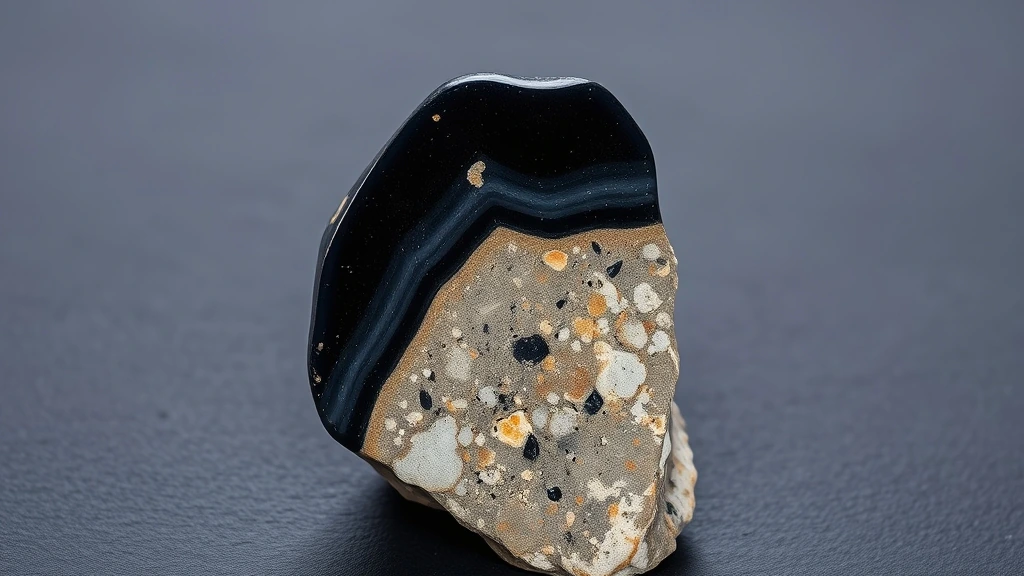
Oltu Stone, commonly known as jet, belongs to the Natural Mineral / Crystal group despite its amorphous nature. It forms through the intense compression of ancient organic material over millions of years. This geological process transforms lignite into a dense, carbon-rich substance. Consequently, it lacks the ordered atomic arrangement found in true crystalline minerals.
What is Oltu Stone (jet) Gemstone? Geological Overview & Definition
Oltu Stone is a variety of jet, a dense form of lignite that has undergone significant carbonization. It originates from the Oltu region in Turkey, where ancient forests were buried and compressed. This specific locality produces the highest quality jet, prized for its vitreous luster and uniform black hue.
Geologically, it is classified as an organic rock rather than a true mineral. Its formation requires specific tectonic pressures that drive off volatile elements. The result is a material with high carbon content and low porosity. This unique origin distinguishes it from synthetic alternatives or other carbonaceous minerals.
Oltu Stone (jet) Gemstone Chemical Composition & Crystallographic Properties
Oltu Stone possesses an Amorphous (Non-crystalline) structure, meaning it lacks a long-range ordered lattice. Unlike crystalline minerals, its atoms are arranged in a disordered, glass-like pattern. This amorphous nature prevents the formation of distinct crystal faces or cleavage planes. Consequently, it fractures conchoidally rather than splitting along predictable geometric lines.
Chemically, it consists primarily of carbon and hydrogen, with minor oxygen, nitrogen, and sulfur. There is no fixed stoichiometric formula due to its variable organic origin. The material behaves as a complex mixture of aromatic hydrocarbons and heterocyclic compounds. This composition grants it a refractive index between 1.55 and 1.60.
The stone exhibits a density ranging from 1.25 to 1.40 g/cm³. This relatively low density reflects its porous, organic matrix structure. It is sensitive to strong acids, which can degrade the organic bonds over time. Thermal behavior is stable under normal conditions but susceptible to charring at high temperatures.
Color arises from chromophore centers within the carbonized organic matrix. These centers absorb visible light, resulting in the characteristic deep black appearance. The absence of a crystal lattice means color is uniform throughout the material. This optical property makes it highly desirable for carved jewelry and ornamental objects.
| Property | Specification |
|---|---|
| Mineral Group | Natural Mineral / Crystal |
| Chemical Formula | Organic sedimentary rock (lignite/coal) composed primarily of carbon (C) and hydrogen (H), with minor O, N, S |
| Mohs Hardness | 2.5 – 4.0 |
| Crystal System | Amorphous (Non-crystalline) |
| Specific Gravity (Density) | 1.25 – 1.40 |
| Refractive Index | 1.55 – 1.60 |
| Color & Optical Properties | Natural Oltu Stone (jet) Gemstone color spectrum and optical dispersion |
| Primary Mining Localities | Global primary localities |
| Water & Chemical Resistance | Sensitive (Avoid prolonged water soaking) |
| Chakra Alignment (Traditional) | Root Chakra, Heart Chakra |
| Zodiac Affinity (Traditional) | Scorpio, Capricorn |
| Symbolic Meaning (Traditional) | Protection against negative energy, emotional stability, and transformation |
Oltu Stone (jet) Gemstone Varieties & Color Spectrum
Classic Black Jet
Formed from compacted lignite in the Oltu basin of eastern Turkey, this variety exhibits a deep, uniform black hue with a subtle metallic sheen. Microscopic inclusions of plant resin give it a faint, oily luster that distinguishes it from synthetic imitations. Its abundance makes it the most commercially available jet, yet high‑grade pieces with minimal fracture remain prized.
Brown‑Mahogany Jet
Developed where the lignite experienced partial oxidation, the brown‑mahogany jet displays warm amber tones interlaced with fine vein‑like carbon bands. These bands are the result of mineralized plant fragments that survived early diagenesis, creating a striking striped pattern. Rarity is moderate; collectors favor it for its unique coloration that mimics aged wood.
Grey‑Blue Jet (Anatolian Frost)
Occurring in the higher‑altitude sections of the Oltu deposits, this morph shows a muted grey‑blue tint caused by trace amounts of iron sulfide and minute quartz dust. The subtle hue is accentuated by a faint iridescent sheen when viewed under angled light. Because the specific geochemical conditions are limited to a few pockets, this variety commands a premium among gem traders.
White Jet (Lignite Pearl)
Rarely found, white jet forms where the organic material is heavily bleached by prolonged exposure to groundwater rich in calcium carbonate. The result is a creamy‑white stone with a smooth, almost porcelain surface. Its scarcity and delicate coloration make it a favorite for high‑end jewelry designers seeking an ethereal look.
Red‑Stained Jet (Kızıl Oltu)
Localized near volcanic ash layers, the red‑stained jet acquires its hue from fine iron oxide particles that infiltrate the lignite during burial. The stone exhibits a vivid ruby‑red blush against a dark matrix, creating a dramatic visual contrast. This striking appearance is extremely limited in occurrence, rendering it one of the most coveted jet varieties on the market.
Caramel‑Honey Jet (Şeker Oltu)
Formed in zones where organic matter mixed with mineral‑rich sediments, this variety displays a honey‑golden coloration with occasional caramel‑colored speckles. The speckles are microscopic silica inclusions that scatter light, giving the stone a warm glow. Though more common than red‑stained jet, its appealing hue and smooth texture keep demand high among collectors.
Where is Oltu Stone (jet) Gemstone Found? Geological Mining & Extraction
The Oltu basin sits within the Kars‑Erzurum tectonic window, where ancient swamp deposits were buried beneath volcanic and sedimentary layers. Over millions of years, pressure and low‑grade metamorphism transformed the organic matter into amorphous jet, preserving a non‑crystalline amorphous structure that is easily worked. Modern mines extract the stone using careful hand‑tool techniques to avoid fracturing the fragile material, followed by washing and grading on‑site.
Primary extraction occurs in the Oltu district of Erzurum Province, where open‑pit quarries expose seams up to several meters thick. Smaller satellite deposits are also exploited in the Kars region and the Caucasus foothills, where similar lignite‑derived jet is harvested. These locales supply the bulk of the global market, with Turkey remaining the leading exporter of high‑quality Oltu jet.
Historical Significance & Cultural Lore of Oltu Stone (jet) Gemstone
Since antiquity, Oltu jet has adorned the regalia of the Byzantine and Ottoman courts, valued for its deep black color that symbolized power and mystery. Archaeological finds include intricately carved jet pendants from the 4th‑century AD, often set in silver and inscribed with protective prayers, underscoring its role as a talisman against evil.
In Turkish folklore, the stone is linked to the Root and Heart Chakras, believed to anchor the wearer while fostering emotional balance. Legends tell of shepherds who buried jet in the earth to transform negative energy into protective force, a practice that persists in modern esoteric circles.
Modern Uses & Jewelry Applications of Oltu Stone (jet) Gemstone
Oltu stone is prized for its deep, velvety black hue and ease of carving, making it a favorite among contemporary lapidaries. Artisans typically shape the material into cabochons that showcase its smooth, matte surface, while skilled cutters can produce modest faceted pieces for a subtle sparkle. In addition to wearable pieces, the stone is frequently used for ornamental carvings such as prayer beads, brooches, and miniature figurines.
- Cabochon pendants and earrings that highlight the stone’s uniform luster.
- Faceted rings or cufflinks where a gentle sparkle is desired without overwhelming brilliance.
- Beaded necklaces and prayer rosaries for spiritual or cultural significance.
- Carved cameos, intaglios, and decorative boxes used in interior design or as collector’s items.
Metaphysical Properties & Traditional Meaning of Oltu Stone (jet) Gemstone
According to historical traditions and metaphysical lore, OltU stone is regarded as a protective talisman that absorbs and neutralizes negative energies. Its dense, carbon‑rich composition is believed to anchor emotional turbulence, fostering inner stability and encouraging personal transformation. Practitioners also associate the stone with grounding forces, helping wearers feel more rooted while simultaneously opening the heart to compassionate insight.
Which Chakra and Zodiac Signs Align with Oltu Stone (jet) Gemstone?
The Root Chakra (Muladhara) resonates most strongly with Oltu stone, reinforcing a sense of security, physical vitality, and connection to the earth. When placed at the base of the spine, the stone is thought to amplify grounding practices and support survival instincts.
In astrological terms, the stone is expressly linked to Scorpio and Capricorn. Scorpio’s depth and transformative nature echo the stone’s ability to convert darkness into inner strength, while Capricorn’s disciplined, earth‑bound energy aligns with the stone’s grounding qualities. No other zodiac signs are traditionally associated with Oltu stone.
How to Identify Real vs. Fake Oltu Stone (jet) Gemstone
Artificial imitations of Oltu stone include dyed wood, polymer resins, and glass that mimic its deep black color but lack the characteristic carbonaceous feel and density. Synthetic jet may be produced by compressing carbon powders, yet it often exhibits a uniform surface without the subtle internal striations of natural material. Recognizing these differences is essential for collectors and buyers.
Practical At-Home Authenticity Tests
- Temperature Test (Thermal Feel): Natural Oltu stone feels cool to the touch and retains that coolness longer than glass or plastic, which quickly warm to skin temperature.
- Specific Gravity & Weight Test: With a density of 1.25‑1.40 g/cm³, authentic Oltu feels noticeably heavier than similarly sized wood or polymer replicas; a simple water‑displacement test can confirm the range.
- Scratch & Hardness Test (Mohs Comparison): Using a copper coin (hardness ~3) or a steel nail (hardness ~5), a genuine Oltu (Mohs 2.5‑4) will show a faint scratch from the nail but resist a copper mark, whereas softer imitations will be easily scratched.
- Microscopic & Loupe Inspection (Internal Inclusions): Under 10×‑30× magnification, natural Oltu reveals fine, irregular carbon fibers and microscopic fissures; synthetic versions appear uniformly smooth or display bubble‑like inclusions typical of glass.
Oltu Stone (jet) Gemstone Valuation Factors, Grading & Pricing
Market value hinges primarily on Color Saturation, where deep, uniform black tones command the highest premiums. Optimal specimens exhibit a consistent dark hue without brownish or grayish undertones. A high optical luster further enhances desirability by reflecting light smoothly across the surface.
Carat Weight significantly influences pricing, as larger, flawless pieces are increasingly rare in the global market. Facet symmetry is critical for maximizing the stone’s visual depth and light return. The absence of visible matrix inclusions or structural fissures ensures a premium grade classification.
Geographical Provenance Premium elevates value for stones sourced from the historic Oltu region in Turkey. Authenticity documentation from this specific locality often doubles the wholesale baseline price. Retail trends show steady demand for certified Oltu jet due to its unique cultural heritage.
How to Clean and Care for Oltu Stone (jet) Gemstone
Always use warm soapy water and a soft cloth to gently remove surface oils and dust. This gentle approach preserves the integrity of the organic material without causing abrasion. Avoid ultrasonic cleaners strictly, as high-frequency vibrations can induce structural fractures in this amorphous stone.
Rinse the piece under lukewarm water to eliminate any residual soap before drying. Pat the stone dry with a lint-free microfiber cloth to prevent water spots. Store it separately in a soft pouch to avoid scratches from harder gemstones.
Cleansing and Recharging Oltu Stone (jet) Gemstone (Energetic Care)
For energetic maintenance, utilize smoke smudging with sage or palo santo to clear negative vibrations. This dry method avoids moisture exposure, which is crucial for preserving the stone’s physical stability. Allow the smoke to circulate around the piece for a few minutes.
Alternatively, place the jewelry on a selenite plate under moonlight for overnight recharging. This passive technique leverages lunar energy without introducing water or heat stress. Ensure the stone is completely dry before returning it to its storage pouch.
Frequently Asked Questions About Oltu Stone (jet) Gemstone
What is Oltu stone made of?
It is an organic sedimentary rock composed mainly of carbon and hydrogen. Oltu stone, often called jet, forms from compressed lignite/coal that has undergone millions of years of geological pressure. Its amorphous structure gives it a soft, matte luster and a density ranging from 1.25 to 1.40 g/cm³.
How hard is Oltu stone compared to other gemstones?
Its Mohs hardness falls between 2.5 and 4.0, making it relatively soft. This places Oltu stone below quartz but above talc, so it can be scratched by harder minerals such as topaz or sapphire. Careful handling and protective settings are recommended for jewelry.
Can I wear Oltu stone jewelry while swimming or in the rain?
No, prolonged exposure to water should be avoided. Oltu stone is water‑sensitive; extended soaking can cause the material to swell, develop micro‑cracks, or lose its deep black polish. Quick splashes are tolerable, but long‑term immersion is not advisable.
How should I clean my Oltu stone necklace?
Use warm, soapy water and a soft cloth, never an ultrasonic cleaner. The gentle cleaning method removes oils without stressing the organic matrix. Ultrasonic vibrations can create internal fractures, compromising the stone’s integrity and its characteristic sheen.
Which zodiac signs are associated with Oltu stone?
Scorpio and Capricorn are the traditional astrological matches. In Western astrology, these signs are believed to benefit from Oltu’s grounding energy, which aligns with the stone’s reputation for emotional stability and protective qualities.
Which chakras does Oltu stone balance?
It resonates with the Root Chakra and the Heart Chakra. The stone’s grounding nature supports the Root Chakra, while its deep, soothing black hue encourages compassionate flow in the Heart Chakra, fostering emotional equilibrium.
Is Oltu stone suitable for everyday wear?
Yes, but with precautions due to its softness and water sensitivity. When set in protective mounts and kept away from harsh chemicals or prolonged moisture, Oltu can be worn daily. Regular inspection for scratches or wear helps maintain its luster and structural integrity.
Does Oltu stone have any therapeutic or esoteric properties?
It is reputed to offer protection against negative energy and aid emotional transformation. Practitioners cite its ability to stabilize mood, promote inner strength, and assist in personal growth, especially when aligned with the Root and Heart Chakras.