
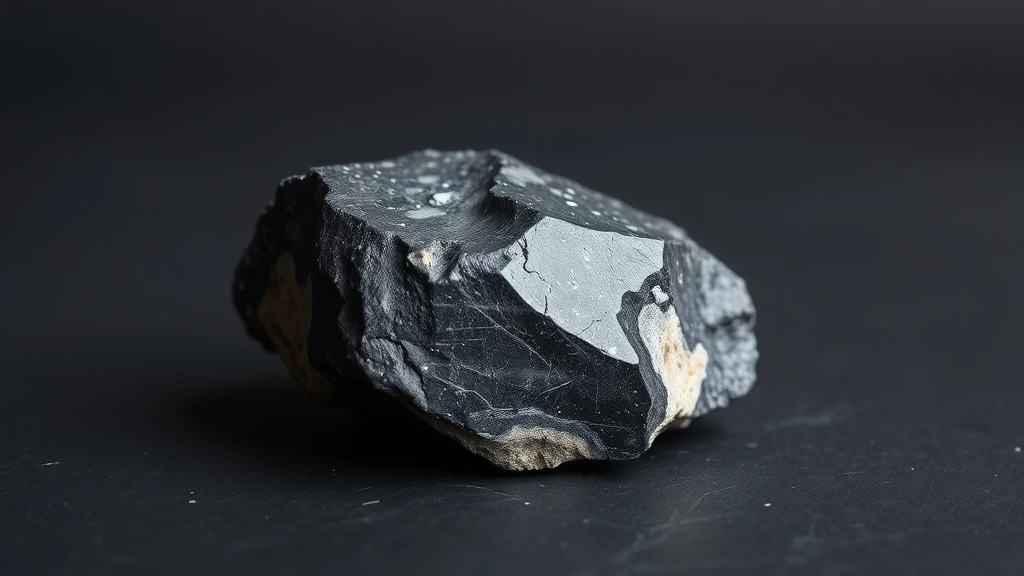
Jet belongs to the Natural Mineral / Crystal group, though it is not a true mineral in the classical sense. Its formation results from the diagenetic alteration of ancient lignite under high pressure, yielding an amorphous or cryptocrystalline carbonaceous material. This organic origin places jet alongside amber and coal, distinguishing it from inorganic silicate gemstones.
What is Jet (gagat) Gemstone? Geological Overview & Definition
Jet is the fossilized remains of wood that has undergone extreme compression and carbonization over millions of years. The resulting material is a dense, fine‑grained carbon allotrope lacking a long‑range crystal lattice, which gives it a characteristic silky luster. Historically prized for its deep black color, jet has been used in jewelry since the Neolithic era.
In geological terms, jet is classified as an organic mineraloid rather than a true mineral, reflecting its origin from plant matter rather than crystalline growth from melt or solution. It is typically found in sedimentary basins where ancient forests were buried, such as the Whitby region of England and the Dominican Republic.
Jet (gagat) Gemstone Chemical Composition & Crystallographic Properties
Jet’s composition is predominantly carbon (≈ 75–90 %), with trace amounts of hydrogen, nitrogen, and oxygen incorporated during fossilization. Because it lacks a periodic atomic arrangement, it is described as amorphous or cryptocrystalline, meaning any micro‑crystals are too small to be resolved by X‑ray diffraction.
The material’s structure consists of tightly packed, disordered graphene‑like sheets, allowing occasional cation substitution (e.g., iron or sulfur) that can subtly affect its density. Jet is highly sensitive to strong acids; exposure to hydrochloric or nitric acid can degrade its surface, underscoring the need for careful cleaning.
Color in jet arises from chromophore color centers created by trapped organic molecules and defects within the carbon matrix, which absorb visible light and impart the deep black shade. When heated above ~300 °C, jet undergoes oxidation, turning brownish‑gray and eventually ash, reflecting its limited thermal stability compared with true crystalline gemstones.
| Property | Specification |
|---|---|
| Mineral Group | Natural Mineral / Crystal |
| Chemical Formula | Organic residue (primarily C, H, O, N; no fixed stoichiometry) |
| Mohs Hardness | 2.5 – 4.0 |
| Crystal System | Amorphous |
| Specific Gravity (Density) | 1.30 – 1.34 |
| Refractive Index | 1.640 – 1.660 |
| Color & Optical Properties | Natural Jet (gagat) Gemstone color spectrum and optical dispersion |
| Primary Mining Localities | Global primary localities |
| Water & Chemical Resistance | High (Safe for gentle water washing) |
| Chakra Alignment (Traditional) | Root Chakra, Heart Chakra |
| Zodiac Affinity (Traditional) | Sagittarius, Scorpio |
| Symbolic Meaning (Traditional) | Protection against negativity, grief healing, and grounding |
Jet (gagat) Gemstone Varieties & Color Spectrum
Jet is primarily a lignite variety of coal, distinguished by its high carbon content and vitreous luster. Unlike standard coal, it possesses a specific gravity that allows it to float in saturated salt water. This unique physical property is a key identifier for gem-quality specimens in the trade.
Whitby Jet
Originating from the Jurassic period, Whitby Jet is the most historically significant variety found in England. It typically exhibits a deep, uniform black color with a distinct conchoidal fracture pattern. This variety is renowned for its fine grain structure and exceptional polishability.
Bittern Jet
Found primarily in the United States, Bittern Jet often contains visible inclusions of pyrite or calcite. Its color ranges from dark brown to pure black, depending on the degree of carbonization. This variety is generally less dense than its English counterpart but remains highly valued.
Retz Jet
Sourced from Austria, Retz Jet is a rarer form that often displays subtle brownish tints. It is characterized by a slightly higher density and a more resinous appearance upon cutting. Collectors prize this variety for its unique geological origin in the Alpine region.
Canarian Jet
This variety is extracted from the Canary Islands and is known for its high luster and durability. It often features a slightly warmer black tone compared to other European varieties. Its formation is linked to ancient volcanic activity and subsequent organic deposition.
Where is Jet (gagat) Gemstone Found? Geological Mining & Extraction
Jet deposits are typically found in sedimentary basins where ancient forests were buried and subjected to intense pressure. These coal seams form over millions of years, transforming lignite into the dense, vitreous stone we know today. The geological process requires specific tectonic conditions to achieve the necessary carbonization levels.
Primary mining regions include the Yorkshire Coast in England, the Austrian Alps, and parts of Spain. Extraction methods often involve open-pit mining or quarrying near the surface where deposits are exposed. Modern operations focus on preserving the integrity of the stone to maximize gemological value.
Historical Significance & Cultural Lore of Jet (gagat) Gemstone
Ancient civilizations, including the Phoenicians and Romans, utilized jet for intricate carvings and jewelry. Archaeological evidence reveals its use in funerary artifacts, symbolizing protection and the passage of the soul. The material’s durability allowed for detailed craftsmanship that has survived millennia of burial.
In Victorian England, jet became the standard material for mourning jewelry, signifying deep grief and remembrance. This cultural association cemented its reputation as a stone of protection against negativity and spiritual grounding. Today, it continues to be revered for its ability to facilitate emotional healing and stability.
Modern Uses & Jewelry Applications of Jet (gagat) Gemstone
Jet is prized for its lustrous black finish and ease of carving, making it ideal for intricate lapidary work. Historically, artisans favored cabochon cuts to maximize the stone’s deep, velvety sheen without revealing internal fractures. Today, it remains popular in vintage-inspired jewelry and ornamental objects.
- Cabochon Jewelry: Smooth, domed cuts highlight the stone’s natural luster and uniform color.
- Faceted Elements: Rarely faceted due to brittleness, but small accents appear in antique settings.
- Ornamental Carving: Used for cameos, religious icons, and decorative boxes due to its workability.
Metaphysical Uses & Origins of Jet (gagat)
According to historical traditions and metaphysical lore, jet is revered as a powerful stone of protection against negativity. Practitioners believe it absorbs emotional toxins and shields the wearer from psychic attacks. Its dark energy is thought to provide a stable anchor during turbulent times.
In grief healing contexts, jet is associated with emotional grounding and resilience. It is believed to help process loss by transforming sorrow into strength. This emotional resonance makes it a favored stone for those navigating significant life transitions or mourning.
Which Chakra and Zodiac Signs Align with Jet (gagat) Gemstone?
Jet aligns primarily with the Root Chakra, fostering a sense of stability and connection to the earth. This alignment helps ground the wearer, reducing anxiety and promoting physical security. It supports the foundational aspects of well-being and presence.
Additionally, jet resonates with the Heart Chakra, balancing emotional depth with protective energy. For Sagittarius and Scorpio natives, this stone enhances their natural intensity and introspective qualities. It supports their journey toward emotional clarity and spiritual protection.
How to Identify Real vs. Fake Jet (gagat) Gemstone
Artificial imitations of jet are common, including synthetic glass, dyed wood, and plastic replicas. These fakes often mimic the stone’s appearance but lack its unique physical properties. Distinguishing real jet requires careful observation of weight, temperature, and surface texture.
Practical At-Home Authenticity Tests
- Temperature Test (Thermal Feel): Real jet feels warm to the touch quickly, whereas glass or plastic remains cool. This thermal conductivity is a key differentiator for organic stones.
- Specific Gravity & Weight Test: Jet is lighter than glass but heavier than wood. Compare it against a similar-sized glass bead; jet should feel surprisingly light for its size.
- Scratch & Hardness Test (Mohs Comparison): Jet has a Mohs hardness of 2.5–4, so it scratches easily with a steel knife. Glass (hardness 5.5) will not scratch, while wood may show different abrasion patterns.
- Microscopic & Loupe Inspection (Internal Inclusions): Under a 10x loupe, real jet often shows parallel fibrous structures or small voids. Glass typically contains bubbles, while dyed wood shows grain patterns.
Jet (gagat) Gemstone Valuation Factors, Grading & Pricing
The primary determinant of value is Color Saturation, which must appear as a deep, uniform black. High-quality specimens exhibit a consistent tone without brownish or grayish undertones. Furthermore, the stone’s optical clarity and resinous luster significantly enhance its visual appeal.
Market pricing heavily depends on Carat Weight, as larger, flawless pieces are increasingly rare. Facet symmetry plays a crucial role in maximizing light reflection and overall aesthetic balance. The presence of matrix or internal inclusions generally diminishes the stone’s commercial grade.
Geographical Provenance Premium often drives prices for historically significant sources like Whitby or Spain. Wholesale values remain stable, but retail prices fluctuate based on artisan craftsmanship. Collectors frequently pay a premium for certified, high-clarity jet cabochons.
How to Clean and Care for Jet (gagat) Gemstone
To maintain the stone’s integrity, always use warm soapy water and a soft cloth for gentle cleaning. This method effectively removes surface oils without compromising the organic material’s structural stability. Ensure the stone dries completely before storing it in a soft pouch.
It is critical to avoid ultrasonic cleaners, as vibrations can cause structural fractures in this porous organic gemstone. Harsh chemical solvents should also be strictly prohibited to prevent surface degradation. Regular, gentle maintenance preserves the jet’s characteristic deep luster over time.
Cleansing and Recharging Jet (gagat) Gemstone (Energetic Care)
For energetic maintenance, utilize smoke smudging with sage or palo santo to clear negative vibrations. This dry method respects the stone’s organic composition while promoting spiritual cleansing. Allow the smoke to pass gently over the surface for several minutes.
Alternatively, place the jet on a selenite plate or expose it to moonlight overnight for recharging. These methods align with the stone’s association with the Root and Heart chakras. Ensure the environment is dry to prevent any potential moisture absorption.
Frequently Asked Questions About Jet (gagat) Gemstone
Is jet safe to wear while washing hands or in the rain?
Yes, jet tolerates gentle water exposure. The organic coal‑derived gemstone is water‑resistant, so brief contact with rain or hand‑washing won’t damage it, but prolonged soaking should be avoided to prevent surface dulling or oil absorption that can affect its deep black luster.
Can I clean jet jewelry with an ultrasonic cleaner?
No, ultrasonic cleaning is not recommended for jet. Use warm, soapy water and a soft cloth to wipe the stone; the high‑frequency vibrations of ultrasonic devices can cause micro‑fractures in this relatively soft, porous material, compromising its structural integrity.
What zodiac signs are traditionally linked to jet?
Jet is associated with Sagittarius and Scorpio. In astrological lore, these signs value jet’s grounding and protective qualities, believing the stone helps focus intent and shield against negative influences, which aligns with the adventurous spirit of Sagittarius and the transformative nature of Scorpio.
Which chakras does jet balance and activate?
Jet works with the Root Chakra and the Heart Chakra. By grounding energy to the base of the spine and opening the center of love, the stone is said to promote stability, emotional healing, and a sense of security, making it popular in meditation and energy work.
How hard is jet compared to other gemstones?
Jet ranks about 2.5–4 on the Mohs scale. This makes it softer than quartz or agate but harder than talc, so it can be scratched by harder minerals. Careful handling, especially during setting and polishing, is essential to preserve its smooth, matte finish.
Does jet have any notable chemical composition?
Jet is an organic mineraloid composed mainly of fossilized wood (lignite). Its structure is a carbon‑rich matrix with trace amounts of iron and sulfur, giving it the characteristic deep black color and a slightly oily feel that distinguishes it from true crystalline minerals.
Can jet be used in everyday jewelry without risk of damage?
Yes, when treated with care, jet is suitable for daily wear. Protect it from harsh chemicals, extreme heat, and heavy impact; store pieces separately in a soft pouch. Regular gentle cleaning with warm, soapy water will keep the stone’s luster while maintaining its structural integrity.
What are the metaphysical benefits of wearing jet?
Jet is prized for protection against negativity and grief healing. Practitioners claim it grounds excess emotional energy, helping the wearer stay centered during stressful situations, while its deep black hue is thought to absorb and transform negative vibrations into calm resilience.