
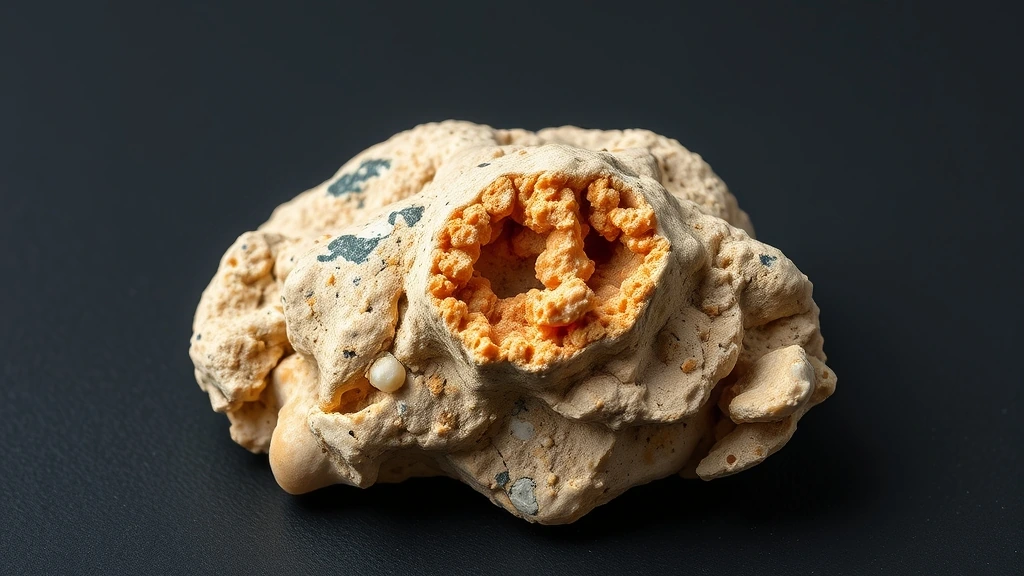
Fossil coral gemstone originates from ancient marine colonies of the order Scleractinia, whose skeletal fragments were buried, lithified, and later altered by mineralizing fluids. Classified within the Natural Mineral / Crystal parent group, its structure is not a true single crystal but an amorphous to cryptocrystalline aggregate of micro‑grains that retain the original coral morphology. This dual nature gives the stone its distinctive organic feel while meeting mineralogical standards.
What is Fossil Coral Gemstone? Geological Overview & Definition
Fossil coral gemstone is the fossilized skeleton of extinct coral organisms, preserved in sedimentary rocks such as limestone or marl. The original aragonite crystals are often replaced by calcite or silica, yet the intricate branching patterns remain recognizable, providing a natural ornamental texture.
In gemological terms, fossil coral is valued for its organic‑mineral hybrid character, combining the warmth of a living organism with the durability of a mineral. It is cut and polished to showcase the vivid color bands that result from mineral inclusions and diagenetic staining, making each piece uniquely patterned.
Fossil Coral Gemstone Chemical Composition & Crystallographic Properties
The fundamental chemistry of fossil coral is CaCO₃, though diagenesis frequently introduces magnesium, iron, and trace elements that substitute into the lattice. These cation substitutions create subtle variations in density and refractive index, influencing the stone’s visual depth.
Crystallographically, fossil coral is amorphous to cryptocrystalline, meaning it lacks a long‑range ordered lattice but consists of microscopic crystal domains too small to be seen without high‑resolution microscopy. This structure accounts for its relatively low hardness and its tendency to fracture conchoidally rather than along cleavage planes.
Because the material is primarily calcium carbonate, it is sensitive to acids; dilute hydrochloric acid will effervesce, confirming the presence of carbonate. However, the mineralized zones that have been replaced by silica or calcite exhibit greater resistance, a diagnostic feature for gemologists.
Color in fossil coral arises from chromophore centers such as iron oxides and organic pigments that infiltrate the porous framework during burial. Thermal treatment can enhance or diminish these hues, but overheating may cause irreversible cracking due to the stone’s low thermal conductivity.
| Property | Specification |
|---|---|
| Mineral Group | Natural Mineral / Crystal |
| Chemical Formula | CaCO₃ (Calcite or Aragonite) |
| Mohs Hardness | 3.0 – 4.0 |
| Crystal System | Trigonal (Calcite) or Orthorhombic (Aragonite) |
| Specific Gravity (Density) | 2.65 – 2.95 |
| Refractive Index | 1.486 – 1.658 |
| Color & Optical Properties | Natural Fossil Coral Gemstone color spectrum and optical dispersion |
| Primary Mining Localities | Global primary localities |
| Water & Chemical Resistance | High (Safe for gentle water washing) |
| Chakra Alignment (Traditional) | Heart Chakra, Sacral Chakra |
| Zodiac Affinity (Traditional) | Cancer, Pisces |
| Symbolic Meaning (Traditional) | Emotional stability, protection from negativity, and connection to ancestral wisdom |
Fossil Coral Gemstone Varieties & Color Spectrum
Red Coral (Corallium rubrum)
Formed in the warm, shallow seas of the Mediterranean during the Miocene, red coral consists of aragonite sclerites bound by an organic matrix. The fossilized skeleton displays a deep ruby‑red hue with occasional white growth bands that indicate seasonal pauses. Its rarity stems from over‑harvesting of living colonies and the limited number of well‑preserved Miocene deposits.
Pink Coral (Corallium sp.)
Pink coral originates mainly from Eocene deposits in the Caribbean and the Indo‑Pacific, where slower growth rates produced a softer rose‑pink coloration. Microscopic siliceous inclusions give the stone a subtle sparkle, distinguishing it from the more vivid red varieties. Because only a few stratigraphic layers contain the right combination of mineralogy and preservation, pink coral remains a collector’s specialty.
White Coral (Corallium sp.)
White coral is the bleached counterpart of red coral, created when diagenetic processes leach iron and manganese from the skeleton. It is most commonly recovered from Oligocene limestone in the Philippines, where the calcitic matrix retains a milky translucency. The lack of color makes it less popular in jewelry, yet its high purity and fine grain structure are prized by scientific collectors.
Black Coral (Antipatharia spp.)
Although technically a marine animal, fossilized black coral appears in Devonian reef deposits of the United Kingdom and Morocco. Its dark, glassy bands result from manganese oxidation within the organic sheath. The material is exceptionally hard, ranking 6–7 on the Mohs scale, and its scarcity in the fossil record adds to its mystique among gem enthusiasts.
Blue‑Green Coral (Corallium sp.)
Rare blue‑green specimens emerge from Cretaceous reef limestones of the Caribbean, where trace amounts of copper and nickel impart a turquoise‑blue sheen. The color is often uneven, creating a marbled effect that is highly sought after for high‑end cabochons. Limited exposure of the relevant strata makes this variety one of the most valuable fossil corals on the market.
Amber‑Tinted Coral (Corallium sp.)
Found in the Eocene deposits of the Red Sea region, amber‑tinted coral displays a warm golden‑amber hue caused by organic carbon impregnation during burial. Thin growth rings are visible under magnification, revealing the coral’s growth history. Its combination of color and historic provenance makes it a favorite for antique jewelry restorations.
Where is Fossil Coral Gemstone Found? Geological Mining & Extraction
Fossil coral is typically recovered from carbonate reef limestones that have undergone diagenesis within stable tectonic basins. In the Mediterranean, miners extract the material from fissile layers of Miocene marl using hand‑picked techniques to avoid fracturing the delicate aragonite framework.
Major extraction zones include the Eocene reefs of the Caribbean, the Oligocene deposits of the Philippines, and the Devonian black‑coral horizons of Morocco. In each locale, quarrying is performed by small‑scale operators who employ controlled blasting and water‑jet separation to isolate the fossilized skeletons from surrounding matrix.
Historical Significance & Cultural Lore of Fossil Coral Gemstone
Ancient Romans prized red fossil coral for its protective properties, embedding it in amulets and signet rings worn by elite soldiers. Archaeological digs in Pompeii have uncovered coral beads in burial caches, indicating its role as a status symbol and a talisman against evil spirits.
In Eastern traditions, especially within Ottoman and Persian courts, fossil coral was linked to the Heart and Sacral chakras, believed to stabilize emotions and channel ancestral wisdom. Folklore records that merchants would trade coral for spices along the Silk Road, a practice that reinforced its reputation as a bridge between material wealth and spiritual insight.
Modern Uses & Jewelry Applications of Fossil Coral Gemstone
Lapidaries typically cut fossil coral into smooth cabochons to highlight its organic, porous texture rather than attempting faceting, which often shatters the delicate matrix. This material is highly valued for ornamental carving, where artisans sculpt intricate figurines, beads, and decorative inlays that celebrate its prehistoric origins. The stone’s earthy tones and unique growth patterns make it a favorite for bohemian and vintage-inspired jewelry designs.
- Cabochon Cutting: Polished domes that emphasize the natural surface relief and fossilized skeletal structures.
- Ornamental Carvings: Detailed sculptures and pendants that showcase the intricate branching patterns of ancient corals.
- Beadwork: Uniformly drilled spheres used in necklaces and bracelets, often paired with silver or gold settings.
- Decorative Inlays: Small, polished pieces set into wood or metal for architectural and artistic ornamentation.
Metaphysical Uses & Origins of Fossil Coral
According to historical traditions and metaphysical lore, fossil coral is revered as a bridge between the living present and the ancestral past. Practitioners believe it fosters emotional stability, helping wearers navigate turbulent feelings with a grounded, steady presence. The stone is said to offer protection from negative energies, acting as a spiritual shield for sensitive individuals.
This ancient organic material is also associated with connection to ancestral wisdom, encouraging introspection and a deeper understanding of one’s heritage. By holding this stone, users may feel a heightened sense of continuity and belonging. It serves as a reminder that life cycles are eternal, promoting patience and resilience during periods of change.
Which Chakra and Zodiac Signs Align with Fossil Coral Gemstone?
In esoteric practice, fossil coral is primarily aligned with the Heart Chakra, where it is believed to open the heart to compassion and unconditional love. This connection supports emotional healing and fosters deep, meaningful relationships. The stone’s earthy energy helps balance the heart’s energy, preventing emotional overload.
Additionally, it resonates strongly with the Sacral Chakra, enhancing creativity and emotional flow. This dual alignment allows the stone to ground spiritual insights while nurturing the body’s creative impulses. Wearers often report a sense of holistic harmony when these two energy centers are balanced.
Astrologically, fossil coral is most compatible with Cancer and Pisces. These water signs share the stone’s intuitive and emotionally sensitive nature. Cancer finds comfort in the stone’s protective qualities, while Pisces appreciates its link to ancestral wisdom.
This alignment supports the natural tendencies of these zodiac signs, amplifying their innate empathy and spiritual awareness. The stone acts as a talisman for emotional security, helping these individuals navigate their complex inner worlds. It reinforces their connection to the past, providing a stable foundation for future growth.
How to Identify Real vs. Fake Fossil Coral Gemstone
The market is flooded with artificial imitations, including synthetic glass, dyed replicas, and modern coral species that mimic fossilized structures. Distinguishing genuine fossil coral requires careful observation of its texture, weight, and internal characteristics. Synthetic versions often lack the natural irregularities and porous surface found in authentic specimens.
Practical At-Home Authenticity Tests
- Temperature Test (Thermal Feel): Genuine fossil coral feels cool to the touch initially but warms up slowly, whereas plastic imitations may feel warmer or have a different thermal conductivity.
- Specific Gravity & Weight Test: Real fossil coral is denser than most plastics; if the piece feels surprisingly light for its size, it may be a synthetic replica.
- Scratch & Hardness Test (Mohs Comparison): Fossil coral has a hardness of approximately 3-4 on the Mohs scale; it should not scratch easily with a steel knife, but it may scratch glass.
- Microscopic & Loupe Inspection (Internal Inclusions): Use a 10x loupe to look for natural pores, fossilized skeletal structures, and irregular color zoning; synthetic glass often contains bubbles or uniform, artificial patterns.
Fossil Coral Gemstone Valuation Factors, Grading & Pricing
The primary driver of value is Color Saturation, specifically deep reds or vibrant oranges with consistent tone. Uniformity across the stone significantly enhances its aesthetic appeal and market desirability. High optical clarity and a polished luster further distinguish premium specimens from lower-grade material.
Carat Weight influences pricing, though large, unfractured pieces command a substantial premium due to rarity. Facet symmetry is critical for cut stones, ensuring light reflection and visual balance. The presence of matrix or organic inclusions can either detract from value or add unique character, depending on the collector’s preference.
Geographical Provenance Premium often elevates prices for stones from renowned sources like the Mediterranean or Japan. Wholesale values remain stable, but retail margins vary based on craftsmanship and brand prestige. Market trends show steady demand for ethically sourced, ancient specimens with documented history.
How to Clean and Care for Fossil Coral Gemstone
To maintain the integrity of your fossil coral, always use warm soapy water and a soft, lint-free cloth. Gently wipe the surface to remove oils and dust without applying excessive pressure. This method effectively cleans the stone while preserving its delicate organic structure.
It is crucial to avoid ultrasonic cleaners entirely, as vibrations can cause structural fractures in the fossilized matrix. Do not submerge the gemstone in harsh chemicals or abrasive solutions. Proper storage in a padded jewelry box prevents scratches and accidental impact damage.
Cleansing and Recharging Fossil Coral Gemstone (Energetic Care)
For energetic cleansing, utilize dry methods that respect the stone’s sensitivity to moisture and vibration. Smoke smudging with sage or palo santo is an effective, non-invasive technique to clear negative energy. Alternatively, placing the gemstone on a selenite plate overnight allows for gentle purification without physical contact.
Moonlight exposure is another safe recharging method, aligning with the stone’s association with the Heart Chakra. Leave the fossil coral in a window sill during a full moon for several hours. This passive approach ensures the stone remains dry and structurally sound while absorbing lunar energy.
Frequently Asked Questions About Fossil Coral Gemstone
Is fossil coral safe to wear in the shower?
Yes, it is generally safe for gentle water washing. Fossil coral possesses high water resistance, allowing it to withstand brief exposure to moisture without immediate damage. However, prolonged soaking or exposure to harsh chemicals should be avoided to preserve the stone’s structural integrity and natural luster over time.
Can I clean fossil coral in an ultrasonic cleaner?
No, you must avoid ultrasonic cleaners for this gemstone. The intense vibrations can cause structural fractures within the fossilized matrix, leading to irreversible damage. Instead, use warm soapy water and a soft cloth to gently clean the surface, ensuring the delicate organic structure remains intact and secure.
Which zodiac signs are aligned with fossil coral?
Fossil coral is primarily aligned with Cancer and Pisces. These water signs resonate deeply with the stone’s protective and stabilizing energies, enhancing emotional balance. Wearing this gemstone can help these individuals connect with their ancestral wisdom and maintain a sense of calm in turbulent emotional environments.
What chakras does fossil coral activate?
It activates the Heart Chakra and Sacral Chakra. This dual alignment supports emotional stability and fosters a deep connection to ancestral wisdom. By balancing these energy centers, the stone helps protect the wearer from negativity while promoting a harmonious flow of creative and loving energy.
How should I store my fossil coral jewelry?
Store it in a soft pouch or separate compartment. Fossil coral is an organic gemstone susceptible to scratches from harder minerals like quartz or topaz. Keeping it isolated prevents surface abrasion and maintains the intricate details of the fossilized coral skeleton, ensuring its aesthetic longevity and value.
Is fossil coral a true mineral or organic gemstone?
It is an organic gemstone formed from ancient coral skeletons. Unlike crystalline minerals, it consists of calcium carbonate deposited by marine organisms over millions of years. This unique biogenic origin gives it distinct structural properties, requiring careful handling that differs from traditional silicate-based gemstones.
What is the hardness of fossil coral on the Mohs scale?
It typically ranges between 3 and 4 on the Mohs scale. This relatively low hardness makes it vulnerable to scratching and chipping during daily wear. You should remove the jewelry before engaging in physical activities or handling rough surfaces to prevent permanent damage to the delicate fossilized structure.
How can I identify genuine fossil coral?
Look for distinct growth lines and cellular structures. Genuine pieces display intricate, natural patterns formed by ancient polyps, which are absent in synthetic imitations. A professional appraisal can confirm authenticity by examining the fossilized matrix and verifying the geological consistency of the calcium carbonate composition.