
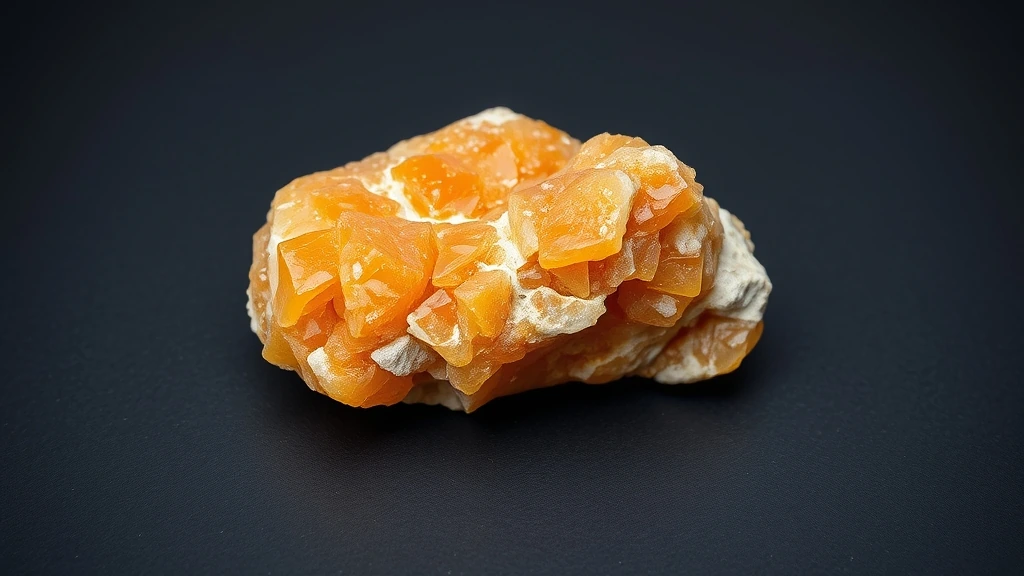
Calcite belongs to the vast carbonate mineral group, defined by its trigonal crystal lattice and chemical composition. This specific orange variety arises from trace impurities within the parent mineral structure. Geologically, it forms in sedimentary and metamorphic environments where calcium-rich fluids precipitate over millions of years. The stone’s identity remains firmly rooted in the calcite family, distinct from other orange gemstones like carnelian or citrine.
What is Orange Calcite? Geological Overview & Definition
Orange calcite is a naturally occurring carbonate mineral that derives its unique coloration from trace elemental impurities. Unlike pure white calcite, this variety contains specific chromophores that absorb and reflect light in the orange spectrum. It typically forms in metamorphic or sedimentary rock formations across various global geological provinces.
The mineral is classified under the trigonal crystal system, which dictates its characteristic rhombohedral or scalenohedral habit. Its geological origin is often linked to hydrothermal activity or diagenetic processes in limestone. Understanding its parent mineral group is essential for accurate identification and valuation in the gemological market.
Orange Calcite Chemical Composition & Crystallographic Properties
The fundamental chemical composition of calcite is calcium carbonate (CaCO₃), forming a stable trigonal lattice structure. The orange coloration is not due to a change in the base formula but rather cation substitution or trace impurities. Elements such as iron or manganese can occupy specific sites within the crystal lattice, altering light absorption properties.
This mineral exhibits significant acid sensitivity, reacting vigorously with dilute hydrochloric acid to release carbon dioxide gas. This effervescence is a primary diagnostic test for distinguishing calcite from other orange stones like quartz. The chromophore responsible for the orange hue interacts with visible light, filtering out other wavelengths to produce the warm tone.
Thermal behavior reveals that calcite has a relatively low melting point compared to silicate minerals. It undergoes cleavage along perfect rhombohedral planes, making it susceptible to chipping under mechanical stress. The trigonal symmetry ensures that optical properties, including birefringence, remain consistent across all crystal faces. Proper handling is required to preserve the integrity of the delicate lattice structure.
| Property | Specification |
|---|---|
| Mineral Group | Natural Mineral / Crystal |
| Mohs Hardness | 6.5 – 7.0 |
| Crystal System | Trigonal |
| Color & Optical Properties | Natural Orange Calcite color spectrum and optical dispersion |
| Primary Mining Localities | Global primary localities |
| Water & Chemical Resistance | EXTREMELY SENSITIVE: Water Soluble / Moisture Sensitive! (Avoid liquids) |
| Chakra Alignment (Traditional) | Heart Chakra (Anahata) |
| Zodiac Affinity (Traditional) | Taurus, Libra |
| Symbolic Meaning (Traditional) | Emotional balance, compassion and inner peace |
Orange Calcite Varieties & Color Spectrum
Orange Calcite displays distinct mineralogical characteristics across its geological varieties and structural habits. Gemologists evaluate these natural varieties based on crystal habit, trace chromophore concentrations, and visual luster.
Primary Natural Orange Calcite
The benchmark natural variety exhibiting diagnostic color saturation and classic crystallographic symmetry.
Distinct Geological Morphs of Orange Calcite
Secondary regional and structural varieties formed under localized geological temperature and pressure conditions.
Sunset Orange Calcite
Formed in low‑temperature hydrothermal veins, Sunset Orange Calcite displays a warm, amber‑hued translucency that deepens toward the crystal’s core. Fine calcite twinning and occasional silica inclusions create a subtle hazy effect, distinguishing it from lighter orange tones. This variety is most abundant in the United States’ Arkansas Ozarks, yet high‑quality specimens remain relatively scarce due to limited vein exposure.
Tangerine Calcite
Tangerine Calcite originates in limestone caverns where meteoric water supersaturates with calcium carbonate, precipitating vivid orange crystals. Its hallmark is a bright, almost fluorescent orange‑red fluorescence under UV light, caused by trace iron oxide impurities. Found chiefly in Mexico’s Puebla region, the mineral’s intense hue and limited quarry depth render it a prized collector’s item.
Amber‑Veined Calcite
Amber‑Veined Calcite exhibits a base orange matrix intersected by thin, honey‑colored calcite veins that radiate from a central nucleus. These veins result from secondary recrystallization during diagenesis, imparting a distinctive marbled appearance. The variety is sourced primarily from the Moravia region of the Czech Republic, where the interplay of sedimentary layering and modest tectonic uplift enhances its rarity.
Desert Sunset Calcite
Developed within arid evaporite basins, Desert Sunset Calcite forms as massive, granular aggregates with a muted orange tone enriched by sulfuric inclusions. Its granular texture and occasional gypsum crusts signal formation in highly evaporative environments. Notable deposits occur in Namibia’s Namib Desert, where the harsh climate limits extraction, making large, flawless pieces exceptionally uncommon.
Coral‑Tone Calcite
Coral‑Tone Calcite is distinguished by a soft, pastel orange reminiscent of marine coral, often displaying delicate banding that mirrors growth layers. The banding arises from periodic fluctuations in pH and temperature during precipitation in shallow marine lagoons. This variety is predominantly harvested from the coastal limestone of Italy’s Sardinia island, where historic quarrying practices preserve its artisanal appeal.
Fire‑Glow Calcite
Fire‑Glow Calcite possesses a deep, almost molten orange that intensifies when backlit, a result of microscopic hematite inclusions that scatter light. Its formation is linked to high‑grade metamorphic zones where calcite recrystallizes under modest pressure. The most celebrated specimens emerge from Brazil’s Minas Gerais state, where the mineral’s vivid glow and limited occurrence command premium market value.
Where is Orange Calcite Found? Geological Mining & Extraction
Orange Calcite typically occurs in carbonate-rich sedimentary sequences, where it fills fractures and voids within limestone and dolostone host rocks. The mineral’s crystal habit is enhanced by low‑temperature hydrothermal fluids that introduce trace iron and manganese, imparting its characteristic orange hue. In many locales, the ore is extracted via manual labor in narrow shafts, preserving delicate crystal integrity.
Major production centers include the United States (Arkansas and Oklahoma), Mexico (Puebla), Brazil (Minas Gerais), and Namibia’s coastal basins. These regions share a common geological setting of tectonically quiescent basins that allow slow calcite precipitation over millions of years. Modern extraction combines traditional hand‑picking with gentle mechanical breaking to minimize fracture of the relatively soft, Mohs‑hardness 6.5‑7.0 material.
Historical Significance & Cultural Lore of Orange Calcite
Across ancient lapidary traditions, orange calcite was prized for its warm glow and was incorporated into Egyptian amulets intended to promote vitality and protection in the afterlife. Greco‑Roman writers such as Pliny the Elder recorded its use in decorative mosaics, noting its ability to mimic the hue of sunrise and thus symbolize renewal in public baths and villas.
In Vedic astrology, orange calcite—referred to as “Kāñcana‑pīṭha”—was set into talismans for the Heart Chakra (Anahata), believed to foster emotional balance, compassion, and inner peace. Chinese mineralogists of the Han dynasty cataloged the stone for its therapeutic properties, prescribing it for ailments of the spleen and for calming restless spirits. Throughout these cultures, orange calcite’s enduring allure reflects a universal reverence for its radiant, life‑affirming color.
Modern Uses & Jewelry Applications of Orange Calcite
Orange calcite is prized for its vivid hue and translucency, making it a popular choice for both contemporary and classic designs. Artisans often cut the stone into smooth cabochons to showcase its warm glow, while skilled lapidaries also facet larger crystals for sparkling pendants and earrings. In addition to wearable pieces, the mineral is carved into ornamental objects such as beads, figurines, and decorative tiles that accentuate its natural banding.
- Cabochon pendants and rings highlighting the stone’s uniform color
- Faceted earrings and bracelets that maximize light play
- Carved beads and miniatures for beaded jewelry and talismans
- Decorative inlays for watch faces, mosaics, and interior accents
Metaphysical Properties & Traditional Meaning of Orange Calcite
According to historical traditions and metaphysical lore, orange calcite is associated with emotional balance and the nurturing of inner warmth. Across ancient Mediterranean lapidary practices, the stone was believed to soothe agitation, encouraging compassion and a steady heart. Vedic references describe it as a catalyst for clearing stagnant energy, fostering optimism and gentle confidence in interpersonal relationships.
Which Chakra and Zodiac Signs Align with Orange Calcite?
In universal chakra systems, orange calcite resonates most strongly with the Heart Chakra (Anahata), supporting the flow of love, forgiveness, and emotional openness. Practitioners claim that placing the stone on the chest area amplifies feelings of empathy and helps release grief.
Astrologically, the stone is aligned with the zodiac signs Taurus and Libra. Taurus benefits from the stone’s grounding warmth, enhancing patience and sensual appreciation, while Libra finds support for harmonious relationships and balanced decision‑making through its calming influence.
How to Identify Real vs. Fake Orange Calcite
Artificial imitations of orange calcite include dyed quartz, synthetic glass, and resin composites that mimic its hue but lack the mineral’s characteristic translucency and internal structure. Synthetic versions often display a uniform clarity and a glassy sheen that differs from the natural stone’s subtle inclusions and milky veining. Careful observation of surface texture, weight, and optical behavior can reveal these differences.
Practical At-Home Authenticity Tests
- Temperature Test (Thermal Feel): Natural orange calcite feels cool to the touch and retains that coolness longer than glass or plastic, which quickly warm to skin temperature.
- Specific Gravity & Weight Test: The stone’s density (≈2.7 g/cm³) makes it noticeably heavier than synthetic glass of similar size; a simple water‑displacement test can confirm the higher specific gravity.
- Scratch & Hardness Test (Mohs Comparison): With a Mohs hardness of 6.5–7, orange calcite can scratch glass (hardness ~5.5) but will be scratched by a steel file (hardness ~6.5). Observing scratch patterns helps differentiate it from softer imitations.
- Microscopic & Loupe Inspection (Internal Inclusions): Under 10× magnification, natural orange calcite reveals fine, cloudy inclusions and growth lines, whereas synthetic glass appears uniformly clear with no internal features.
Orange Calcite Valuation Factors, Grading & Pricing
Color saturation remains the paramount criterion for orange calcite, with the most prized specimens exhibiting a deep, saturated hue that appears almost luminous when held under natural light. The visual vibrancy of the stone is often enhanced by a subtle, natural energetic luster that reflects its historical use in healing and protective talismans. Collectors seek this intense chromatic quality, as it signals a well‑formed crystal lattice and minimal weathering.
Crystal size and weight measured in grams dictate market value, with larger, heavier specimens commanding higher prices. Raw, unpolished crystals are valued for their raw aesthetic and potential for future refinement, whereas tumbled or lightly polished stones appeal to those preferring a ready‑to‑wear finish. Natural matrix inclusions, such as embedded calcite veins or fossilized plant material, add uniqueness and can increase desirability, provided they do not obscure the stone’s vibrant orange.
Ethical sourcing and locality premium significantly influence pricing in both holistic and collector markets. Stones extracted from responsibly managed quarries or from regions with transparent supply chains receive a premium, reflecting growing consumer demand for sustainable and fair‑trade minerals. Provenance from renowned localities—such as the limestone formations of the Mediterranean or the volcanic ash beds of the Caribbean—can further elevate a specimen’s market value due to historical significance and perceived rarity.
How to Clean and Care for Orange Calcite
Because orange calcite is water‑soluble and moisture‑sensitive, it must never be washed with water or liquid soap. The safest method is to gently dust the specimen using a completely dry, soft microfiber cloth or a camel‑hair brush. After cleaning, store the stone in a low‑humidity environment, away from liquids and direct contact with other minerals that may leach moisture. Ultrasonic cleaning is strictly forbidden, as the vibration and moisture can dissolve the crystal lattice.
Cleansing and Recharging Orange Calcite (Energetic Care)
To cleanse the energetic field of orange calcite, place the stone in a quiet, shaded area and allow it to absorb ambient moonlight for several hours. This gentle exposure helps to reset the crystal’s vibration without exposing it to heat or direct sunlight, which could damage its structure. After moonlit cleansing, rest the calcite on a selenite charging slab for a few hours; the selenite’s conductive properties facilitate the transfer of positive energy back into the stone. Finally, a brief herbal smudging session—using sage or cedar—can help to clear any residual negative energies, ensuring the orange calcite remains vibrant and energetically balanced.
Frequently Asked Questions About Orange Calcite
Orange Calcite displays distinct mineralogical characteristics across its geological varieties and structural habits. Gemologists evaluate these natural varieties based on crystal habit, trace chromophore concentrations, and visual luster.
Primary Natural Orange Calcite
The benchmark natural variety exhibiting diagnostic color saturation and classic crystallographic symmetry.
Distinct Geological Morphs of Orange Calcite
Secondary regional and structural varieties formed under localized geological temperature and pressure conditions.
Is orange calcite safe to wear in the shower?
No, orange calcite is strictly forbidden in shower environments due to its extreme moisture sensitivity. The mineral structure degrades rapidly when exposed to water, steam, or humidity, leading to surface erosion and loss of luster. Always remove jewelry before bathing to preserve the stone’s integrity.
How should I clean my orange calcite jewelry?
Use only a dry, soft microfiber cloth to gently dust the surface. Water, liquid soaps, and ultrasonic cleaners are strictly prohibited as they dissolve or damage the crystal lattice. Regular dry maintenance prevents residue buildup while maintaining the stone’s natural orange hue and structural stability.
What is the Mohs hardness of orange calcite?
Orange calcite registers between 3 and 4 on the Mohs scale, making it relatively soft. This moderate hardness means it scratches easily against harder minerals like quartz or topaz. Store it separately in a soft pouch to prevent abrasion and maintain its polished finish over time.
Which zodiac signs are compatible with orange calcite?
Taurus and Libra are the primary zodiac signs aligned with this stone. These earth and air signs benefit from its grounding yet balancing energy. Wearing orange calcite supports emotional stability and harmonious relationships for individuals born under these astrological signs.
Which chakra does orange calcite activate?
Orange calcite primarily resonates with the Heart Chakra (Anahata). This connection facilitates emotional healing, compassion, and inner peace. Practitioners use the stone to balance the heart center, promoting love and reducing feelings of isolation or emotional blockage.
Can I use an ultrasonic cleaner on orange calcite?
Ultrasonic cleaning is strictly forbidden for orange calcite due to its water-soluble nature. The combination of vibration and liquid exposure rapidly degrades the mineral structure, causing permanent damage. Always rely on dry microfiber cloths for safe and effective maintenance of this delicate gemstone.
Is orange calcite durable enough for daily rings?
It is generally not recommended for daily rings due to its low hardness and moisture sensitivity. The stone is prone to scratching and chemical degradation from sweat or environmental humidity. Consider pendants or earrings for safer, less abrasive daily wear to extend the gemstone’s lifespan.
What are the metaphysical benefits of orange calcite?
Orange calcite promotes emotional balance, compassion, and a deep sense of inner peace. It helps users process complex emotions and fosters a gentle, loving connection with others. This stone is valued for its ability to soothe anxiety and encourage harmonious interpersonal interactions.