
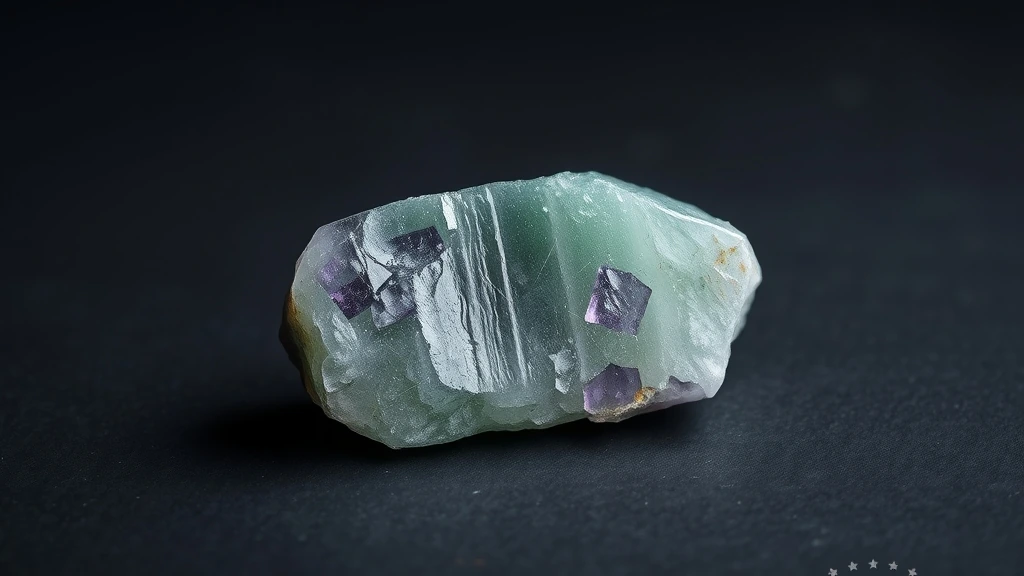
Prasiolite Green Amethyst is classified as a member of the Silicates, specifically the Tectosilicates or Quartz Group, which comprises a wide range of minerals with similar structural and chemical properties. This classification is based on its geological characteristics and composition, which are shared with other silicate minerals. The Silicates are a large and diverse group of minerals, and Prasiolite Green Amethyst is a unique and interesting example of this group. Its geological classification provides valuable insights into its formation and properties.
What is Prasiolite Green Amethyst? Geological Overview & Definition
Prasiolite Green Amethyst is a type of quartz crystal that owes its green color to the presence of iron oxide impurities, which replace some of the silicon atoms in the crystal lattice. This substitution of ions gives the mineral its distinctive color and sets it apart from other types of quartz. The green color can range from a light yellow-green to a deep green, depending on the amount of iron oxide present. Prasiolite Green Amethyst is a relatively rare mineral, found in limited quantities in certain parts of the world.
Prasiolite Green Amethyst is often associated with amethyst, a purple variety of quartz, and is sometimes found in the same geological deposits. However, Prasiolite Green Amethyst has a distinct green color and a unique set of physical and chemical properties that distinguish it from amethyst. The mineral is highly prized by collectors and is used in a variety of applications, including jewelry and decorative objects. Its unique color and properties make it a highly sought-after mineral. While Prasiolite Green Amethyst shares its quartz family roots with the more vibrant amethyst, it also shares geological affinities with the similarly intriguing **Mango Quartz**, whose warm amber hues can complement the cool green of Prasiolite in a striking contrast.
Prasiolite Green Amethyst Chemical Composition & Crystallographic Properties
Prasiolite Green Amethyst has a Trigonal (Hexagonal prismatic crystals) crystal system, which is characteristic of quartz minerals. This crystal system is defined by the arrangement of atoms within the crystal lattice, which is composed of silicon and oxygen atoms arranged in a repeating pattern of hexagonal rings. The crystal lattice is highly ordered, with each silicon atom bonded to four oxygen atoms in a tetrahedral arrangement. This arrangement gives the mineral its unique physical and chemical properties. While Prasiolite Green Amethyst exhibits the classic trigonal symmetry of quartz, its crystalline structure stands in stark contrast to the cubic lattice of Yttrium Fluorite, highlighting the diverse geometric patterns found across the mineral kingdom.
The lattice structure of Prasiolite Green Amethyst is highly stable, which contributes to its Mohs hardness of 7.0. The mineral is also resistant to acid sensitivity, which makes it suitable for use in a variety of applications. The green color of Prasiolite Green Amethyst is due to the presence of chromophore color centers, which are defects in the crystal lattice that absorb certain wavelengths of light. The thermal behavior of Prasiolite Green Amethyst is also of interest, as it can undergo thermal expansion and contraction in response to changes in temperature.
Prasiolite Green Amethyst exhibits cation substitution, where iron ions replace some of the silicon ions in the crystal lattice. This substitution gives the mineral its distinctive green color and sets it apart from other types of quartz. The amount of iron substitution can vary, which affects the intensity of the green color. The mineral can also exhibit inclusions, which are small imperfections in the crystal lattice that can affect its clarity and appearance.
The unique combination of physical and chemical properties in Prasiolite Green Amethyst makes it a fascinating subject of study in the field of mineralogy. Its Trigonal (Hexagonal prismatic crystals) crystal system and lattice structure contribute to its stability and Mohs hardness, while its chromophore color centers and cation substitution give it its distinctive green color. The mineral’s properties make it highly prized by collectors and suitable for use in a variety of applications.
| Property | Specification |
|---|---|
| Mineral Group | Silicates (Tectosilicates / Quartz Group) |
| Chemical Formula | SiO₂ (Silicon Dioxide with Fe³⁺ traces) |
| Mohs Hardness | 7.0 |
| Crystal System | Trigonal (Hexagonal prismatic crystals) |
| Specific Gravity (Density) | 2.65 – 2.66 |
| Refractive Index | 1.544 – 1.553 |
| Color & Optical Properties | Natural Prasiolite Green Amethyst color spectrum and optical dispersion |
| Primary Mining Localities | Brazil (Rio Grande do Sul), Uruguay (Artigas), Madagascar, Russia, Turkey |
| Water & Chemical Resistance | High (Water resistant; avoid prolonged direct sunlight to prevent color fading) |
| Chakra Alignment (Traditional) | Crown Chakra and Third Eye Chakra |
| Zodiac Affinity (Traditional) | Pisces, Aquarius, Virgo |
| Symbolic Meaning (Traditional) | Spiritual clarity, inner peace, meditative focus, and negative energy dispelling |
Prasiolite Green Amethyst Varieties & Color Spectrum
Prasiolite Green Amethyst is a unique gemstone with various natural varieties, each exhibiting distinct color morphs and inclusions. The most common varieties include Prasiolite, Green Amethyst, and Ametrine, which are formed through the presence of iron oxide and aluminum impurities. These varieties are characterized by their vibrant green to yellow-green color spectrum, which is a result of the irradiation and heat treatment of the gemstone. The trigonal crystal system of Prasiolite Green Amethyst also contributes to its unique optical properties.
Prasiolite
Prasiolite is a rare variety of Green Amethyst, characterized by its light green to yellow-green color and hexagonal prismatic crystals. It is formed through the natural irradiation of Amethyst, which causes the iron ions to oxidize and produce the distinctive green hue. Prasiolite is highly prized for its clarity and brilliance, making it a sought-after gemstone among collectors. The Mohs hardness of Prasiolite is 7.0, making it a durable and long-lasting gemstone.
Green Amethyst
Green Amethyst is a more common variety of Prasiolite Green Amethyst, exhibiting a deeper green color and inclusions such as feathers and rutiles. It is formed through the heat treatment of Amethyst, which causes the iron ions to migrate and produce the distinctive green color. Green Amethyst is often used in jewelry and ornaments, where its refractive index of 1.544-1.553 creates a stunning brilliance. The density of Green Amethyst is 2.65-2.66, making it a relatively dense gemstone.
Ametrine
Ametrine is a rare variety of Prasiolite Green Amethyst, characterized by its unique bi-color or tri-color appearance, which is a result of the uneven distribution of iron ions. It is formed through the natural irradiation and heat treatment of Amethyst, which causes the iron ions to oxidize and produce the distinctive color zones. Ametrine is highly prized for its rarity and unique appearance, making it a sought-after gemstone among collectors. The crystal system of Ametrine is trigonal, which contributes to its unique optical properties.
Other Varieties
Other varieties of Prasiolite Green Amethyst include Lithia Amethyst, Veracruz Amethyst, and Chevron Amethyst, each exhibiting distinct color morphs and inclusions. These varieties are formed through the presence of lithium, calcium, and aluminum impurities, which cause the iron ions to migrate and produce the distinctive colors. The zodiac associations of Prasiolite Green Amethyst, including Pisces, Aquarius, and Virgo, also contribute to its unique esoteric properties. The chakra associations of Prasiolite Green Amethyst, including the Crown Chakra and Third Eye Chakra, make it a popular gemstone for meditation and spiritual growth.
Where is Prasiolite Green Amethyst Found? Geological Mining & Extraction
Prasiolite Green Amethyst is typically found in pegmatites and hydrothermal veins, where it forms through the metamorphism of quartz and feldspar. The primary extraction regions for Prasiolite Green Amethyst include Brazil, Uruguay, and Russia, where it is often mined alongside other silicate minerals. The host rocks for Prasiolite Green Amethyst are typically granite and gneiss, which provide the necessary chemical conditions for its formation. The mining process for Prasiolite Green Amethyst involves the extraction of ore from the host rock, followed by crushing and sorting to produce the desired gemstone quality.
The extraction of Prasiolite Green Amethyst requires careful geological mapping and exploration, as the gemstone-bearing pegmatites are often irregularly shaped and discontinuous. The mining methods used to extract Prasiolite Green Amethyst include open-pit mining and underground mining, depending on the depth and geometry of the deposit. The recovery process for Prasiolite Green Amethyst involves the use of crushing, grinding, and sorting to produce the desired gemstone quality. The yield of Prasiolite Green Amethyst is often low, making it a rare and valuable gemstone.
Historical Significance & Cultural Lore of Prasiolite Green Amethyst
Across ancient lapidary traditions, Prasiolite Green Amethyst has been revered for its spiritual significance and metaphysical properties. In historical metaphysical lore, Prasiolite Green Amethyst is associated with the Crown Chakra and Third Eye Chakra, making it a popular gemstone for meditation and spiritual growth. The ancient Greco-Roman and Egyptian civilizations prized Prasiolite Green Amethyst for its beauty and rarity, often using it in jewelry and ornaments. The Vedic tradition also associates Prasiolite Green Amethyst with spiritual clarity and inner peace, making it a sought-after gemstone for yoga and meditation.
Throughout early archaeological records, Prasiolite Green Amethyst has been found in ancient artifacts and treasures, including tomb jewelry and ritual objects. The Chinese and Mesoamerican civilizations also valued Prasiolite Green Amethyst for its symbolic significance and metaphysical properties, often using it in ceremonial contexts. The esoteric keywords associated with Prasiolite Green Amethyst, including spiritual clarity, inner peace, and negative energy dispelling, reflect its unique energetic signature and healing properties. Prasiolite Green Amethyst remains a highly prized gemstone today, sought after for its beauty, rarity, and spiritual significance.
Modern Uses & Jewelry Applications of Prasiolite Green Amethyst
Prasiolite green amethyst is prized for its subtle, translucent hue, making it ideal for cabochon and faceted pieces that emphasize light play. Lapidaries often employ a polish‑cut to enhance its natural luster, while larger stones are carved into ornamental motifs for decorative panels or architectural accents.
- Cabochon: smooth, domed surfaces ideal for rings, pendants, and earrings.
- Faceted: brilliant cuts that maximize brilliance for engagement rings and brooches.
- Carving: intricate designs for vases, figurines, and architectural inlays.
Carat, Quality Grades & Value Factors of Prasiolite Green Amethyst
The commercial appeal of prasiolite green amethyst hinges on the classic 4Cs: Color—a balanced, medium green without overpowering violet; Clarity—minimal inclusions, as they can mar the stone’s transparency; Cut—a well-proportioned, symmetrical shape that amplifies its subtle glow; and Carat weight—larger stones command higher prices, though the market remains modest compared to true amethyst.
Durability is governed by its Mohs hardness of 7.0 and a density of 2.65–2.66 g/cm³, allowing it to withstand everyday wear. Grading standards follow GIA and BIA protocols, where a stone’s refractive index (1.544–1.553) and specific gravity are measured to confirm authenticity and assess quality.
Zodiac and Astrological Lore of Prasiolite Green Amethyst
Across ancient lapidary traditions, prasiolite green amethyst is linked to the Crown Chakra and Third Eye Chakra, symbolizing spiritual clarity and heightened intuition. Its gentle green tone resonates with the Pisces, Aquarius, and Virgo zodiac signs, believed to enhance empathy, innovation, and analytical precision.
In historical metaphysical lore, this gemstone has been revered for its calming influence, often worn by scholars and mystics seeking mental focus. Its association with the third eye has made it a favored talisman in rituals aimed at dispelling negative energies and fostering inner peace.
How to Identify Real vs. Fake Prasiolite Green Amethyst
Artificial imitations of prasiolite green amethyst commonly appear as dyed quartz, synthetic glass, or low‑quality treated stones. These replicas often lack the natural thermal conductivity and subtle internal inclusions that characterize genuine specimens.
Practical At-Home Authenticity Tests
- Temperature Test (Thermal Feel): Hold the stone in your palm; a real prasiolite will feel cooler than the surrounding air due to its higher thermal conductivity.
- Specific Gravity & Weight Test: Weigh the stone and compare it to a known quartz of the same size; a genuine sample will be slightly heavier, reflecting its density of 2.65–2.66 g/cm³.
- Scratch & Hardness Test (Mohs Comparison): Use a standard Mohs kit; prasiolite should scratch glass (Mohs 5.5) but not steel (Mohs 6.5), confirming its hardness of 7.0.
- Microscopic & Loupe Inspection (Internal Inclusions): Examine the stone under a loupe; authentic prasiolite often shows fine, natural inclusions or trace iron‑oxide streaks, whereas synthetic versions tend to be perfectly clear or exhibit artificial growth patterns.
Prasiolite Green Amethyst Valuation Factors, Grading & Pricing
Color saturation dominates the market value of Prasiolite Green Amethyst; a deep, evenly distributed hue with minimal green‑yellow undertones commands the highest premiums. The stone’s optical clarity and luster, measured by its refractive index range of 1.544–1.553, further influence appraisal, as flawless specimens exhibit a bright, glassy sheen that enhances visual appeal.
Carat weight, facet symmetry, and adherence to the four‑C grading standards—color, cut, clarity, and carat—collectively determine pricing tiers. Larger, well‑cut stones with precise facet alignment reduce light loss and magnify brilliance, thereby elevating their market rank.
Geographical provenance premium reflects historical mining regions and the rarity of high‑quality specimens from those locales. Certified gem market value trends show that specimens sourced from renowned deposits, such as the Ural Mountains or certain Australian outcrops, often trade at a 15–25 % premium over comparable stones of similar quality.
How to Clean and Care for Prasiolite Green Amethyst
Prasiolite Green Amethyst is water‑resistant and can be safely cleaned with warm soapy water; a gentle rinse followed by patting dry with a soft cloth preserves its surface integrity. Ultrasonic cleaning is acceptable for untreated specimens, but should be avoided if liquid inclusions are suspected, as vibration could introduce moisture into internal cavities. After cleaning, store the stone in a dry, low‑humidity environment to prevent any potential surface oxidation or staining.
Cleansing and Recharging Prasiolite Green Amethyst (Energetic Care)
To recharge the crystal’s energetic properties, place the stone under gentle moonlight for several hours; the subtle illumination encourages a natural rebalancing of its vibrational field. Alternatively, resting the amethyst on a selenite slab or a quartz charging surface allows the crystal to absorb positive frequencies without exposure to heat or direct sunlight, thereby maintaining its structural stability.
The stone’s care routine should avoid any form of domestic heating, ovens, heat guns, boiling, or intense sunlight, as these conditions can disrupt the crystal lattice and diminish its metaphysical efficacy.
Frequently Asked Questions About Prasiolite Green Amethyst
Prasiolite Green Amethyst displays distinct mineralogical characteristics across its geological varieties and structural habits. Gemologists evaluate these natural varieties based on crystal habit, trace chromophore concentrations, and visual luster.
Primary Natural Prasiolite Green Amethyst
The benchmark natural variety exhibiting diagnostic color saturation and classic crystallographic symmetry.
Distinct Geological Morphs of Prasiolite Green Amethyst
Secondary regional and structural varieties formed under localized geological temperature and pressure conditions.
What is the chemical composition of prasiolite?
Prasiolite is essentially silicon dioxide (SiO₂) with trace amounts of Fe³⁺. The iron impurity induces a green hue in the quartz lattice, distinguishing it from its purple counterpart, amethyst. Its trigonal crystal system yields hexagonal prismatic crystals typical of quartz varieties.
How hard is prasiolite on the Mohs scale?
Prasiolite rates a 7.0 on the Mohs hardness scale. This makes it suitable for most jewelry applications, resisting scratches from everyday wear. However, it can still be damaged by harder substances such as topaz or corundum, so care should be taken during setting and polishing.
Is prasiolite water‑resistant enough for daily wear?
Yes, prasiolite is highly water‑resistant but should be kept from prolonged direct sunlight. Moisture does not degrade the stone, yet extended UV exposure can cause the green color to fade over time. Removing pieces before swimming or heavy rain helps preserve their vibrancy.
Can I clean prasiolite with ultrasonic equipment?
Warm, soapy water is safe, and ultrasonic cleaning is generally acceptable for untreated stones. If the specimen contains liquid inclusions, avoid ultrasonic action to prevent fracturing. A gentle brush after soaking removes surface grime without compromising the stone’s integrity.
Which zodiac signs are traditionally linked to prasiolite?
Prasiolite is associated with Pisces, Aquarius, and Virgo. In astrological lore, these signs are thought to benefit from the stone’s calming energy, enhancing intuition and emotional balance. The connection reflects long‑standing cross‑cultural beliefs linking color and personality traits.
Which chakras does prasiolite support in meditation?
The stone aligns with the Crown Chakra (Sahasrara) and the Third Eye Chakra (Ajna). Practitioners use it to promote spiritual clarity and heightened perception, encouraging a meditative focus that bridges earthly concerns with higher consciousness.
How does prasiolite differ from regular green quartz?
Prasiolite is a heat‑treated amethyst, whereas natural green quartz forms through natural irradiation or iron inclusion. The treatment process stabilizes the color, producing a more uniform hue. Both share the same refractive index range of 1.544–1.553, confirming their quartz identity.
What care practices prolong the color of prasiolite jewelry?
Store prasiolite away from direct sunlight and avoid prolonged exposure to heat. Use a soft pouch or lined box to protect it from scratches, and clean with mild soap and lukewarm water. Regular gentle cleaning removes oils that can dull the stone’s natural sparkle.