
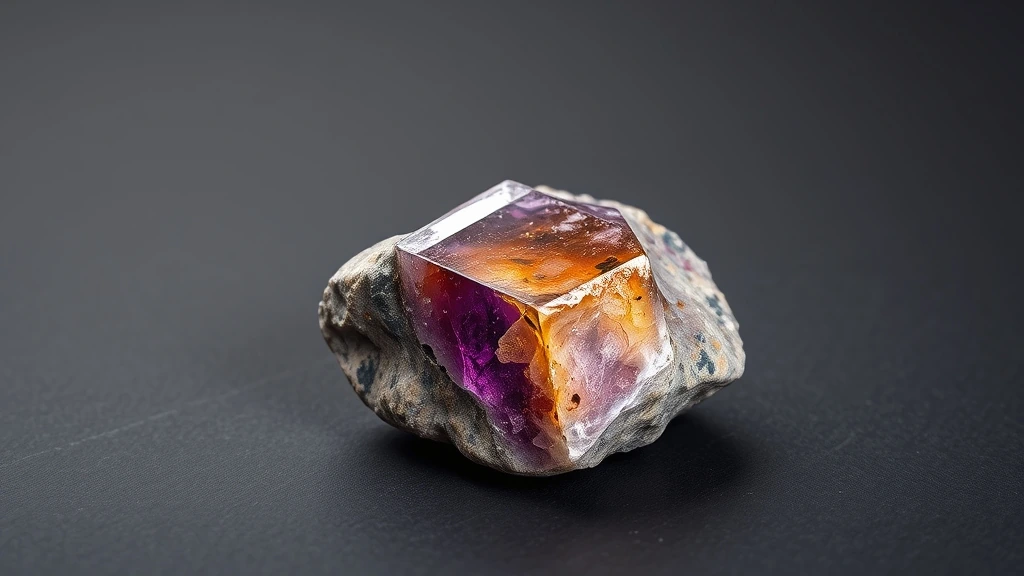
Ametrine belongs to the Natural Mineral / Crystal group, specifically classified as a gem-quality variety of quartz. It forms through the complex interplay of trace element substitutions within the crystalline lattice. This geological origin distinguishes it from synthetic counterparts, ensuring its authenticity in the gemological market. Its formation is tightly linked to specific tectonic and hydrothermal conditions found in limited global deposits.
What is Ametrine Gemstone? Geological Overview & Definition
Ametrine is a naturally occurring bicolor quartz that displays distinct zones of violet and yellow-orange hues. This unique coloration results from the simultaneous presence of different chromophores within the same crystal structure. It is geologically significant as it represents a rare intersection of two common quartz varieties.
The stone is primarily sourced from the Anahí mine in Bolivia, where specific geological conditions facilitated its formation. Unlike standard amethyst or citrine, ametrine requires precise trace element concentrations to achieve its dual-tone appearance. This rarity elevates its status among collectors and gemologists worldwide. Understanding its origin is crucial for accurate identification and valuation.
Ametrine Gemstone Chemical Composition & Crystallographic Properties
Ametrine crystallizes in the Trigonal crystal system, sharing the fundamental lattice structure of feldspar. Its chemical formula is strictly potassium aluminum silicate (KAlSi₃O₈), with a specific gravity of 2.54. The crystal habit often exhibits tabular prisms terminated by pinacoidal faces, characteristic of this system. This structural consistency ensures predictable physical properties across all specimens.
The coloration arises from cation substitution and irradiation-induced defects. Violet zones are caused by aluminum substituting for silicon, creating color centers. Orange zones result from iron impurities and natural irradiation, similar to citrine. These distinct chromophore mechanisms operate independently within the same crystal lattice.
Optically, ametrine is uniaxial positive, with a refractive index ranging from 1.543 to 1.554. It exhibits weak birefringence, which can be observed under polarized light. The stone is chemically stable but sensitive to extreme thermal shock. Proper handling is essential to prevent fracturing along cleavage planes.
Thermal behavior reveals that ametrine is generally stable under normal jewelry conditions. However, high heat can alter the color centers, potentially shifting the hue. Acid sensitivity is low, as silica is resistant to most weak acids. This durability makes it suitable for long-term wear and display.
| Property | Specification |
|---|---|
| Mineral Group | Natural Mineral / Crystal |
| Chemical Formula | SiO₂ (Silicon Dioxide) |
| Mohs Hardness | 7 |
| Crystal System | Trigonal |
| Specific Gravity (Density) | 2.65 |
| Refractive Index | n ω = 1.543–1.553 n ε = 1.552–1.554 |
| Color & Optical Properties | Natural Ametrine Gemstone color spectrum and optical dispersion |
| Primary Mining Localities | Global primary localities |
| Water & Chemical Resistance | High (Safe for gentle water washing) |
| Chakra Alignment (Traditional) | Heart Chakra, Throat Chakra |
| Zodiac Affinity (Traditional) | Taurus, Libra |
| Symbolic Meaning (Traditional) | Harmony, balance, and emotional clarity |
Ametrine Gemstone Varieties & Color Spectrum
Ametrine is a unique bicolored quartz variety that exhibits a distinct transition between purple amethyst and yellow citrine hues. This natural gemstone forms when iron impurities interact with specific geological conditions within the same crystal lattice. The interplay of these colors creates a striking visual contrast that distinguishes it from single-color quartz varieties.
Classic Bicolor Ametrine
This primary variety features a clear demarcation or gradient between purple and yellow zones within a single stone. The color zoning results from varying concentrations of iron and manganese during the crystal growth phase. High-quality specimens display vibrant, saturated tones without significant cloudiness or visible inclusions.
Deep Purple Dominant
In this morph, the amethyst component occupies the majority of the crystal’s volume, offering a rich violet intensity. The yellow citrine areas appear as subtle accents rather than equal partners in the color spectrum. These stones are highly prized for their deep, royal purple saturation and elegant appearance.
Citrine Dominant
This variety showcases a strong golden-yellow base with distinct patches of purple amethyst. The dominance of citrine gives the stone a warm, sunny aesthetic that appeals to collectors. The purple zones often appear as sharp, angular inclusions within the yellow matrix.
Gradient Transition Type
Here, the colors blend seamlessly without a hard boundary, creating a smooth spectral shift from violet to gold. This rare formation requires precise thermal and chemical stability during the crystallization process. The resulting visual effect is often described as a natural sunset captured in stone.
High Clarity Premium
These top-tier specimens exhibit exceptional transparency with minimal internal fractures or mineral inclusions. The absence of “jardin” allows light to penetrate deeply, enhancing the brilliance of both color zones. Such clarity is a critical factor in determining the gemstone’s market value.
Where is Ametrine Gemstone Found? Geological Mining & Extraction
Ametrine is exclusively mined from the Anahí Mine in the Andes Mountains of the Puna region in Argentina. This unique deposit is situated at a high altitude, where specific tectonic pressures facilitated the formation of these bicolored crystals. The mine is the only known source of natural ametrine, making its supply geographically restricted.
The gemstones are extracted from large pegmatite veins that contain coarse-grained quartz crystals. Miners carefully hand-select the crystals to preserve the integrity of the color zoning and structural clarity. The remote location and challenging mining conditions contribute to the gemstone’s relative rarity in the global market.
Historical Significance & Cultural Lore of Ametrine Gemstone
Although ametrine is a modern commercial discovery, its constituent minerals have deep historical roots in South American cultures. Indigenous peoples of the Andes revered quartz varieties for their spiritual properties and protective qualities. Archaeological evidence suggests that amethyst and citrine were used in ceremonial objects and jewelry for centuries.
The specific bicolored variety was first identified and marketed in the late 20th century, gaining international recognition. Its name combines “amethyst” and “citrine,” reflecting its dual nature and unique aesthetic appeal. Today, it is celebrated as a symbol of balance and harmony in contemporary gemology.
Modern Uses & Jewelry Applications of Ametrine Gemstone
Lapidaries prize ametrine for its exceptional clarity and vibrant dual-tone coloration, which allows for versatile cutting styles. The stone’s Mohs hardness of 7 makes it durable enough for everyday wear in rings and pendants. Faceted cuts maximize the interplay between the purple and green zones, while cabochons highlight the stone’s smooth luster.
- Faceted Jewelry: Ideal for engagement rings, earrings, and necklaces where brilliance is paramount.
- Cabochon Carvings: Used for intaglio seals and smooth, polished beads that emphasize color saturation.
- Ornamental Objects: Carved into decorative boxes, vases, and architectural accents for high-end interiors.
- Mixed-Metal Settings: Pairs beautifully with yellow gold to enhance warmth or white gold for contrast.
Metaphysical Properties & Traditional Meaning of Ametrine Gemstone
According to historical traditions and metaphysical lore, ametrine is revered as a stone of profound spiritual balance. Practitioners believe it harmonizes the masculine and feminine energies within the wearer, promoting inner peace. The unique blend of amethyst and citrine is said to amplify intuitive clarity while simultaneously boosting personal confidence.
This gemstone is often associated with emotional healing and the release of negative patterns. Users report a sense of grounded stability combined with uplifting optimism. It is frequently used in meditation to align the mind and spirit, fostering a state of emotional equilibrium.
Which Chakra and Zodiac Signs Align with Ametrine Gemstone?
In chakra theory, ametrine uniquely bridges the Root Chakra and the Heart Chakra. This dual alignment allows the stone to ground the wearer’s energy while simultaneously opening the heart to love and compassion. Such a connection is rare, making ametrine a powerful tool for holistic energy balancing.
Astrologically, this gemstone resonates strongly with Taurus, Gemini, and Leo. Taurus appreciates its grounding qualities, while Gemini benefits from its mental clarity. Leo is drawn to its vibrant energy and capacity to enhance personal charisma and creative expression.
How to Identify Real vs. Fake Ametrine Gemstone
Distinguishing genuine ametrine from imitations requires careful observation of its physical properties. Common fakes include synthetic glass, dyed quartz, or lab-created crystals that mimic the natural color zoning. Unlike natural stones, these replicas often lack the subtle variations and internal complexity found in geological formations.
Practical At-Home Authenticity Tests
- Temperature Test (Thermal Feel): Hold the stone in your palm; genuine ametrine feels cool to the touch initially, whereas plastic or glass warms up quickly.
- Specific Gravity & Weight Test: Ametrine has a density of 2.65, making it feel heavier than similarly sized glass or plastic imitations.
- Scratch & Hardness Test (Mohs Comparison): With a Mohs hardness of 7, ametrine will not be scratched by steel, but it may scratch glass.
- Microscopic & Loupe Inspection (Internal Inclusions): Use a 10x loupe to look for natural inclusions or color zoning; synthetic glass often contains bubbles or is perfectly uniform.
Ametrine Gemstone Valuation Factors, Grading & Pricing
The primary driver of value is Color Saturation, which must exhibit a vibrant, even blend of purple and yellow hues. Gemologists assess tone uniformity to ensure the stone lacks muddy or washed-out areas. High optical clarity and a brilliant vitreous luster further enhance the gem’s visual appeal and market desirability.
Carat Weight significantly influences pricing, as larger, high-quality specimens are increasingly rare in the global market. Precise facet symmetry maximizes light return, creating the distinctive “fire” associated with top-grade ametrine. The presence of visible matrix or internal inclusions generally reduces the stone’s overall valuation and commercial appeal.
Geographical Provenance Premium often applies to stones from the renowned Anahi mine in Bolivia, commanding higher wholesale prices. Retail market value trends reflect steady demand for this unique bicolored quartz variety, ensuring consistent appreciation. Buyers should verify origin documentation to guarantee they are paying for authentic, high-provenance material.
How to Clean and Care for Ametrine Gemstone
For routine maintenance, immerse the gem in warm soapy water and gently agitate with a soft cloth. This method effectively removes surface oils and dust without damaging the stone’s delicate surface. Rinse thoroughly under lukewarm running water to eliminate any residual soap before drying.
Ametrine is safe for ultrasonic cleaning, which can dislodge stubborn debris from hard-to-reach facet junctions. However, always inspect the setting first, as ultrasonic vibrations may loosen prongs or damage softer accent stones. Avoid harsh chemical solvents or extreme temperature changes to preserve the gem’s integrity and luster.
Cleansing and Recharging Ametrine Gemstone (Energetic Care)
To cleanse ametrine energetically, use smoke smudging with sage or palo santo, allowing the aromatic smoke to pass over the stone. This dry method avoids water exposure entirely, respecting the mineral’s physical properties while clearing perceived negative energy. Ensure the area is well-ventilated to prevent any residue from settling on the gem’s surface.
For recharging, place the gem on a selenite plate or expose it to moonlight overnight. These methods harness natural energy without risking physical damage or chemical interaction. Keep the stone in a dry, secure location to maintain its structural stability and vibrant color.
Frequently Asked Questions About Ametrine Gemstone
What is the chemical composition of ametrine?
Ametrine is composed entirely of silica, making it a bicolored variety of quartz. Its unique coloration arises from trace impurities of aluminum and iron within the crystal lattice. This composition ensures high stability and durability for jewelry use.
How hard is ametrine on the Mohs scale?
Ametrine registers a Mohs hardness of 7, indicating significant resistance to scratching. This makes it suitable for daily wear in rings and bracelets. However, it remains susceptible to damage from harder minerals like diamond or ruby.
Can I clean ametrine in an ultrasonic cleaner?
Yes, ametrine is safe for ultrasonic cleaning due to its robust crystal structure. For routine maintenance, use warm soapy water and a soft cloth. Avoid harsh chemicals that might degrade any surface treatments or settings.
Is ametrine safe to wear in the shower?
Ametrine has high water resistance and is safe for gentle washing. You can wear it during showers or while swimming without fear of dissolution. Just ensure the setting is secure to prevent accidental loss during activities.
Which zodiac signs are aligned with ametrine?
Ametrine is traditionally associated with Taurus, Gemini, and Leo. These signs are believed to resonate with the stone’s balanced energy. Wearing ametrine may enhance personal traits linked to these astrological profiles.
Which chakras does ametrine activate?
Ametrine primarily activates the Heart Chakra, Throat Chakra. This dual alignment bridges physical stability with emotional openness. It is valued in metaphysical practices for promoting holistic balance and grounding.
What is the crystal system of ametrine?
Ametrine crystallizes in the triclinic system, typical of quartz varieties. Its refractive index ranges from 1.543 to 1.554, contributing to its vitreous luster. This structure supports its clarity and brilliance in faceted cuts.
What is the specific gravity of ametrine?
Ametrine has a density of 2.65, which helps distinguish it from other gemstones. This value is consistent with pure quartz varieties. Gemologists use this metric alongside refractive index for accurate identification.