
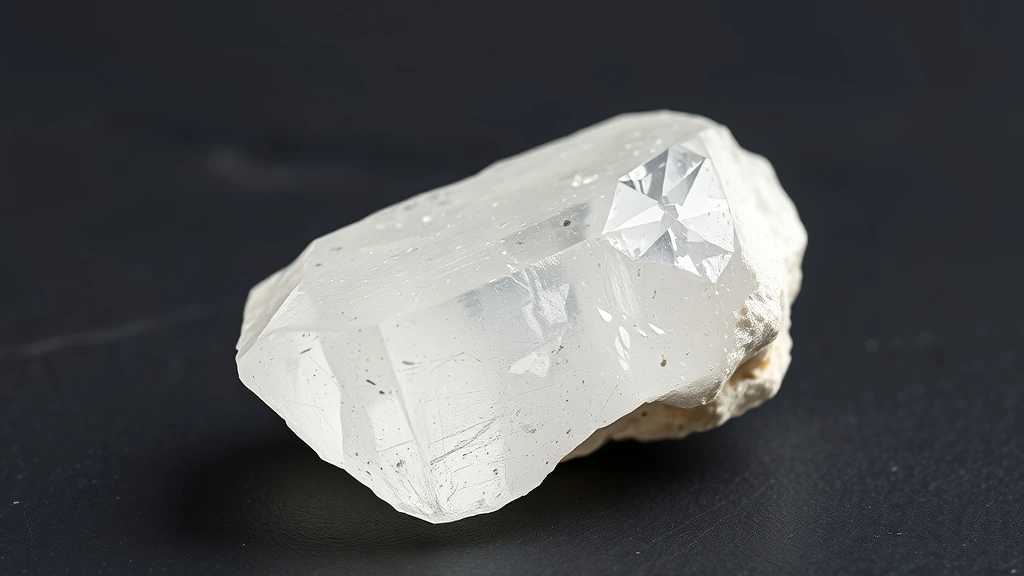
Herkimer Diamonds are a distinctive variety of tectosilicate quartz that form in the trigonal (rhombohedral/trapezohedral) crystal system. They occur in Cambrian‑age dolostone fissures of the Herkimer County, New York, where silica‑rich fluids precipitated double‑ended prisms up to 10 cm long. Their clarity and natural terminations set them apart from synthetic or milky quartz, and they are prized for both gemological and metaphysical applications.
What is Herkimer Diamond Quartz Gemstone? Geological Overview & Definition
Herkimer Diamonds are natural double‑terminated quartz crystals that develop within fissure fillings of the Little Falls Formation. Unlike typical quartz, they grow free of a host matrix, resulting in two perfectly formed terminations that enhance light reflection and visual brilliance.
The stones are tectosilicates belonging to the quartz group, characterized by a three‑dimensional SiO₄ tetrahedral framework. Their formation required low‑temperature hydrothermal conditions (≈ 50–150 °C) and silica‑saturated waters, which allowed the crystals to elongate without interruption, producing the famed “diamonds” of upstate New York.
Herkimer Diamond Quartz Gemstone Chemical Composition & Crystallographic Properties
The chemical formula is SiO₂, with trace amounts of Ti, Al, Fe, and Mn that can create subtle color zones. These minor cation substitutions occupy interstitial sites in the trigonal lattice, slightly distorting the ideal Si–O bond lengths but preserving overall symmetry.
Crystallographically, Herkimer Diamonds belong to the trigonal (rhombohedral/trapezohedral) system, space group P3₁21 or P3₂21. Their unit cell parameters average a ≈ 4.913 Å and c ≈ 5.405 Å, forming six‑sided prisms terminated by pyramidal faces. This geometry yields the characteristic double‑ended habit and contributes to their high optical clarity.
Acid sensitivity is low; concentrated hydrofluoric acid can etch quartz, but dilute HCl or H₂SO₄ have negligible effect. The crystal’s resistance to chemical attack underpins its durability in both jewelry settings and industrial applications.
Color in Herkimer Diamonds arises from color centers—electron or hole traps created by radiation or impurity complexes. These centers absorb specific wavelengths, producing the occasional pale yellow, brown, or gray hues, while the majority remain colorless due to the absence of strong chromophores.
Thermally, quartz undergoes the α‑β transition near 573 °C, where the trigonal α‑quartz transforms to hexagonal β‑quartz. Herkimer Diamonds retain their trigonal symmetry up to this temperature, after which reversible expansion occurs; rapid heating can induce microfractures, so controlled annealing is essential for any heat‑treatment processes.
| Property | Specification |
|---|---|
| Mineral Group | Silicates (Tectosilicates / Quartz Group) |
| Chemical Formula | SiO₂ (Silicon Dioxide) |
| Mohs Hardness | 7.0 |
| Crystal System | Trigonal (Rhombohedral / Trapezohedral) |
| Specific Gravity (Density) | 2.65 |
| Refractive Index | 1.544 – 1.553 |
| Color & Optical Properties | Natural Herkimer Diamond Quartz Gemstone color spectrum and optical dispersion |
| Primary Mining Localities | Brazil, Madagascar, USA (Arkansas), Swiss Alps |
| Water & Chemical Resistance | High (Fully resistant to water and moisture) |
| Chakra Alignment (Traditional) | All Chakras (Universal Harmonizer) |
| Zodiac Affinity (Traditional) | All Zodiac Signs (Especially Leo and Aries) |
| Symbolic Meaning (Traditional) | Master energy amplifier, clarity, purification, and focus |
Quartz Varieties & Comprehensive Sub-Types
Amethyst
Amethyst forms in low‑temperature hydrothermal veins where silica‑rich fluids encounter iron‑bearing host rocks. The characteristic violet hue arises from Fe⁴⁺ (FeO₄)⁴⁻ color centers produced by natural irradiation. Macrocrystalline crystals display parallel banding and feather‑like inclusions, and the stone rates a Mohs hardness of 7.0, making it a staple in the global trade for crown‑chakra and third‑eye applications.
Citrine
Citrine develops in the same geological settings as amethyst but requires heat‑induced oxidation of Fe³⁺ to yield its golden‑yellow to amber tones. Naturally occurring citrine is rare; most market specimens are heat‑treated amethyst that have been carefully annealed to avoid color loss. The quartz retains its transparent macrocrystalline habit, with occasional growth zoning that can be seen under magnification, and it is prized for its solar‑plexus prosperity symbolism.
Rose Quartz
Rose quartz crystallizes in granitic pegmatites where trace borosilicate fluids precipitate microscopic dumortierite‑like fibers. These fibrous inclusions scatter light, imparting a soft pink to rose‑red coloration that is uniform across the crystal. The stone is typically massive rather than well‑formed crystals, and its gentle hue makes it the premier heart‑chakra crystal in both raw and polished forms.
Smoky Quartz
Smoky quartz originates in deep‑seated pegmatites where natural radioactive decay of aluminum‑oxygen complexes creates color centers that absorb visible light. The result is a translucent to opaque brown‑black body with subtle internal fracture fillings that enhance its grounding reputation. Its durability (Mohs 7) and consistent coloration keep it in steady demand for both ornamental and metaphysical markets.
Rutilated Quartz
Rutilated quartz forms when TiO₂ rutile needles infiltrate growing quartz crystals in silica‑rich cavities. The acicular inclusions appear as golden, copper‑red, or black spears, often aligned parallel to the crystal’s c‑axis, creating striking visual contrast. Because the rutile is a separate mineral, gemologists assess the stone’s value by the density, length, and clarity of the needles as well as the host quartz’s transparency.
Strawberry Quartz
Strawberry quartz is a clear or pale pink quartz that hosts red and orange mineral specks of lepidocrocite, hematite, or goethite. These inclusions form during late‑stage hydrothermal alteration, producing a freckled appearance reminiscent of a strawberry’s surface. The stone’s market niche lies in its decorative use, where the contrast between the pink matrix and metallic inclusions is highlighted in cabochons and beads.
Ametrine
Ametrine is a rare, naturally zoned quartz that displays distinct amethyst (purple) and citrine (golden) sectors within a single crystal. The zoning results from variable iron oxidation states across a temperature gradient in the Anahi mine, Bolivia. Gemologists differentiate it by the sharpness of the color boundary and the absence of artificial heat treatment, which commands premium prices in the collector market.
Prasiolite (Green Quartz)
Prasiolite, or green quartz, is produced by controlled heat treatment of iron‑bearing amethyst, converting Fe⁴⁺ centers to Fe³⁺‑related green color centers. The resulting crystals are leek‑green and transparent, often retaining the original amethyst’s crystal habit. Because the green hue is entirely synthetic, the stone is labeled “treated” in trade, yet it remains popular for its soothing color in jewelry and décor.
Comparative Summary
Gemologists separate these quartz varieties by examining color origin (irradiation vs. heat treatment), inclusion type (rutile, fibrous borosilicate, metallic specks), and crystal habit (massive vs. well‑formed macrocrystals). Microscopic spectroscopy confirms Fe⁴⁺, Fe³⁺, or TiO₂ signatures, while UV‑visible analysis distinguishes natural smoky quartz from treated counterparts. These diagnostic tools ensure accurate classification and valuation across the market.
Where is Herkimer Diamond Quartz Gemstone Found? Geological Mining & Extraction
Herkimer diamonds are double‑terminated quartz crystals that grow within Carboniferous‑age Cambrian‑Ordovician dolostone and limestone host rocks of the Adirondack Mountains, New York. The crystals develop in silica‑rich cavities of metamorphosed marble‑like pegmatites, where slow cooling allows the formation of clear, well‑terminated points up to 10 cm long.
Modern extraction employs hand‑tool mining and careful blasting to preserve the delicate terminations. Miners remove overburden, then split the host rock with controlled wedges, exposing the quartz nodules. The gems are hand‑picked, cleaned, and sorted by clarity, with the highest‑grade stones retaining their natural double‑pointed morphology for collectors and lapidary artisans.
Historical Significance & Cultural Lore of Herkimer Diamond Quartz Gemstone
Native American tribes of the Mohawk and Iroquois confederacies prized Herkimer diamonds for their protective and visionary properties, incorporating them into ceremonial pendants and trade networks as early as the 17th century. Early European settlers documented the stones in 1790, noting their “diamond‑like brilliance,” and they quickly entered the burgeoning American gemstone market.
In the 19th century, Herkimer diamonds were featured in Victorian jewelry and later embraced by the New Age movement as universal harmonizers for all chakras, aligning with esoteric claims of master energy amplification, clarity, purification, and focus. Their enduring allure bridges scientific wonder and mystical tradition, cementing their place in both mineralogical literature and cultural folklore.
Modern Uses & Jewelry Applications of Herkimer Diamond Quartz Gemstone
Lapidaries value Herkimer diamonds for their exceptional double-terminated crystal structure, which allows for precise faceting that maximizes brilliance. Unlike standard quartz, these specimens often require minimal cutting to preserve their natural geometric perfection. The high clarity and diamond-like luster make them ideal for high-end bespoke jewelry pieces.
- Faceted Cutting: Skilled cutters exploit the natural terminations to create brilliant-cut stones with exceptional fire and scintillation.
- Cabochon Settings: While less common, smooth cabochons are used to highlight unique internal inclusions or color zoning.
- Ornamental Carving: Large, flawless specimens are carved into pendants, rings, and sculptural art pieces to showcase their natural symmetry.
Carat, Quality Grades & Value Factors of Herkimer Diamond Quartz
According to historical traditions and metaphysical lore, Herkimer diamonds are revered as powerful master energy amplifiers that enhance clarity and focus. Practitioners believe these crystals facilitate deep purification, helping to clear mental fog and emotional stagnation. The stone is often associated with heightened intuition and spiritual awakening.
In esoteric circles, the gemstone is considered a universal harmonizer that balances the body’s energy systems. It is believed to promote mental clarity and sharp focus, making it a popular choice for meditation and study. Users report a sense of calm and centeredness when holding or wearing the stone.
Which Chakra and Zodiac Signs Align with Herkimer Diamond Quartz Gemstone?
Herkimer diamond quartz is recognized as a universal harmonizer that aligns with all seven chakras. This broad resonance allows the stone to balance the entire energy system simultaneously. It supports the root chakra’s stability while enhancing the crown chakra’s spiritual connection.
In astrological practice, the stone resonates with all zodiac signs but holds special affinity for Leo and Aries. These fire signs benefit from the crystal’s ability to amplify confidence and drive. The stone’s clarity helps these signs channel their energy with greater precision and purpose.
How to Identify Real vs. Fake Herkimer Diamond Quartz Gemstone
Artificial imitations of Herkimer diamonds are increasingly common, ranging from synthetic glass to dyed quartz replicas. These fakes often mimic the double-terminated shape but lack the natural crystal lattice structure of genuine specimens. Understanding the subtle differences in optical properties and physical behavior is essential for accurate identification.
Practical At-Home Authenticity Tests
- Temperature Test (Thermal Feel): Genuine quartz feels distinctly cool to the touch and warms slowly, whereas glass imitations often feel warmer initially. This thermal conductivity difference is a reliable first indicator of authenticity.
- Specific Gravity & Weight Test: Real Herkimer diamonds have a specific gravity of approximately 2.65, making them feel heavier than their size suggests. Glass fakes typically feel lighter due to lower density and different material composition.
- Scratch & Hardness Test (Mohs Comparison): Quartz ranks 7 on the Mohs hardness scale, meaning it will not be scratched by steel or glass. If the stone scratches easily, it is likely a softer imitation material.
- Microscopic & Loupe Inspection (Internal Inclusions): Use a 10x loupe to examine the stone for natural inclusions like feather fractures or mineral traces. Perfectly clear stones with no internal features are often synthetic glass or plastic.
Herkimer Diamond Quartz Gemstone Valuation Factors, Grading & Pricing
Market valuation hinges primarily on Color Saturation and optical clarity. High-grade specimens exhibit a toneless, crystal-clear appearance with exceptional brilliance. Any yellowish or brownish tint significantly reduces the gem’s desirability. Uniformity in tone across the entire crystal structure is also critical for premium pricing.
Carat Weight and facet symmetry heavily influence the final retail price. Larger, well-formed bipyramidal crystals command higher premiums due to their rarity. The presence of matrix material or internal inclusions can diminish value. However, some collectors appreciate natural imperfections that attest to the stone’s geological authenticity.
Geographical Provenance Premium remains a key driver in the specialty market. Stones sourced from the original Herkimer formation in New York often fetch higher prices. Wholesale trends show steady demand for high-clarity specimens. Retail values fluctuate based on current collector interest and available supply.
How to Clean and Care for Herkimer Diamond Quartz Gemstone
This quartz variety is High in water resistance, making it fully resistant to moisture. You can safely clean it using warm water and mild soap. Gently scrub the surface to remove any accumulated dust or oils. Rinse thoroughly and dry with a soft, lint-free cloth.
Ultrasonic cleaning is suitable for most intact specimens. However, you must avoid ultrasonic cleaners if the stone is heavily fractured. Vibrations could potentially worsen existing cracks or cause further damage. Always inspect the crystal for structural integrity before submerging it in any cleaning solution.
Cleansing and Recharging Herkimer Diamond Quartz Gemstone (Energetic Care)
For energetic maintenance, use dry methods to preserve the stone’s physical integrity. Smoke smudging with sage or palo santo is a popular traditional practice. This ritual helps clear stagnant energy without exposing the crystal to moisture. Ensure the area is well-ventilated during this process.
Alternatively, place the gemstone on a selenite plate under moonlight. This method gently recharges the crystal’s vibrational frequency overnight. Selenite is known for its purifying properties and safe contact with quartz. This dry approach ensures no risk of chemical or physical damage occurs.
Frequently Asked Questions About Herkimer Diamond Quartz Gemstone
Is Herkimer Diamond safe to wear in the shower?
Yes, it is fully resistant to water and moisture. The mineral’s chemical stability allows it to withstand daily exposure to water without degradation. You can safely wear your jewelry during showers or while swimming. This durability makes it an excellent choice for active lifestyles.
How should I clean my Herkimer Diamond?
Use warm water and mild soap for routine maintenance. This gentle method effectively removes oils and dirt without damaging the crystal structure. For deeper cleaning, ultrasonic cleaners are suitable unless the stone is heavily fractured. Always inspect for cracks before using high-frequency vibrations.
Which zodiac signs are compatible with this gemstone?
It aligns with All Zodiac Signs, especially Leo and Aries. The stone’s universal energy resonates broadly across the astrological spectrum. However, its fiery nature creates a particularly strong connection with these specific signs. This makes it a versatile accessory for any wearer.
What chakras does Herkimer Diamond activate?
It functions as a Universal Harmonizer for All Chakras. Unlike stones tied to single energy centers, this quartz balances the entire system. It promotes holistic alignment and energetic flow throughout the body. This makes it ideal for comprehensive spiritual practices.
Is Herkimer Diamond actually a diamond?
No, it is a variety of clear quartz. The name is a misnomer based on its exceptional clarity and double-terminated shape. It lacks the carbon structure of true diamond gemstones. Understanding this distinction is crucial for accurate valuation and identification.
How hard is Herkimer Diamond on the Mohs scale?
It rates a 7 on the Mohs hardness scale. This places it on par with traditional quartz and topaz. It resists scratches from most everyday materials like steel or glass. Proper storage remains essential to prevent chipping from harder minerals.
Can I use an ultrasonic cleaner on it?
Yes, it is suitable for ultrasonic cleaning unless heavily fractured. The internal structure generally withstands the vibrations well. However, inspect the stone for significant internal cracks first. If fractures are present, stick to gentle hand washing to avoid breakage.
Why are Herkimer Diamonds so clear?
They form in ancient limestone under unique geological conditions. This process minimizes inclusions and impurities within the crystal lattice. The result is exceptional transparency and brilliance. This clarity is a key factor in their high market value.