
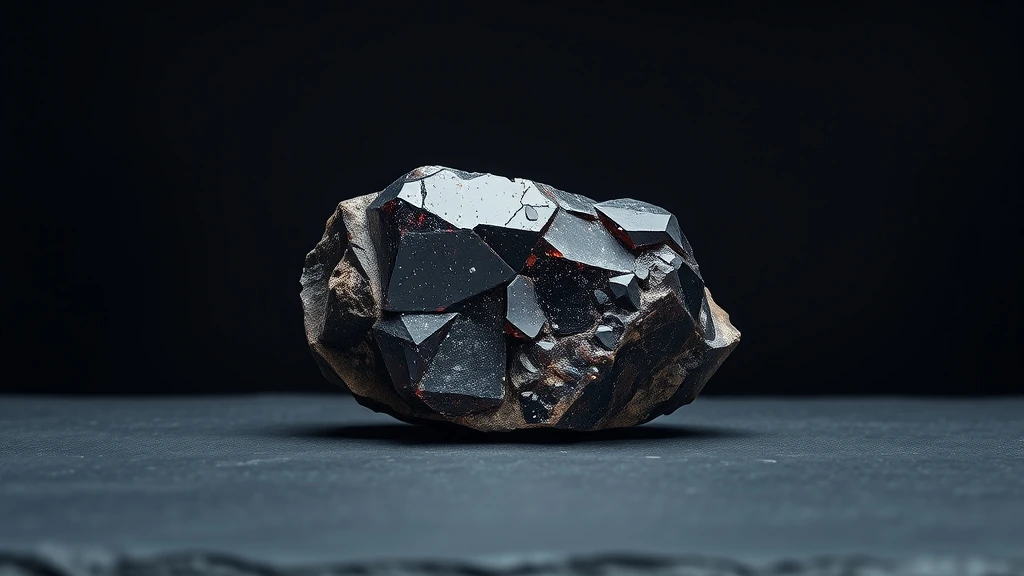
Pyrope garnet belongs to the extensive silicate mineral family, specifically classified as a nesosilicate within the garnet supergroup. This geological classification highlights its isolated tetrahedral silicon-oxygen structure, which distinguishes it from chain or sheet silicates. As a primary igneous mineral, it forms under high-pressure conditions within the Earth’s mantle. Its presence often indicates specific tectonic environments, such as ophiolites or eclogites. Understanding this parent group is essential for accurate mineral identification.
What is Pyrope Garnet? Geological Overview & Definition
Pyrope is the magnesium-aluminum end-member of the garnet solid solution series, typically forming in high-pressure mantle rocks. It is a key indicator mineral for identifying eclogite and ophiolite terrains globally. Geologists use its presence to reconstruct ancient subduction zone processes and mantle dynamics. In comparative mineralogical collections, practitioners and geologists frequently study Garnet In Arfvedsonite alongside this crystal to appreciate their subtle energetic and structural differences.
The term “pyrope” derives from the Greek word for “fire-brand,” referencing its intense red color. It frequently occurs in association with olivine and pyroxene in peridotite xenoliths. These geological contexts provide critical data regarding mantle temperatures and pressures. Precise identification relies on distinguishing it from other red garnet varieties like almandine.
Pyrope Garnet Chemical Composition & Crystallographic Properties
Pyrope crystallizes in the isometric (cubic) system, commonly forming dodecahedral or trapezohedral crystals. Its cubic lattice features a specific arrangement of silicon-oxygen tetrahedra and octahedra. This symmetry results in identical optical properties along all crystallographic axes. The structure is highly stable under high-pressure geological conditions.
The ideal chemical composition is Mg₃Al₂(SiO₄)₃, though natural specimens often contain minor iron substitutions. This cation substitution can slightly alter the refractive index and density values. Pyrope is generally resistant to dilute acids, unlike carbonate minerals. Its chemical durability makes it suitable for various industrial applications.
The characteristic deep red color arises from chromophore centers involving iron ions in the crystal lattice. These electronic transitions absorb specific wavelengths of visible light, producing the gem’s signature hue. Thermal behavior remains stable, with no significant phase changes at standard gemological temperatures. This stability ensures the stone retains its optical clarity over time.
| Property | Specification |
|---|---|
| Mineral Group | Silicates (Nesosilicates / Garnet Group) |
| Chemical Formula | X₃Y₂(SiO₄)₃ (Complex Silicate / Nesosilicate Group) |
| Mohs Hardness | 6.5 – 7.5 |
| Crystal System | Isometric / Cubic (Dodecahedral or trapezohedral crystals) |
| Specific Gravity (Density) | 3.50 – 4.30 |
| Refractive Index | 1.714 – 1.888 |
| Color & Optical Properties | Natural Pyrope Garnet color spectrum and optical dispersion |
| Primary Mining Localities | India, Madagascar, Sri Lanka, Mozambique, USA |
| Water & Chemical Resistance | High (Water-resistant; safe for gentle warm water washing) |
| Chakra Alignment (Traditional) | Root Chakra (Muladhara) and Sacral Chakra |
| Zodiac Affinity (Traditional) | Capricorn, Aquarius, Aries |
| Symbolic Meaning (Traditional) | Grounding, passion, loyalty, physical vitality, and steadfast courage |
Pyrope Garnet Varieties & Color Spectrum
Pyrope exhibits a rich chromatic range derived from variable iron and chromium content within its crystal lattice. The most prized specimens display a deep, velvety red hue that intensifies under direct illumination. This color saturation is a direct result of Fe²⁺ ions substituting for magnesium in the garnet structure.
Classic Red Pyrope
This variety represents the archetypal pyrope, characterized by a pure, unadulterated red color without secondary orange or brown tones. It typically forms in ultramafic rocks where high temperatures facilitate the incorporation of iron. The stone often exhibits a distinct glassy luster and high transparency when cut into cabochons or faceted gems.
Orange-Red Pyrope
Often found in metamorphic terrains, this morph displays a warm, sunset-like hue bridging the gap between pure red and orange. The color shift is attributed to subtle variations in oxidation states during geological cooling. These stones are frequently associated with spinel or chromite inclusions that influence their overall visual appeal.
Brownish-Red Pyrope
Common in lower-grade deposits, this variety features a muted, earthy red with noticeable brown undertones. The presence of impurities such as manganese or excess iron reduces the stone’s vibrancy and market value. Despite its lower aesthetic appeal, it remains significant for understanding the geochemical evolution of garnet-bearing zones.
Pinkish-Red Pyrope
Rarer than its red counterparts, this variety exhibits a delicate, rose-tinted red that appeals to collectors seeking subtlety. The pinkish hue arises from specific crystal field splitting effects on light absorption. These stones are often found in pegmatite dikes and require careful cutting to maximize their delicate color saturation.
Deep Crimson Pyrope
This high-end variety showcases an intense, dark red that appears nearly black in low light but glows vividly under bright sources. The high refractive index of pyrope enhances this dramatic light behavior, creating a fiery brilliance. Such specimens are typically sourced from high-pressure metamorphic environments where crystal purity is maximized.
Where is Pyrope Garnet Found? Geological Mining & Extraction
Pyrope primarily crystallizes in ultramafic and metamorphic host rocks, including peridotites and schists. These geological settings provide the necessary heat and pressure conditions for the stable formation of the isometric crystal structure. The mineral often occurs in association with olivine, pyroxene, and chromite within these deep-earth formations.
Major commercial deposits are located in Czechia, Romania, and India, where extensive mining operations have long targeted garnet-bearing zones. In the Czech Republic, pyrope is extracted from alluvial deposits derived from ancient glacial activity. Modern extraction methods combine open-pit mining with careful hand-sorting to identify high-quality gem material amidst the raw ore.
Historical Significance & Cultural Lore of Pyrope Garnet
Ancient civilizations valued pyrope for its perceived protective qualities and vibrant color, often incorporating it into ritualistic and ornamental artifacts. Archaeological findings in Celtic and Roman sites reveal garnet beads and intaglios used as talismans against evil spirits. The stone’s durability made it a preferred material for engraved seals and personal adornments in early European cultures.
Medieval lore associated pyrope with courage and loyalty, leading knights to wear the stone into battle for spiritual protection. This cultural narrative persisted into the Victorian era, where pyrope became a symbol of enduring love and steadfast devotion. Today, its historical legacy continues to influence modern gemological appreciation and market demand.
Modern Uses & Jewelry Applications of Pyrope Garnet
Pyrope garnet serves as a versatile medium for both high-end jewelry and industrial applications due to its consistent color and durability. Lapidaries favor its isometric crystal structure for precise faceting, which maximizes the stone’s natural brilliance and fire. The gemstone is commonly set in rings, pendants, and earrings, where its deep red hue complements gold and silver settings.
- Faceted Cuts: Standard brilliant and mixed cuts are employed to enhance the stone’s high refractive index, creating a sparkling appearance.
- Cabochon Polishing: Smooth, domed cabochons are used for vintage-style jewelry or inlays, highlighting the stone’s rich saturation without relying on facets.
- Ornamental Carving: Historically, pyrope has been carved into cameos and intaglios, showcasing its ability to hold fine detail during the sculpting process.
Carat, Quality Grades & Value Factors of Pyrope Garnet
The market value of pyrope garnet is primarily determined by the interplay of the four Cs, with color being the most significant factor. The most desirable specimens exhibit a pure, deep red to purplish-red hue, free from brownish or orange overtones. Stones with a “raspberry” or “cherry” tone command premium prices, while those with dull or dark shades are valued lower. Consistency of color across the entire stone is critical for high-grade commercial lots.
Clarity and cut further refine the gemstone’s overall appeal and market positioning. Eye-clean stones with minimal internal inclusions are rare and significantly more expensive than those with visible flaws. A well-executed cut optimizes the stone’s refractive index, ensuring maximum light return and brilliance. While pyrope is durable, its Mohs hardness of 6.5 to 7.5 requires careful handling to prevent chipping during setting and daily wear.
Zodiac and Astrological Lore of Pyrope Garnet
In traditional gemology, pyrope garnet is strongly associated with the zodiac signs of Capricorn, Aquarius, and Aries. These earth and fire signs are believed to resonate with the stone’s grounding energy, which promotes stability and determination. For Capricorns, the gemstone enhances ambition and discipline, while Aries find courage and physical vitality through its influence.
Culturally, pyrope is linked to the Root Chakra (Muladhara) and the Sacral Chakra, symbolizing passion and steadfast loyalty. Practitioners often use this stone to anchor spiritual energy and boost physical resilience. Its deep red color is thought to stimulate blood circulation and ignite creative passion, making it a popular choice for meditation and personal empowerment rituals.
How to Identify Real vs. Fake Pyrope Garnet
Distinguishing natural pyrope from imitations requires careful observation of physical properties and internal characteristics. Common fakes include synthetic glass, dyed quartz, and colorless spinel treated with red dyes. These substitutes often lack the specific refractive index and density of genuine garnet, leading to noticeable differences in weight and light behavior.
Practical At-Home Authenticity Tests
- Temperature Test (Thermal Feel): Genuine pyrope feels cool to the touch initially due to its high thermal conductivity. Glass imitations, however, warm up quickly under the skin, providing a distinct tactile difference that helps identify non-gemstone materials.
- Specific Gravity & Weight Test: Pyrope has a high density of 3.50 to 4.30, making it feel heavier than its size suggests. Glass and quartz imitations are significantly lighter, so comparing the stone to a known gemstone of similar size can reveal discrepancies in weight.
- Scratch & Hardness Test (Mohs Comparison): With a Mohs hardness of 6.5 to 7.5, pyrope can scratch glass but will not be scratched by a steel knife. Softer imitations like quartz (hardness 7) may scratch glass, but harder fakes like sapphire (hardness 9) will scratch the garnet, indicating a different mineral.
- Microscopic & Loupe Inspection (Internal Inclusions): Using a 10x loupe, look for natural inclusions such as tiny crystals or fluid-filled fractures. Synthetic glass often contains bubbles or swirls, which are not found in natural pyrope, providing a clear visual cue for authenticity.
Pyrope Garnet Valuation Factors, Grading & Pricing
The primary determinant of market value is Color Saturation, specifically the intensity of the deep red to purplish-red hue. Uniformity across the entire stone significantly enhances desirability, as zoning or color banding reduces overall aesthetic appeal. High optical clarity and a brilliant vitreous luster further elevate the gemstone’s visual impact and commercial standing.
Carat Weight plays a critical role in pricing, with larger, inclusion-free specimens commanding substantial premiums due to rarity. Precise facet symmetry and polish are essential for maximizing light return and fire within the stone. Professional lapidary grading strictly adheres to the 4Cs standards, ensuring consistent quality assessment across the global gemological market.
Geographical Provenance Premium often influences final valuation, with stones from historic mines like those in the Czech Republic or New Zealand fetching higher prices. Certified gem market value trends reflect steady demand for high-quality pyrope in both jewelry and collector circles. Reputable laboratory certification provides the necessary documentation to substantiate these premium pricing structures.
How to Clean and Care for Pyrope Garnet
Due to its robust physical properties, pyrope garnet is water-resistant and safe for gentle maintenance with warm water. The recommended cleaning method involves using warm soapy water and a soft cloth to effectively remove oils and dust. This approach preserves the stone’s luster without risking damage to the crystal structure or setting.
Ultrasonic cleaners are generally safe for untreated garnets, making them a viable option for professional-grade maintenance. However, always verify the specific treatment history of the stone before subjecting it to high-frequency vibrations. Regular inspection of prong settings ensures long-term security for the gemstone within its jewelry piece.
Cleansing and Recharging Pyrope Garnet (Energetic Care)
Holistic practitioners often employ herbal smudging with sage or palo santo to clear perceived energetic stagnation from the stone. This dry method avoids any contact with moisture, preserving the mineral’s physical integrity while addressing metaphysical concerns. The gentle smoke is believed to purify the stone’s vibrational field without introducing external contaminants.
For recharging purposes, placing the pyrope on a selenite charging slab under gentle moonlight is a popular practice. This method leverages the ambient energy of the lunar cycle to restore the stone’s purported vitality. It is crucial to avoid direct intense sunlight or heat sources, as thermal stress can compromise the crystal lattice stability.
Frequently Asked Questions About Pyrope Garnet
Is pyrope garnet safe to wear in the shower?
Yes, pyrope garnet is highly water-resistant and safe for gentle warm water exposure. The mineral’s dense crystal structure prevents water absorption, making it suitable for daily wear. However, avoid harsh soaps or steam, as these can degrade metal settings over time. Always rinse thoroughly after showering to maintain brilliance.
Can I clean pyrope garnet with an ultrasonic cleaner?
Ultrasonic cleaners should generally be avoided or used with extreme caution, as high-frequency vibrations can cause microscopic fissures. The stone’s high hardness and stability withstand the vibrations effectively. Always ensure the stone is not fractured or heavily included before submersion. For maximum safety, start with warm soapy water and a soft cloth.
What is the Mohs hardness of pyrope garnet?
Pyrope garnet rates between 6.5 and 7.5 on the Mohs scale. This makes it durable enough for rings and bracelets, though it is softer than diamond or sapphire. It resists scratching from most common materials but can be abraded by harder gemstones. Store it separately to prevent surface wear.
Which zodiac signs are aligned with pyrope garnet?
Pyrope garnet is traditionally associated with Capricorn, Aquarius, and Aries. These signs benefit from the stone’s grounding energy and steadfast courage. Wearers often report enhanced physical vitality and loyalty. The mineral’s deep red hue resonates with the fiery nature of these astrological profiles.
Which chakras does pyrope garnet activate?
Pyrope garnet primarily activates the Root Chakra (Muladhara) and Sacral Chakra. This alignment supports feelings of security, passion, and physical vitality. The stone’s earthy energy helps anchor the wearer to the present moment. It is particularly effective for balancing emotional stability and creative drive.
What is the chemical formula for pyrope garnet?
Pyrope belongs to the nesosilicate group with the formula X₃Y₂(SiO₄)₃. This complex silicate structure defines its isometric crystal system. The specific iron-rich composition gives pyrope its characteristic deep red color. Understanding this formula helps identify its geological origin and formation conditions.
How does pyrope garnet compare to almandine?
Pyrope is typically lighter in color and has a lower refractive index than almandine. While both are garnets, pyrope’s refractive index ranges from 1.714 to 1.888. Almandine tends to be darker and more common. Distinguishing them requires precise gemological testing and spectral analysis.
Is pyrope garnet good for everyday jewelry?
Yes, its durability makes it excellent for everyday jewelry pieces. With a Mohs hardness of 6.5 to 7.5, it withstands daily wear well. It is less prone to chipping than many other colored stones. Regular cleaning with warm soapy water keeps its lustrous surface intact.