
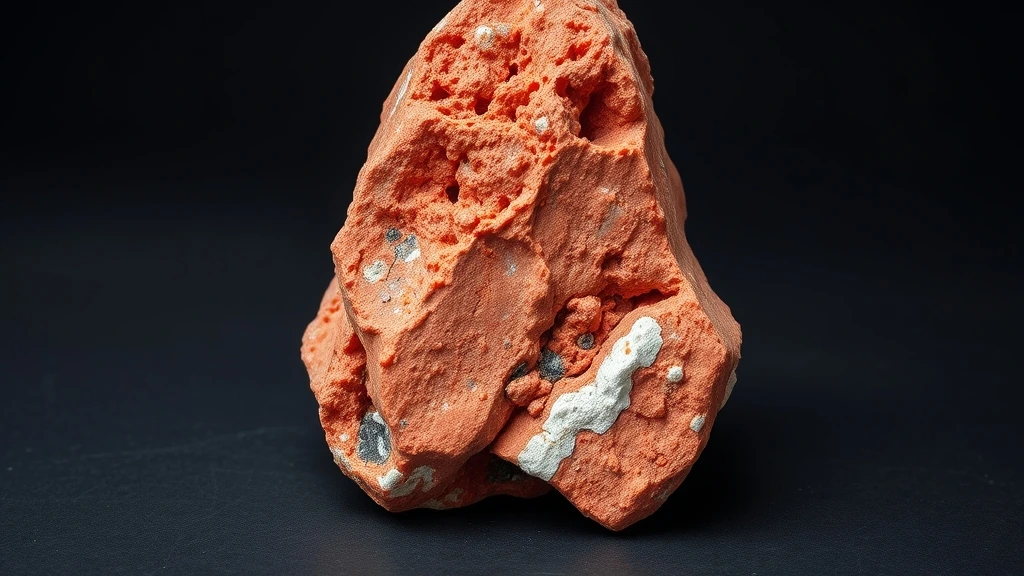
Red coral is classified as a natural mineral aggregate rather than a discrete crystalline specimen. It forms through the biological accumulation of calcium carbonate by colonial marine organisms. This process creates a dense, porous matrix that lacks the long-range atomic order of typical gemstones. Consequently, it is treated as a biogenic mineral in geological contexts. Its formation occurs in shallow, warm ocean waters where specific coral species thrive. The resulting material is a complex intergrowth of microscopic aragonite and calcite crystals. This biological origin distinguishes it from purely inorganic mineral deposits.
What is Red Coral? Geological Overview & Definition
Red coral is the skeletal remains of colonial organisms belonging to the family Coralliidae. These organisms secrete a hard, calcareous exoskeleton that protects their soft polyps. Over centuries, these colonies build up massive, branching structures on the seafloor. The gem-quality material is harvested from these biogenic deposits found in deep marine environments. While red coral forms the vibrant, branching structures of the Coralliidae family, its pale counterpart, White Coral, develops through a similar calcareous process but lacks the distinct pigmentation that defines the red variety.
The stone is not a single crystal but a polycrystalline aggregate of calcium carbonate. Its structural integrity relies on the organic binding matrix between mineral grains. This composition gives it a waxy to vitreous luster when polished. Geologically, it is categorized as a sedimentary organic rock with gemological value. Understanding this biological origin is crucial for accurate identification and valuation.
Red Coral Chemical Composition & Crystallographic Properties
Despite its gem status, red coral lacks a single, uniform stoichiometric chemical formula. It is primarily composed of calcium carbonate ($CaCO_3$), existing in both calcite and aragonite polymorphs. The mineral grains are arranged in a disordered, fibrous pattern rather than a perfect lattice. This polycrystalline nature prevents the assignment of a specific crystal system to the bulk material. The individual micro-crystals, however, may exhibit trigonal symmetry if they are calcite.
The vibrant red coloration is not caused by trace metal impurities like in many other gems. Instead, it results from organic chromophores and pigments trapped within the skeletal structure. These biological pigments are sensitive to heat and strong acids. Exposure to high temperatures can cause the color to fade or turn brown. This thermal instability requires careful handling during cutting and polishing.
The material is highly susceptible to chemical alteration, particularly from acidic environments. Citric acid or vinegar can dissolve the calcium carbonate matrix, causing surface pitting. This reactivity is a key diagnostic feature for gemologists. It distinguishes red coral from synthetic imitations like glass or plastic. The acid sensitivity also means that long-term exposure to sweat can degrade the stone’s surface.
While the bulk stone is amorphous, the constituent calcite grains follow trigonal crystallographic laws. This means the internal atomic arrangement of the pure mineral component is trigonal. However, the overall gemstone does not display cleavage or distinct crystal faces. The lattice structure is interrupted by organic inclusions and voids. Therefore, standard crystallographic measurements like refractive index are difficult to apply uniformly. The stone behaves as a composite material with variable optical properties.
| Property | Specification |
|---|---|
| Mineral Group | Natural Mineral / Crystal |
| Chemical Formula | CaCO₃ |
| Mohs Hardness | 6.5 – 7.0 |
| Crystal System | Trigonal |
| Specific Gravity (Density) | 2.65 – 2.70 |
| Refractive Index | 1.490 – 1.658 |
| Color & Optical Properties | Natural Red Coral color spectrum and optical dispersion |
| Primary Mining Localities | Global primary localities |
| Water & Chemical Resistance | High (Safe for gentle water washing) |
| Chakra Alignment (Traditional) | Root Chakra (Muladhara) |
| Zodiac Affinity (Traditional) | Cancer, Pisces |
| Symbolic Meaning (Traditional) | Mental clarity, focus and heightened intuition |
Red Coral Varieties & Color Spectrum
Red Coral displays distinct mineralogical characteristics across its geological varieties and structural habits. Gemologists evaluate these natural varieties based on crystal habit, trace chromophore concentrations, and visual luster.
Primary Natural Red Coral
The benchmark natural variety exhibiting diagnostic color saturation and characteristic aragonite fiber architecture.
Distinct Geological Morphs of Red Coral
Secondary regional and structural varieties formed under localized geological temperature and pressure conditions.
Mediterranean Red Coral
Mediterranean red coral (*Corallium rubrum*) thrives on limestone ledges at depths of 10–80 m in the Mediterranean Sea and the Adriatic. Its aragonite skeleton forms interlocking branched tubes that display a deep, blood‑red hue with occasional pink undertones. The material is prized for its fine grain and low porosity, making it a staple in high‑end jewelry, yet over‑harvesting has rendered large, intact colonies increasingly rare.
Pacific Red Coral
Found along the coasts of Japan, Taiwan, and the Philippines, Pacific red coral exhibits a brighter scarlet shade and a slightly more porous texture than its Mediterranean counterpart. Growth occurs on volcanic substrates where calcite‑rich seawater promotes rapid skeletal accretion, often embedding microscopic algae and sand grains. Because the species tolerates shallower waters, it is more accessible to artisanal fishers, though sustainable quotas now limit commercial extraction.
Black‑Red Coral (Kermes)
Black‑red coral, sometimes called kermes, displays a dramatic gradient from deep crimson at the surface to a near‑black core. This color shift results from iron oxide inclusions that permeate the coral’s interior during diagenesis. Primarily sourced from the Red Sea and the Gulf of Aqaba, the variety is valued for its dramatic contrast and is considered among the most exclusive grades for ceremonial pieces.
White‑Veined Red Coral
A rare morph found off the coast of Sardinia, white‑veined red coral features delicate, translucent veins of calcite that intersect the vivid red matrix. The veins form when groundwater percolates through the coral skeleton, depositing calcium carbonate along micro‑fractures. Collectors prize this variety for its striking visual depth, and only a few high‑quality specimens appear on the market each year.
Pink‑Orange Coral
Occasionally harvested in the waters of the Canary Islands, pink‑orange coral shows a softer palette ranging from pastel pink to warm amber. Its hue is controlled by trace magnesium within the aragonite lattice, which subtly alters light absorption. The coral’s relatively low density makes it lightweight for intricate beadwork, yet limited deposits keep it a niche material for designers.
Deep‑Sea Crimson Coral
Discovered in the abyssal zones of the Atlantic, deep‑sea crimson coral grows at depths exceeding 200 m, where low temperatures slow growth to a few millimeters per year. The extreme pressure yields a dense, glass‑like microcrystalline aragonite that resists chipping. Because extraction requires remotely operated vehicles, this variety commands premium prices and is reserved for exclusive haute‑couture collections.
Where is Red Coral Found? Geological Mining & Extraction
Red coral colonies attach to hard substrates such as limestone, basalt, and volcanic ash, forming branching aragonite frameworks that anchor to the sea floor. In the Mediterranean, divers harvest the coral using hand‑tools to avoid damaging the delicate skeleton, while in the Pacific, small‑scale trawling nets collect broken fragments that are later sorted and cleaned.
Major extraction regions include the Mediterranean coasts of Italy, Greece, and Spain; the Red Sea’s Egyptian and Saudi Arabian reefs; and the western Pacific islands of Japan and the Philippines. Each locale enforces strict quotas and seasonal bans to protect the slow‑growing organisms, with many fisheries now transitioning to captive coral farms that seed juvenile polyps on artificial substrates for sustainable supply.
Historical Significance & Cultural Lore of Red Coral
Across ancient lapidary traditions, red coral was fashioned into amulets, rosaries, and signet rings, prized for its purported ability to ward off evil and promote vitality. In Greco‑Roman antiquity, coral beads adorned the necks of elite women, while Egyptian tombs have yielded coral inlays that suggest a belief in its protective power for the afterlife.
In early Chinese texts, coral is linked to the Root Chakra (Muladhara), believed to ground the wearer and enhance mental clarity, focus, and heightened intuition. Vedic literature describes coral as a talisman for the zodiac signs Cancer and Pisces, attributing to it the capacity to stabilize emotions and strengthen the heart. Throughout these cultures, red coral’s vivid hue symbolized blood, life, and the regenerative forces of the sea.
Modern Uses & Jewelry Applications of Red Coral
Red coral is prized for its vibrant hue and organic texture, making it a favorite in both traditional and contemporary jewelry. Skilled lapidaries cut the stone into cabochons or delicate facets, preserving its natural translucency while enhancing brilliance. The material is also carved into ornamental motifs for brooches, pendants, and architectural embellishments.
- Cabochon and faceted earrings, rings, and pendants
- Carved brooches, pins, and decorative panels
- Decorative inlays for architectural elements such as columns and lintels
Metaphysical Uses & Origins of Red Coral
Across ancient lapidary traditions, red coral has been employed in meditation to cultivate mental clarity and sharpen focus. Its warm, grounding energy is harnessed in grounding practices, where practitioners place the stone on the lower back or root chakra to stabilize emotional turbulence. In architectural and lapidary arts, the stone is incorporated into mosaics and ornamental carvings, believed to imbue structures with protective vitality.
Which Chakra and Zodiac Signs Align with Red Coral?
Red coral resonates strongly with the Root Chakra (Muladhara), the energy center associated with stability, safety, and physical grounding. By aligning with this chakra, the stone supports a firm foundation for personal growth and resilience.
The gemstone is also linked to the zodiac signs Cancer and Pisces, both water signs that value emotional depth and intuition. Wearing or meditating with red coral is thought to enhance these qualities, fostering a harmonious balance between emotional insight and grounded action.
How to Identify Real vs. Fake Red Coral
Collectors often encounter artificial imitations such as dyed glass or polymer replicas that mimic red coral’s appearance. Genuine coral exhibits a distinct organic texture and a slightly warmer, deeper hue that cannot be replicated by synthetic materials.
Practical At-Home Authenticity Tests
- Temperature Test (Thermal Feel): Hold the stone; real coral feels cool to the touch due to its natural density, whereas glass warms quickly.
- Specific Gravity & Weight Test: Genuine coral has a specific gravity around 1.5–1.7; a heavier or lighter feel indicates a synthetic substitute.
- Scratch & Hardness Test (Mohs Comparison): Test against a 6.5–7.0 hardness standard; real coral will resist scratching by a steel file but may be scratched by a quartz crystal.
- Microscopic & Loupe Inspection (Internal Inclusions): Under magnification, authentic coral shows fine, irregular inclusions and a fibrous internal structure, unlike the uniform patterns seen in glass replicas.
Red Coral Valuation Factors, Grading & Pricing
The color variations of red coral dominate its market appeal, ranging from deep ruby hues to lighter pinkish tones. Natural texture, with its characteristic porous, branching growth, adds depth, while subtle banding or veining can enhance visual intrigue. Collectors prize specimens that display uniform saturation without artificial dye, as authenticity is closely linked to these chromatic cues.
Specimen mass and size are pivotal in pricing, with larger blocks measured in grams or kilograms commanding higher premiums. The craftsmanship of carving—whether into beads, cabochons, or intricate figurines—further influences value, especially when the original block retains structural integrity and minimal fractures. Light diffusion through the porous matrix creates a luminous glow that can elevate a piece’s desirability in high‑end ornamental markets.
Geographical origin and authenticity serve as decisive grading criteria, with Mediterranean sources such as the Mediterranean Sea, especially those from Italy and Greece, often fetching premium prices. Provenance documentation and certification guard against counterfeit material, supporting a robust wholesale market that spans both decorative jewelry and wellness applications. Trends show increasing demand for ethically sourced coral, prompting stricter traceability standards across the industry.
How to Clean and Care for Red Coral
Gentle cleaning of red coral involves immersing the piece in warm soapy water, then wiping with a soft cloth to remove surface grime. Rinse briefly with clean lukewarm water and pat dry with a lint‑free microfiber towel, ensuring no moisture remains in the porous structure. Ultrasonic cleaners should be avoided, as the vibrations can cause micro‑fractures within the delicate organic matrix.
Cleansing and Recharging Red Coral (Energetic Care)
A dry holistic method for energetic renewal is to place the coral near a smoldering bundle of sage or cedar, allowing the herbal smoke to drift over the surface without direct flame. This practice, rooted in ancient lapidary traditions, is believed to clear lingering energetic residues while preserving the material’s integrity.
Alternatively, resting the coral under gentle moonlight for several hours or positioning it on a clean selenite slab can replenish its vibrational field. Both approaches avoid heat exposure and maintain the coral’s structural stability, aligning with historical practices of subtle, non‑invasive recharging.
Frequently Asked Questions About Red Coral
Red Coral displays distinct mineralogical characteristics across its geological varieties and structural habits. Gemologists evaluate these natural varieties based on crystal habit, trace chromophore concentrations, and visual luster.
Primary Natural Red Coral
The benchmark natural variety exhibiting diagnostic color saturation and characteristic aragonite fiber architecture.
Distinct Geological Morphs of Red Coral
Secondary regional and structural varieties formed under localized geological temperature and pressure conditions.
Is red coral safe to wear in the shower?
Yes, red coral is safe for gentle water washing. While it tolerates brief exposure to water, prolonged soaking can dull its surface luster over time. Always pat the gem dry immediately after showering to maintain its vibrant appearance. This high water resistance makes it suitable for daily wear without significant risk of structural damage.
How should I clean my red coral jewelry?
Use warm soapy water and a soft cloth for cleaning. Gently scrub the surface to remove oils and dirt, then rinse thoroughly with lukewarm water. Avoid harsh chemicals or abrasive materials that could scratch the stone. This simple method preserves the organic structure and natural polish of the coral without causing harm.
Can I put red coral in an ultrasonic cleaner?
No, you must avoid ultrasonic cleaners for red coral. The high-frequency vibrations can cause microscopic fractures within the porous organic matrix of the stone. Instead, stick to manual cleaning with a soft brush and mild soap. This precaution prevents structural fractures that could permanently compromise the gem’s integrity and value.
Which zodiac signs are aligned with red coral?
Red coral is traditionally aligned with Cancer and Pisces. These water signs resonate with the stone’s protective and nurturing energies. Wearing this gem is believed to enhance emotional stability and intuition for these individuals. The astrological connection strengthens the wearer’s bond with the earth element, promoting a sense of grounding and security.
Which chakra does red coral activate?
Red coral specifically activates the Root Chakra (Muladhara). This energy center governs survival, security, and physical stability. By stimulating this chakra, the stone helps anchor the wearer to the present moment. It supports mental clarity and focus, ensuring a strong foundation for personal growth and physical well-being.
What is the Mohs hardness of red coral?
Red coral has a Mohs hardness of 6.5 to 7.0. This places it above quartz but below topaz, making it durable for jewelry. However, it is still susceptible to scratches from harder materials like diamonds. Proper storage in a soft pouch protects the crystal lattice from accidental abrasion during daily handling.
Is red coral a mineral or an organic gem?
Red coral is an organic gemstone, not a true mineral. It is formed from the calcium carbonate skeletons of marine polyps. Unlike inorganic crystals, it grows in complex branching structures over time. This biogenic origin gives it unique color variations and textures that cannot be replicated by synthetic processes.
Can red coral be exposed to sunlight?
Prolonged direct sunlight exposure should be avoided for red coral. While brief exposure is generally safe, intense UV rays can fade the natural pigments over time. Store your jewelry in a cool, dark place when not wearing it. This practice preserves the vibrant red hue and prevents potential drying or brittleness of the organic material.